
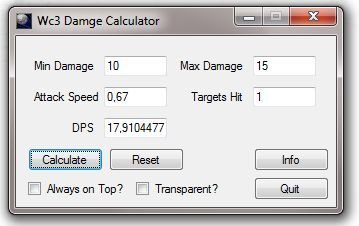
‘To calculate DPS, divide the total damage dealt by the time it took to deal that damage. This gives you your damage per second.’
Ever wondered how much hurt you’re actually putting out in your favorite game? We often talk about damage, but how do you really know what you’re doing is effective? Knowing how to calculate dps in games helps you optimize your strategy and make informed decisions.
It’s not just about bigger numbers; it’s about efficiency. Understanding your damage output allows you to compare different weapons or skills. This can help you refine your builds and become a more effective player.

How to Calculate DPS in Games
Ever wondered how much damage you’re really doing in your favorite game? Or why some characters seem to shred through enemies while others barely scratch them? The secret often lies in something called DPS, or Damage Per Second. It’s a way to measure how much hurt you’re dishing out over time, and understanding it can really boost your gaming skills. But don’t worry, it’s not as complicated as it sounds! Let’s break down what DPS is all about and how you can figure it out yourself.
Understanding the Basics of DPS
DPS, or Damage Per Second, is a core concept in many video games, especially those with combat. It essentially tells you the average damage you are doing every second. It’s a simple idea but a powerful tool for comparing different weapons, abilities, and character builds. Imagine you have two swords. Sword A hits for 10 damage and Sword B hits for 5 damage, but Sword B attacks twice as fast. Which is better? That’s where understanding DPS comes in, it will help you decide which will provide you with more damage output. Rather than looking at just the raw damage of each hit, DPS takes into account both the damage and how quickly those hits land.
Why is DPS Important?
DPS is important for a lot of reasons:
- Comparing Weapons and Abilities: It lets you easily see which of your gear or skills are most effective.
- Optimizing Character Builds: You can choose equipment and abilities that maximize your DPS and lead to better performance.
- Planning Strategies: Knowing your DPS helps you understand how quickly you can take down an enemy, whether it’s a regular mob or a boss.
- Team Play: When playing with others, understanding your role and DPS can help your team succeed. For instance, a player with high DPS can focus on attacking, while a player with support role can heal and support.
The Fundamental DPS Formula
The most basic way to calculate DPS uses the following formula:
DPS = Total Damage / Time
Let’s break this down further:
Total Damage
This is how much damage you dealt to an enemy. This damage could be from a single attack or from a series of attacks. Note that sometimes in games, damage can be affected by other factors and it’s important to use actual damage delivered when calculating DPS.
Time
This refers to how long it took for you to deal that total damage. It’s often measured in seconds. If you dealt 100 damage in 5 seconds, you would divide 100 by 5.
Let’s do a quick example:
- Imagine you fired a spell that dealt 500 damage in 10 seconds.
- To calculate the DPS: 500 / 10 = 50.
- So, your DPS with that spell is 50.
A Closer Look: Attack Speed and Damage Per Hit
The basic formula is good, but let’s dig a little deeper. Most games don’t just have you deal a lump of damage over time. Instead, you deal damage in hits, and each hit has its own damage and speed. This means we can also think of DPS as:
DPS = (Damage Per Hit) (Attacks Per Second)
In this version of formula, let’s look at each of the terms.
Damage Per Hit
This is the amount of damage you deal with each attack, spell, or ability. It is shown as a number in your game. If you are playing a game and your in game tooltips states that the damage of your spell is 100, this will be your damage per hit for that spell.
Attacks Per Second
This represents how many attacks you can do in one second. This is sometimes directly shown as attack speed in games, and sometimes you’ll need to calculate it using attack time (a value that tells you the time it takes between two consecutive attacks, or how often you attack). For example, if it takes 0.5 seconds to do an attack, then your attack per second would be 2 attacks per second, as 1 / 0.5 = 2.
Let’s try out an example for this version:
- Assume that your sword has a damage per hit of 50.
- Assume that you attack at a rate of 2 times per second.
- Your DPS would be 50 2 = 100.
- This indicates that in every second you deal 100 points of damage.
Factors Affecting DPS in Games
Calculating DPS isn’t always straightforward because games often have various modifiers and mechanics that can change damage output. Here are some key things that can impact your DPS:
Critical Hits
Critical hits are attacks that deal extra damage. Games often have a “critical hit chance” that determines how often you’ll get one. For example, if you have a 25% critical hit chance, on average 1 out of every 4 attacks will be a critical hit. Each crit hit will also be increased by certain amount, such as 50%, 100% or more. When calculating average DPS, we have to factor in how often you are getting a critical hit as well as the extra damage from crit hits.
Damage Buffs and Debuffs
Many games have buffs and debuffs that can temporarily increase or decrease your damage. Damage buffs will give you extra damage, while debuffs on enemies will make them take extra damage. You must always take these into account as your true DPS is only effective when taking buffs and debuffs into account.
Armor and Resistances
Enemies often have armor or resistances that can reduce the damage you deal. For example, if your enemy has 100 armor, you might do significantly less damage than if the enemy has 0 armor. Games also often have elemental resistances, so if the enemy resists fire, then you will do less damage with fire damage abilities. It is important to understand your enemy’s defenses to be able to calculate the true DPS, as damage mitigation from armor can change your effective damage.
Skill Interactions
Some abilities in game synergize to each other, and certain spells and skills can either affect the damage of other skills, or the attacks per second. An example of this would be a character that might have a buff that increases damage done by a secondary skill. Always take these into account when calculating the true DPS.
Procs
Many games also have abilities that can randomly proc. This means there’s a chance they trigger special effects, like dealing additional damage or buffing you. To accurately calculate the DPS, you’ll have to average the effects of these procs over time.
How to Calculate DPS in Practice
Let’s get practical. Here are a couple of ways you might calculate DPS in a game.
Using a Damage Log
Many modern games have damage logs that display your damage in real-time or after combat, as well as how much damage you do. This is the easiest way to measure DPS. You can read the damage log directly to find your DPS. Some damage logs break it down by each ability and you can also see DPS for each individual ability. If your game doesn’t have one, you can try using third-party add-ons or plugins.
Here’s how you can do it:
- Engage in Combat: Fight some enemies.
- Record Damage: See how much damage you did in the damage log.
- Record Time: See how long the combat lasted, also shown in the log.
- Calculate DPS: Divide total damage by time.
Manual Calculation
If you don’t have a damage log or you want a very simple DPS calculation, you can do it yourself with some simple steps.
Here’s how you could do it:
- Choose your target. Pick an enemy to test your DPS on. This target could be a training dummy, a normal monster, or a boss.
- Attack the target. Make sure that you use your normal rotation, as using certain skills can sometimes affect the DPS.
- Time the attack. Use a stopwatch or a timer to see how long you have been attacking the target.
- Count Damage. Record the damage that you have done. This can be done manually or by using third party software that tracks damage.
- Use the basic formula. Use the formula DPS = Total Damage / Time, to find the DPS.
Keep in mind, this approach isn’t always accurate as there can be fluctuations in damage, crit chances, and procs, so you’ll need to do multiple tests and average the results for a more precise number.
Advanced DPS Considerations
As you get more familiar with DPS, there are a few more things to keep in mind for advanced players.
Sustained vs. Burst DPS
Sustained DPS means that you can keep dealing a consistent amount of damage over a longer period of time. Usually these are abilities that can be used often, such as auto-attacks and some common skills. On the other hand, Burst DPS means you can do a high amount of damage in a short time, but you may not be able to repeat that damage often. For example, a skill that can do a very high amount of damage once every 10 seconds. For certain games it is important to understand if your skill is more sustained damage or burst damage. Burst damage is extremely useful for short battles where you need to take down enemies quickly, while sustained DPS is more useful for longer battles.
Damage Over Time (DoTs)
Some abilities don’t deal damage instantly but instead do damage over a period of time. This damage is often referred to as “DoT”. When calculating the DPS of a character using DoTs, you must take into account that DoTs do a fixed damage per second and is part of the DPS. For example, you can calculate DPS of a DoT by using the same basic formula, where DPS = total damage / time. If a DoT skill does 300 total damage over 10 seconds, then the DoT DPS is 300 / 10 = 30.
Mobility and Downtime
Mobility can affect DPS because if you have to run around, you may not be doing damage at that time. Having good mobility to deal damage while moving will make your total DPS much higher. You can also have downtime where you can’t deal damage, such as when you have to dodge an incoming attack. This is why it is important to consider the practical DPS, which takes into account the downtime where you are not dealing damage. For example, a player with 1000 DPS while standing still might be doing only 500 DPS during practical combat if that player has to dodge frequently.
Understanding Game-Specific Mechanics
Different games will have unique factors that affect DPS. For example, a game might have special skills that can increase DPS, or special enemies that take more damage. Understanding these nuances is crucial for getting accurate DPS calculations. For example, some games will increase damage if you attack from behind, while others may increase damage against low health enemies. Learning these mechanics can help increase your DPS.
Tips for Maximizing Your DPS
Now that you understand what DPS is and how to calculate it, here are some tips for making sure you are dealing optimal damage.
- Optimize your Gear. Choose the equipment that provides you the most damage output. Sometimes having a higher attack speed weapon is much better than a slower hitting weapon even if it has higher damage on paper.
- Learn your Rotation: Practice your attack rotation to maximize your damage by using skills in the correct order.
- Use Buffs and Debuffs: Apply buffs to yourself and debuffs to enemies whenever possible.
- Stay Alert: Always be aware of your surroundings and keep doing damage while dodging enemy attacks.
- Practice: The more you play, the better you’ll become at maximizing your DPS. This can often mean learning more about the game and also learning the optimal attack pattern to get more consistent damage output.
Calculating DPS is a skill that can greatly improve how well you play games. It’s not just about knowing how the formula works, but understanding the nuances of each game and what impacts damage output. By understanding DPS, you will be a much better player in the long run.
How do video games calculate damage? || Mechanics Dismantled 6
Final Thoughts
To calculate DPS, divide the total damage dealt by the time it took to deal that damage. This gives you a damage per second value. It’s essential for comparing weapon or ability effectiveness.
Remember that practical DPS can vary based on factors like enemy resistances and critical hits. Calculating your average damage output is crucial. Understanding how to calculate dps in games lets you optimize your gameplay.

