
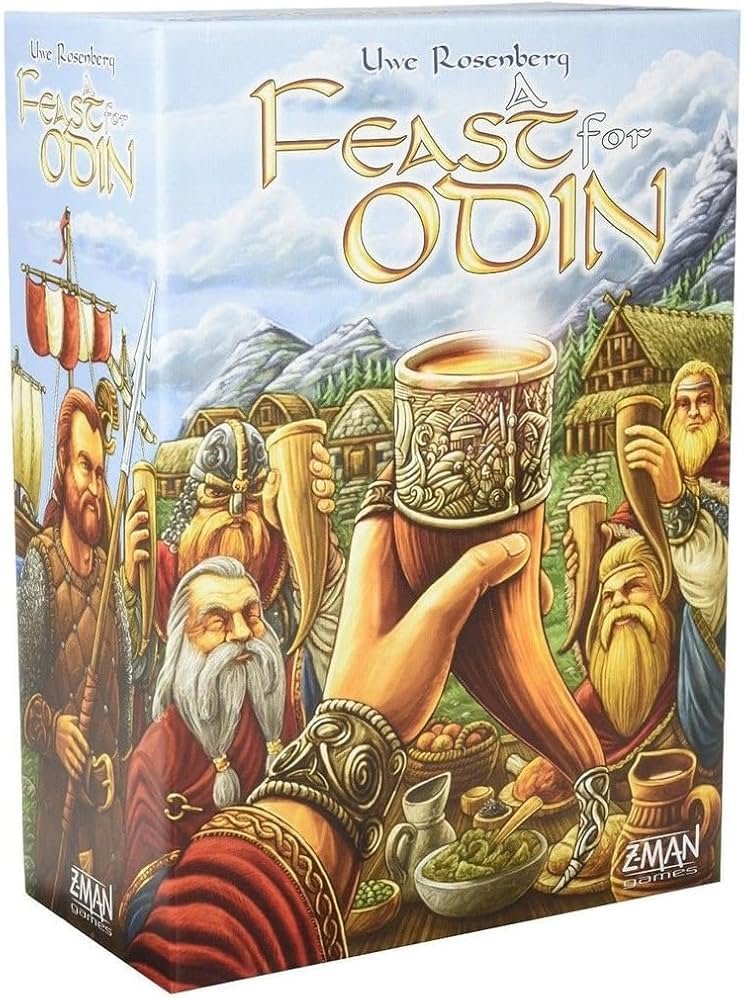
A Feast for Odin board game is a complex worker placement game where players gather resources, craft goods, and develop their settlements in the Viking age.
Have you ever wanted to lead a Viking clan? A Feast for Odin board game lets you do just that. This engaging game offers a deep, strategic experience, taking you through resource management and settlement building. Players will navigate a large action selection board, placing workers to gain crucial materials.
You’ll need to carefully plan your moves because the game involves a lot of different options and paths to victory. Each choice has a consequence. So, are you ready to become the best Viking leader?

A Feast for Odin Board Game: A Deep Dive into Viking Life
Get ready to set sail and explore the world of Vikings! A Feast for Odin, designed by the renowned Uwe Rosenberg, isn’t just any board game; it’s an epic journey into the daily lives of Norsemen. You’ll become a Viking leader, managing your resources, exploring new lands, and developing your settlement. This game is complex, but that’s what makes it so engaging. Let’s delve into the details of what makes A Feast for Odin a truly special experience.
Exploring the Core Mechanics
At its heart, A Feast for Odin is a worker placement game with a strong emphasis on resource management and strategic planning. You’ll have a set number of Vikings to place on the action board each round. These actions allow you to gather resources like wood, stone, and food, go hunting, fishing, craft items, build structures and even explore new lands. But here’s the catch: your Vikings don’t just gather things. They create a ripple effect. An action you take might help you now, but it can also influence what you can do later in the game. This interaction makes each decision weighty and important.
Action Spaces and Worker Placement
The main board is overflowing with action spaces. These spaces represent all sorts of activities Vikings would engage in. Some common actions include:
- Gathering Basic Resources: Collect essential materials like wood and stone, the backbone of any Viking settlement. These are necessary to create buildings and improve your home.
- Hunting and Fishing: Send out your Vikings to obtain food sources. You’ll need food to feed your people and to complete certain goals.
- Crafting: Use your resources to craft useful items, like tools, weapons, and even clothing. These items provide different types of bonuses and can also contribute to scoring at the end of the game.
- Ship Building: Construct Viking ships, which allow you to explore distant lands and gain even more resources and bonuses.
- Building Structures: Develop your home board by placing tiles representing homes, workshops, and farms. These tiles increase your income, and provide specific benefits.
- Emigrating: Choose to travel and settle in new locations, allowing access to further resources and scoring opportunities.
You must carefully consider where to place your Vikings each round. Every action costs a certain number of Vikings. Some actions require only one worker, while others require two or more. This creates a push-pull between getting immediate benefits and maximizing your efficiency over the long game. Careful planning here can truly make or break your game strategy.
Resource Management: The Viking Way
Resources are at the heart of A Feast for Odin. You’ll be juggling a variety of goods, each with a specific purpose. Here’s a breakdown:
- Basic Resources: Wood, stone, and clay are the building blocks of your settlement. You’ll use these to construct houses and workshops.
- Food Resources: Animals, fish, and crops are essential to feed your Vikings and to complete objectives. Food is a key to maintain your people and avoid losing points at the end of the game.
- Valuable Goods: These include items like iron, silver, and amber. You’ll obtain them by crafting or exploring. These goods have many uses, including creating more valuable items or simply being worth points.
- Crafted Items: Tools, weapons, and clothing are important items you’ll create by combining different resources. These crafted items will enhance your resource gathering, trading power, or grant other perks.
You must carefully manage your resources. You can’t simply hoard them; you must use them to develop your settlement and to pursue your long-term strategies. The game forces you to make tough choices about what to prioritize. Do you focus on building homes, gathering food, crafting items or going for exploration? This constant balancing act is one of the things that makes A Feast for Odin so fascinating.
The Importance of the Home Board
Your home board is the center of your Viking kingdom. It’s where you store your resources, place buildings, and watch your settlement grow. The main part of your home board is the area where you place “polygonal” tiles, representing rooms, farms, and even natural resources. Each tile fills a space and gives benefits. These tiles also cover up minus points on your home board. So, it’s not just about acquiring stuff, but also strategically placing your tiles to optimize your score. This tile placement element adds a puzzle-like layer to the game.
Diving Deeper: Exploration and Specialization
Beyond basic worker placement and resource management, A Feast for Odin introduces other interesting and engaging concepts that add to the strategic depth and theme of the game.
Exploration and Emigration
Exploring new lands is a critical part of the Viking lifestyle, and the game reflects this. You can send your ships out to distant islands and continents. Each location provides unique resources and bonuses. Some give you regular income, while others give you a one-time benefit. Exploration is a way to obtain resources you cannot easily get back in your home region. It’s a key to gaining advantage and reaching higher scores. You must also consider the cost of exploration, as these expeditions are not always cheap.
Emigration allows you to settle in these explored locations, getting different bonuses. However, it’s a race. Only a set number of Vikings can settle in some areas, and if you’re too slow you’ll lose out on opportunities. This can mean focusing more on ship building early in the game.
The Crafting System: A Key to Variety
Crafting is more than just combining resources; it adds a unique layer to the game. You create tools, weapons, and clothing, each of which can give benefits and help you with your strategy. The crafting process requires planning. You must obtain the specific resources to craft specific items. It also creates a secondary market of sorts. You will sometimes have to exchange your resources in order to craft something unique, and then use that new crafted item to exchange for something different. This creates a lot of trading and resource management opportunities and adds to the engaging nature of the game.
Here are some examples of how the crafting system works:
- Weaving: You might combine wool and other materials to make clothing, which can provide food bonuses or protect you from income penalty cards.
- Smithing: Use metal and other resources to make tools, such as axes that make collecting wood more efficient.
- Pottery: Turn clay into pots that store more food.
The crafting element is an important part of A Feast for Odin, and it offers a lot of strategic depth.
Occupation and Specialization Cards
Occupation cards represent the diverse roles within Viking society and also add variance to every game session. These cards are given to players randomly at the start of the game and grant unique abilities and bonuses. These abilities can influence your decision-making process, allowing you to specialize in certain areas, and help you create interesting and different strategies on how to play the game. There are a great number of occupation cards with all kinds of varying advantages. Some may help you with crafting, others may give you bonuses during trading or exploration. The occupation cards are another part that makes A Feast for Odin such a varied and replayable experience.
Scoring and Strategy
The goal in A Feast for Odin, like most games, is to earn the most points. Points are earned through a number of different ways. In addition to all the resources, structures and crafted items you gain over the course of the game, it’s the end-game scoring that truly determines your final result. Let’s look at some key scoring methods:
End-Game Scoring
Most of your points will come from a variety of factors at the end of the game:
- Home Board Coverage: Covering negative point values on your home board is critical. You must fill as much of your board with tiles as possible, as these hidden point penalties will hurt you a lot if you don’t cover them in time.
- Exploration: The number and type of explored locations can earn you good points at the end. The farther away and more dangerous the island, the better the payoff at the end of the game, when scoring.
- Buildings and Structures: Each type of building can have its own scoring rules, which must be considered as you plan your strategy.
- Sets of Resources and Crafted Items: Collecting sets of similar or different crafted items gives points.
- Bonus Cards: Specific card bonuses will give extra scoring for meeting certain requirements.
Developing a Winning Strategy
There’s not one single path to victory in A Feast for Odin, which is one of its main attractions. You have to adapt to the cards you get, the tiles you find, and what your opponents are doing. However, there are some general guidelines that can help you reach victory:
- Plan Ahead: Don’t just focus on immediate gains. Think about your long-term objectives. What resources will you need? Which goals will you go after? Planning several steps ahead is critical to success.
- Manage Your Resources: Be smart about what you collect and how you use it. Don’t hoard resources that are not critical to your plan, but don’t underspend in any critical resource. Balance your needs and your resources.
- Explore Wisely: Don’t ignore the opportunities to explore. The rewards are worth the risk, but you have to choose the right time.
- Pay attention to Your Home Board: The minus points on the board must be covered as quickly as possible to avoid a last-minute loss.
- React to your Opponents: Be aware of what others are doing, so that you can adjust your gameplan accordingly. Don’t let opponents get easy access to resources they need, especially if they go against your gameplan.
A Feast for Odin offers a deep and rewarding experience for players who enjoy strategic thinking and complex gameplay. The many different paths to victory means that you can play this game many times without it being repetitive.
Why A Feast for Odin is Special
A Feast for Odin is a game that stands out due to its depth and replayability. This isn’t a game you’ll master in one session. Every game provides a unique set of challenges and opportunities. Here’s why players love it:
- Complexity and Depth: The game offers a huge number of options and strategies, making every play different.
- Replayability: With numerous action spaces, resources, and occupation cards, no two games will ever be the same.
- Strategic Choices: Every decision is important, and the interaction of different game systems creates a dynamic and engaging gameplay.
- Thematic Immersion: The game’s theme is deeply integrated into the mechanics, making you feel like you’re actually managing a Viking community.
A Feast for Odin is an experience, not just a game. It’s a journey into the life of the Vikings, offering hours of strategic thinking and replayability. Whether you’re new to worker placement games or a veteran of the hobby, it will provide a challenging and incredibly rewarding experience. This Viking saga is a must-have for those who love complex strategy and appreciate deep thematic integration in their games.
A Feast for Odin is not just a board game. It’s a deep dive into the complexities of Viking life. The game makes you balance resources, explore new lands, and strategically develop your home. Every decision you make has a consequence, adding layers of depth and engagement. If you enjoy a challenging game with plenty of strategic depth and high replayability, then A Feast for Odin will be a truly rewarding experience. It is a game that will reward careful planning and strategic thinking. So, gather your Vikings and get ready for an adventure like no other!
How to Play A Feast for Odin in 20 Minutes
Final Thoughts
A Feast for Odin board game offers a truly engaging, complex experience. Players must carefully manage resources and explore various strategies for victory. The game’s depth provides countless replay opportunities, making it a must for enthusiasts. Ultimately, thoughtful planning and skillful execution are key to achieving success.

