
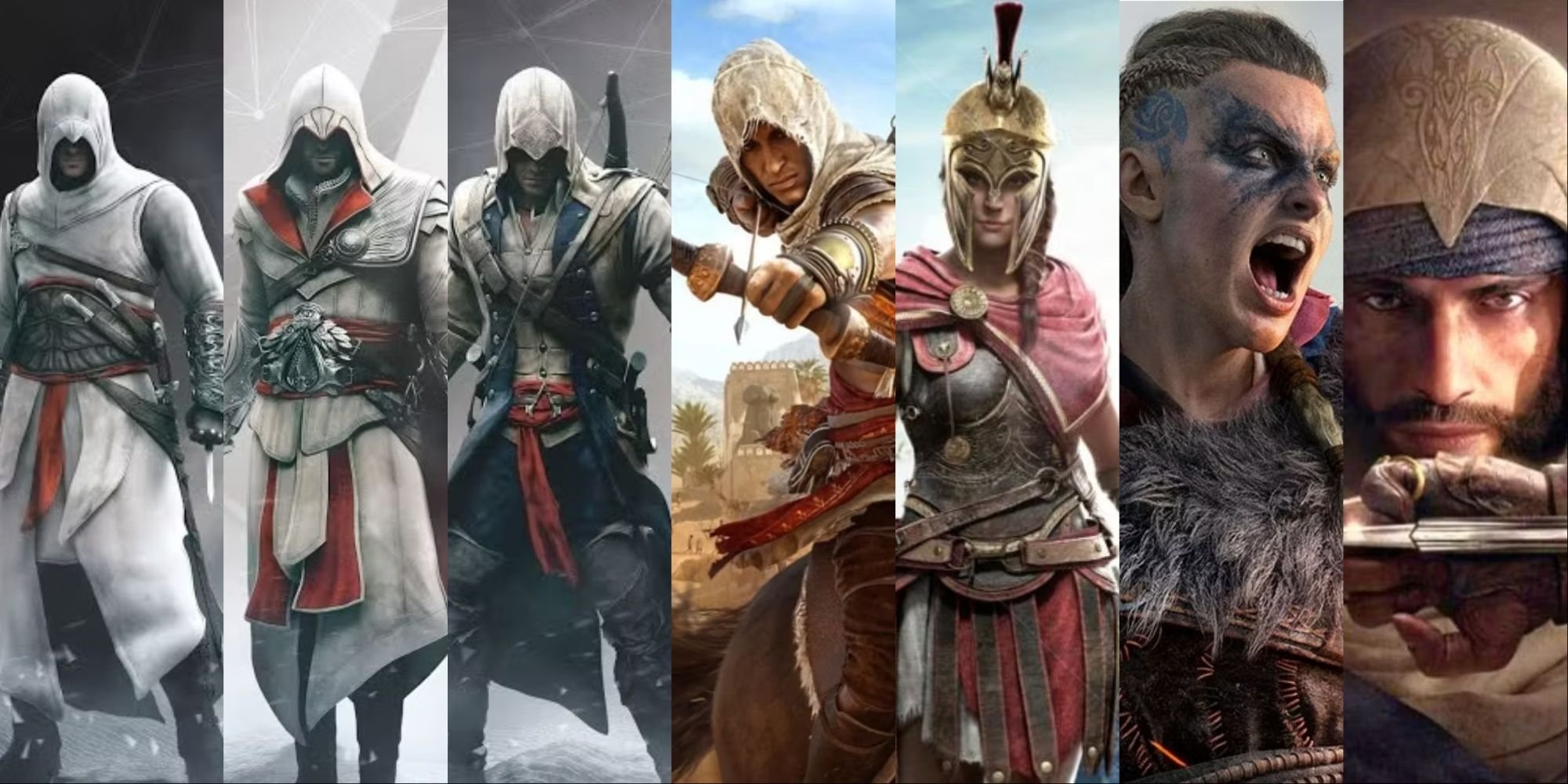
Yes, while each Assassin’s Creed game features its own story and time period, a modern-day narrative thread connects them all.
The sprawling world of Assassin’s Creed can seem daunting, especially with its many entries. You might be wondering, are all Assassin’s Creed games connected? It’s a valid question considering the diverse historical settings and protagonists each game presents.
It’s easy to feel like they’re separate adventures. However, a hidden connective tissue runs through each title. This thread ties the past and the present together in a compelling way.

Are All Assassin’s Creed Games Connected?
Yes, they are! While each Assassin’s Creed game often takes us to different time periods and features new main characters, there is a big story that ties them all together. It’s like a giant puzzle where each game is a piece. The pieces fit together to tell a much larger tale about a secret war between two ancient groups: the Assassins and the Templars. This war plays out across history, and the games show us different parts of it. But how exactly are they connected? Let’s dive into the details.
The Animus and Modern Day Story
One of the main ways the games connect is through the Animus. The Animus is a machine that allows modern-day people to explore the memories of their ancestors. This device is important for the whole story because it connects the historical adventures to a larger narrative in the present day. We follow the characters using the Animus in many games, learning more about the ancient conflict through their eyes.
Desmond Miles: The Beginning
The first few games of the Assassin’s Creed series center around a character named Desmond Miles. Desmond is captured by a company called Abstergo, which is secretly run by the Templars. They force Desmond to relive the memories of his Assassin ancestors using the Animus. This is how we experience the stories of Altaïr Ibn-LaʼAhad from the first Assassin’s Creed, and Ezio Auditore from Assassin’s Creed II, Brotherhood, and Revelations. Desmond’s story is crucial because it starts the modern-day storyline and introduces us to the central conflict between Assassins and Templars.
Desmond’s Impact
Desmond’s experiences are more than just reliving the past. They have a real impact on the modern world. As he relives the memories of his ancestors, he learns skills and knowledge that are useful in the fight against the Templars. The experiences Desmond has through the Animus also shape him and other characters in the modern day.
The Modern Day After Desmond
After Desmond’s story concluded, the modern-day storyline has continued with new characters. While these stories may not always be the main focus of each game, they still have a great importance. These stories feature the ongoing conflict between Assassins and Templars in the present, and they provide important context for the historical events.
The Pieces of Eden
Another key element that connects the Assassin’s Creed games is the presence of powerful artifacts called Pieces of Eden. These ancient devices were made by an advanced civilization known as the First Civilization. They possess incredible powers and are often sought after by both Assassins and Templars, for very different reasons.
What are the Pieces of Eden?
These artifacts can take many forms, including:
Apples: These can control people’s minds.
Swords: Some swords possess great power, like the sword in Assassin’s Creed Valhalla.
Staves: These can manipulate reality and time.
Shrouds: They can heal and bring back to life.
Tridents: Can control water and wind, as seen in the Odyssey.
The Templars’ and Assassins’ Goal
The Templars seek the Pieces of Eden to control the world and create a new world order, believing they can bring peace through force. The Assassins, on the other hand, want to keep the Pieces of Eden out of the wrong hands, so they can protect humanity from the Templars. Throughout the games, we see these groups clashing over these powerful artifacts.
The Historical Settings and Time Periods
While each Assassin’s Creed game takes place in different historical settings, they are all connected through the central conflict. Let’s look at some of the main time periods and how they relate to the larger narrative:
The Early Years: The Middle Ages and Renaissance
Assassin’s Creed (1191 AD): We start in the Holy Land during the Third Crusade, with Altaïr. This is the start of the modern-day storyline.
Assassin’s Creed II, Brotherhood, Revelations (1476-1512 AD): These games center on Ezio Auditore’s journey in Italy during the Renaissance, further developing the Assassin’s story.
Assassin’s Creed: Altaïr’s Chronicles (1190 AD): This is a prequel to the first main game, showing more of Altaïr’s early life.
The Colonial Era and Beyond
Assassin’s Creed III (1754-1783 AD): This game takes place during the American Revolutionary War, with Connor Kenway. It further deepens our understanding of the Assassins and Templars.
Assassin’s Creed IV: Black Flag (1715-1722 AD): We explore the Golden Age of Piracy in the Caribbean, playing as Edward Kenway, who becomes an important figure in the Assassin’s story.
Assassin’s Creed Rogue (1752-1776 AD): This game follows Shay Cormac, who becomes a Templar and hunts Assassins.
Assassin’s Creed Unity (1789-1794 AD): Set during the French Revolution, this game features Arno Dorian, another Assassin.
Assassin’s Creed Syndicate (1868 AD): Set during the Industrial Revolution in London, this game features twins Jacob and Evie Frye, both Assassins.
Ancient Times and Mythology
Assassin’s Creed Origins (49-44 BC): This game takes place in ancient Egypt and tells the origins of the Assassin Brotherhood.
Assassin’s Creed Odyssey (431-422 BC): This game is set in ancient Greece and introduces the concept of Isu technology.
Assassin’s Creed Valhalla (872-878 AD): This game takes place during the Viking Age in England and expands on Isu lore with a focus on Norse mythology and the return of the Pieces of Eden.
Assassin’s Creed Mirage (861-870 AD): This game follows Basim Ibn Ishaq, who is an Assassin in ancient Baghdad. This game ties into the overall story and connects to events in Valhalla.
Recurring Characters and Themes
Many characters and themes reappear throughout the Assassin’s Creed series, creating more connections between games:
The Hidden Blade: The iconic weapon of the Assassins, which has been used by many of the protagonists.
Eagle Vision: The special ability that allows characters to see their surroundings with heightened awareness. This ability is inherited through the character’s DNA.
The Creed: The core principles that guide the Assassin Brotherhood, including “Nothing is true, everything is permitted” and “Stay your blade from the flesh of an innocent.”
Certain Historical Figures: Characters from history are also recurring, even when we meet different versions of them in the simulation.
Recurring Characters: Some characters from previous games reappear in later games, creating a sense of continuity.
The First Civilization (Isu)
The First Civilization, also known as the Isu, are a powerful race of beings who lived on Earth before humans. They created the Pieces of Eden and played a key role in shaping human history. Their actions and their legacy are shown throughout all of the Assassin’s Creed games.
Isu Technology and Lore
The Isu technology is often the explanation for the more supernatural aspects of the game series. The Pieces of Eden are just some of the technologies that they created. The Isu lore is constantly being revealed over the games, giving us a deeper understanding of the world.
The Prophecy and the End of the World
Many games explore the prophecy of a great catastrophe that ended the Isu civilization and is still a threat to modern-day Earth. The Assassins and Templars each seek to control this future by preventing or causing the end of the world, respectively. This is often the goal of the modern-day story characters and what makes them enter into these simulations.
Spin-offs and Supplementary Materials
There are also spin-off games, comics, and books that connect to the main series, further enriching the overall story. These materials often provide extra insights into the lore and backstory of the characters and events within the Assassin’s Creed universe. They offer supplementary information that deepens the player’s understanding.
Examples of Spin-offs
Assassin’s Creed Chronicles: A series of 2.5D side-scrolling games featuring different Assassins in various historical settings.
Assassin’s Creed Identity: A mobile game that allows players to create their own Assassins.
Comics and Novels: They offer more details about the characters, and storylines that might not be presented in the games, but are still connected.
A Big, Interconnected Story
While the main focus of each game may be the historical setting and the individual character, they are all linked together by a common thread. The modern-day story, the conflict between Assassins and Templars, the presence of the Pieces of Eden, and the influence of the First Civilization create a story. This shows that all of the games, while they can be enjoyed separately, are also part of a large story with a rich history and exciting lore.
The Assassin’s Creed series is more than just a collection of individual games. They are all parts of a grand, interconnected narrative that spans thousands of years. From the first game to the latest, each title contributes to the larger story, creating a rich and exciting universe. Whether you’re playing as an Assassin in the Holy Land, a pirate in the Caribbean, or a Viking in England, you’re experiencing a piece of the overall saga, which is a testament to the intricate storytelling of the series.
The Complete ASSASSIN’S CREED Timeline Explained!
Final Thoughts
Ultimately, the answer to ‘are all assassins creed games connected’ is yes, though some connections are subtle. The overarching modern-day narrative binds most games together through characters, artifacts, and historical events. We must remember the Animus acts as a key tool, permitting players to experience past memories that are intertwined.
While each game tells a specific story, the threads of the Assassins vs. Templars conflict remain consistent. These connections, both direct and indirect, form a larger, more detailed universe. The games are interconnected.

