
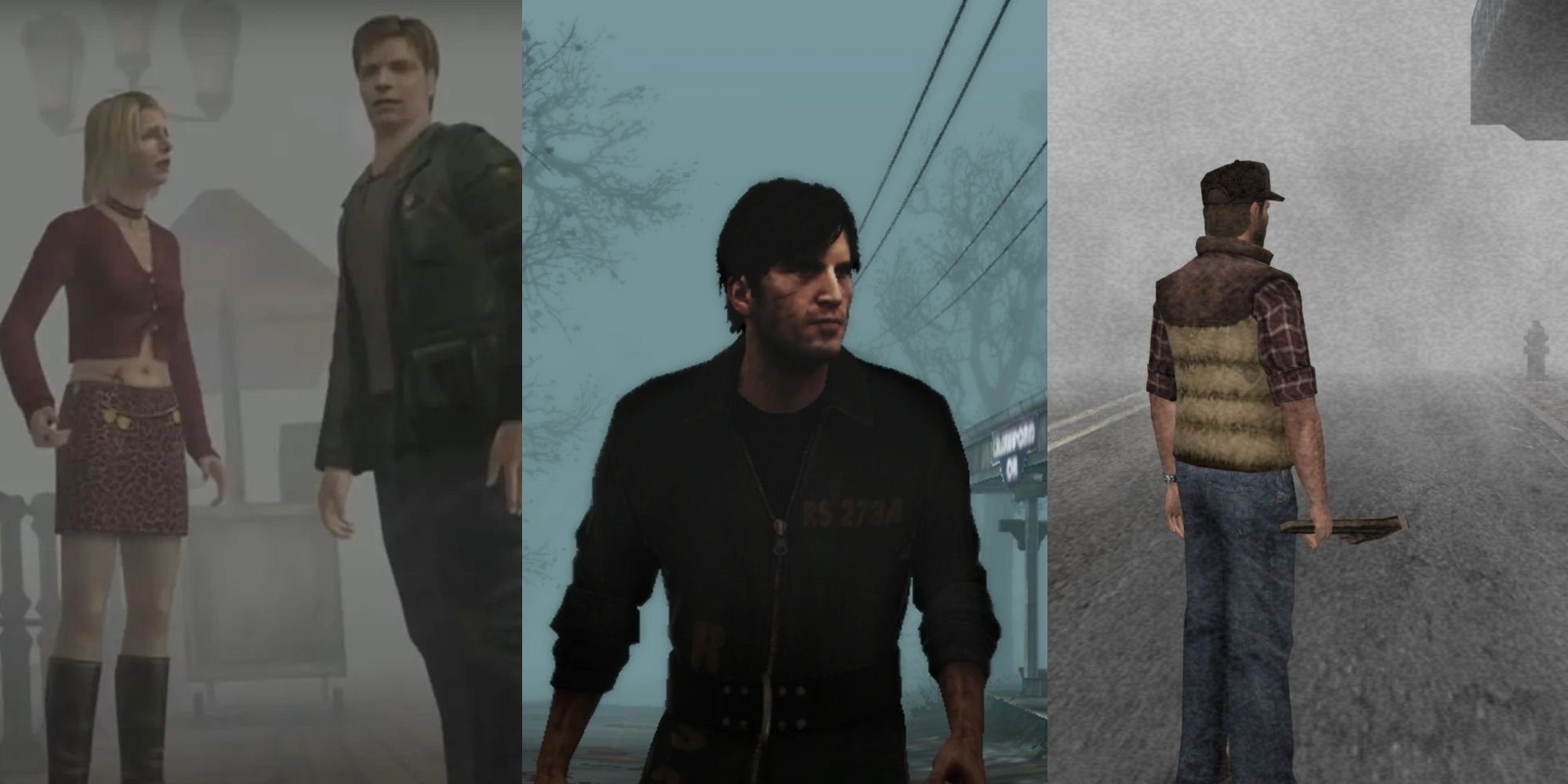
No, not all Silent Hill games are directly connected. While some share thematic elements and recurring locations, they primarily present individual narratives with different protagonists experiencing their own personal hells.
The fog rolls in, the radio crackles, and a sense of dread settles deep in your bones; it’s Silent Hill. We often find ourselves asking if the nightmarish experiences across the game series are truly linked. Are all Silent Hill games connected? That’s a question that has plagued fans for years.
Each game seems to weave its own disturbing tale, featuring unique characters facing their inner demons manifested in this terrifying town. Although familiar locations and monsters appear, these mostly act as shared motifs rather than plot connectors.

Are All Silent Hill Games Connected?
The town of Silent Hill. It’s a creepy place, full of fog, rusty metal, and monsters that look like they came from nightmares. For years, fans of the Silent Hill video game series have asked one big question: are all the Silent Hill games connected? The answer is… complicated. There isn’t a simple “yes” or “no.” It’s more like a tangled web of stories, characters, and spooky happenings. Let’s explore this misty landscape together.
The Core Silent Hill Universe
At the heart of the Silent Hill series are the first four games: Silent Hill, Silent Hill 2, Silent Hill 3, and Silent Hill 4: The Room. These games are most tightly linked. They share locations, themes, and some characters. Think of them as the core of the Silent Hill universe.
Silent Hill 1: The Beginning
The original Silent Hill introduces us to the town and its power. It follows Harry Mason as he searches for his adopted daughter, Cheryl. This game sets up many of the ideas we see later. The town isn’t just a place; it’s affected by the emotions of the people who are there. The religious cult, The Order, also makes its debut, playing a big part in the story, and it will reappear in future titles. This game is a foundation for all others in the core universe.
Silent Hill 2: A Personal Hell
Silent Hill 2 takes a different approach. Instead of a direct connection to the first game, it focuses on James Sunderland, who is drawn to Silent Hill by a letter from his deceased wife. This game explores themes of guilt, loss, and inner turmoil. While James’s story is separate from Harry’s, the town is still the same, and the monsters are still reflections of the characters’ inner selves. Silent Hill 2 shows us that the town affects different people in different ways, using the darkness within them to create its horrors.
Silent Hill 3: The Legacy Continues
Silent Hill 3 brings us back to the story established in the first game. We play as Heather Mason, Harry’s adopted daughter, now a teenager. Heather has to fight The Order and deal with their plans that are connected to the events of the first game. This game makes it very clear that Silent Hill 1 and Silent Hill 3 are connected. It also includes some very clear connections to Silent Hill 2, mainly through references to events and symbols.
Silent Hill 4: The Room: Another Twisted Tale
Silent Hill 4: The Room is often seen as a bit of an outlier, but it still fits into the core universe. You play as Henry Townshend, who finds himself trapped in his apartment, with portals to other terrifying locations. While the majority of the game doesn’t take place in Silent Hill, the town does feature in it. The game includes strong themes of isolation, stalking, and the power of disturbing locations. While it is different in structure than the other core titles, it’s still clearly in the same world.
Beyond the Core: Spin-Offs and Alternative Stories
After the first four games, several other Silent Hill titles were released. These games are where the connections get much more unclear. Some are considered spin-offs, while others tell stories in their own corners of the Silent Hill universe. Let’s look at some of them:
Silent Hill: Origins
Silent Hill: Origins acts as a prequel to the first game. It follows Travis Grady, who is drawn to Silent Hill. This game reveals some of the background of the town’s power. It also shows the beginning of events and characters that appear in later titles. While this game is a prequel, it doesn’t change the story of the original games, but it helps fill in some of the gaps.
Silent Hill: Homecoming
Silent Hill: Homecoming tells the story of Alex Shepherd, a soldier returning home to find his family missing. The game brings new themes and characters, but it keeps the core ideas of the series – monsters that reflect inner turmoil and a foggy, twisted town. While there is a connection to the town of Silent Hill, it is not considered a continuation of the core narrative.
Silent Hill: Shattered Memories
Silent Hill: Shattered Memories is a reimagining of the first Silent Hill game. The game follows a version of Harry Mason. This version of the story is very different than the original. It focuses more on psychological elements and changing the environment based on the players’ choices. While it uses the same basic plot and characters, this is a different path to the story.
Silent Hill: Downpour
Silent Hill: Downpour features Murphy Pendleton as the main character. He is a prisoner who finds himself in Silent Hill. This game stands on its own, with only the overall Silent Hill atmosphere. It explores the themes of redemption, choices, and personal demons. The game does not make any direct link to other Silent Hill games, with the exception of a mention to the Order.
Silent Hill: Book of Memories
Silent Hill: Book of Memories is a spin-off game for the PlayStation Vita. This game plays very differently, using an action-RPG style. It doesn’t focus on the town or on the story. Rather, it’s more about fighting monsters and creating your own personal story. This title isn’t part of the core Silent Hill story.
Themes That Tie the Games Together
Even if the plots of some Silent Hill games aren’t directly connected, they share several themes. These repeating ideas help create a cohesive feel for the series. The core themes are:
- Personal Demons: Many Silent Hill monsters represent a character’s fears, guilt, or trauma. The town pulls these inner demons out into the real world.
- Fog and Mist: The ever-present fog is more than just weather. It is part of the overall atmosphere of the town, creating a feeling of unease and isolation.
- The Otherworld: The town has the power to shift to the otherworld, a dark, disturbing mirror of the normal town. This version of the town shows how the town twists itself according to emotions.
- Religious Cults: The Order is a recurring element in many games. Their influence affects the town and the events happening there.
- Inner Turmoil: The games tend to explore the characters’ psychological struggles. The town often amplifies and twists these issues.
Understanding the Connections
To help visualize how connected the Silent Hill games are, we can divide them into a few categories:
| Category | Games | Connection Type |
|---|---|---|
| Core Series | Silent Hill, Silent Hill 2, Silent Hill 3, Silent Hill 4: The Room | Direct connections through characters, plot, and the town. |
| Prequel/Reimagining | Silent Hill: Origins, Silent Hill: Shattered Memories | Either directly tied to the events of the first game or presents a different version of it. |
| Independent Stories | Silent Hill: Homecoming, Silent Hill: Downpour | These games use the setting of Silent Hill but tell their own stories, with few direct connections to the other games. |
| Spin-Off | Silent Hill: Book of Memories | A very different style and story, with barely any link to any other games. |
The Beauty of the Ambiguity
The lack of clear-cut connections between all the Silent Hill games isn’t a flaw. It is intentional, part of what makes the series so compelling. The games are designed to be open to interpretation, letting players create their own understanding of the Silent Hill universe. Some of the connections are subtle, while others are very clear. It is up to us, the fans, to explore those connections and find them.
This allows each game to have its own personality while still fitting into the overall world. It means that new games can come out and not have to be tightly bound to the events of previous ones, which is a good thing for storytelling. This flexibility adds to the series’ lasting appeal.
So, are all Silent Hill games connected? Yes and no. The core series definitely shares strong connections, and other games loosely share connections through themes and locations, while some are more standalone tales. The links aren’t the point. The point is to explore the dark, twisted world of Silent Hill, one nightmare at a time, and find your own meaning.
The Complete SILENT HILL Timeline Explained! | FULL STORY RECAP
Final Thoughts
Ultimately, the precise connections between Silent Hill games remain ambiguous. Some games share recurring themes and symbols, but each presents its own unique narrative. These shared elements suggest a loose, interconnected world.
However, direct, explicit links between the protagonists and storylines of all games are scarce. So, are all silent hill games connected? The answer is complex. We can say these games feature a shared universe rather than a single, continuous story.

