
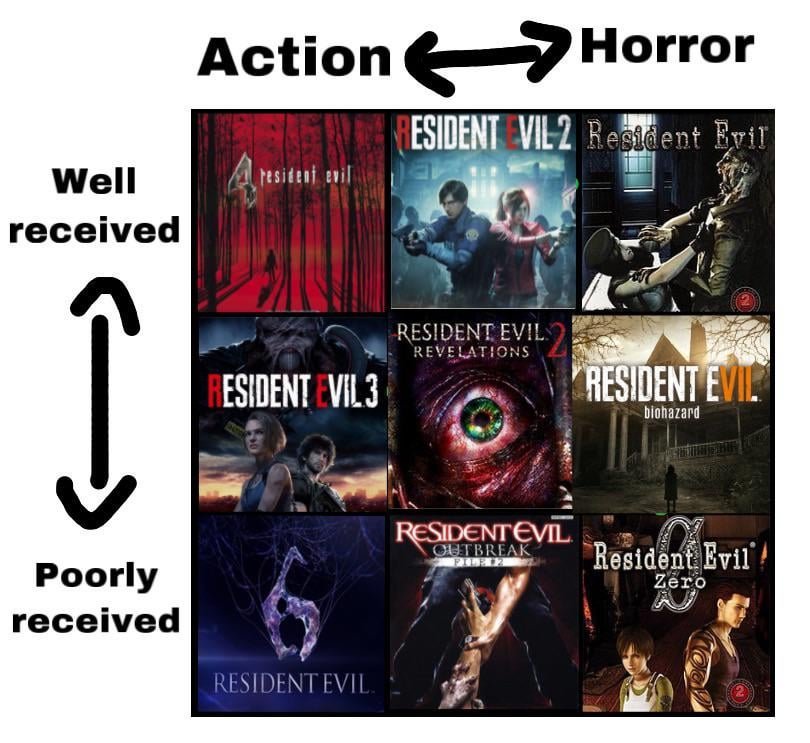
Yes, the Resident Evil games are connected through a shared universe, characters, and overarching storyline, although some spin-offs have looser ties.
Ever wondered how the events in Raccoon City relate to the horrors in Europe? It’s a fair question, since the scope of the Resident Evil franchise is vast and spans many years. Players often ask, are all the Resident Evil games connected?
The short answer is yes, they mostly are. Many games share recurring characters, bio-weapon creations, and events that build upon previous narratives. The connections might not always be obvious, but a shared continuity is present in most titles.

Are All the Resident Evil Games Connected?
Okay, let’s dive deep into the world of Resident Evil and figure out if all those zombies, monsters, and scary situations are actually linked. It’s a question that’s probably popped into your head if you’ve played more than one Resident Evil game, right? The answer, in short, is mostly yes! There’s a big, overarching story that ties almost all the main games together, like pieces of a puzzle. But, it’s not always super straightforward. Let’s break down exactly how it all fits, character by character and virus by virus.
The Umbrella Corporation: The Root of All Evil
If there’s one thing that binds almost every Resident Evil game, it’s the infamous Umbrella Corporation. This gigantic pharmaceutical company is responsible for creating the T-virus, the very thing that turns people into zombies! Umbrella is not just a background detail, they’re at the heart of the story, causing chaos and making life difficult for our heroes. Think of them as the biggest bad guys in the entire series, even when they are not physically present in a particular game. Their research facilities, experiments, and secret agendas provide the fuel for the spooky plots you see in the games. From the Arklay Research Facility in the first game to their far-flung labs around the globe, Umbrella’s reach is long and dangerous.
The T-Virus and Its Offspring
The T-virus, and all the other viruses that come from it, are the lifeblood of the Resident Evil plot. It doesn’t just create zombies; it also creates all those giant, mutated creatures that you have to battle. It all started with a search for biological weapons, something Umbrella was very keen on developing. The T-virus is the base for other viral mutations and dangerous substances, making it the granddaddy of all nasty in the world of Resident Evil.
- T-Virus: The original virus, responsible for the first outbreak in Raccoon City.
- G-Virus: A more powerful virus created by William Birkin, leading to even more terrifying mutations.
- T-Veronica Virus: Created by the Ashford family and is the base for the events in code veronica.
- Las Plagas: A parasite introduced in Resident Evil 4, which completely changes the nature of the threats.
- Mold: A biological substance in Resident Evil 7 and Village, further complicating the story and creatures.
These different viruses, and biological weapons, don’t just pop up randomly. They each tie into the overarching narrative of Umbrella’s quest for power and the various groups that oppose or use the results of their research. Each of these viruses add a layer of complexity and new terrifying enemies into the world. Each also usually features a new location and cast of characters.
Key Characters and Their Connections
Let’s talk about the characters who make the series so engaging. They aren’t just randomly placed into the games. Many of them show up in multiple games and their stories are intertwined, creating a complex web of relationships and rivalries. These characters connect the games with their direct involvement in multiple storylines. They also grow and change as the series progresses.
Chris Redfield
Chris is practically a staple of the Resident Evil world. He’s one of the original S.T.A.R.S. members in the first game, battling zombies in the Spencer Mansion. After that, he continues to fight bioweapons all over the world. He has appeared in many games including Resident Evil, Resident Evil 5, Resident Evil Code Veronica, Resident Evil 6, and Resident Evil 7’s Not a Hero DLC as well as the most recent Resident Evil Village.
Chris’s story is a long journey of him battling biological threats. He goes through loss, trauma and becomes a hardened soldier. He often takes matters into his own hands when organizations can’t deal with outbreaks. His strong sense of duty and his desire for justice motivate his actions throughout the game and are present in every installment he is featured in.
Jill Valentine
Like Chris, Jill is another original S.T.A.R.S. member. She also survives the mansion incident. She is a key character in the events of Resident Evil 3, when Racoon city is going through its darkest days. She gets caught up in multiple conspiracies, and she fights through countless dangers, showcasing her resilience and fighting skills. She reappears later in Resident Evil 5, proving that her battle against bioweapons is far from over. Jill’s character is strong, smart, and determined. She is a perfect example of what a character can go through and how much they can evolve while going through so much.
Leon S. Kennedy
Leon starts as a rookie cop in Resident Evil 2, finding himself in the middle of the Racoon City outbreak. His survival of this event, and his ability to take action make him a prime candidate to join government organizations, as he goes on to work as an agent for the US government and eventually the DSO. He’s also the main character of Resident Evil 4 where he is tasked with rescuing the president’s daughter, who is being held captive by a cult. His actions in that particular game help set up the events of Resident Evil 6 as well as the most recent Resident Evil Remake 4. Leon’s journey is one of a character thrown into a world of bioweapons and he has to step up to survive and protect others. He becomes a key figure in stopping threats worldwide.
Albert Wesker
Wesker is a very complicated villain, and he shows up in multiple games. He begins as a captain of S.T.A.R.S., but he’s secretly working with Umbrella. Wesker’s actions from the first game set him up as a powerful force of evil. His quest for power is present throughout the series. He shows up in many different situations before his final confrontation with Chris in Resident Evil 5. Wesker’s influence on events in the world is huge, he’s very intelligent, has super human abilities and is very manipulative.
Claire Redfield
Claire, Chris’s sister, is a key character in Resident Evil 2. She arrives in Racoon City to try and find her brother. She also appears in Resident Evil Code Veronica where she has to survive the T-Veronica virus. Claire is not a soldier like her brother or Leon. She is more of a compassionate character who helps the survivors. Her strong morals, and her dedication to helping others add another dynamic to the series.
Rebecca Chambers
Rebecca starts out as a medic and a very young S.T.A.R.S. member in the first game. She also appears in Resident Evil 0 where she gets caught up in the events that lead up to the incident at the Spencer Mansion. Her smarts and her knowledge of medicine make her a valuable asset, not just for the team but also in terms of furthering the story.
How the Games Connect: A Closer Look
The connections between the games aren’t just about shared characters. The overall timeline of the Resident Evil story helps us understand how everything ties together. The events in one game directly impact the events of another. These connections become a tangled web of conspiracy, survival and terrifying creatures.
The Raccoon City Incident
The Raccoon City outbreak, caused by the T-virus, is the catalyst for many subsequent games. The first three games, along with Resident Evil 0, are all deeply connected to this event. It’s the starting point for most of our favorite characters and the beginning of the end of Umbrella. This event also showcases the dangers of their experiments and sets the stage for all the biological disasters that follow.
The Aftermath of Raccoon City
After Racoon City is destroyed by the government, the series expands beyond one single location. Resident Evil Code Veronica takes players to new places. The search for Umbrella’s secrets are an important factor in Resident Evil 4 as well as Resident Evil 5. Resident Evil 5 sees the fall of Umbrella, but the threat of bioweapons remains, leading into Resident Evil 6. Resident Evil 7 changes things up and introduces a new type of biological threat with Mold but it still has ties to Umbrella. Resident Evil Village continues from where Resident Evil 7 left off and it expands on those themes. The Resident Evil Revelations games further explore the events happening around the world beyond the scope of the main installments.
Here’s a simple way to think about how some of the main games connect:
- Resident Evil 0 & Resident Evil: These introduce the T-virus and Umbrella’s experiments in the Spencer Mansion. These events lay the foundation of the entire series.
- Resident Evil 2 & 3: These show the outbreak in Racoon City and the efforts to stop it or survive it.
- Resident Evil Code Veronica: This game expands the story to different locations, further unveiling Umbrella’s history, and introduces the T-Veronica virus.
- Resident Evil 4: This sees Leon taking on new threats, with new enemies and biological weapons and setting up future games.
- Resident Evil 5: Chris and Jill take on Wesker and end the Umbrella Corporation’s legacy once and for all.
- Resident Evil 6: Characters from all parts of the series come together for a larger threat, showing a global scope of the story.
- Resident Evil 7 & 8 (Village): A new story arc begins with a different type of biological weapon (Mold) but it still is connected to past events in the games and it expands the story.
What About the Spin-Offs?
The Resident Evil universe includes more than just the main numbered games. There are also lots of spin-off titles that add to the lore but sometimes these are a little less connected. Games like Resident Evil: Revelations, and Resident Evil: Revelations 2 expand upon some of the main characters stories and give extra insight into what is happening behind the scenes. Then you also have non-canon games like Resident Evil Outbreak series which feature completely new characters in situations that exist separately from the main storyline.
It’s often the case that these spin-offs add more detail to the main story but might not be required to fully understand it. However, they do provide interesting pieces of the puzzle and give an even wider picture of the world of Resident Evil.
Remakes and Reboots
The recent remakes, like Resident Evil 2 Remake, Resident Evil 3 Remake, and Resident Evil 4 Remake fit into the existing canon while updating the gameplay and graphics. They tell the same stories, with more modern graphics and controls. They generally remain faithful to the original narratives and as such do not create any problems with series continuity. These modern remakes ensure the games are easier to access for new players, without losing touch with the original story. These remakes give newer players an easy way to experience the classics.
In conclusion, while the Resident Evil series has many different entries, they are mostly connected through a large overarching storyline. Umbrella’s experiments, the various viruses, and our core group of heroes create a web of connected events. Whether you’re playing a numbered title, a spin-off or a remake, you are playing a part of the greater story. The games work because they build upon each other and they show us a scary world that is constantly evolving.
The Resident Evil Games in Chronological Order
Final Thoughts
Ultimately, the Resident Evil games are mostly connected, sharing a core narrative. The overarching storyline involves Umbrella Corporation’s bioweapons research, directly linking many titles. Key characters and events often reappear, creating a continuous timeline, though some entries act as side stories.
Despite minor deviations, the connections are generally clear. We must acknowledge some spin-offs and remakes might alter the flow. Ultimately, answering “are all the resident evil games connected?” the answer is yes, mostly.

