
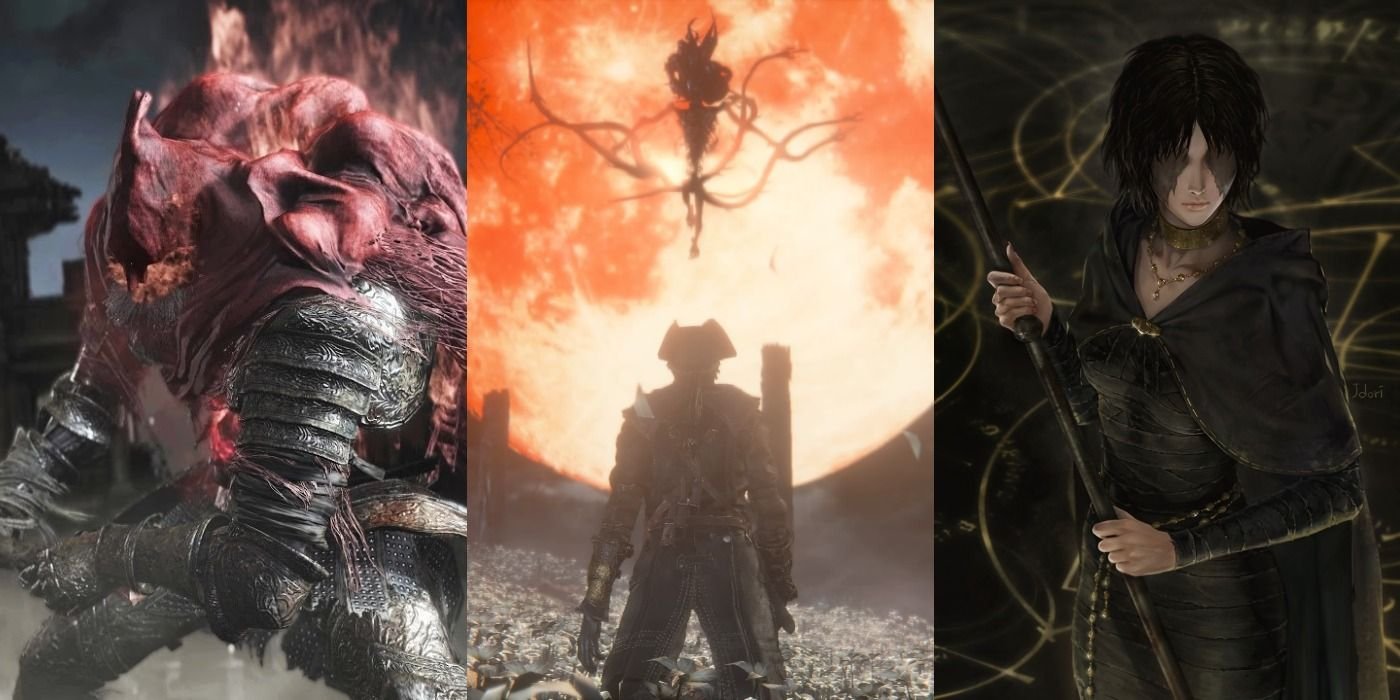
No, the Souls games, while sharing similar themes and mechanics, are not all in the same universe.
The question of whether are all the souls games in the same universe is a popular debate among fans. Each title presents its own unique lore and world. While familiar elements like the bonfire and item descriptions connect the games, the core narratives remain separate.
These subtle connections create an illusion of shared continuity. However, developers have confirmed that each title stands as its own distinct world. These worlds simply share common inspiration.

Are All the Souls Games in the Same Universe?
That’s the big question, isn’t it? If you’ve spent any time lost in the gloomy, challenging worlds of games like Dark Souls, Bloodborne, or Elden Ring, you’ve probably wondered if these epic adventures all take place in the same grand, interconnected universe. The answer, it turns out, is a bit more complicated than a simple “yes” or “no.” Let’s dive deep and explore the evidence, the theories, and what the creators themselves have said about this intriguing topic. We’ll investigate the lore, the recurring themes, and the subtle nods that connect these incredible games, trying to make sense of it all.
The Shared DNA: Recurring Themes and Concepts
Before we even consider the possibility of a shared universe, it’s important to acknowledge the common threads woven through all of FromSoftware’s Souls-like games. These aren’t just superficial similarities; they represent core design philosophies and narrative elements that define the genre.
The Cycle of Fire and Dark
One of the most prominent recurring themes is the idea of a cyclical struggle between light and dark, often represented as fire and the abyss (or something similar). In the Dark Souls games, the First Flame is a source of life, and its fading leads to decay and darkness. Players are often tasked with rekindling the flame or choosing to let it fade, perpetuating a cycle. We also see this thematic struggle in Elden Ring with the Elden Ring and The Greater Will and even hints of it in Bloodborne with the cosmic and human nature. Though not precisely the same, the idea of a power source that wanes and must be contended with, or sacrificed for, forms a bedrock to these stories.
The Undead Curse or Similar afflictions
Many of these games feature a protagonist afflicted by a condition that forces them to revive after death. This condition, whether it’s the Undead Curse in Dark Souls or the Hunt in Bloodborne, shapes the gameplay and the narrative. It allows for the challenging, death-filled experiences that players have come to expect. It also acts as a way to question what it means to live and die in these worlds. This condition often ties into the lore about the rise and fall of civilizations and it helps reinforce the idea that history may be repeating itself in some way. It creates a sense that the player is not just wandering through an abandoned world, but is part of a grand, tragic story.
The Archetypes and Recurring Characters
While not the same characters across each game, FromSoftware often employs specific archetypes. Think of the wise old smith, the tragic maiden, the enigmatic trickster or the powerful ruler. We see variations of these throughout the different games. Andre, the blacksmith from Dark Souls, and Smithing Master Hewg in Elden Ring, are examples of this. They are not the same character but they perform similar functions and serve a similar purpose within the game’s lore and world. They add a familiar feel that even though the world may be new it’s in the same sort of lineage.
Hints of Connection: The Subtle Lore and Item Descriptions
Beyond the obvious thematic similarities, there are more subtle clues that fans have latched onto, leading them to believe in a grander interconnected universe.
Item Descriptions: A Deep Dive into Lore
FromSoftware is famous for hiding bits of lore within the descriptions of items. These often reference far-off lands, forgotten gods, and ancient civilizations. Some of these descriptions seem to link different games together, though these references are often cryptic and open to interpretation. For example, some items in Dark Souls mention entities from a past age, which may have parallels to the Great Ones in Bloodborne. These could be coincidences or they could point towards the same universe but existing in different time periods. These hidden pieces of the story help to feed the theories.
Recurring Names and Places
While we won’t find the exact same locations across every title, there are names and places that seem to echo each other. For example, the idea of a ‘Great Lake’ is present in multiple titles, even if they are not the same lake. These shared names could suggest a kind of shared history or a pattern in how these worlds are shaped. There are also recurring references to certain concepts. For example, the idea of a ‘Paleblood’ is very crucial to Bloodborne’s narrative. But, the word ‘pale’ also comes up in a more general context in Dark Souls, which also mentions pale dragons, further adding to the connection.
The Role of the Gods and Higher Powers
Each game has its own unique set of powerful beings, but they often share a similar role in the lore. These gods and higher powers often have complex motives and their actions directly affect the worlds and the human lives within it. These entities are not always benevolent, nor are they easily defeated. The very existence of these gods and cosmic beings in each of the games can give the impression that the worlds are all part of a larger cosmic hierarchy. And perhaps these different pantheons of gods are just different reflections or interpretations of something more complex and intertwined.
The Case Against a Unified Universe: Differences and Separations
While there’s a lot of compelling evidence that suggests a connected universe, there are just as many reasons to believe these games exist in their own unique worlds. Let’s examine why a shared universe is not so clear-cut.
Distinct Art Styles and Aesthetics
Each game has its own specific style. The gothic horror of Bloodborne is very different from the high fantasy of Dark Souls. The large open world in Elden Ring also varies from the more linear levels of the previous games. These differences in art style and general aesthetic make it less likely that these are simply different locations within the same world. They seem like distinct creations with their own rules and tones. This does not mean these worlds can’t have a connection but they have distinct flavors.
Unique Lore and Mythologies
Each game’s lore tells a unique tale. The specific gods, historical events, and the cause of the present-day struggles are distinct in each game. The stories often have different roots, and different lessons, even if there are some shared themes. This divergence in mythologies makes it difficult to place each game in the same universe without needing to reconcile a whole lot of differences. If these are part of the same universe, the history would have to be exceptionally complicated.
Gameplay Mechanics
Although all the FromSoftware games have common gameplay roots, like the challenging combat and level design. Each has distinct mechanics that separate it from others. Bloodborne’s emphasis on aggressive, fast paced combat and use of a rally system for health regeneration is very distinct from the slower, more tactical combat of Dark Souls or Elden Ring. The various mechanics that they employ throughout the series, while drawing inspiration from one another, have unique identities. This uniqueness in mechanics creates different experiences for the player and suggests that these different worlds have their own unique sets of rules.
The Creator’s Perspective: What FromSoftware Has Said
It is important to hear what the people who made these games, have to say on the matter. After all, their perspective is important when trying to determine if a shared universe is intended.
Miyazaki’s Statements: Intentional Ambiguity
Hidetaka Miyazaki, the creator of these games, has often spoken about the thematic connections between his works. He has acknowledged the inspirations and the shared DNA, but he has been very careful not to confirm a direct, unified timeline. Miyazaki seems to prefer ambiguity, leaving the connections open to interpretation. He prefers to focus on the shared themes and the emotional impact of the stories rather than providing concrete links. This has fueled the fans with the ability to theorize and explore the possibilities for themselves.
Thematic Resonance Over Concrete Connections
Miyazaki and FromSoftware seem to prioritize thematic resonance over concrete connections. They are more interested in exploring shared concepts and emotions across the games. The games’ themes are the important common thread, rather than a shared geographical location or timeline. The shared experience is more important than a unified universe. The aim seems to be making experiences that resonate with the player, making them ask questions and make connections in their own way. They want the players to feel the weight of the worlds they are exploring, not worry about if they all belong to the same timeline.
Possible Interpretations: Multiverse, Cycles, and Spiritual Connections
If we accept that there isn’t a single, unified universe, what are some other ways to understand the shared themes and connections? Here are some popular theories:
The Multiverse Theory: Alternate Realities
One common theory is that these games exist in alternate realities. They exist in different dimensions that are similar but not the same. This theory allows for the existence of shared themes without requiring a literal, interconnected timeline. Different realities could have echoes of each other, explaining the similar archetypes and recurring themes. But, each one can operate under its own set of rules. The multiverse theory provides a flexible framework to interpret the connections between the games. It doesn’t need exact links, or timelines but it allows for parallels between them.
Cyclical Nature: Repeating Patterns
The idea of cyclical time and repeating patterns is already present in many Souls-like games. It may be the case that these games represent different cycles or iterations of the same core story. Worlds rise and fall, gods come and go, but the same core conflicts and struggles play out over and over again. Each game might be a different telling of the same basic story, separated by vast epochs of time. This explains the similarities, without implying that they share the same time period. This theory ties in very well with the recurring themes of repeating cycles.
Spiritual Connections: Similar Dreams and Themes
Rather than a physical connection, perhaps these games are connected on a more spiritual or thematic level. They are not the same place in time or even the same dimension, but they exist as echoes of one another in the same creative space. The games deal with common themes, including death, rebirth, power, and the nature of humanity. These themes may create a type of kinship between the stories, connecting them in a way that is more abstract than literal. This idea embraces the concept that we’re exploring variations of the same ideas, rather than the same universe.
The Enduring Mystery: Leaving Room for Interpretation
In the end, the question of whether the Souls games are all set in the same universe is more of an artistic question than a factual one. FromSoftware has left the connections open to interpretation, allowing players to theorize and come to their own conclusions. This ambiguity is a big part of the games’ appeal. It encourages discussions and lets each player come to their own conclusion. Perhaps that’s the real point, the mystery and the ability to interpret these worlds for ourselves. There is no right or wrong answer, just different perspectives. The journey and the theorizing might be more satisfying than getting a definitive answer. In a way, the shared experience and debate between fans is the real interconnected universe of the Souls games. It is in this place of shared passion where the true connections exist.
Elden Ring Is A Prequel to Dark Souls and Bloodborne #shorts
Final Thoughts
Therefore, the evidence points towards a shared thematic and spiritual connection rather than a single, literal universe. Subtle recurring elements and similar lore frameworks suggest a kinship. The games share ideas but not necessarily the same location or time period.
“are all the souls games in the same universe” is a question that still sparks debate. It is more accurate to say they exist within a ‘Multiverse of Souls’, with repeating cycles and similar mythologies.

