
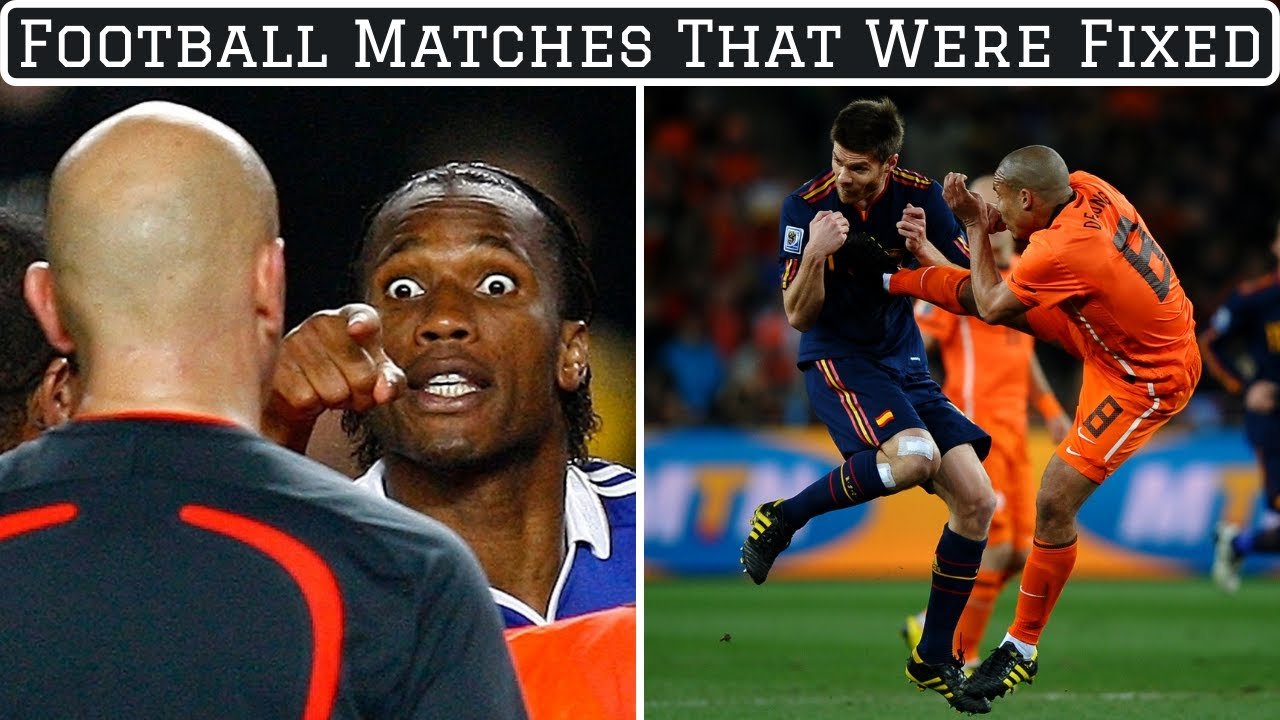
There is no widespread evidence to confirm that football games are fixed at a professional level; however, isolated incidents of match-fixing have occurred.
The roar of the crowd, the thrill of the goal, the agony of defeat—football ignites passions worldwide. But a question often lingers in the back of many minds: are football games fixed? Accusations of manipulated results have shadowed the beautiful game for decades, raising doubts about the integrity of the sport.
These whispers challenge the very essence of competition, causing fans to wonder if what they see is truly a fair contest. Such concerns understandably dent the faith people have in the sport.

Are Football Games Fixed? Unveiling the Truth Behind Match-Fixing
The idea that football games might be rigged, that the outcome isn’t always decided on the pitch, is a dark cloud that hangs over the beautiful game. It’s a question many fans ask, especially after a shocking upset or a controversial referee call. So, are football games fixed? The simple answer is: sometimes, but not as often as you might fear. Let’s dig deeper into this complex issue, looking at the ‘hows,’ ‘whys,’ and the impact it has on the sport we all love.
Understanding Match-Fixing: What Does it Really Mean?
When we talk about fixed football games, we’re not talking about a team having a bad day. Match-fixing is deliberate manipulation of a game’s outcome. Someone, or a group of people, intentionally influences the game for their own benefit. This could involve:
- Rigging the Final Score: The most obvious kind of fixing, where the scoreline is predetermined.
- Influencing Specific Events: This can be manipulating things like the number of corner kicks, the number of yellow cards given, or even the timing of goals.
- Manipulating Half-Time Results: Sometimes, only the outcome of one half of the game might be fixed.
These actions are not random. They usually involve corrupt players, coaches, officials, or even organized crime groups. These individuals try to make money from betting markets by knowing the outcome of a match before it happens.
The Motivation Behind Match-Fixing: Follow the Money
The primary driver for match-fixing is money. Lots and lots of money. Here are the common motivations:
Betting Syndicates
Global betting markets are huge. Organized crime groups or individuals exploit these markets by betting on outcomes they’ve fixed. The amounts they wager can be immense, making even small percentage profits very lucrative. They don’t just bet on the final result, they also bet on specific events within a match. This allows them to profit from many different fixed outcomes, not just who wins the game. Imagine, if they know that there will be a yellow card given in the 30th minute, they can bet on it and make money. That is the type of manipulation these groups are involved in. These syndicates are very hard to detect because they are operating in the dark and they can influence matches across many leagues and countries. These syndicates can also approach players or officials with large sums of money in order to corrupt them.
Personal Gain
Sometimes, a player might have personal financial struggles. They might take a bribe to fix a game to pay off debts or make some quick cash. For example, they might receive a sum of money to underperform during a match. It is easy to understand that when a player has financial pressure, they can easily fall into the trap of this manipulation. A lot of times, these offers are too good to refuse, and it becomes a major issue.
Team Advantages
Less frequently, teams might try to fix a game to help them achieve a certain league position or avoid relegation. It is rare because it is riskier compared to the other motivations mentioned. If someone is caught, there are severe consequences. But sometimes, a desperate team will take the risk if they feel they have no other option.
The Role of Corrupt Officials
Referees and other match officials have the power to strongly affect a game. They can award penalties, give red cards, or turn a blind eye to fouls. If they are corrupt, they can easily influence a match’s outcome, even if the players are trying their best. A dishonest referee can easily change the course of the match. Imagine that the referee decides to give a questionable penalty in the last minutes of the match, and it can instantly change the result of the match. Similarly, a red card can also put a team at a disadvantage. That’s why, it is so important to make sure that the officials have the integrity needed to fairly conduct the matches.
How is Match-Fixing Carried Out?
The methods used to fix football games are surprisingly varied and can be very difficult to detect.
Approaching Players
The most common method is for a fixer to approach a player. They usually do this by offering the player a large sum of money in exchange for their cooperation. The fixer might approach a player directly, through an intermediary, or through a teammate. Usually, these offers are very attractive to the players, and the players sometimes decide to go against the rules.
Fixers will often look for players who are struggling financially, or players who are not playing well for the team. This method is difficult to control because it can happen in private, without anyone else knowing about it.
Bribery of Officials
As we mentioned earlier, referees and other match officials have considerable power on the pitch. Bribing them is another way to manipulate games. A corrupt referee can make calls that favor a certain team or make calls that are specifically designed to create a certain scenario. They can make controversial decisions that will benefit the betting syndicate.
This method is very difficult to prevent and it is very common. There are a lot of reports of referees that get involved in match fixing, despite their high positions. This method also can happen in private, without any notice from the public, until the match occurs. After that it becomes very difficult to prove any sort of wrongdoing.
Using Inside Information
Sometimes, people not directly involved on the field can manipulate games. For instance, someone who knows a player is injured or that a key player has been suspended can provide this information to betting syndicates. This information allows them to have a significant advantage in betting on the game. These fixers can manipulate the betting markets and make huge profits.
The ‘Silent’ Fix
Sometimes, the manipulation is not obvious. A player might agree to make subtle errors or not play at their best. This form of manipulation can be hard to identify because it might be mistaken for poor performance. This subtle form of match fixing can be very hard to detect because the player is not doing anything obviously wrong. It is a very dangerous method that fixers use, because it is so hard to detect. These players are just underperforming, but they are actually doing it on purpose.
The Impact of Match-Fixing: More Than Just a Loss
Match-fixing has a serious impact on football, far beyond just a single game. It damages the trust that fans have in the game, which affects every single fan of the game.
Erosion of Trust
The first and most obvious impact is the loss of trust. When fans start to believe that games are fixed, they lose faith in the sport. They start to doubt the validity of every win, every loss, every match. They feel that they are being cheated. This damages the whole game because it impacts its credibility. If fans do not trust the results, they are going to lose interest in football. It is also demoralizing to see these kinds of actions happening in the sport you love.
Financial Losses
When match-fixing is revealed, it can result in major financial losses. Leagues can lose sponsorships and broadcasting deals, and teams can face fines or even relegation. It is very difficult to recover from these damages because it requires years to re-establish trust. This is a good reason why football is so keen to fight against these kind of manipulations.
Damage to Player Careers
Players involved in match-fixing can face lifetime bans from the sport and even criminal charges. A career that they have worked hard for their entire life can be destroyed by a bad choice. It is important that players always play fair and try to stay out of these scandals to keep their career alive.
The Undermining of Fair Play
Match-fixing directly undermines the core value of fair play. The beauty of football lies in the fact that it’s a competition where the best team should win. When games are fixed, this principle is disregarded, and it takes away from the beauty of the sport. The essence of the game is damaged, which is a loss for everyone. Fair play is an essential part of football, and it must be always protected.
Identifying Potential Signs of Match-Fixing: Looking Beyond the Obvious
Spotting match-fixing is difficult, but there are some red flags to watch for.
Unusual Betting Patterns
Sudden, large bets on unusual outcomes can be a sign that someone has prior knowledge about a match being fixed. If betting companies detect these patterns, they usually report them to the authorities for further investigation. This is one of the most reliable methods for identifying a possible match fixing case.
These large amounts are very difficult to hide. There are people who constantly monitor the betting markets and look for these unusual spikes in activity. It is difficult to completely hide these kinds of activities.
Poor Play from Key Players
If a star player or a team that is usually very good starts making silly mistakes and playing below their usual standard, it could be a sign of match-fixing, especially if it happens suddenly and without explanation. There are cases where some players are actually instructed to play below their regular capabilities to influence the results.
Refereeing Controversies
An unusual number of controversial calls or strange decisions from referees can raise suspicions. When these decisions are always going in favor of one team, it becomes easier to identify that there is something going on. There are cases of referees who have received bribes to make calls in favor of a team.
Unexplained Team Performance
If a team suddenly plays in a manner that is far from their usual form, it can be cause for alarm. This is especially true if the team has been performing well in the past and there is not a clear reason why the performance has dropped. It can be an indicator of a possible manipulation on the field.
Late Goal Spikes
An unusual number of late goals can also indicate possible manipulation. If there are a large amount of goals within the last minutes of the game, it may signal that the game was being manipulated by betting syndicates. It can be a sign that the fixers are trying to manipulate the final score of the game.
Efforts to Combat Match-Fixing: The Fight for Fair Play
Football organizations and law enforcement agencies are constantly working to combat match-fixing. They are implementing a number of strategies to keep the sport clean.
Enhanced Monitoring Systems
Betting companies now use advanced systems to monitor betting activity and detect suspicious patterns. These systems can analyze thousands of bets in a matter of seconds to detect any sort of unusual activity.
Anti-Corruption Units
Many football leagues and organizations have created anti-corruption units that are dedicated to investigating match-fixing cases. These units work alongside law enforcement agencies to identify, investigate, and prosecute those involved. These units have a very difficult job, but they are doing their best to protect the sport.
Educating Players and Officials
Educational programs are very important in helping to prevent match-fixing. These programs educate players and officials about the dangers and consequences of getting involved in match-fixing. It is important that they understand the potential damage of participating in match manipulation.
Tougher Penalties
Stricter penalties are now being implemented for those caught in match-fixing. These penalties are designed to act as a strong deterrent and discourage people from engaging in corruption. The penalties can include lifetime bans and prison sentences.
International Cooperation
Since match-fixing is a global problem, international cooperation between football organizations and law enforcement agencies is very important. They are sharing information and strategies to combat match-fixing across borders.
Can We Eliminate Match-Fixing Completely?
Unfortunately, it is very unlikely that match-fixing will ever be completely eliminated. The huge sums of money involved and the ingenuity of fixers make it a constant challenge. However, continuous monitoring, education, and stringent penalties are essential to minimize its presence and protect the integrity of the game. It is an ongoing battle, and it’s important to be aware of the issue and its potential impact.
The fight against match-fixing is a marathon, not a sprint. It will require consistent effort, collaboration, and vigilance from all stakeholders. The fans, the players, the organizations, and the authorities must work together to protect the integrity of the sport. If everyone is on the same page, we can minimize the possibility of corruption, which is essential to make the sport more beautiful.
A Fixed match caught live on TV !
Final Thoughts
So, are football games fixed? Evidence suggests manipulation is possible, but proving it definitively remains incredibly difficult. Match fixing scandals occur, highlighting vulnerabilities in the system. However, the vast majority of games are likely fair contests decided on the field.
Ultimately, the question “are football games fixed” continues to fuel debate. While suspicion always exists, solid proof is usually elusive, and fans must judge each instance.

