
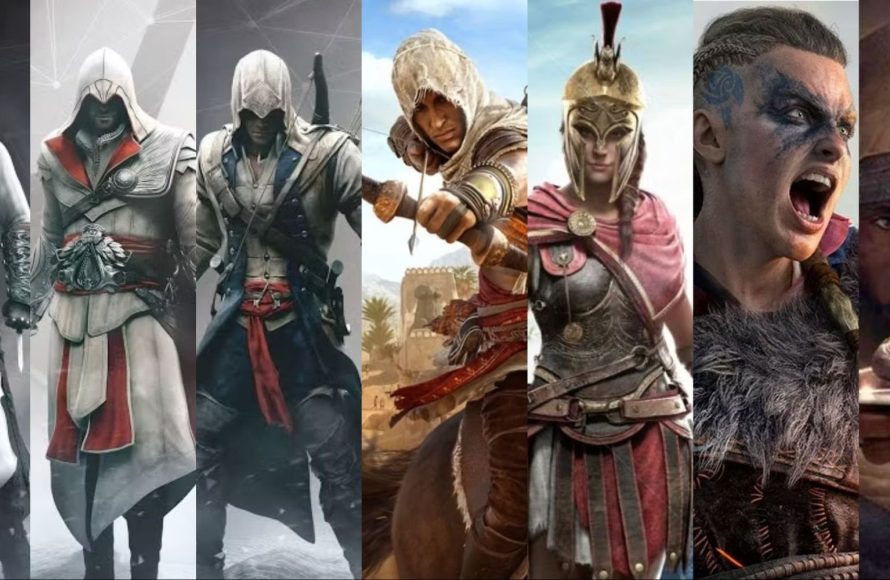
Yes, the Assassin’s Creed games are connected through a recurring narrative involving the conflict between the Assassins and Templars, and the overarching story of the First Civilization.
Many fans wonder if the games are all part of one big picture; are the assassins creed games connected? The answer, surprisingly, is yes! Though each game often focuses on a different historical setting and character, they all intertwine.
They share a common thread, the ongoing war between the Assassin Brotherhood and the Templar Order. Furthermore, the games reference a pre-human civilization, called the Isu, adding another layer of continuity.

Are the Assassin’s Creed Games Connected?
So, you’re diving into the world of Assassin’s Creed, huh? That’s awesome! Maybe you’ve played a couple of games, and you’re wondering, “Wait a minute, are these all part of the same big story?” It’s a great question because while each game takes us to different times and places, they are indeed connected. Think of it like a giant puzzle. Each game is a piece, and when you put them all together, you get a sprawling tale spanning centuries! Let’s break down exactly how these games fit together.
The Animus: Your Gateway to the Past
At the heart of it all is the Animus. This is a machine (think super-cool gaming chair) that lets people relive the memories of their ancestors. In the games, you play as a modern-day character who uses the Animus to explore the lives of different assassins from history. The Animus is the thread that ties every game together. Every time we hop into the Animus, we are visiting a different ancestor, but we are using the same technology and it is used by people in the modern-day story.
The Modern Day Storyline
While we spend most of our time exploring the past, there’s also a storyline that takes place in the present day. This modern-day storyline, featuring characters like Desmond Miles and later Layla Hassan, is important to understanding the grand scheme of Assassin’s Creed. These characters are searching for pieces of powerful technology left by an ancient civilization called the Isu. Each game continues the modern-day saga, and the events in the past impact the modern-day characters in many ways. The modern-day characters are key in our understanding of the Isu and the pieces of eden that we see in the historical timelines.
The Isu: Ancient Architects
Now, let’s talk about the Isu. They are an ancient and highly advanced civilization that existed long before humans. They created powerful artifacts called Pieces of Eden. These Pieces of Eden are super important because they appear throughout history, and both Assassins and Templars seek them for their own agendas. Each game reveals more about the Isu and their role in history and the events happening in the present time. Many of their artifacts are seen through the game, so we see they are always connected.
The Assassin and Templar Conflict: A Timeless Struggle
The core conflict in the Assassin’s Creed games is the struggle between the Assassins and the Templars. The Assassins fight for freedom and free will, while the Templars seek order and control. This conflict is a common thread that runs through all of the games. The specific members on each side are different for every time period, but the philosophical battle remains the same. The overarching story is that the templar group wants to take control of the world, by getting pieces of eden, where as the assassin groups do not want one organization to take control of the world. The pieces of eden can also affect people by mind controlling them.
Different Eras, Same Struggle
Even though the games take place in different eras, from ancient Egypt to the American Revolution, the underlying conflict between the Assassins and Templars remains constant. It’s like a historical re-enactment of the same big fight, but with different characters and different costumes. Each game gives a new perspective on this conflict, enriching the overall story and giving us an understanding of how the organization has affected the human history. Some of the most iconic assassins include Ezio Auditore da Firenze, Connor Kenway and Altaïr Ibn-La’Ahad. Each of these assassins have their own unique story that intertwines with the greater conflict of the assassin and templars.
Recurring Characters
You’ll notice that some characters pop up in multiple games, even if they’re not the main playable character. For example, you’ll see connections and hints about characters across the timeline. These recurring characters and plot points are another way that the games are connected. These characters are usually in the modern-day storyline, such as characters from the Desmond Miles trilogy, and other important modern-day characters. This is also present for important historical characters like Hytham. These characters are not always directly connected, but have an underlying influence in the storyline.
How the Games Connect Chronologically
While the games have a consistent theme, they aren’t released in chronological order. It can be a bit confusing to follow the overarching story, so it is important to know the order in which the events take place in the series. Here is a breakdown of the main games in their historical order. This does not include all the games but the main titles that focus on the main storyline of the assassin’s creed series.
Historical Order
Here’s a look at how the main Assassin’s Creed games are connected in terms of the in-game timeline, from oldest to most recent:
- Assassin’s Creed Odyssey (431-404 BCE): You play as a Spartan mercenary in Ancient Greece. This is the earliest game in the timeline.
- Assassin’s Creed Origins (49-43 BCE): You experience the birth of the Assassin Brotherhood in Ancient Egypt.
- Assassin’s Creed Valhalla (872-878 AD): You become a Viking raider in England, interacting with a hidden order.
- Assassin’s Creed (1191 AD): The first game, where you play as Altaïr in the Holy Land.
- Assassin’s Creed II (1476-1499 AD): You take on the role of Ezio Auditore in Renaissance Italy.
- Assassin’s Creed Brotherhood (1499-1507 AD): Continuation of Ezio’s story in Rome.
- Assassin’s Creed Revelations (1511-1512 AD): Ezio travels to Constantinople, connecting with Altaïr.
- Assassin’s Creed III (1754-1783 AD): You experience the American Revolution as Connor Kenway.
- Assassin’s Creed Freedom Cry (1735-1737 AD): A standalone expansion that gives a glimpse of the events in the carribean.
- Assassin’s Creed IV: Black Flag (1715-1722 AD): You become a pirate in the Caribbean. This is connected to the characters in the game 3.
- Assassin’s Creed Rogue (1752-1776 AD): You play as a Templar, Shay Cormac. This game gives the opposite perspective of the conflict, and is also connected to the events in game 3.
- Assassin’s Creed Unity (1789-1794 AD): You’re an Assassin in revolutionary France.
- Assassin’s Creed Syndicate (1868 AD): You play as twin Assassins in Victorian London.
Understanding the Connections Between Stories
While it is important to know the historical order, the story is not always connected directly through each game. The modern-day story connects each game in an overarching storyline. But for the historical story, each assassin is tied to the past in their own way. Each game has an overarching story about the conflict between templars and assassins, and we can get to experience different time periods in history. It is important to remember that each assassin character has their own unique personality and individual story.
The Pieces of Eden: A Central Theme
The Pieces of Eden also play a crucial role in connecting the games. These powerful artifacts are sought after by both Assassins and Templars, and their presence in different time periods leads to conflict and plot development. Some of these artifacts include the apple, the shroud, the sword, and the staff. We see these through different games, and they have a big impact in the story of the assassin’s creed series. Each game makes it clear that the artifacts have a purpose, and gives more context on the importance of the pieces of eden.
Do You Need to Play All the Games?
This is a common question for people new to the series. While playing all the games will give you a complete understanding of the story, you don’t necessarily have to play every single one. Here are the pros and cons of playing all the games:
Benefits of Playing the Entire Series
- Full Understanding: Playing all the games gives you the most comprehensive understanding of the overarching plot, characters, and the Isu mythology.
- Character Development: You’ll get to see the growth of recurring characters across multiple titles.
- Historical Immersion: You’ll experience different historical periods and cultures in a rich and engaging way.
- Deeper Lore: You will gain a better understanding of the lore and how everything is connected.
- Enjoyment: You will get more time to enjoy the game series, and appreciate the effort that the developers put into the game series.
Can You Skip Games?
Yes, you can definitely skip some games and still enjoy the series. If you’re just interested in a particular historical period or gameplay style, you can choose the games that appeal to you the most. However, it might be a good idea to at least know the story of the games that you skip. This will give you a better idea of the overall story, and the main characters in the series. If you skip a game, you might not get some of the context in the games you play after. It is important to look at reviews and see what people are saying about the game, that might help you choose to play certain games.
Where to Start
If you’re new to the series and a bit overwhelmed by the sheer number of titles, consider starting with one of these games:
- Assassin’s Creed II: This game is considered to be one of the best in the series, and is a good starting point.
- Assassin’s Creed Origins: A great start if you want to focus on ancient history, and the beginning of the Assassin brotherhood.
- Assassin’s Creed Valhalla: This game gives you the chance to explore the viking timeline, and ties many lore pieces together.
- Assassin’s Creed IV: Black Flag: This game is very different from the rest of the games, focusing on the pirate life.
These games are often praised for their engaging stories, well-developed characters, and refined gameplay. After playing one of these titles, you can decide if you would like to continue with other games, or focus on one of the timelines. If you find a game you enjoy, then play other games in the same timeline to find out more about that assassin, and the events of the series.
The Future of Assassin’s Creed
The Assassin’s Creed series continues to grow, with more games and stories to come. The developers continue to create games in new historical periods, and each game builds onto the existing story. We can expect to see more Isu related information, and more stories of the assassin and templar conflict. The future of the series looks very exciting, with new gameplay and storylines to look forward to.
In short, yes, the Assassin’s Creed games are definitely connected. They tell a grand, epic story that weaves through history and the present day, and it involves a struggle of philosophical differences between the templars and assassins. Each game adds a new layer to the overall narrative, making for a rich and compelling experience. Whether you decide to play every single one or just a few that pique your interest, there’s plenty to enjoy in this fantastic game series!
The Complete ASSASSIN’S CREED Timeline Explained!
Final Thoughts
Ultimately, the Assassin’s Creed games are definitely connected, primarily through the overarching modern-day narrative and the recurring Isu lore. Each game presents individual historical settings, but these always tie into the bigger picture.
The Animus technology acts as a crucial link, allowing characters to explore the past. Therefore, when asking “are the assassins creed games connected,” the answer is a definitive yes, with a rich, interconnected history.

