
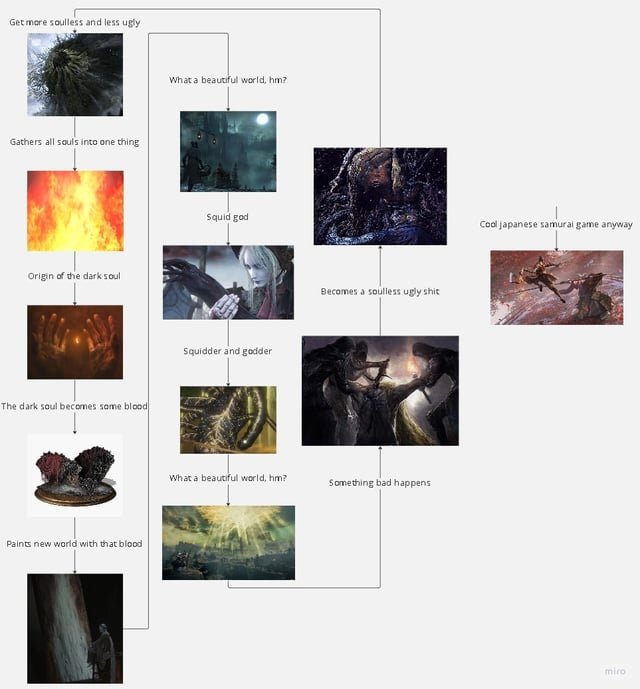
Yes, the Dark Souls games are connected through recurring themes, lore, characters, and locations, though their connections are often subtle and indirect rather than a direct sequel narrative.
Are the Dark Souls games connected? It’s a question many newcomers and seasoned players ponder. The worlds, bosses, and even certain items appear in different titles, hinting at a deeper link beyond mere coincidence. These shared elements weave a complex and intriguing narrative across the series.
The connections aren’t always obvious. Players piece together lore fragments and encounter familiar faces to grasp the larger, interconnected world. Each game expands the mythology, building upon the previous installments.

Are the Dark Souls Games Connected?
Let’s dive deep into the shadowy world of Dark Souls. These games are famous for being tough, but they also have a story that many players love to explore. One big question fans always ask is: are the Dark Souls games connected? It’s not a simple yes or no. The connections are more like whispers in the dark, hints and echoes rather than a clear, straight line. The Dark Souls series, made up of Dark Souls, Dark Souls II, and Dark Souls III, plus the remastered versions and DLC, share a lot of similar ideas, characters, and places. But the way they link together is tricky, and that’s part of what makes them so interesting!
The Shared World: A Foundation of Lore
At their core, all the Dark Souls games take place in a world touched by the First Flame and the Age of Fire. This is very important. In the beginning, there was a world covered in gray, ruled by dragons. Then, the First Flame appeared, bringing light, life, and great souls. From those souls, powerful beings rose – Gwyn, the Lord of Sunlight; the Witch of Izalith; and Nito, the First of the Dead. This is where the stories of Dark Souls games really begin.
The key idea that connects the games is the cycle of fire and dark. When the First Flame starts to fade, the world starts to fall apart. The undead appear, and the world gets twisted. The Chosen Undead in the first game, the Bearer of the Curse in the second game, and the Ashen One in the third are all fighting against this fading fire, trying to make a choice: keep the fire burning or let it die out. This cycle ties all three games together, showing a world that keeps repeating history.
Let’s look at some key shared elements:
- The First Flame: The power that makes the world work. When it fades, the world decays.
- The Undead Curse: People rise from the dead, and each time they die, they lose more of themselves. This curse drives the story of each game.
- Bonfires: The places where the undead can rest, repair, and level up.
- The Souls: The essence of life that undead collect to become more powerful.
Direct Connections and Easter Eggs
While the world itself is a shared idea, the games also have some direct connections. These are not always huge parts of the story, but they are there, hidden like little secrets. These are things that players who play all of the games notice and can appreciate.
Character Appearances
Certain characters show up in more than one game. Solaire of Astora, the friendly sun-bro, is a great example. While he doesn’t appear in person in Dark Souls II or Dark Souls III, his legacy lives on through items, references, and even similar characters with the same positive attitudes towards the sun. These links make us feel like these characters’ stories continue to affect the world.
Patches, the trickster, is a character that has appeared in many FromSoftware games including the Souls series. Patches, sometimes found as Patches the Hyena, Unbreakable Patches, or Trusty Patches, always plays the same role – the unreliable character who tricks you to take your loot. His presence in each game reminds players of the dangerous and unpredictable nature of the world.
Location Echoes
Some places from earlier games appear, or are hinted at, in later ones. Anor Londo, the grand city of the gods in Dark Souls, is a key location that appears again in Dark Souls III. Although the city is changed and damaged in Dark Souls III, the memories of that location is clearly evoked. The presence of these places reminds us that time has passed, but the echoes of old stories linger.
The presence of places like Drangleic, in Dark Souls II, doesn’t directly show up in later games, but the geographical idea of a “land beyond” that is separated from the first one is still there. The idea of linking different kingdoms and places in the Dark Souls world show that the universe is bigger than any one game. It’s a tapestry of connected locations, each with its own important story to tell. These connections allow the players to feel like they are truly experiencing a larger world through the lens of separate stories.
Item and Lore References
Items, weapons, and armor often have descriptions that offer little bits of lore. These details sometimes tie the games together, connecting items to people or places from past games. For example, some item descriptions in Dark Souls III explain the history of items found in the previous games, like the souls of Gwyn and his knights, who have since become corrupted. These small pieces of information show a lot about the events that came before, creating a bigger picture.
The existence of certain weapons and armor with specific origins in the Dark Souls universe provides additional context and helps to establish a coherent timeline. Even seemingly unimportant items found through the game can have lore details connecting them to previous games. Such references allow the players to learn more about the history of this world from multiple view points and different games. These connections are a reward for players who pay attention and are keen to the story of the Dark Souls games.
The Subtle Web: Not Always Direct
The connections between the Dark Souls games are not all obvious or straightforward. The games don’t have a single story that runs from one to the next, like in a trilogy with one main character. Instead, they share themes, ideas, and echoes that make them feel related. The creators of these games, FromSoftware, call this a “fragmented” way of storytelling, where you need to put pieces together yourself. The way the story is told is part of what makes these games so fascinating, as different players can interpret the connections in different ways.
The Concept of Cycles
The idea of cycles is a very important concept throughout the Dark Souls series. Each game deals with the same problem: the fading of the First Flame and the coming of darkness. You can find the same thing in all games, the need to make a choice to link the First Flame or let it fade away. This concept makes it feel like the characters are caught in a loop, repeating history again and again. The world doesn’t always move in a straight line, but rather keeps going back to the same point.
This idea of cyclical stories gives a greater context to why there are some returning elements, as events, both large and small, are bound to repeat. The concept of a cycle allows the writers to weave a larger and more complicated narrative that is not bound by any single story. It allows the games to feel like part of a larger history.
Themes and Symbolism
While the games don’t always have the same characters or places, they do share important themes. The struggle against decay, the fear of losing yourself, and the search for hope in a dark world, are themes that can be found in all of the games. These ideas connect all of the Dark Souls games deeply, making them a powerful example of interconnected story telling.
Symbolism also plays a key role in creating these connections. The recurring use of specific symbols, like the coiled sword, the flame, and the dark sign are present throughout the series. These symbols have a specific significance, and each appearance helps build a shared universe with a rich and interconnected lore.
Dark Souls II: The Outlier?
Of all the Dark Souls games, Dark Souls II is often viewed as being the most different. While it has the same style and mechanics as the other games, some of the links to the other two games are not as strong. This does not mean it’s completely unconnected, though. There are still echoes of themes, items, and concepts. Instead of being a direct sequel, Dark Souls II has a more parallel story, showing the same story in a different part of the world. The approach taken in this game is quite different and that is what makes it a little bit of an outlier in this series.
A Different Kingdom
Dark Souls II takes place in the kingdom of Drangleic, which feels separate from the locations in Dark Souls and Dark Souls III. While these new locations are not entirely different, they have their own distinct look and character, with their own story line. This makes it feel like a different part of the world, allowing it to present new ideas about the world and the curse that plagues it.
Focus on the Curse
The central story of Dark Souls II focuses on the undead curse and finding a way to break it, perhaps more so than the other games. This idea of looking for a solution to the problem of the undead curse gives the story a different focus from the other games, which are more focused on the First Flame. Even though the story is different, it still connects to the bigger idea of the cycle of fire and dark that connects all three games.
The Absence of Specific Characters
Unlike other games in the series, familiar characters from Dark Souls, such as Solaire, don’t appear in Dark Souls II. This lack of returning characters strengthens the feeling that Dark Souls II is in its own story and realm. The game’s story and approach are unique, which helps the players see a different part of the Dark Souls universe without making it feel completely disconnected. There are still references and hints to the other games, but their stories feel less closely tied.
The FromSoftware Approach
FromSoftware, the team behind the Dark Souls series, are known for their very specific approach to storytelling. They choose to leave many details open for player interpretation. The connections between the games are not always told directly, but rather, are presented through hints, references, and echoes. This approach encourages players to search for their own interpretation and understanding of the story and the connection between the games. This way of storytelling makes the world feel bigger and more complex.
Fragmented Storytelling
The game series uses a technique known as “fragmented storytelling,” where the story is told by small pieces of information rather than in a clear line. This style of storytelling makes the game experience engaging, and it encourages players to work to connect these pieces together. The way FromSoftware approaches storytelling is unique and makes the players want to explore every corner of the game world to learn about the story behind it.
Player Interpretation
Because the story is not directly stated, there is room for many different interpretations. Players can form their own ideas about the connections, based on the pieces of information they find. The amount of player involvement in the storytelling creates a unique community where players share their own stories and interpretations. This helps the players feel more involved in the story as a whole, since they are part of constructing the story themselves.
Ultimately, the question of whether the Dark Souls games are connected isn’t as simple as a yes or no answer. They are connected through a complex web of shared themes, repeating cycles, and subtle references. While each game tells its own story, they all take place within the same world, affected by the same underlying rules and forces. The nature of these connections is deliberately vague, leaving room for player discovery and interpretation. This makes the world feel more real, as the story does not unfold in a simple way, but requires the player to be engaged in the narrative.
Elden Ring Is A Prequel to Dark Souls and Bloodborne #shorts
Final Thoughts
The Dark Souls games possess a fascinating, subtle connection. Shared lore elements, character reappearances, and recurring themes strongly suggest a shared universe, albeit one twisted and fragmented by time. These echoes definitely link each game.
While direct sequels aren’t always present, the cyclical nature of the world is a key narrative thread. This reinforces that ‘are the dark souls games connected’ is more a question of interconnected destinies within a repeating pattern, rather than a simple timeline.

