
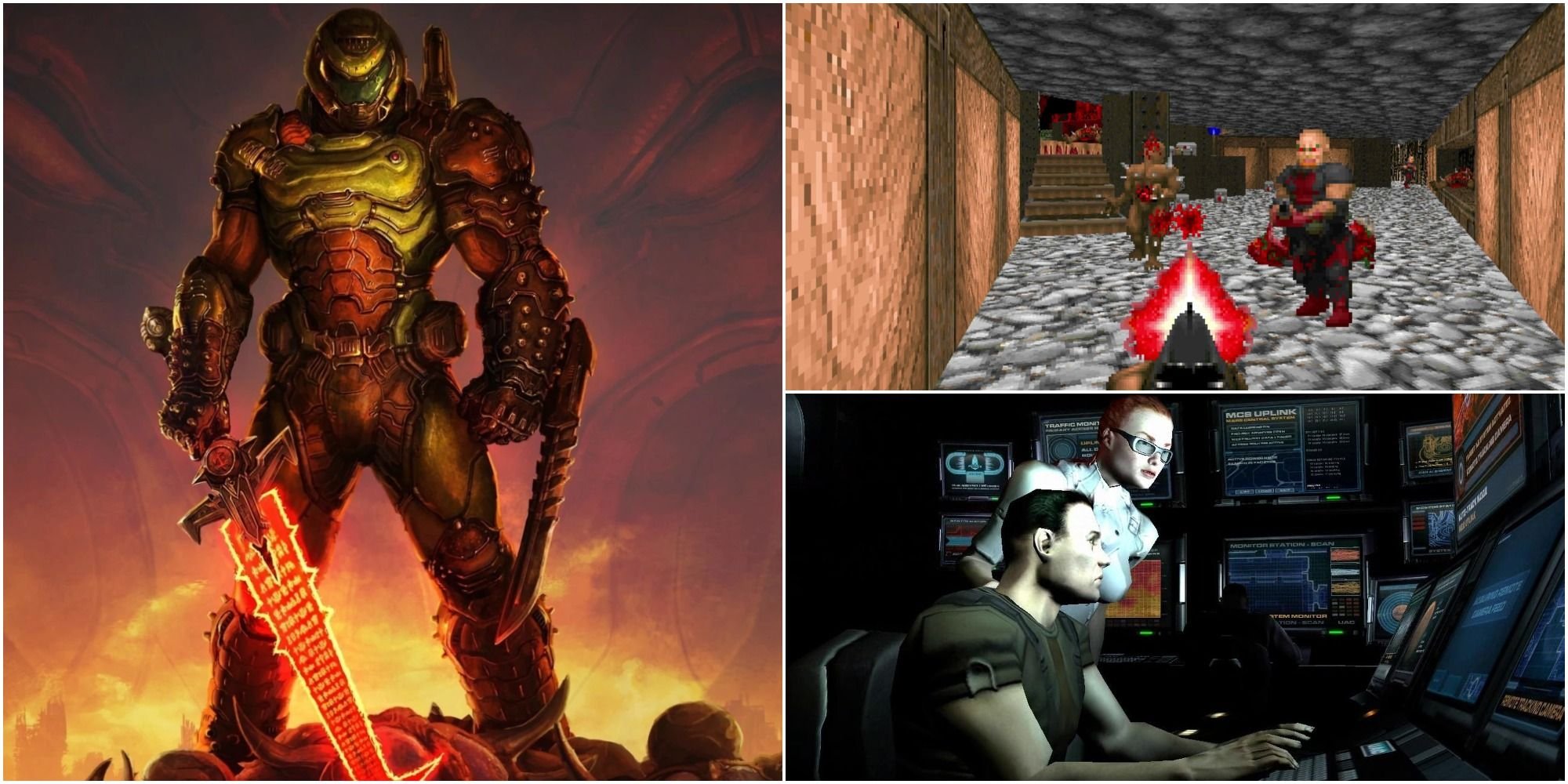
Yes, the main Doom games are connected through narrative threads, character appearances, and lore implications, though sometimes subtly and across different timelines.
Ever wondered if all that demon-slaying across different planets and dimensions actually fits together? Many players ponder, are the doom games connected? The answer isn’t always straightforward, considering the series’ long history and occasional reboots.
We delve into the lore, examining the connections between the original titles, Doom 3, and the more recent reboots, including Doom 2016 and Doom Eternal. You’ll see how elements like the Doom Slayer’s origins and the UAC’s actions weave throughout the franchise.

Are the Doom Games Connected? Exploring the Complex Doom Timeline
Okay, let’s dive deep into the fiery world of Doom! We all love blasting demons, but have you ever wondered if all those Doom games are actually linked together? It’s not always as clear as a shotgun blast to the face, that’s for sure. The short answer is: yes, mostly! But, it’s a bit of a rollercoaster ride with different timelines and interpretations. So, buckle up, because we’re about to explore the complex connections that tie the Doom games together.
The Classic Doom Era: The Start of It All
Let’s begin our journey way back with the games that started it all. We’re talking about Doom (1993), Doom II: Hell on Earth (1994), and Final Doom (1996). These are often called the “classic” Doom games. These games clearly form a direct narrative.
Doom (1993): The Mars Uprising
In the original Doom, our hero, the Doom Slayer (though he wasn’t called that yet), is a space marine stationed on Mars. When a teleportation experiment goes horribly wrong, demons from Hell pour through, turning the Martian base into a demonic playground. Our job? Clean up the mess, blast those demons back to where they came from, and save the day. This game laid the foundation for everything that followed, and established key elements like the demonic invasion from hell. The story is simple: hell comes to mars, you, a space marine, fight demons. This is where it all started, a very linear story about a single space marine battling hell itself.
Doom II: Hell on Earth (1994): Earth’s Demise
Doom II picks up right after the events of the first game. This time, the demonic invasion has reached Earth. Our hero, fresh off his Martian victory, must now fight his way through hordes of demons tearing up human cities. It’s bigger, it’s badder, and it’s definitely more intense. The core mechanics stay the same: fast-paced combat against hordes of hellish foes. It follows the first game directly, continuing the story and making the link to the previous adventure clear. This time, the battle is on earth, which emphasizes the global scale of the demonic threat.
Final Doom (1996): Two More Challenges
Final Doom isn’t a sequel in the traditional sense. It’s actually two separate 32-level episodes, The Plutonia Experiment and TNT: Evilution. While these aren’t a direct continuation of the storyline of Doom II, these episodes can be placed within the same universe and timeline. They feature the same gameplay as the previous games, with players engaging in high-octane battles with demonic enemies. They are still very much connected by overall gameplay style and universe setting. The stories here are independent, but they fit inside the overall narrative arc of demons attacking, and us fighting them. It’s like a side quest within the main storyline.
The Divergence: Doom 3 and a New Path
Here’s where things get a bit more complicated. Doom 3, released in 2004, is a reimagining of the original Doom. It’s not a direct sequel and doesn’t fit seamlessly with the previous games timeline. Instead of the fast action, Doom 3 focuses more on a darker and horror-focused gameplay experience. The story is a reboot, exploring the original story’s events but with more depth, it’s a retelling and a re-imagining of the events of the original 1993 Doom. This also brought a more suspenseful and terrifying feel to the franchise, making it very different from previous entries. Many consider Doom 3 to exist in its own isolated continuity. The game focuses more on a horror atmosphere, making it feel distinct from other games.
- Reimagined Setting:Doom 3 presents a more detailed and horror-focused version of the Mars facility and the demon invasion.
- Different Pace: Unlike the fast-paced gameplay of the classic Doom games, Doom 3 has a slower, more atmospheric pace that emphasizes suspense.
- New Story Elements: The story features more character development and a more intricate narrative than the previous games.
The Modern Era: Doom (2016) and Doom Eternal
Now we jump to the modern era of Doom with the 2016 reboot, simply titled Doom, and its direct sequel, Doom Eternal (2020). These games are a new continuation, not from Doom 3 but from the classic Doom universe, essentially, they pick up on the ideas first proposed by the classic games. These are much more directly related to each other and follow a more linear narrative than the previous releases. They aren’t a direct continuation of Doom II, but they take place in the same larger universe and follow the same Doom Slayer. They do not contradict the original games, making it a type of continuation.
Doom (2016): The Slayer’s Return
Doom (2016) reboots the series, bringing back the fast-paced, intense action of the classics while adding modern mechanics. It reintroduces the Doom Slayer, who has been awakened after being dormant for an unknown amount of time, and puts him right back into the demonic fray. The story also expands on the demonic invasion, adding more backstory to the demonic forces and the origins of the Doom Slayer. The setting again returns to Mars and Hell, and introduces new factions and new characters. This reboot was not a simple remake. Instead, it was a modernization of all the features that made the classic doom games enjoyable. This brought a new generation of players into the world of Doom. The game successfully updated the core gameplay elements while still retaining what made the classic games special.
Doom Eternal (2020): The Earth is Now A Battleground Again
Doom Eternal is the direct sequel to Doom (2016), this game goes bigger, better, and more chaotic. It expands on the lore of the Doom universe, revealing more about the Doom Slayer’s past and the cosmic forces at play. The story is more developed, connecting the Doom Slayer’s origin with the fight against hell. The game also introduces new weapons, new enemies, and new abilities. In this, the demons have returned to Earth, and the player must fight across multiple locations including earth, hell and other dimensions. It’s a very direct continuation of the events of the 2016 reboot, establishing a clear timeline between them, with the game also expanding the lore established in 2016. This provides a comprehensive, deep storyline for the Doom Slayer. This connection makes it clear that both 2016 and 2020 games are part of the same modern storyline, with Doom Eternal acting as a direct sequel.
Doom 64: A Forgotten Link
Let’s not forget about Doom 64, originally released on the Nintendo 64 in 1997. This game is a direct sequel to Doom II, with the story showing another attack, this time on a space station. It is considered a true sequel to Doom II and bridges the storyline gap between Doom II and the modern Doom games of 2016 and beyond. It keeps the core gameplay of classic Doom but with new maps and new enemies and provides an intermediary between the old games and the modern ones. The story sets up the Doom Slayer’s later entombment and eventual reawakening. Doom 64 acts as a bridge between the classic and modern eras of Doom, confirming the continuity of the Doom Slayer across different games. This also provides more information on Doom Slayer’s history, that the modern games continue to expand on.
The Multiverse Theory and Connecting it All
Okay, here is where the fun really starts. Many fans like to think about all these different Doom stories as part of one large, sprawling multiverse. Think about it like this:
- Classic Timeline: The original Doom, Doom II, Final Doom, and Doom 64 form a direct line, showcasing the start of the Doom Slayer’s fight against Hell. These are all interconnected and tell a continuous story.
- Rebooted Timeline: Doom 3 exists in its own universe, a re-telling of the first Doom, with horror elements. It is not directly connected to the main timeline.
- Modern Timeline: The 2016 Doom and Doom Eternal introduce new plot threads, but connect directly to the classic universe, specifically to the Doom Slayer’s history and exploits as seen in both the classic games and Doom 64. They continue the Doom Slayer’s story, but not necessarily the story that immediately follows Doom 64.
This way of thinking explains why some things are different. It also allows all the games to exist within a larger, cohesive structure. It keeps it all in the family, while allowing each individual story to also be its own unique experience. Think of it like different branches of a tree, with all starting from the same root but going in different directions. It gives us different interpretations of the same events, different angles to look at the stories of Doom Slayer.
So, Are They Connected? The Final Verdict
So, let’s bring it all together. Are the Doom games connected? Yes, but not always in a straight line. The classic games are connected, Doom 3 is a reboot, and the modern games continue the narrative and expand on the ideas of the classic story. Doom 64 bridges the gaps, confirming the Doom Slayer as the main character. The Doom universe is like a big, messy family, with different branches, timelines and re-tellings of the same core concept, the player fighting demons. The overall connection is this: The Doom Slayer exists across all of these timelines, fighting the same enemies in slightly different settings. And, that’s why Doom is so great, because the lore is deep and there are so many stories to explore. Whether you love classic fast-paced action, or a more modern, lore-filled adventure, Doom has something for everyone. They all share a core DNA of fast action and demons, making each game feel like part of one larger whole. We just have to accept that some games are more closely related than others. So grab your shotgun, pick your favorite timeline, and get ready to slay some demons!
The Complete Doom Timeline – From Doom to Doom Eternal
Final Thoughts
The Doom franchise presents a complex narrative, spanning different timelines and dimensions. The original games have loose connections, focusing more on atmosphere than a tight story. The newer titles, especially Doom 2016 and Eternal, directly build on past events.
So, are the doom games connected? Yes, they generally are, forming a multiversal saga with recurring characters and demons. Certain games act as reboots or reimaginations, while others directly continue the established narrative. Players must delve deep to find explicit plot threads.

