
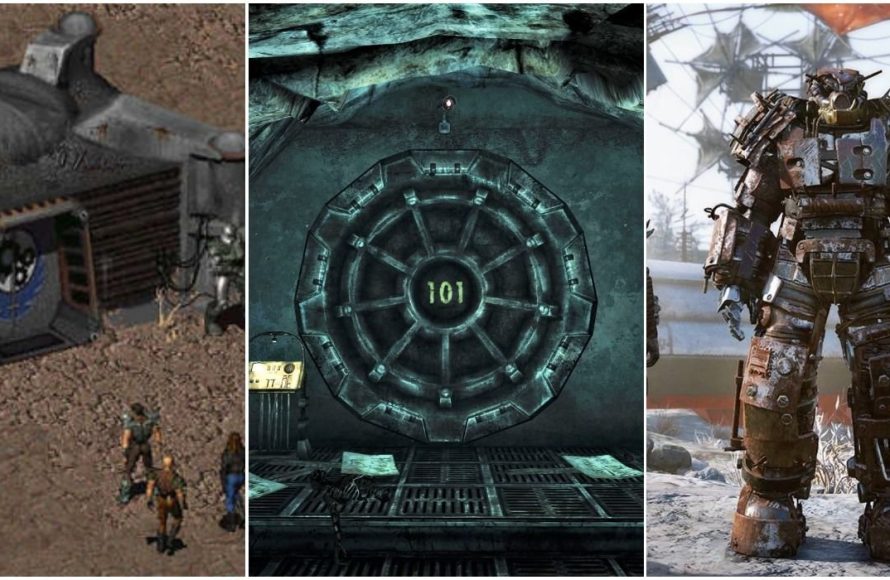
Yes, the Fallout games are connected through a shared world, lore, and recurring factions, though each title often features a distinct regional setting and main storyline.
Have you ever wondered how the expansive world of Fallout ties together? Many players ask: are the Fallout games connected? The short answer is yes. They all exist within the same post-apocalyptic universe.
Each game builds upon a common foundation. This includes the Great War, the vaults, and the presence of groups like the Brotherhood of Steel. While each story is unique, these elements weave them together.

Are the Fallout Games Connected?
Have you ever wandered the post-apocalyptic wastelands of a Fallout game and wondered if it’s all one big story? It’s a question that many players ponder, especially those new to the series. The answer isn’t a simple yes or no. Instead, it’s more like a “yes, but…” kind of thing. Think of it like a bunch of puzzle pieces that fit together to make a larger picture, but each piece also has its own distinct story. Let’s dive in and explore the ways these games are linked, and the ways they are not.
The Shared World and Lore
At the core of it all, every Fallout game is set in the same world, albeit at different times and in different locations. This shared world is what provides the foundation for their interconnectedness. This shared world follows an alternate history where the world’s technological progress took a different route, focusing more on atomic power and retro-futurism. Then, a nuclear war in 2077 turned that world into the desolate place we explore in the games.
The Great War: A Common Starting Point
The defining event of the Fallout universe is the Great War. This worldwide nuclear conflict is the event that changed the world, leading to the creation of the wastelands and the post-apocalyptic settings we explore in each game. All Fallout games reference the Great War as the moment when the old world ended and the new one began. We learn about the events leading up to the war, like the resource wars, through various pieces of information scattered in each game. These references help connect the games. They ensure all the games are related to one another in some way.
Vault-Tec’s Experiments
Another significant connection is Vault-Tec. This company was responsible for the construction of the underground vaults that were meant to save people during the Great War. However, many of these vaults were not designed as places of protection, but as locations for social and scientific experiments. Each vault serves as a mini-story, showing how people adapted to post-nuclear life under extraordinary conditions. Through vault terminals and scattered data, we learn about how these vaults were used. Some vaults are present in multiple games, and the information found on them enhances the overall understanding of Vault-Tec’s goals.
- Vault 11: Explored in Fallout: New Vegas and mentioned in other games. Its dark history of democratic sacrifice adds to the grim theme of Vault-Tec experiments.
- Vault 87: A major location in Fallout 3 and mentioned elsewhere. This vault shows what happened when FEV was used in humans, creating super mutants.
- Vault 111: The starting vault in Fallout 4. Its history gives an insight into cryo-sleep.
The appearance of vaults and references to Vault-Tec within each game tie them together in the narrative timeline.
Key Factions and Groups
Several factions and groups appear in multiple Fallout games, further solidifying their connections. These factions, though sometimes having differing goals and presence in different regions, act as common threads throughout the series.
- The Brotherhood of Steel: This group believes in preserving pre-war technology. They are a significant force in several games including Fallout 3, Fallout 4, and Fallout: New Vegas, although they have regional differences. For instance, the East Coast Brotherhood is different from the West Coast Brotherhood.
- The Enclave: This group is made up of the remnants of the pre-war US government. They appear as antagonists in Fallout 2 and Fallout 3, and are also referenced in other games, showing their presence and influence across the country.
- The Super Mutants: Created by the Forced Evolutionary Virus, Super Mutants are a common enemy across all the games. The lore behind their creation and different types of mutants is consistent across the series.
These factions add a sense of consistency to the setting. They show how different groups try to survive and build power in the post-apocalyptic world.
Loose Connections and Standalone Stories
Even with these strong connections, it’s important to understand that the Fallout games are not direct sequels to one another. Each game often introduces a new protagonist, a new region to explore, and a new main story. Think of them more like connected short stories in an anthology, each with its own beginning, middle, and end, but all part of the larger Fallout universe. This approach allows new players to jump into any game without needing to know everything from the previous ones.
Different Protagonists and Regions
Each Fallout game presents a different main character with a new journey to experience. These protagonists are called “Vault Dwellers”, “Chosen Ones”, “Couriers”, etc. They each live in different parts of the country or wasteland. Each game is set in a different location, from the West Coast in Fallout, Fallout 2, and Fallout: New Vegas to the East Coast in Fallout 3 and Fallout 4. This means that while there might be some overlap in factions or lore, the main stories of these games are separate adventures. The different locations also give each game a unique feel.
- Fallout 1 & 2: Explore California and the surrounding areas.
- Fallout 3: Takes place in the ruins of Washington D.C.
- Fallout: New Vegas: Is centered around the Mojave Desert and Las Vegas.
- Fallout 4: Is located in Boston and the surrounding Massachusetts area.
This makes each game feel fresh and unique, while keeping in line with the overall feel of the Fallout world.
Timeline Differences
The Fallout games are set at different times after the Great War. This allows them to tell their own stories without being directly dependent on what happened in a previous game. Although they all share a common history, the gap between games can be decades or even centuries.
- Fallout 1: Takes place about 80 years after the Great War (2161)
- Fallout 2: Happens roughly 160 years after the War (2241)
- Fallout 3: Is set around 200 years after the War (2277)
- Fallout: New Vegas: Starts in 2281, very close to the events of Fallout 3 in the timeline.
- Fallout 4: Begins in 2077, jumps to the year 2287
This helps explain why some characters or factions might be more or less powerful in different games. It also provides room for each game to make a significant impact on the wasteland.
References and Easter Eggs
While the Fallout games are not direct sequels, they frequently reference one another through easter eggs. These easter eggs can be subtle nods or direct mentions, making for fun finds for long-time fans. These references help to connect the games, encouraging players to think about the bigger picture of the Fallout universe. They also add a layer of fun for observant players who recognize the references.
Character Mentions
Characters from one game might get a mention in another, even if they don’t physically appear. This makes the world feel much more connected, since it implies that the events of the earlier games aren’t forgotten. For example, the protagonist of Fallout 2, called the “Chosen One”, is mentioned in Fallout: New Vegas. These little nods bring past stories into current ones.
Location References
Certain locations, such as areas of the Capital Wasteland from Fallout 3, can be mentioned in other games. This helps players feel that the entire Fallout world exists in the same reality. These references give the game a sense of history and continuity. They help make the world feel lived-in and consistent.
Object Recognition
Objects and items, such as special weapons, clothing or even specific brands like Nuka-Cola, can be recognized between different Fallout games. This provides a sense of continuity within the series’ universe. These repeated items are a nice reminder that each game is part of a bigger picture. They make each game feel like a piece of the wider Fallout world.
Fallout 76: An Exception
Fallout 76 is a bit of an exception because it’s a prequel, set before any of the other main Fallout games. This means it doesn’t have any direct ties to the events or characters of those games. However, it does share the same world and lore, showing the early days of the wastelands.
Set Before the Other Games
Fallout 76 is set in 2102, just 25 years after the Great War. This makes it the earliest point in the series timeline. You see the world in its very first stages of post-nuclear recovery. This creates a unique view, because there are no established factions or settlements.
Focus on World-Building
Because Fallout 76 is so early in the timeline, it focuses more on establishing the early post-nuclear world and setting the scene for the rest of the games. It introduces some of the early factions and provides the backstories for future game locations. It expands upon the overall lore of the world.
The Overall Connection
So, are the Fallout games connected? Yes, they are, but in a way that allows each game to have its own standalone story. They share the same universe, lore, factions, and events like the Great War. They are also set in the same universe and have some small connections here and there. Each game is like a different chapter in a really big book, all contributing to the Fallout story and universe.
When you play a Fallout game, you’re always exploring some part of the same world. Even if the characters or locations are new, the world and background are familiar. Each game adds its own spin, but always stays true to the idea of the Fallout universe.
Whether you are new to the series or a seasoned wanderer, this connected world offers an incredible experience of discovery.
The Complete FALLOUT Timeline Explained!
Final Thoughts
The core narrative of Fallout games connects them through shared history, factions, and recurring themes, despite their different locations and protagonists. You will see the Brotherhood of Steel in multiple entries, for example. Each game presents a standalone story.
While each game is separate, they still exist within the same universe. Therefore, the question “are the fallout games connected” has a nuanced answer. They are linked by lore, but not directly by a continuing story. So, the world is connected, but not the characters.

