
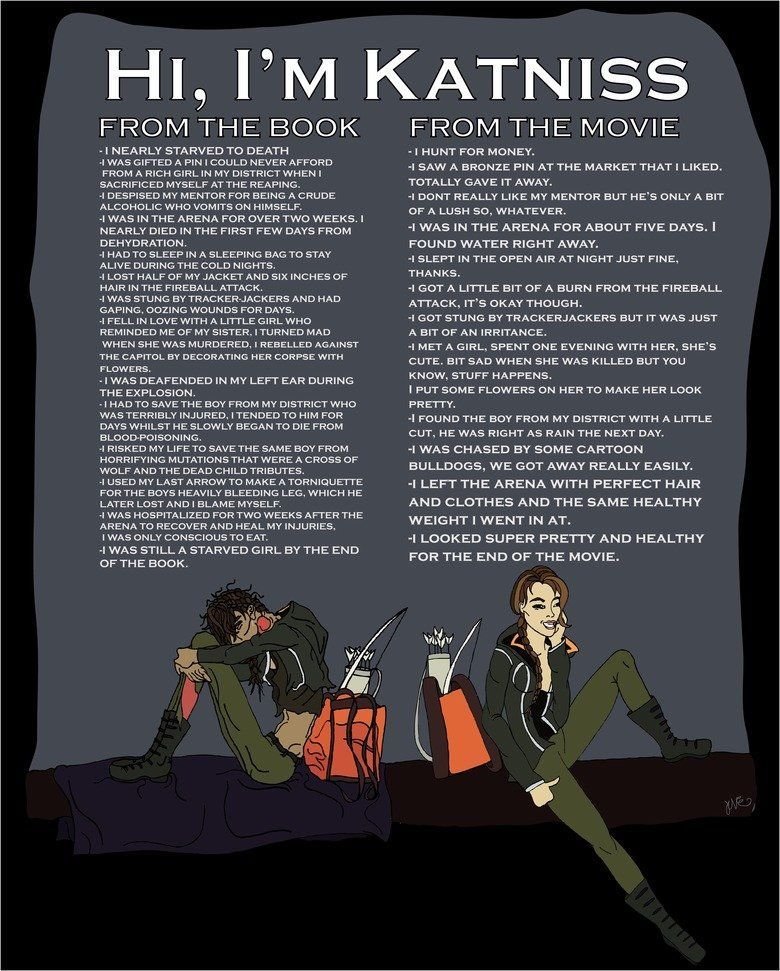
The Hunger Games books are widely considered better than the movies due to their richer internal monologue and deeper character exploration.
It’s a debate as old as adaptations themselves: are the Hunger Games books better than the movies? Many fans find that the source material provides a more profound experience. The internal thoughts and complex emotions of Katniss, for example, are much more clearly presented in Suzanne Collins’ writing.
These internal monologues give a level of understanding not easily captured on screen. This results in a richer, more nuanced reading experience. The books also often dive deeper into the world of Panem, offering details that are unfortunately glossed over in the cinematic adaptations.

Are The Hunger Games Books Better Than The Movies?
The Hunger Games, a thrilling tale of survival and rebellion, has captivated audiences worldwide in both book and film format. But a question that often sparks debate among fans is: are the hunger games books better than the movies? It’s a complex question, since each version offers unique strengths and weaknesses. Let’s dive deep into this arena, examining different aspects to see which format truly wins the hearts of readers and viewers.
Deeper Immersion: The Power of the Written Word
One major advantage books hold is their ability to create a deeper level of immersion. When you read, you’re not just watching a story unfold; you’re actively participating in it. You’re seeing the world through the character’s eyes, feeling their emotions, and understanding their thoughts in a way that a movie, with its visual limitations, can’t always replicate.
Inside Katniss’s Mind
Take Katniss Everdeen, for example. In the books, we have access to her inner monologue. We know her doubts, her fears, and her calculations, which are crucial in understanding her motivations. We see her weighing the risks and benefits of each choice. This internal dialogue makes her feel like a real person, a complex character navigating a brutal world. The movies, while showing us her expressions and actions, can’t fully convey the complexity of her thoughts. Her strategic thinking, her quiet rebelliousness – so much of it is captured through the book’s narrative.
Think about the moments where Katniss is struggling with grief or anger. These moments are powerfully written in the novels, allowing us to feel the depth of her pain. We can almost feel her heartache as she thinks about Prim, Gale, and her other loved ones. These are difficult emotions to capture on screen without feeling overly dramatic. The books often handle them with more nuance. It’s this deeper understanding of Katniss that many readers feel is missing from the movies.
World-Building Through Description
Another area where books shine is their ability to build a rich and detailed world. Suzanne Collins, the author of the Hunger Games, meticulously describes Panem, from the opulent Capitol to the impoverished districts. She paints a vivid picture of the people, the landscapes, and the social structures. This allows readers to immerse themselves in the story’s setting. We have a clear sense of the contrast between District 12 and the Capitol, a contrast that is not just visual but also felt through our reading experience. In the books, we learn about the daily life in the districts, the food they eat, the jobs they do, the challenges they face. These details, often glossed over in the films for pacing purposes, add a layer of richness and complexity to the world. The movies do an excellent job visually showcasing the different locations, but they can’t give us the same depth of cultural understanding that the books do.
Visual Spectacle: The Magic of Movies
While the books have the edge in internal characterization and in-depth world-building, the movies excel in creating stunning visual spectacles. The Hunger Games films bring the arena, the Capitol, and the districts to life with impressive sets, costumes, and special effects. Watching the characters move through these environments can be captivating in a way that reading about them, no matter how vivid the description, simply cannot replicate.
The Action Sequences
One of the biggest differences between the books and the movies is how they handle action. The books do a great job describing the action, but the movies have the advantage of showing it. From the bloodbath at the beginning of the games to the various skirmishes throughout the series, the films depict these scenes with dramatic intensity. We see the speed and agility of the tributes, and the brutality of the games is made incredibly real. The tension during these sequences is often heightened by the cinematography and the musical score. The movies also allow the action to unfold at a quicker pace. This quick pacing can be more exciting and thrilling compared to reading about those same moments.
The Visual Representation of the Capitol
The Capitol is visually striking in the films, with its outlandish fashion, futuristic architecture, and vibrant colors. The filmmakers did a fantastic job making the Capitol look like a place of wealth and excess, a stark contrast to the drab districts. The movie’s costume and set designs emphasize the Capitol’s superficiality and corruption. They show us a society more concerned with appearances than with people, something that is crucial to understanding the series’ political themes. The opulence and extravagance on display really drive home the inequality present in Panem, solidifying the core message of the entire story.
Character Portrayal: Actors vs. Imagination
The casting of the Hunger Games movies was, for the most part, widely praised. Jennifer Lawrence as Katniss, Josh Hutcherson as Peeta, and Liam Hemsworth as Gale were all generally well-received. These actors brought the characters to life in a way that was both familiar to readers but also uniquely their own. The movies allow us to actually see these characters, watch their facial expressions, and listen to the way they deliver their lines. This is obviously something that is missing in the books.
Strengths of Book Characterisation
However, even with such great casting, there are certain limitations. We’ve already spoken about the inner thoughts of Katniss that we can access in the books. This lack of interior monologue in the movies means some of Katniss’s characterization is lost on the audience. We are only privy to what she does and says. Also, the books have more time to develop supporting characters like Haymitch, Effie, and Finnick. We know much more about their backstories and motivations in the books. While the movies do try to build on these characters, there just isn’t enough time to explore all the details.
The Power of Interpretation
When you read a book, you are in charge of the visualization. You might imagine a character differently from how they appear in a film. This act of imagining can be very personal and special to the reader. This element of active participation is absent when watching the film. You are given a set image of how the character looks and how they portray themselves. While there is nothing wrong with this, many readers prefer to have more control over their vision. In essence, readers get to craft their versions of the characters in their minds. This process creates a deeper sense of connection between the reader and the story. The actors, no matter how good they are, can’t entirely replace this personal bond.
Pacing and Plot Adaptation: The Challenges of Film
Adapting a novel into a movie is never easy, particularly when it’s a book series. Movies, by necessity, have to condense a lot of information into a shorter timeframe. This is why books often feel more detailed and nuanced than their film counterparts. The need to keep the movie moving results in plot points and details being cut or altered. In the context of the hunger games series, this can sometimes mean the loss of meaningful character arcs and important subplots.
Important Omissions in the Movie Adaptations
Many die-hard fans of the Hunger Games book series point to some specific areas where they think the movies missed the mark. For instance, the way the relationship between Gale and Katniss was explored in the books was more complex than it was depicted in the films. There’s also the political undercurrent which feels more prominent in the books. The movie adaption struggles to fully grasp this political and social commentary. Another area where movies often fall short is in the representation of internal struggles and character development. The novels had the time and space to unpack these ideas, while the movies were limited by their running time. Many book fans were also unhappy with the changes made to the plot. These changes might seem small in isolation, but they do affect the way that the story plays out. They might also affect the themes and messages that the author was trying to convey.
The Trade-Off Between Details and Brevity
It’s important to note that film adaptations need to appeal to a wide range of audiences. Many viewers do not have the time or patience to go into great detail. This means that the filmmakers had to make decisions about what to include and what to cut. While this can be frustrating for fans who love all the little details, it’s necessary for the pacing of the film. Movies must move at a certain speed in order to be engaging. If they were too long or slow, they might lose the audience’s interest. This is always a challenge with movie adaptations: how to balance loyalty to the source material while creating a watchable and engaging film experience.
The Power of Interpretation
Both books and films provide interpretations of the same story, but the way they handle these interpretations is different. As we’ve explored, the books rely on the reader’s imagination, and the reader is asked to participate in building the setting, characters, and their inner world. The films, on the other hand, present a visual interpretation that is more concrete. The audience has no control over how things look, sound, and feel, as everything is presented in a visual and audible format.
Different Media, Different Strengths
Ultimately, the question of whether the Hunger Games books are better than the movies is subjective. There is no right or wrong answer. Each format has its own strengths. Books offer depth, detail, and immersion, allowing readers to explore the characters’ inner world and fully appreciate the story’s world-building. Movies provide a visual spectacle and make the action come to life. They also present different interpretations of the material, which can enhance a viewer’s understanding of the story. Both books and films are powerful storytelling mediums and each one provides a unique experience.
For those who prefer a more personal and nuanced experience, the books are likely the preferred medium. Those who enjoy dynamic action sequences and visual interpretations might find the movies more satisfying. It ultimately depends on personal preference and what you value most in a story. It’s safe to say that both versions of The Hunger Games have left a significant mark on their respective audiences, sparking conversations and inspiring fans worldwide. Whether you prefer the books or the movies, or appreciate both for their different qualities, there’s no denying the lasting impact of The Hunger Games phenomenon.
The Hunger Games – Book vs. Movie
Final Thoughts
Ultimately, the books provide deeper character development and internal monologue, which the films simply cannot fully capture. The narrative nuance in the text must be acknowledged.
The Hunger Games books definitely paint a more vivid picture of Panem and its dystopian society. It allows for a much more immersive experience. Therefore, the question “are the hunger games books better than the movies” is often answered with a resounding yes, especially by avid readers.

