
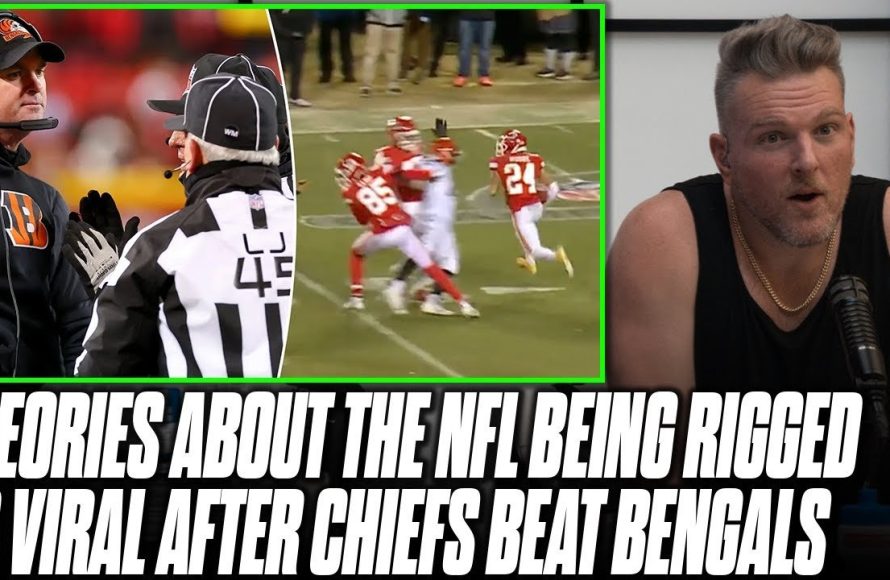
No credible evidence supports the claim that NFL games are rigged.
The roar of the crowd, the bone-jarring hits, and the last-second victories—it’s the essence of NFL football. But whispers always swirl, questioning the legitimacy of it all. Are the NFL games rigged, some wonder? The intensity and passion that surround the sport often fuel these doubts.
Intrigue and speculation arise particularly after shocking outcomes or questionable calls by officials. It’s natural to question the integrity when your team loses, especially on a close call. However, these moments are rarely proof of something sinister.

Are the NFL Games Rigged?
The question of whether NFL games are rigged is a hot topic, and it’s easy to see why. The games are full of excitement, big plays, and sometimes, head-scratching calls by referees. When a team loses in a surprising way, or a seemingly obvious penalty isn’t called, people start to wonder if something fishy is going on. It’s like watching a magic show – you know it’s just tricks, but a part of you still wonders if it might be real magic. So, let’s dive deep into this big question and try to see what’s really going on behind the scenes in the NFL.
The Allure of Conspiracy Theories
Conspiracy theories are captivating. They give simple answers to complicated questions. When a sports game outcome seems strange, it can be tempting to believe a grand plan is at work. These theories often involve ideas like:
- Referee Bias: Refs might favor certain teams or players.
- Gambling Influence: The league might manipulate games to affect betting odds.
- Scripted Drama: The NFL creates an exciting narrative by pre-determining outcomes.
These ideas can sound convincing, especially when emotions run high after a tough loss. But how much truth do they hold? We will look at each one carefully.
Referees: The Scapegoats
Human Error vs. Deliberate Bias
Referees are people. They make mistakes. In a fast-paced game like football, these errors can happen often. Sometimes a ref will miss a holding penalty, sometimes they might misinterpret a rule. These mistakes can have big impacts on the game, leading to frustration for fans and accusations of bias. But are these mistakes deliberate? It’s hard to prove. It’s important to remember that referees are under a lot of pressure. They have to make quick decisions, and they don’t get the advantage of slow-motion replays. While some calls are questionable, labeling all mistakes as intentional sabotage is probably a stretch.
The Pressure on Referees
Imagine being watched by millions of people while making split-second decisions. That’s the life of an NFL referee. They have to know the rule book inside and out, and they must be extremely quick thinkers. They are trained, graded, and held accountable for the quality of their calls. Referees are not perfect and the league provides training to help improve each referee’s skills. The NFL tries to provide fair and accurate game officiating. While bad calls will happen, they mostly result from the complexity of football rules and the speed at which the game is played. The NFL penalizes referees who are incompetent. This process of accountability goes against a system of rigged games.
Analyzing Specific Calls
Sometimes a specific call can cause a lot of debate, and it might seem like a game was changed by just one bad decision by the referees. The problem is that in football, almost every play involves several potential infractions. The referee has to quickly decide if a rule was broken and then determine the penalty. This is why some calls can appear inconsistent. People also tend to remember the bad calls and forget the good ones. This can create the perception of widespread bias even if it’s not the reality. While human error is a real factor, that does not mean the game is fixed.
Gambling and the Shadow of Influence
The Temptation of Fixing Games
The popularity of sports betting is huge. With so much money at stake, it’s natural to think that someone might try to fix a game for profit. It’s a common thought – if there’s a lot of money involved, maybe someone would try to take an unfair advantage. The NFL knows this is a possibility and they have very strict rules against anyone involved with the league from gambling. There’s also a lot of scrutiny from the public and media, making it extremely risky to try to fix a game.
The League’s Stance on Gambling
The NFL has very strict rules about gambling. Players, coaches, and other staff members are banned from betting on NFL games. If they’re found to be involved with gambling, they face severe penalties, including long suspensions or even being removed from the league. They do this because they know if there is proof the games are rigged, they will lose fans, and the value of their entire business would decline. The NFL has a lot to lose if their league gets a reputation for not being trustworthy. While the temptation of fixed games is real, the risk associated with it also is quite high.
The Role of Point Spreads
Point spreads are used to balance out the betting odds. The team that’s favored to win must win by a certain number of points, or else people who bet on the other team will win their bets. This makes it seem like there could be a reason for the games to be rigged, so a team can achieve the point spread. However, it’s very difficult for the NFL to predict and control the outcome of every game, especially regarding the point spread. Trying to do this would require unbelievable planning and risk of exposure. Because the point spread is always changing and sometimes by a lot, it’s just not possible for a specific outcome to always come true. The volatility of point spreads, along with all the uncontrollable factors of a live football game, makes rigging games highly unlikely.
The “Scripted” Narrative
The Drama of Sports
Sports are inherently dramatic. There are rivalries, comebacks, underdogs, and upsets. It’s exciting, which makes us feel a lot of emotions. Sometimes, a story line seems too perfect, which can make people think it’s all part of a larger script. But this type of thinking does not take into consideration the human element of sports. The games are played by real players who are trying their best to win. They have different levels of skill and ability. In most games, there will be a clear favorite but sometimes the underdog comes out on top. So, while it might seem like the NFL is writing a script, it’s usually just the natural way things happen in a competitive environment.
The Appeal of a Good Story
Humans are natural storytellers and they tend to see patterns, even where they might not exist. We like a clear beginning, middle, and end. We also like good vs. evil stories, and underdogs coming out on top. The NFL can be seen as using those stories to help build drama and make things more interesting. While the NFL does a great job of marketing and promoting its teams and players, it doesn’t mean the outcomes are pre-determined. It just means that they are smart in how they create excitement for their league. The truth is that the uncertainty and unpredictability of sports are what make them so exciting.
The Randomness of the Game
Football is a game of chance. There are so many moving parts, and so many factors that go into the results. Injuries, weather, specific matchups, momentum – all of these things play a big part in how a game turns out. All the planning, coaching, and training does not guarantee a team will win. That’s what makes each game exciting, and also why it’s not possible to predict the exact outcome. A team can be better, but still lose. This is a natural element of all competition. So, while storylines can be fun, they don’t indicate that the games are actually scripted.
Examining the Evidence
Lack of Concrete Proof
Despite all the talk of rigged games, there’s no solid, irrefutable proof. All the arguments are usually based on circumstantial evidence and speculation. If there was any hard evidence, it would have been revealed. In today’s world of technology and journalism, it’s very difficult to keep any kind of large-scale conspiracy hidden. There are so many cameras, journalists, and fans. If the NFL was rigging games, someone, somewhere, would have revealed it. The lack of proof is a strong argument against the idea of rigged games.
The Complexity of a Large-Scale Conspiracy
Let’s say the NFL did try to fix games. Imagine the planning, the money, the people, the coordination it would require. It would be an extremely complicated operation involving hundreds, if not thousands of people. Keeping all that secret would be nearly impossible. Someone involved would eventually come out and expose it. Also, the NFL players themselves are very dedicated to their sport. They want to win, and they take pride in what they do. It is highly unlikely a professional player would risk their career and reputation by taking part in a system of rigged games.
The Financial Risk for the NFL
The NFL is a multi-billion dollar business. If it was proven that the games were rigged, their entire league would collapse. Sponsors would walk away, fans would leave, and the league’s value would drop dramatically. If it came out that the league was cheating, no one would trust it. So, the NFL has a huge financial incentive to make sure everything is legitimate. They wouldn’t risk their entire business on a scheme that could be revealed. The financial ramifications are just too big for it to make any sense for the NFL to do this. It simply doesn’t make good business sense.
Alternative Explanations
The Nature of Competition
Sports are unpredictable and competitive. Upsets, close games, and unexpected results are all part of the game. Teams have bad days. Sometimes they just don’t perform as well as expected. That’s just part of competition. Teams have to deal with injuries, bad calls, and other factors that can impact their performance. Thinking about these things can give a better understanding of why the results are not always what we think they should be.
The Impact of Momentum
Momentum is a real thing in sports. When a team starts playing well, it can be very hard for the other team to stop them. It can feel like one team has a supernatural ability to win. But what is really going on is that the players and coaches are experiencing changes in their own mindset. This can lead to a team playing above its usual level. Sometimes things just line up in such a way that one team is much better on a given day. These changes are often beyond what the average fan can clearly see. And sometimes it just comes down to luck.
The Role of Luck
Luck plays a part in any sport. Sometimes, a team will get a lucky bounce, a bad call will go their way, or the weather will impact the game in their favor. These small, unpredictable elements can change the outcome of the game. You might say luck is random, and can happen to any team. So, thinking about all these things – luck, competition, momentum and more – helps to understand that a lot more goes into a game than just a pre-determined outcome.
In summary, while it’s tempting to believe that the NFL games are rigged, there’s no real proof of that. The human element of officiating, the strict rules against gambling, the nature of competition, and randomness all contribute to unexpected outcomes. These elements combined create the drama and excitement that is present in sports. When you see something that seems questionable, it’s important to step back and consider if there’s a simpler reason for it.
Former NFL player Arian Foster admits the NFL is rigged
Final Thoughts
Ultimately, the question of whether NFL games are rigged remains a persistent debate. While some instances might raise eyebrows, concrete evidence proving systematic manipulation is scarce. Fans often have strong opinions, but without conclusive proof, it’s hard to say for certain.
The passionate nature of the sport fuels speculation about unfair advantages or pre-determined outcomes. Many believe that ‘are the nfl games rigged’, but the evidence is very difficult to find and there are a lot of safeguards in place. Still, the debate continues.

