
Basic butchering of livestock & game involves field dressing, skinning or plucking, evisceration, and breaking down the carcass into manageable cuts of meat suitable for cooking or preservation.
Here’s the requested content:
Ever wonder where your meat really comes from? Taking control of your food source is empowering, and understanding basic butchering of livestock & game is the first step. This knowledge can save you money and allow you to respect the animal fully.
We’ll guide you through the essential steps, from field dressing to breaking down a carcass. Learn the fundamental techniques, ensuring safe and efficient processing for quality meat on your table.

Basic Butchering of Livestock & Game
Butchering your own livestock or wild game is a rewarding skill. It allows you to control the quality of your meat. It also saves money and connects you to your food source.
Essential Butchering Tools
Having the right tools makes the butchering process safer and more efficient. Invest in quality equipment for best results. This will pay off in the long run.
- Sharp Knives: A boning knife, a skinning knife, and a butcher knife are essential.
- Steel: Use a honing steel to keep your knives sharp.
- Cutting Board: Choose a large, sturdy cutting board made of food-grade plastic or wood.
- Meat Saw: A meat saw is necessary for cutting through bone.
- Game Bags/Butcher Paper: Use these to wrap and store your meat.
- Scale: A scale helps you weigh your cuts.
- Gloves: Wear food-grade gloves for hygiene.
Safety First: Hygiene and Knife Skills
Safety is paramount when butchering. Always prioritize cleanliness and proper knife handling. This will prevent accidents and contamination.
Knife Handling Techniques
Learn basic knife handling skills. This will improve your efficiency and prevent injuries.
Grip: Use a firm, controlled grip. Keep your fingers tucked away from the blade.
Cutting Motion: Use smooth, deliberate cutting motions. Avoid jerky movements.
Sharpening: Keep your knives sharp. A sharp knife is safer than a dull one.
Hygiene Practices
Maintain a clean workspace. This prevents bacterial contamination and spoilage.
Wash Hands: Wash your hands thoroughly with soap and water before and after handling meat.
Clean Surfaces: Disinfect all surfaces that come into contact with meat.
Separate Equipment: Use separate cutting boards and knives for raw and cooked meat.
Butchering Livestock: A Step-by-Step Guide
Butchering livestock involves several key steps. Proper handling and technique are crucial. This guide focuses on basic breakdown.
Slaughtering (If Applicable)
Humane slaughter is essential. This requires proper equipment and technique.
Skinning
Skinning involves removing the hide from the carcass. It’s often easier when the carcass is still warm.
Initial Incision: Make an incision along the belly from the brisket to the tail.
Separate the Hide: Carefully separate the hide from the underlying muscle.
Pulling the Hide: Pull the hide away from the carcass, using your knife to help separate it where necessary.
Evisceration
Evisceration involves removing the internal organs. This should be done as soon as possible after slaughter.
Opening the Cavity: Carefully open the abdominal cavity, avoiding cutting the intestines.
Removing Organs: Separate the organs from the carcass, being careful not to puncture them.
Inspection: Inspect the organs for signs of disease.
Chilling
Chilling the carcass is essential for food safety. It slows down bacterial growth.
Ideal Temperature: Chill the carcass to below 40°F (4°C) as quickly as possible.
Hanging: Hanging the carcass allows the muscles to relax and tenderize.
Duration: The duration of chilling depends on the animal and the desired tenderness.
Breaking Down the Carcass
Breaking down the carcass involves separating it into primal cuts. This is a crucial step in butchering.
Primal Cuts: Common primal cuts include the shoulder, loin, rib, and leg.
Separating the Cuts: Use your knife and saw to separate the primal cuts along natural seams.
Trimming: Trim excess fat and connective tissue from the cuts.
Cutting into Retail Cuts
Retail cuts are the cuts you would typically find in a grocery store. These are further subdivisions of the primal cuts.
Steaks: Cut steaks from the loin and rib.
Roasts: Cut roasts from the shoulder, leg, and rib.
Ground Meat: Grind trim and less desirable cuts into ground meat.
Butchering Game: Field Dressing to Freezer
Butchering game animals requires similar techniques as livestock. However, field dressing is an important first step.
Field Dressing
Field dressing involves removing the internal organs in the field. This helps to cool the carcass and prevent spoilage.
Opening the Cavity: Make an incision along the belly. Be careful not to puncture the intestines.
Removing Organs: Remove the internal organs.
Washing: Rinse the cavity with clean water.
Transportation
Transport the carcass to a processing area as soon as possible. Keep it cool and clean.
Skinning (Game)
Skinning game animals can be more challenging than skinning livestock. The hide can be tougher and more tightly attached.
Quartering
Quartering involves dividing the carcass into four sections: two front quarters and two hindquarters. This makes it easier to transport and handle.
Deboning
Deboning involves removing the bones from the meat. This can make it easier to store and cook.
Grinding
Grinding is a popular way to process game meat. It’s a good way to use tougher cuts.
Specific Animal Butchering Techniques
Different animals require slightly different butchering techniques. Consider the size and anatomy of the animal.
Butchering a Chicken
Butchering a chicken is relatively simple. It involves separating the legs, wings, and breast.
Removing Legs: Cut through the joint connecting the leg to the body.
Removing Wings: Cut through the joint connecting the wing to the body.
Removing Breast: Cut along the breastbone to separate the breast from the carcass.
Butchering a Deer
Butchering a deer requires more skill and effort than butchering a chicken. The carcass is larger and the bones are thicker.
Skinning (Deer): Skin the deer as soon as possible after field dressing.
Quartering (Deer): Quarter the deer to make it easier to handle.
Deboning (Deer): Debone the quarters to make it easier to store and cook.
Butchering a Pig
Butchering a pig involves several steps, including scalding and scraping. This removes the hair from the skin.
Scalding: Submerge the carcass in hot water to loosen the hair.
Scraping: Scrape the hair off the skin with a sharp knife.
Breaking Down: Break down the carcass into primal cuts.
Meat Storage and Preservation
Proper storage and preservation are essential for maintaining the quality and safety of your meat. Choose the right method for your needs.
Refrigeration
Refrigeration is a short-term storage method. It’s ideal for meat that will be consumed within a few days.
Temperature: Store meat at a temperature of 40°F (4°C) or below.
Packaging: Wrap meat tightly in airtight packaging.
Freezing
Freezing is a long-term storage method. It can preserve meat for several months.
Temperature: Freeze meat at a temperature of 0°F (-18°C) or below.
Packaging: Wrap meat tightly in freezer-safe packaging.
Curing
Curing involves preserving meat with salt, sugar, and other ingredients. This method has been used for centuries.
Smoking
Smoking involves preserving meat with smoke. This adds flavor and helps to prevent spoilage.
Understanding Meat Cuts
Knowing different meat cuts helps you make informed choices. It allows you to select the best cut for your cooking method.
Beef Cuts
Beef cuts vary in tenderness and flavor. Some common cuts include:
- Ribeye: A flavorful and tender cut from the rib.
- Tenderloin: The most tender cut of beef.
- Sirloin: A lean and flavorful cut from the loin.
- Brisket: A tough cut that becomes tender when cooked low and slow.
Pork Cuts
Pork cuts are often classified as either lean or fatty. Some common cuts include:
- Pork Tenderloin: A lean and tender cut.
- Pork Chops: Cut from the loin.
- Bacon: Cured and smoked pork belly.
- Ham: Cured pork leg.
Venison Cuts
Venison cuts are generally leaner than beef or pork. Some common cuts include:
- Backstrap: A tender cut from the loin.
- Tenderloin (Venison): A very tender cut located inside the carcass.
- Sirloin (Venison): A lean and flavorful cut.
- Ground Venison: A versatile option for burgers and other dishes.
Meat Grading
Meat grading is a system used to assess the quality of meat. Different countries have different grading systems.
USDA Grading (United States)
The USDA grades beef based on marbling and maturity. The grades are Prime, Choice, and Select.
Prime: The highest grade, with abundant marbling.
Choice: A high-quality grade, with moderate marbling.
Select: A leaner grade, with less marbling.
Common Butchering Mistakes to Avoid
Even experienced butchers can make mistakes. Awareness helps prevent errors.
Dull Knives: Using dull knives is dangerous and inefficient. Keep your knives sharp.
Poor Hygiene: Failing to maintain proper hygiene can lead to contamination.
Improper Chilling: Not chilling the carcass quickly enough can promote bacterial growth.
Rushing the Process: Rushing the butchering process can lead to mistakes and injuries.
Incorrect Cuts: Making incorrect cuts can result in wasted meat and poor-quality cuts.
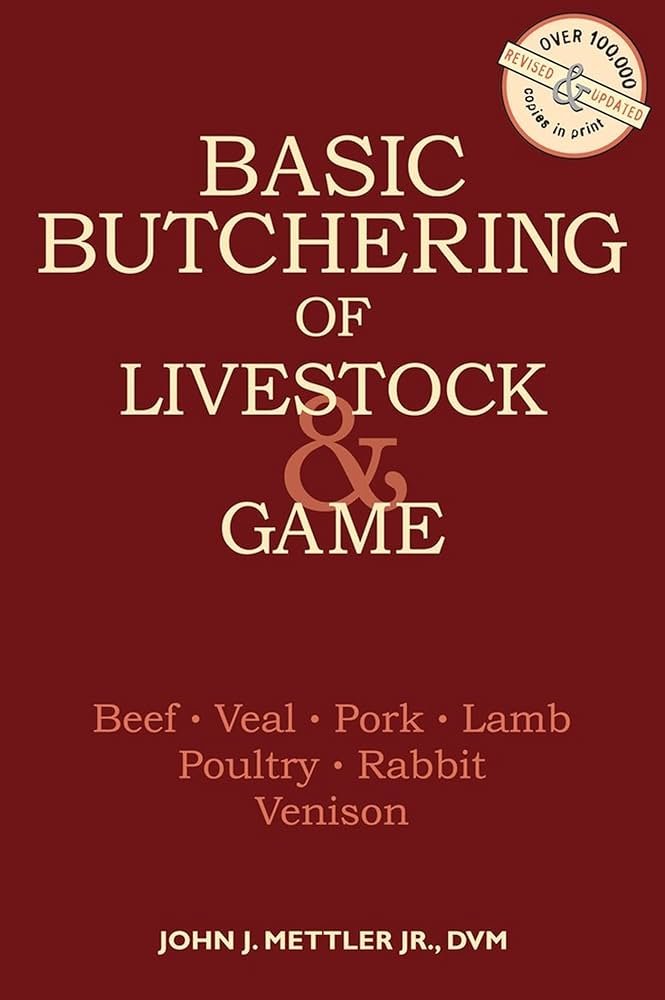
Book Review: The Basic Butchering of Livestock and Game
Final Thoughts
Basic butchering of livestock & game offers incredible self-sufficiency. You gain control over your food source and maximize your harvest. Learning essential techniques is easier than you think with practice.
This process ensures you utilize every part of the animal respectfully. Proper butchering leads to better quality meat and reduces waste. Remember safety is must, and hygiene are key throughout the process.
Basic butchering of livestock & game allows you to connect directly with your food. This skill provides satisfaction and promotes sustainable practices.

