
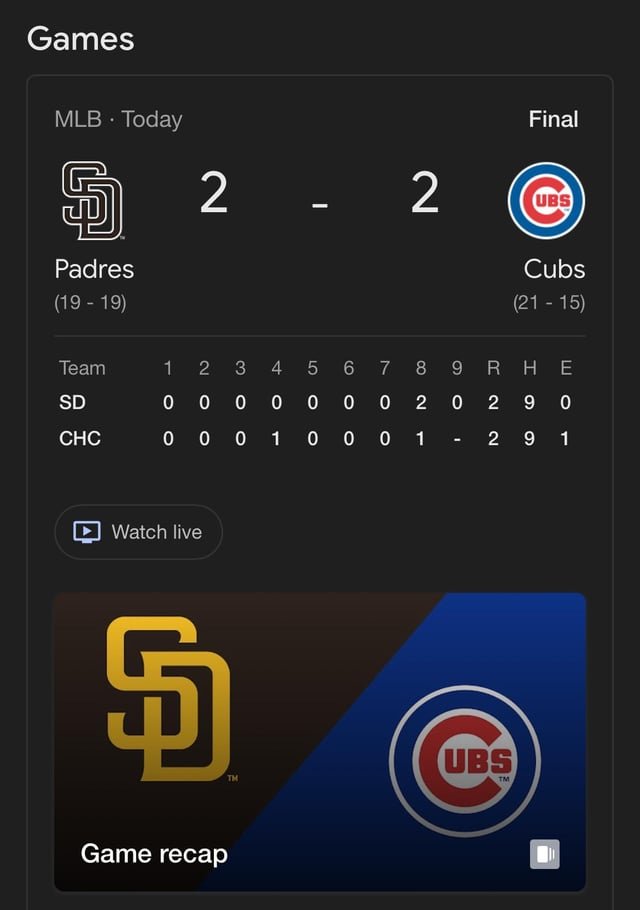
No, an MLB game cannot end in a tie.
Have you ever wondered if the seemingly endless innings of a baseball game could ever result in a stalemate? Many new to the sport ask, can an MLB game end in a tie? The answer is a straightforward no.
Major League Baseball implemented rules to ensure a definitive winner in every game. If a game remains tied after nine innings, extra innings begin, continuing until a team achieves a lead at the end of an inning. So, you’ll never see a tie game in the MLB.

Can an MLB Game End in a Tie? Exploring the Possibilities
Okay, let’s talk about something that doesn’t happen very often in Major League Baseball (MLB) – ties! If you’re used to seeing games end with a clear winner and loser, the idea of a tie might seem a bit strange. So, can an MLB game actually end without either team coming out on top? The answer is a little complicated, but the short answer is: very, very rarely these days. Let’s dive into why ties were more common a long time ago and how MLB has made changes to almost eliminate them. Understanding this will give us a good picture of baseball history and rules.
The History of Ties in MLB: Before the Rule Changes
Believe it or not, baseball used to have many more ties. Early on, things were a little different, and a game could end without a winner fairly often. There were several reasons for this:
- Limited Lighting: Imagine playing baseball without big stadium lights. In the old days, they didn’t have great lighting systems, especially for night games. If the game went too long and it got too dark to see, they would have to stop, and if the score was tied, it was declared a tie game.
- Curfews: Some towns had rules about how late you could make noise, which included baseball games. If it was past the town’s curfew, teams would have to stop the game, regardless of the score. If the score was even at that point, it resulted in a tie.
- Weather: Rain, snow, or fog sometimes made playing impossible. When the weather got too bad, the game might get stopped early, resulting in a tie if the scores were equal.
Because of these conditions, ties were more normal, and fans understood that sometimes a winner just couldn’t be decided. These ties were recorded in the MLB standings, and this is very different to what we see in baseball today.
The Introduction of Extra Innings: The Shift Away from Ties
As baseball grew in popularity, they wanted to see fewer ties and more clear winners. They wanted to make sure the fans could see a proper result. This led to the development of the extra innings rule. This rule meant that if the game was tied after nine innings, the game wouldn’t end there. Instead, they would play extra innings until one team finally scored more runs than the other. Let’s look at this more closely:
The Basic Extra Innings Rule
The basic idea of extra innings is simple. If the game is tied after the standard nine innings, the game continues. Each team gets another turn at bat, and they keep playing until one team has more runs at the end of an inning. There is no limit on the number of extra innings that can be played. A game will eventually end when one team scores more runs at the end of an extra inning.
The Impact of Extra Innings on Ties
The introduction of the extra innings was a game-changer. It immediately started to eliminate the number of tie games. Now, teams were forced to play it out until there was a winner. This also added excitement for the fans because it meant that the game could now continue for much longer periods, adding a new layer of competitiveness and suspense. This rule change shows that baseball is always adapting to make the game more exciting for everyone.
The Modern MLB and the Almost Elimination of Ties
In modern-day Major League Baseball, ties are incredibly uncommon, almost unheard of. This is primarily due to the rule changes, but some rules make it extremely difficult for a tie to happen under any circumstances.
The Modern Extra Innings Rules
While the basic idea of extra innings is still the same, there have been some tweaks in recent years. During the 2020, 2021, and 2022 MLB seasons, a new rule was in place to help shorten games. The rule was to begin each extra inning with a runner on second base. The purpose of this was to ensure that extra innings did not go on for too long and the intention was to get to a winner sooner.
This rule was removed for the 2023 MLB season, and the games returned to a format that does not place a runner on second to begin extra innings.
Exceptions That Could Technically Lead to a Tie
Even with extra innings, there are a few situations where a tie could happen but are very unlikely:
- Called Games Due to Weather: If a game is tied after any number of innings and is then stopped (or “called”) due to extremely bad weather, and if that game can’t be resumed, it can officially end in a tie. However, these types of weather situations rarely occur.
- Forfeit: Although rare, it is possible if both teams have to forfeit due to very unusual circumstances, such as a massive player injury, this could mean that they would not continue the game. If both teams forfeited at the same time with the scores level, technically, it would result in a tie.
These situations are incredibly rare, which is why you rarely see an MLB game end in a tie. The modern approach to games always strives to get a winner, and it is very rare that an unforeseen circumstance would cause a tie.
Why MLB Wants to Avoid Ties
MLB has tried to eliminate ties completely because it ensures a much better experience for everyone, such as:
- Fan Satisfaction: Fans want a clear winner and loser. A tie feels a little anticlimactic to them, and they want to see teams battle it out until they can get a clear win.
- Competitive Integrity: A winner and loser means that the game is conclusive. It helps with rankings, playoffs, and how they look at the season as a whole.
- League Standings: The league needs the result for the team standings, because the records and season stats are very important for a team’s progress and the MLB season. Ties make everything harder to keep track of.
The Cultural Impact of Ties
While ties are very uncommon in MLB, the history of ties in baseball has an important place in the story of the sport. It shows how the rules have been changed and adapted to make it a better experience. Understanding these old rules and how they changed helps fans appreciate what goes into every single game. Although we will almost never see an MLB tie in this modern-day game, understanding where they came from is a big part of baseball history.
Ties in Other Sports: A Quick Comparison
It is also worth remembering that ties are a much more common part of some other sports. Here’s a quick look:
- Soccer: Ties are common in soccer (or football). When two teams have the same number of goals, many leagues end the match with a draw.
- Hockey: Hockey games used to have more ties but now use overtime to try and find a winner.
- American Football: Ties in NFL American Football are rare but can still happen during the regular season with overtime rules, and these games are officially recorded as ties.
It is clear from this that every sport has different rules, and MLB has gone to great lengths to remove ties from the game.
So, while the answer to “Can an MLB game end in a tie?” is technically yes, it’s extremely unlikely these days, and will almost certainly never happen due to the way that the rules have been made for today’s game. The focus is now on having a winner, and although ties have a place in baseball history, they do not have a place in the modern game.
Should MLB Games End in a Tie?
Final Thoughts
MLB games can indeed end in a tie, but this is rare. Regular season games continue until a winner emerges, using extra innings. However, if a game is suspended, or called due to weather after it becomes official, it can remain a tie.
Historically, ties were more frequent before interleague play and expanded playoffs. The question, ‘can an mlb game end in a tie’, is answered affirmatively, but it is extremely uncommon nowadays.

