
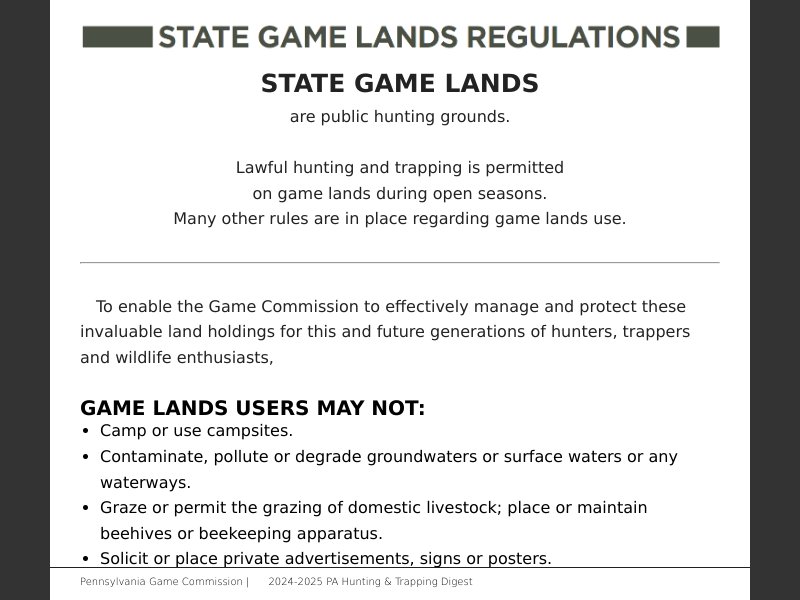
Camping on state game lands is generally prohibited, with very limited exceptions often requiring specific permits.
Planning an outdoor adventure often brings up the question, can you camp on state game lands? Many people imagine setting up a tent among the trees, but it’s essential to know the rules first. These areas are primarily managed for wildlife conservation and hunting. Therefore, overnight stays are usually restricted.
Specific regulations vary greatly depending on the state. Some allow very limited primitive camping with permits. Others have a zero tolerance policy for any overnight camping. Always check with the specific state agency managing the game lands before making plans.

Can You Camp on State Game Lands? A Deep Dive
So, you’re itching to sleep under the stars surrounded by nature’s symphony? That’s awesome! But before you pack your tent and head out, you need to know the rules about camping on state game lands. These areas are often super attractive to outdoor lovers, but they come with specific guidelines to keep the wildlife safe and the land healthy. Let’s explore the world of camping on state game lands, figure out what’s allowed, what’s not, and how to be a responsible camper.
Understanding State Game Lands
First off, what exactly are state game lands? These are areas of land bought and managed by the state. Their main purpose is to protect and support wildlife populations. Hunting, trapping, and fishing are often allowed within these areas, but recreational activities like hiking and birdwatching are also welcome. Think of state game lands as a big outdoor playground, but with a focus on conservation. Because their primary purpose is wildlife management, rules about things like camping can be stricter compared to say, a national park or even some state parks.
Primary Purpose
State game lands have a specific mission. Their core focus isn’t recreation, it’s the preservation and management of wildlife. This means that any human activity, including camping, must fit within this goal. This may result in rules that seem stricter than recreational areas which are managed specifically for camping and human entertainment. Remember, these places are for the animals first, and for us to enjoy while respecting the animal habitat and their home.
Common Activities
Though their main purpose is for the wildlife, state game lands provide great opportunities for recreation. Typical activities allowed on state game lands include:
- Hunting (in season)
- Fishing
- Trapping (with proper permits)
- Hiking
- Wildlife Viewing/Bird Watching
- Photography
However, keep in mind that these activities may come with their own set of rules and regulations, so you always need to check the specific regulations for the particular game lands you want to visit.
The Camping Question: Is it Allowed?
Okay, let’s get to the heart of the matter – can you actually camp on state game lands? The short answer is: It really depends. It’s not a straight yes or no. Camping rules vary greatly depending on the specific state you are in and even the specific state game lands you are looking to camp in.
Varying State Regulations
Each state has its own governing body that manages its state game lands. Because of this, the rules are not uniform. For example, one state might allow primitive camping with certain restrictions, while another may completely prohibit any overnight stays. It is very crucial to know the specific rules for the area you wish to camp before your trip.
Here is a breakdown of how camping might be handled in different scenarios:
- Permitted with Restrictions: Some states allow camping but with strict guidelines. This might include designated camping areas, permit requirements, time limits (e.g., one night only), or a specific distance from roads or trails.
- Primitive Camping Allowed: You might be able to camp in a basic manner (tent only, no facilities), but you’ll likely need to follow Leave No Trace principles and obtain a permit.
- Prohibited: In other cases, camping could be completely off-limits. This might be due to the sensitive habitat, fire risk, or over-use of the game lands area.
Specific Regulations and Permits
Before heading out, it is very important to do your research and find out the specific regulations. This includes identifying the area’s specific rules about camping, permits needed, and other potential restrictions. This research is critical to avoid a fine or being asked to leave.
Where to Find Information
Your best bet is to visit the official website of the state agency that manages the game lands. These agencies are usually called something like the “Department of Natural Resources” (DNR), “Fish and Wildlife Agency,” or “Game Commission”. Here’s where you can often find the information you need:
- State Agency Website: Look for a section specifically about game lands, public lands, or wildlife areas. Search for keywords like “camping,” “regulations,” or “permits.”
- Specific Game Lands Information: Sometimes, each game lands area will have its own page with specific regulations. So, search for the name of your desired area.
- Contacting the Agency: If you can’t find the information online, call or email the agency directly. They’ll be able to give you up-to-date and correct information.
Common Camping Restrictions
Even if camping is permitted, you’ll likely find some restrictions. Here are a few common ones:
- Permits: Often, you’ll need to obtain a permit, sometimes for a small fee. These permits may need to be purchased in advance and require you to adhere to certain rules.
- Designated Areas: You might only be able to camp in specified campsites or within a certain distance of a trail or road. Random camping might be restricted.
- Time Limits: Camping might only be allowed for one or two nights, or with time limitations per year.
- Fire Restrictions: Open fires are often banned, particularly during fire season. You may need to use a camp stove.
- Leave No Trace: You’ll always be expected to pack out everything you packed in, and be sure to take all your trash, and to minimize your impact on the environment.
- Group Size Limits: There may be limitations to the number of people allowed in a single group. This helps minimize overuse of the area.
Permit Process
If permits are required, familiarize yourself with the process. It might be online, by mail, or in person. Be sure to obtain your permit in advance and keep a copy with you during your trip. Sometimes, they may need to be purchased and a physical paper copy might be required to be kept with you, along with proper identification.
Leave No Trace Principles
Whether camping is permitted on state game lands or not, everyone is always expected to follow Leave No Trace principles. These are ethical guidelines to help minimize human impact on the natural environment. Following these rules help protect the wilderness areas, the wildlife, and keep these spaces open for other visitors to use in the future.
The Seven Principles
The Leave No Trace Center for Outdoor Ethics promotes seven principles. These principles are helpful in minimizing your impact when visiting natural areas. These principles are:
- Plan Ahead and Prepare: Research the area, pack appropriately, and know the rules before you go.
- Travel and Camp on Durable Surfaces: Stick to trails, campsites, and durable ground surfaces to avoid damaging vegetation.
- Dispose of Waste Properly: Pack out all trash, including food scraps, and use appropriate bathroom techniques.
- Leave What You Find: Avoid taking natural or historical items. Enjoy them as they are and leave them for the next visitor.
- Minimize Campfire Impacts: If fires are allowed, use existing fire rings or a camping stove. Be very sure to extinguish fires completely.
- Respect Wildlife: Observe animals from a distance, don’t feed them, and keep your food stored properly to avoid attracting them to your campsite.
- Be Considerate of Other Visitors: Keep noise levels low and be courteous to others using the area.
Why They Matter on Game Lands
Leave No Trace is extra important on state game lands because these are not just recreation areas. These areas are actively used by wildlife. They are also managed for the protection of the wildlife habitat. By following these principles, you help protect the habitat of these animals. You also ensure that these areas will remain pristine and available for future use for all visitors.
Safety Considerations
Safety is important for any outdoor adventure, and camping on state game lands is no exception. You’re often in a remote and natural environment, so it’s essential to be prepared.
Wildlife Awareness
State game lands are home to a variety of animals. Be aware of their presence and take precautions to avoid any negative interaction. Here are some tips to stay safe around wildlife:
- Store Food Properly: Use bear-resistant containers and store food and trash away from your tent.
- Be Loud: Make noise while hiking to alert animals of your presence and give them a chance to avoid you.
- Observe From a Distance: Keep a safe distance from all wildlife and never approach or feed them.
- Know Your Animals: Research the wildlife in the area and how to react if you encounter them.
Navigation and Weather
Being prepared for both navigation and weather is essential. The weather can change quickly in the outdoors, so having the correct gear is key. Always bring a map and compass, and do not rely solely on electronic devices because you might not have cell phone service in remote areas.
- Check the Weather: Always check the weather forecast before you leave. Prepare for temperature changes and sudden weather changes.
- Bring a Map and Compass: Learn how to use them, even if you have a GPS device.
- Tell Someone Your Plans: Inform a friend or family member of your itinerary and expected return date.
- Carry a First-Aid Kit: Be sure to pack a complete first aid kit and know how to use it.
Hunting Seasons
State game lands are used for hunting during hunting seasons. This can increase your risk for accidents during these times. When camping on state game lands, it’s crucial to be aware of hunting seasons. It’s often a good idea to wear bright colors to be more visible during these times. Also, avoid hiking or camping near active hunting areas.
- Know Hunting Dates: Check the state agency website for hunting season dates.
- Wear Bright Colors: Consider wearing blaze orange or bright colors for visibility.
- Be Extra Cautious: Make noise and stick to well-marked trails during hunting season.
Alternatives to Camping
If camping is not allowed on your desired state game land, or if the rules are too restrictive for your comfort, there are many alternatives to consider. This way, you can still have a great camping experience.
State Parks
Many state parks have designated campsites with amenities like restrooms, fire rings, and picnic tables. These are often more suitable for families and offer a more relaxed camping experience compared to primitive options.
National Forests
National Forests often allow dispersed camping (camping outside of designated campgrounds). This offers the chance to camp in a wilder environment but still within a regulated framework. You’ll usually need to follow some basic rules, but they offer a little more freedom.
Private Campgrounds
Private campgrounds provide developed campsites, amenities, and other services that you won’t find on public lands. You might have to pay a fee, but you’ll often get things like electric hookups, showers, and sometimes even recreational facilities. These are often more family friendly.
Dispersed Camping
Dispersed camping, also known as boondocking or wild camping, is camping outside of developed campgrounds. It’s allowed on some public lands, like national forests and Bureau of Land Management (BLM) areas. It’s usually primitive camping with no facilities, and requires following Leave No Trace principles. Be aware that not all public land allows dispersed camping, so be sure to check.
Research and Choose Wisely
It’s always best to research and know the rules for your intended area before setting out on your trip. By researching your options ahead of time, you are more likely to have a fun and safe camping experience.
In conclusion, camping on state game lands is a complex issue. It’s not as simple as a yes or no answer. It requires careful planning, research, and adherence to the specific regulations of each location. While the possibility of camping on these lands exists, often with strict regulations, sometimes it is prohibited completely. By understanding the purpose of state game lands, respecting wildlife, and practicing Leave No Trace principles, we can help ensure that these valuable natural resources remain for generations to come. Remember, if you’re unsure, always check with the relevant state agency first.
Sept 15th: State Game Lands #57 campsite, Pennsylvania
Final Thoughts
In short, camping on state game lands is usually restricted. Most states allow only primitive camping, typically for a single night, and only while actively hunting or fishing. Regulations vary greatly by state, so always check specific rules before going.
“Can you camp on state game lands?” is a common question. The answer depends on the exact location and the current season, this is a must. Always confirm with the relevant wildlife agency.

