
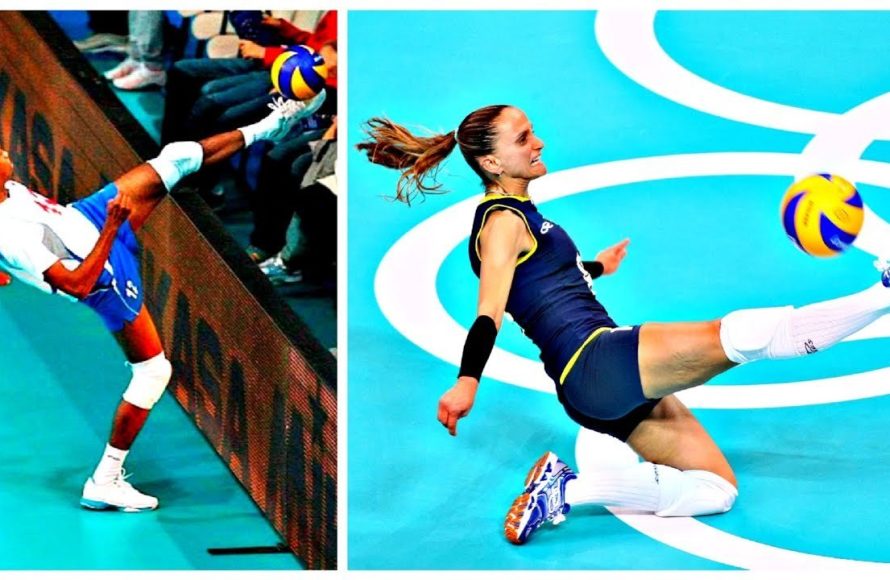
Yes, you can kick a volleyball during a game, as long as it’s not a deliberate lift or carry.
Have you ever watched a volleyball match and wondered, “can you kick a volleyball during a game?” It’s a common question! Many people are surprised to learn that, yes, you actually can use your feet to contact the ball.
The rules allow kicking, but it’s not very common because it’s harder to control the ball with your feet. The main thing is to avoid carrying or lifting the ball with any body part.

Can You Kick a Volleyball During a Game?
Okay, let’s dive into a super important question for all you volleyball fans: can you actually kick the ball during a game? It’s something many beginners wonder about, and even some seasoned players might not be completely clear on. The short answer is: yes, absolutely, you can kick a volleyball! But, like most things in volleyball, there are some important rules and strategies that come into play. We’re going to break down exactly how kicking works in volleyball, when it’s a good idea, and when it’s probably best to use your hands instead. So, get ready to learn all about the world of kicking in volleyball!
The Basics: Kicking is Legal
First things first, let’s make it crystal clear: kicking a volleyball is totally allowed by the official rules of the game. It is not a foul, you won’t get penalized, and the rally will continue. The misconception that you can’t kick a volleyball might stem from other sports where hand contact is more standard, or simply a general misunderstanding of the rules. In volleyball, the main goal is to get the ball over the net and onto the opponent’s side, and you can use any part of your body to do it. This includes your feet, legs, knees, shoulders, head – you name it! However, while legal, it’s not always the best approach.
Why is Kicking Allowed?
The reason for allowing kicking in volleyball is primarily about game flow and keeping the ball in play. Imagine a scenario where a hard-hit ball is coming at you really low, and you are struggling to get under it. If the rules required you to only use your hands or arms, it would be extremely difficult to reach the ball and you might miss the ball more easily. Allowing the usage of your feet and legs creates more opportunities to keep the ball in the air, leading to longer rallies, more exciting plays, and ultimately more fun for everyone. This promotes more dynamic play and encourages quick thinking by the players. It also gives players another tool in their toolbox, allowing for creative and athletic saves.
When Is Kicking a Good Idea?
While kicking is permitted, it doesn’t mean you should be kicking the volleyball every chance you get. Knowing when to use your foot effectively is crucial. Let’s look at some situations where kicking can be a great strategy:
- Emergency Saves: This is probably the most common and useful situation for kicking. When a ball is coming at you fast and low to the ground, and it is a tough dig, your foot might be your only option for keeping it alive. Instead of letting the ball hit the floor, a quick kick can send the ball back up, giving your teammates a chance to play it.
- Reaching Difficult Balls: Sometimes the volleyball might go out of reach of your hands. You might be diving or already fallen, that’s where kicking becomes an asset. A well-placed kick can not only save the point but can even help your team keep the offensive momentum.
- Changing the Ball’s Direction: Kicking allows you to manipulate the ball’s direction and trajectory in ways that might be difficult with other parts of the body, especially when the ball is coming in at a low height.
- To Avoid a Fault: It is much better to kick the ball and save the ball from hitting the ground, even if it is not the best kick, than let the ball drop down for point to the opponent team.
Kicking For Digging and Passing
Kicking is most often used to dig a fast hit, or pass a difficult low ball. While not the most accurate way to pass, kicking to your teammate allows your team to stay in the rally and have another chance to attack. This is especially true at lower levels where players may not yet have mastered the forearm pass. The aim is to keep the ball in play, and kicking is a valid tool for that purpose, however not a great option for consistent passes.
When to Avoid Kicking
Now, while kicking has its moments, it’s certainly not the ideal way to play volleyball in many situations. Here’s when you should usually avoid using your feet:
- When You Can Use Your Hands: If the ball is at a height where you can easily use your forearms or hands, that’s almost always the better option for better accuracy and control. Forearm passing and hand setting provide far greater precision.
- Setting Up an Attack: Kicking is not a consistent way to set up an attack. You have less control with a kick, so using your hands is crucial for accurate sets to your hitters.
- When It is Easier To Do a Forearm Pass: If you have plenty of time to perform a forearm pass, then that’s usually the better choice for accuracy and control. It allows your team to run an offense and make it easier to control and pass to your teammates.
- When You’re Close to the Net: Kicking near the net can be risky as you might end up accidentally touching the net, which is a foul. The margin for error is very thin, making it a less desirable option close to the net.
- For Beginner Players: If you are a beginner, it’s better to practice and master your forearm and overhead passes. Focus more on your hands instead of your legs, until the time comes for a situation that requires kicking the volleyball. Kicking can be a fun move, but it will not be your first choice in most situations.
Types of Kicks You Might See
There are different kinds of kicks you might see in volleyball, each with its purpose:
- The Toe Kick: This involves kicking the ball with your toes, often used when a ball is very low and fast coming at you.
- The Inside-of-the-Foot Kick: Similar to a soccer pass, this kick is used to gently direct the ball up or towards your teammate.
- The Heel Kick: A less common but sometimes effective option, where you use your heel to redirect the ball quickly, generally used for very low balls behind you.
- The Thigh Bump: Technically not a foot kick, but a similar body part. This involves using the thigh to bump the ball upward.
The Challenge and Benefits of Kicking
Kicking in volleyball presents both challenges and benefits. One of the main challenges is the accuracy and control. Unlike hands, feet aren’t designed for fine motor control, and it requires practice to consistently direct the ball where you want it to go. Another challenge is getting used to the feeling of kicking the ball, as it feels very different from hitting the volleyball with the hands and forearms. But, when you have mastered your kicking ability, it allows you to save the ball more easily during emergency situations. Also, an effective kick may add surprise to the opposition team. It is a great way to keep the ball in play and continue the rally.
Mastering the Art of the Kick
So, how do you get better at kicking in volleyball? It’s all about practice, just like with any skill in the game. Here are a few tips:
- Start Simple: Begin with practicing gentle kicks, aiming for height rather than power. Focus on using your foot to lift the ball up to your teammate.
- Practice Against a Wall: Use a wall to practice your kicks, focusing on accuracy and control.
- Work on Footwork: Get comfortable moving into a position for a kick. Agility is very important to perform a kick in an effective manner.
- Practice Reaction: Practice quickly responding to low balls, and use your feet to save the ball.
- Observe Professional Players: Pay attention to how professional players use kicks during a game. Observe how they position themselves before the kick, how they use their foot, and the outcome of the kick.
Kicking as a Tactical Move
Kicking isn’t just about saving the ball, it can sometimes be a tactical move. For example, if your opponent is expecting you to always use your hands and forearms, they might not anticipate a kick. Kicking sometimes may create a sense of surprise, which can give your team an advantage. However, it is crucial to remember that the goal of volleyball is to have consistency and accuracy in every ball contact.
Kicking in Different Volleyball Levels
The way kicking is used can vary across different levels of play. In younger or more recreational play, kicking might be more frequent as players are still developing their forearm pass skills. As the level of play increases, kicking becomes more of an emergency option, used only when the ball is far out of reach for a normal hand contact. But, even at the highest levels, you’ll still see some amazing kicks that save points, as long as it is done by highly skilled players who know how to accurately kick the ball.
Common Mistakes to Avoid When Kicking
Even though kicking is allowed, there are some common mistakes people make when they do it, and it’s good to know these so you can avoid them:
- Kicking Too Hard: You need to make sure you don’t kick too hard when your team is trying to play the ball. You should only be trying to get the ball to a player on your team.
- Not Aiming Properly: Sometimes players kick the ball without knowing where it is going to go. Focus on aiming your kick at a teammate, not just anywhere.
- Kicking when Hands are an Option: Avoid kicking the ball if a hand pass or dig is the better option, in terms of accuracy and consistency.
- Being Unbalanced: Kicking when you are not balanced can lead to less control and might even lead to injury.
The Importance of Body Control
Whether you are kicking, passing, setting, or hitting, it is important to have good body control. This means being able to move quickly and effectively to reach the volleyball in time. It also means being able to keep your balance and position yourself well to control the ball. Practicing body control will improve all aspects of your volleyball game, including your kicking.
So, there you have it! Kicking in volleyball is definitely a “thing,” and it’s a useful skill to have in your arsenal. While it might not be the primary way you play the ball, knowing when and how to use your feet can be the difference between winning and losing a point. Remember to prioritize your hand techniques first, then keep practicing, and you’ll be kicking like a pro in no time!
Can You Kick The Ball In Volleyball | Volleyball Rules
Final Thoughts
Yes, you can kick a volleyball during a game. Kicking is a legal play, just like a forearm pass. Players often use their feet to save a ball. This is usually a last-resort move though.
However, kicking should not be your main skill. Focus on learning traditional volleyball techniques. Players should aim for accurate passes and sets. Kicking is an option, but strategy often calls for better control.

