
No, citizens cannot typically move districts in the Hunger Games.
The districts of Panem are not designed for easy movement. Each district serves a specific purpose in the nation’s economy and people’s lives are deeply intertwined with their assigned roles. Leaving your district is not a simple choice; it’s something the Capitol actively prevents. Can you move districts in the Hunger Games? This is a question many readers of the series ponder.
It’s a system built for control, not for personal freedom or choice. The Capitol keeps a tight grip on the population and movement between districts is restricted for those who do not have the means to do so, like a Capitol citizen. So, your birthplace is effectively your lifelong address.

Can You Move Districts in the Hunger Games?
The world of Panem, with its twelve (formerly thirteen) districts, is a rigid place. Each district has its own job, its own people, and its own way of life. But can people actually move from one district to another? It’s a big question, and one that really gets to the heart of what life is like under the Capitol’s control. So let’s dive in and find out if moving districts is possible in the world of the Hunger Games.
The Strict District System
First things first, it’s super important to understand how the districts work. Panem isn’t like a place where people can just pack up and move whenever they feel like it. The Capitol designed the district system so that each region focuses on a specific kind of work. This system keeps everyone in their place, making sure that all the different needs of Panem are met.
District Specializations
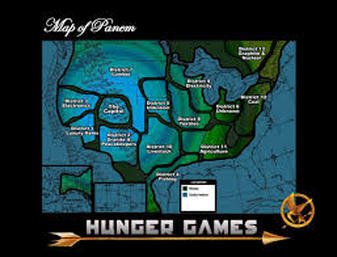
Each district is known for what it produces or provides. Here’s a quick look:
- District 1: Luxury items. Think of beautiful jewelry and fancy clothes for the wealthy in the Capitol.
- District 2: Masonry and defense. They mine and work with stone, and a lot of Peacekeepers come from this district.
- District 3: Technology. They make the computers and machines that Panem uses.
- District 4: Fishing. They catch all the seafood for Panem.
- District 5: Power. They generate the electricity for Panem.
- District 6: Transportation. They make the trains and hovercraft.
- District 7: Lumber. They harvest wood and trees for building.
- District 8: Textiles. They make the fabrics and clothes for Panem.
- District 9: Grain. They grow all the wheat and other grains.
- District 10: Livestock. They raise the animals that people eat.
- District 11: Agriculture. They grow the fruits and vegetables.
- District 12: Coal mining. They dig deep into the ground to get coal.
- District 13 (Destroyed): Graphite and nuclear technology. They were responsible for weapons production before the Dark Days.
Because each district is so specialized, it’s hard for someone to just move to another district and suddenly fit in. You wouldn’t expect someone from District 12, who works in coal mines, to just start working in a fishing boat in District 4 or creating tech in District 3. They don’t have the training or the skills.
The Capitol’s Control
The Capitol doesn’t allow people to move freely because they want to control everything. They keep everyone in their place to make sure that there isn’t any trouble or rebellion. If people moved around freely, it would be harder for the Capitol to keep track of everyone and control the districts. The Capitol’s iron fist maintains this system. People are born, live, and die in their assigned district, following the expectations set for them.
Exceptions and Limited Mobility
While moving districts is very difficult, there are a few exceptions and situations where some movement occurs, but these are often under the watchful eye of the Capitol and come with certain restrictions.
Peacekeepers
Peacekeepers, the Capitol’s law enforcement, have the most freedom to move around. Peacekeepers can move between districts, but they are often stationed far from their home district, which is part of the Capitol’s method of ensuring loyalty, rather than personal choice. They aren’t making a move based on a choice, rather on the orders of the Capitol. This movement is a forced move for them.
Victors and the Victor’s Village
After winning the Hunger Games, tributes become victors. While victors are still technically residents of their home districts, they receive special treatment, including a house in the Victor’s Village. However, the Victor’s Village is also located in their home district and is merely a special neighborhood. This move is not a change in district, it’s a change in living style.
Capitol Escorts and Stylists
Capitol personnel, like the escorts and stylists who accompany tributes during the Games, often travel between districts as part of their job. However, these individuals are not from the districts but rather the Capitol, and their travel is strictly for official purposes and doesn’t involve a permanent change in residency.
The Hob
In District 12, there is a black market called The Hob. People from different districts who are traveling for work might find themselves in a district for trade. While they’re not moving permanently, these instances show that there are small areas where some people do cross district borders, but even this is under strict watch of the Peacekeepers.
Why Moving Districts is Practically Impossible
Let’s break down the main reasons why moving districts isn’t something that happens in Panem:
Social and Economic Barriers
Each district has a deeply rooted way of life. People from different districts have very different ways of living, different accents, and different jobs. They don’t easily accept people from other districts. A person from District 4, for example, might have difficulty finding their place in District 12, and vice versa. The system is designed to create a stark contrast in lifestyle.
Limited Opportunities
Panem’s rigid structure means people are typically stuck doing what their district specializes in. There is not much opportunity for people to explore other types of jobs, and if they do not, they would have difficulty if they were in a new district. Moving districts would mean a lack of work and not being able to provide for a family.
Fear and Control
The Capitol uses fear as a tool to keep the districts in check. The idea of being sent to a new district, especially without the Capitol’s permission, would be terrifying. People know that such behavior can come with serious punishments. The very system is built to keep people in their places.
Travel Restrictions
Traveling between districts is difficult. It’s not like having a car and driving from one city to another. People mostly travel by train or sometimes by plane, which are both controlled by the Capitol. There aren’t any ‘free’ trains or ‘free’ flights, meaning people can not travel around on their own. You need permission from the Capitol to travel, and they don’t give permission to just anyone.
The Consequences of Trying to Move
Let’s imagine someone tried to move from one district to another without permission. What could happen?
Severe Punishments
The Capitol’s punishments are very harsh. A person trying to move districts could be labeled a rebel and face severe consequences. They might be publicly punished, imprisoned, or even executed. The Capitol wants to make an example of anyone who breaks their rules. They do this so others don’t get ideas of doing the same.
Increased Scrutiny
If someone tried to move without permission, they would be watched very closely. Peacekeepers would be very suspicious of them, and their every move would be monitored. They would be living in constant fear of getting caught and punished.
Loss of Support
Moving to a new district without permission would mean losing the support of your community in your original district. You would likely face problems with support from the new district. People would know that you are not from there and that you’ve broken the rules. You might not get food, help or other needs met. The system is designed to keep the communities separate and loyal to their own district.
The Symbolism of Staying Put
The fact that people cannot easily move districts isn’t just a practical rule. It is a symbol of the Capitol’s control over the people of Panem. It shows that the Capitol wants to keep each district separate, isolated, and focused on its role. By restricting movement, the Capitol can ensure that the districts remain under their thumb. They are showing the districts that they have no freedom in their lives.
A Reminder of Power
The inability to move is a daily reminder of the Capitol’s power and how much control they have over every person. It’s a system that is made to break the people and keep them from rebelling. The people of Panem are always aware of their place and how little power they have in the system.
A Catalyst for Rebellion
In some ways, the lack of freedom, including the inability to move districts, is what causes the rebellion. This is a major part of the story of the Hunger Games. The districts want their freedom, and the strict system of Panem is a major reason for it. People are tired of not having any control over their lives.
So, while you can’t move from one district to another in the Hunger Games without the express, and usually forced, permission of the Capitol, it’s important to remember that the very fact that this is true tells us a lot about the world of Panem. It’s a world of control, designed to keep people in their places and prevent any type of uprising. It’s a world where freedom is something many can only dream of.
The 13 Districts of Panem Explained | The Hunger Games Explained
Final Thoughts
Moving between districts in the Hunger Games is strictly prohibited. The Capitol controls all movement, enforcing rigid district boundaries. This is a crucial element of their oppressive system.
The Games themselves are designed to keep districts separate and antagonistic. Therefore, it is almost impossible to relocate outside of the very basic rules established. The question, “can you move districts in the hunger games?” is answered decisively: no, you cannot.

