
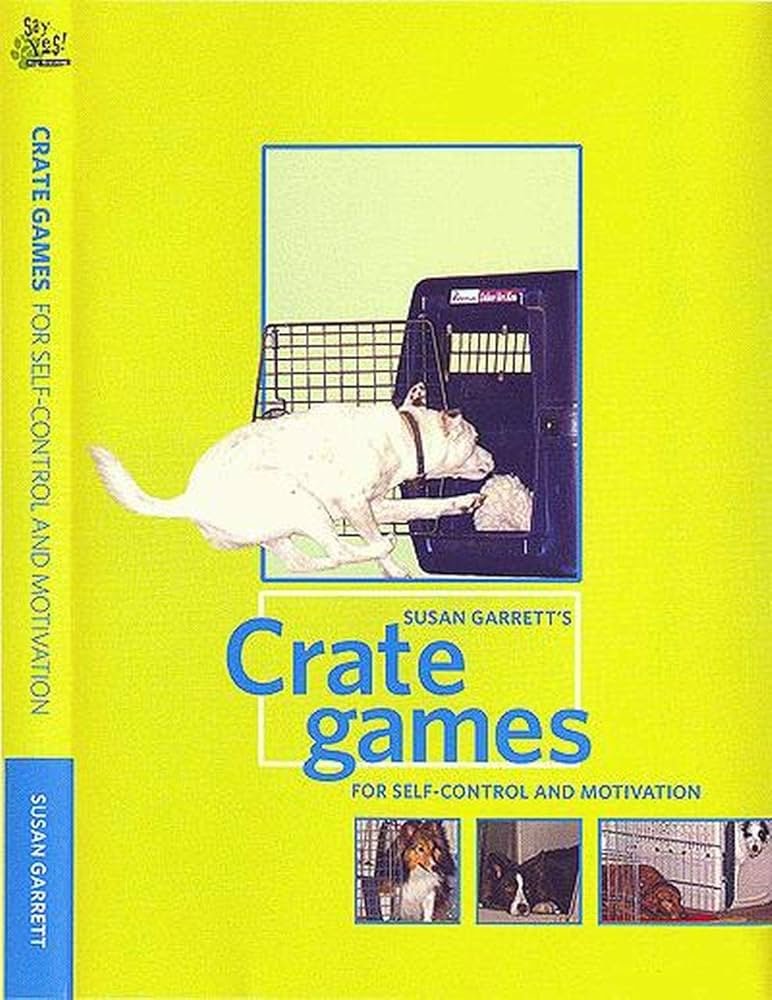
Crate games by Susan Garrett improve your dog’s focus, impulse control, and spatial awareness through a series of structured exercises involving a crate.
Ever wonder how to sharpen your dog’s mind and body with a fun and engaging activity? Consider crate games by Susan Garrett! These games offer a pathway to building a stronger connection with your furry friend.
It’s a simple concept: using a crate in playful ways to boost your dog’s skills. Imagine the possibilities of enhancing their focus and self-control with these games.

`
`Crate Games by Susan Garrett`
`
Susan Garrett is a renowned dog trainer. She’s known for her innovative and positive reinforcement-based training methods.
Crate Games are a cornerstone of her approach. These games help build a strong bond with your dog and teach valuable skills.
`
`What Are Crate Games?`
`
Crate Games are a series of fun, engaging exercises. They transform the crate from a place of confinement to a place of excitement.
These games use positive reinforcement. They make the crate a highly desirable location for your dog.
The ultimate goal is to create a positive association. Your dog should happily enter and remain in their crate.
`
`Benefits of Playing Crate Games`
`
There are many benefits to incorporating crate games into your training routine. They extend far beyond simply crate training.
- Improved Crate Acceptance: Dogs learn to love their crates, seeing them as a safe and comfortable haven.
- Enhanced Obedience: Games reinforce basic commands like “sit,” “stay,” and “come.”
- Increased Focus: Dogs learn to focus on their handler, even in distracting environments.
- Stronger Bond: The playful interaction strengthens the relationship between dog and owner.
- Impulse Control: Games teach dogs to control their impulses and wait for cues.
- Mental Stimulation: Crate Games provide mental enrichment and prevent boredom.
- Problem-Solving Skills: The games encourage dogs to think and solve problems.
- Improved Recall: Many games involve calling the dog to and from the crate, enhancing recall.
- Confidence Building: Successfully completing the games boosts a dog’s confidence.
`
`Key Principles of Susan Garrett’s Training Philosophy`
`
Susan Garrett’s training philosophy emphasizes positive reinforcement. This means rewarding desired behaviors.
She focuses on building a strong relationship with the dog. This is achieved through trust and communication.
She advocates for clear communication. Dogs need to understand what is expected of them.
Garrett also stresses the importance of management. This helps to prevent unwanted behaviors.
`
`Essential Equipment for Crate Games`
`
You don’t need much equipment to get started. Just a few basic items will suffice.
- A Dog Crate: This should be appropriately sized for your dog, allowing them to stand, turn around, and lie down comfortably.
- High-Value Treats: Use treats that your dog finds irresistible. These are your primary motivators.
- A Clicker (Optional): A clicker can be used as a marker to pinpoint the exact moment your dog performs the desired behavior.
- Toys (Optional): Certain games incorporate toys as rewards.
`
`Getting Started with Crate Games: The Foundation`
`
Before you jump into advanced games, establish a solid foundation. Ensure your dog is comfortable with the crate.
Introducing the Crate
Make the crate inviting. Place comfortable bedding inside.
Toss treats into the crate. Let your dog go in and out at their own pace.
Never force your dog into the crate. This can create negative associations.
Feeding in the Crate
Feed your dog meals inside the crate. This helps them associate the crate with positive experiences.
Start with the door open. Gradually close it for short periods as your dog becomes more comfortable.
Short Crate Sessions
Begin with very short crate sessions. Gradually increase the duration as your dog gets used to it.
Reward your dog for remaining calm and quiet in the crate. Use treats and praise.
`
`Examples of Crate Games`
`
There are many different crate games you can play. Here are a few examples to get you started.
The “In and Out” Game
This game teaches your dog to enter and exit the crate on cue.
Say “Crate!” and toss a treat inside. As your dog enters, click (if using a clicker) and reward.
Once your dog is inside, say “Out!” and lure them out with a treat. Repeat the process.
Gradually fade the lure. Eventually, your dog will enter and exit on the verbal cue alone.
The “Stay in the Crate” Game
This game teaches your dog to remain in the crate for increasing periods.
Ask your dog to enter the crate. Once they are inside, say “Stay.”
Start with very short stays. Reward your dog for remaining in place.
Gradually increase the duration of the stay. Continue to reward calm and quiet behavior.
The “Crate and Release” Game
This game focuses on impulse control and delayed gratification.
Ask your dog to enter the crate. Close the door.
Hold a treat in front of the crate. If your dog remains quiet, release them with a cue like “Okay!” and give them the treat.
If your dog barks or paws at the crate, wait until they are quiet for a moment before releasing them.
`
`Troubleshooting Common Crate Training Challenges`
`
Some dogs may resist crate training initially. Patience and consistency are key.
Whining and Barking
If your dog whines or barks in the crate, avoid letting them out immediately. This can reinforce the behavior.
Wait for a moment of quiet before releasing them. You can also try distracting them with a chew toy.
Ensure your dog has had sufficient exercise and potty breaks before crating.
Anxiety and Fear
Some dogs may experience anxiety or fear related to the crate. Consult with a professional trainer or behaviorist.
They can help you develop a customized plan to address your dog’s specific needs.
Consider using calming aids, such as pheromone diffusers or calming supplements.
Refusal to Enter the Crate
If your dog refuses to enter the crate, go back to the basics. Make the crate more appealing with high-value treats and toys.
Avoid forcing your dog into the crate. This will only worsen their aversion.
Break the process down into smaller steps. Reward even small steps towards the crate.
`
`Advanced Crate Games and Concepts`
`
Once your dog is comfortable with the basics, you can introduce more advanced concepts. These can further enhance their skills.
Distance Crate Games
This involves sending your dog to the crate from a distance. It improves recall and obedience.
Start by sending your dog to the crate from a short distance. Gradually increase the distance as they become more proficient.
Use a clear verbal cue, such as “Crate!” and reward them when they successfully enter.
Distraction Crate Games
This involves having your dog remain in the crate while distractions are present. It builds focus and impulse control.
Start with mild distractions, such as someone walking by. Gradually increase the intensity of the distractions.
Reward your dog for remaining calm and quiet in the crate despite the distractions.
Crate Games with Duration and Distance
Combine duration and distance. Have your dog stay in the crate for an extended period.
Do this even with you at a distance. It will test your dog’s reliability.
`
`Adapting Crate Games for Different Dog Breeds and Temperaments`
`
Crate Games can be adapted to suit different dog breeds and temperaments. The key is to tailor the games to your dog’s individual needs and preferences.
High-Energy Dogs
For high-energy dogs, incorporate more physically demanding games. These can help to tire them out before crating.
Try incorporating a short training session before crate games. This will help to focus their energy.
Provide plenty of chew toys in the crate. This will keep them occupied and prevent boredom.
Anxious Dogs
For anxious dogs, focus on creating a safe and comfortable environment. This is crucial for reducing their anxiety.
Use calming aids, such as pheromone diffusers or calming supplements. Provide plenty of soft bedding in the crate.
Avoid rushing the process. Allow your dog to adjust to the crate at their own pace.
Independent Dogs
For independent dogs, make crate games more rewarding. This will increase their motivation to participate.
Use high-value treats that they find irresistible. Incorporate toys into the games.
Keep the sessions short and engaging. This will prevent them from losing interest.
`
`The Importance of Positive Reinforcement in Crate Games`
`
Positive reinforcement is the cornerstone of Susan Garrett’s training philosophy. It is crucial for successful crate training.
Avoid using punishment or coercion. This can create negative associations with the crate.
Focus on rewarding desired behaviors. This will motivate your dog to repeat them.
Use high-value treats, praise, and toys as rewards. Keep the training sessions fun and engaging.
`
`Integrating Crate Games into Daily Life`
`
Crate Games shouldn’t be confined to formal training sessions. Integrate them into your daily life.
Use the crate as a place for your dog to relax and unwind. This will help them see it as a safe and comfortable haven.
Feed your dog meals in the crate. This will continue to associate the crate with positive experiences.
Occasionally, give your dog a special treat or toy when they are in the crate. This will reinforce the positive association.
`
`Crate Games and Problem Behaviors`
`
Crate games can also be helpful in addressing certain problem behaviors. For example, separation anxiety or excessive barking.
By creating a positive association with the crate, you can help your dog feel more secure and less anxious when left alone.
Crate games can also teach impulse control. This can help to reduce excessive barking or other unwanted behaviors.
However, it’s important to address the underlying cause of the problem behavior. Crate games are just one tool in your training arsenal.
`
`Resources for Learning More About Crate Games by Susan Garrett`
`
Susan Garrett offers a variety of resources for learning more about crate games. These include books, online courses, and workshops.
Her “Crate Games” DVD is a popular resource for dog owners. It provides a step-by-step guide to playing the games.
Her online training program, “Recallers,” also includes a significant focus on crate games. It provides in-depth instruction and support.
Consider attending one of her workshops or seminars. This is a great way to learn from her directly and get personalized feedback.
Susan Garrett's Crate Games
Final Thoughts
Crate games by Susan Garrett offer a fun and effective way to build focus and drive in your dog. They encourage problem-solving skills, promoting mental stimulation. This positive training method strengthens the bond between you and your canine companion.
These games develop confidence and control. Consistent practice yields a well-behaved and happy dog. It is a must to explore these engaging exercises.
In short, crate games by Susan Garrett provide a valuable framework for dog training. You can develop your dog’s obedience skills and overall well-being with these creative games.

