
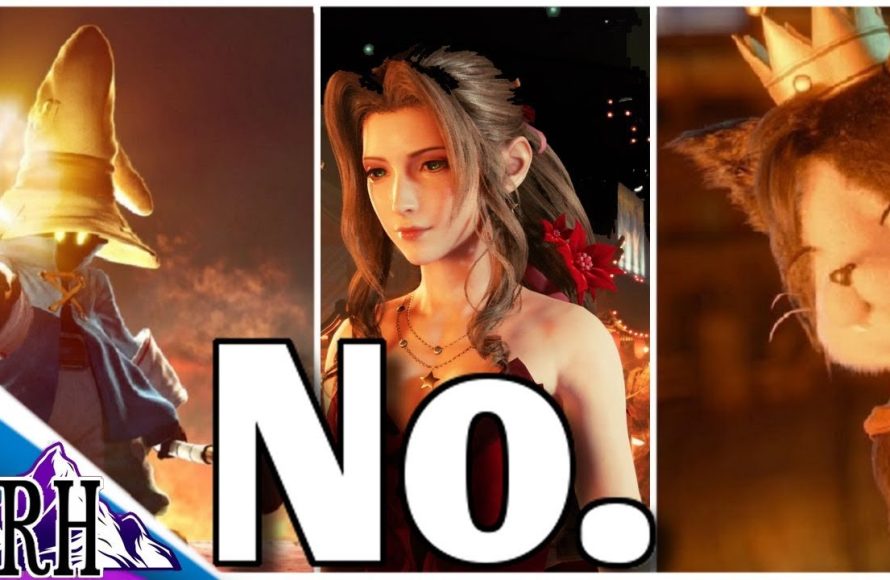
No, generally, the main numbered Final Fantasy games are not directly connected in terms of story or characters. They exist as distinct universes with recurring themes and elements.
Ever wondered if all those Final Fantasy adventures take place in the same world? It’s a question that comes up often, especially when you notice recurring creatures and names. Many players ponder, ‘do final fantasy games connected?’
While certain titles share a universe, mostly the numbered entries do not. Instead, each game offers a fresh, standalone experience. You can jump in anywhere without needing prior knowledge from another title.

Do Final Fantasy Games Connected? Unraveling the Threads of a Legendary Series
That’s a question many fans ask when diving into the world of Final Fantasy. With so many numbered entries, spin-offs, and sequels, it’s easy to wonder if these fantastic worlds are secretly intertwined. The short answer? It’s complicated! While they aren’t all part of a single, continuous storyline like, say, the Marvel Cinematic Universe, there are definitely connections to explore.
The Main Line: Standalone Stories, Shared Themes
The core Final Fantasy games, the ones with the numbers (I, II, III, and so on), are generally designed to be standalone experiences. You can jump into almost any of them without needing to know the plot of previous games. Each game introduces a fresh world, new characters, and an original conflict. Think of it like a collection of beautifully illustrated storybooks; each one is different, but they all share a similar art style.
Common Threads That Bind the Games
Even though the stories are unique, the Final Fantasy series does share common elements that act like invisible threads connecting them all. These elements are the heart and soul of what makes a Final Fantasy game feel like, well, a Final Fantasy game. Let’s look at some of these recurring motifs:
- Crystals: Powerful sources of energy and often vital to the world’s survival. Crystals are a frequent centerpiece of the plots.
- Chocobos: These feathery, yellow birds are the iconic mounts of the series. They come in various colors and offer different travel abilities.
- Moogles: Small, white, fuzzy creatures with bat-like wings and a charming “kupo!” catchphrase. They are often helpers, merchants or just friendly faces.
- Summons/Espers: These are powerful entities that the heroes can call upon in battle to deal devastating damage. Ifrit, Shiva, Ramuh and many more are common summons in many titles.
- Job Classes: The familiar archetypes of Warriors, Mages, Thieves, and other classes. Many games feature variations on these roles.
- Airships: Usually, a crucial mode of transportation, airships allow characters to travel between locations much faster.
- Recurring Names: Names like Cid, Biggs, and Wedge often appear across different games, even though they are different people. These are like easter eggs for longtime fans.
Spin-Offs, Sequels, and Shared Worlds
Beyond the main numbered titles, things start to get a bit more interconnected. There are a large number of spin-off games, direct sequels, and even games that share a single universe or mythos. It’s here that some of the deeper connections start to show.
Direct Sequels: Continuing the Story
Some games directly continue the story of a previous title. This means that you need to play the first game to fully understand and appreciate the events of the sequel. Examples include:
- Final Fantasy X-2: This game directly follows the events of Final Fantasy X, featuring returning characters and locations.
- Final Fantasy XIII-2 & Lightning Returns: Final Fantasy XIII: These games directly continue the story started in Final Fantasy XIII.
The Fabula Nova Crystallis Series: A Shared Mythos
The games within the Fabula Nova Crystallis sub-series, which includes Final Fantasy XIII, Final Fantasy Type-0, and Final Fantasy XV initially started with the same mythos. While these games aren’t directly connected in terms of characters or immediate plot lines, they do share a common mythology focusing on powerful crystals and gods. In other words, they are set in different places, but the core story elements are similar. This makes them feel thematically connected, even though the characters and conflicts are different.
- The L’Cie and Fal’Cie: Key concepts of the Fabula Nova Crystallis mythology. They are essentially chosen ones of the gods or the gods themselves, with powerful abilities.
- Crystal Power: The significance of crystals as a source of power is a common theme throughout the Fabula Nova Crystallis games.
The Ivalice Alliance: A Shared World
Games like Final Fantasy XII, Final Fantasy Tactics, and Vagrant Story are set within the same world of Ivalice. Although characters and storylines are different, the geography, races, and even political structures overlap. This creates a sense of shared history and culture, offering a feeling of connectedness.
The Multi-verse: Exploring Different Dimensions
The concept of a “multi-verse” is increasingly making its way into the Final Fantasy series, mostly through the Dissidia games. This idea suggests that characters from different Final Fantasy worlds can sometimes cross paths. Games like:
- Dissidia Final Fantasy & Dissidia 012 Final Fantasy: These games pull heroes and villains from all over the Final Fantasy main series into a battle of light versus dark.
- World of Final Fantasy: This game blends chibi-style characters from various entries into a charming adventure, further blurring the lines between games.
Interdimensional Travel and Character Appearances
Though mostly seen in spin-offs, the concept of interdimensional travel means that characters are not always bound to the worlds where they originally began. Characters may be summoned into a different world or a character from another world can appear as a guest character. These crossovers add an element of surprise and fan service to the games, but these crossovers do not always mean that the story is set in the same world.
Examples of Specific Game Connections
Let’s delve into some specific examples to illustrate how the connections work in the Final Fantasy Universe.
Final Fantasy VII and its Extended Universe
The connection between Final Fantasy VII and its spin-offs is one of the best-known examples of connected games. There are several spin-offs, prequels, and sequels to the original, including:
- Crisis Core: Final Fantasy VII: A prequel that tells the story of Zack Fair, events that led directly to the original Final Fantasy VII
- Dirge of Cerberus: Final Fantasy VII: A sequel that focuses on Vincent Valentine’s story, some years after the events of the original game.
- Final Fantasy VII Remake & Final Fantasy VII Rebirth: Modern remakes of the original, expanding on the existing story with new and reimagined elements.
These connected titles expand on the original storyline, showing more about the characters, events, and world of Final Fantasy VII. Playing these games can give you a much richer understanding of the world of Midgar.
Final Fantasy IV and The After Years
Final Fantasy IV got a direct sequel titled Final Fantasy IV: The After Years. It brings back a lot of the familiar characters but focus on a new generation and is set several years after the original.
The Spirit of Final Fantasy
Ultimately, the connections between Final Fantasy games are less about a strict timeline and more about shared spirit and themes. The recurring elements, like crystals, summon beasts, and job systems, create a sense of familiarity for fans, and a sense of belonging for each games. Each new numbered game is a chance to visit a new unique world, yet feels very much like a final fantasy experience.
The Joy of Discovery
While it can be tempting to try to create one single timeline for the Final Fantasy games, a lot of the fun is discovering these connections for yourself. Seeing a recurring summon, a familiar name, or a similar world design can bring a smile to the face of any fan, both new and old. The “connections” are more like homages and shared DNA, they allow each game to have its own identity but also form part of a great, larger legacy.
The real magic in Final Fantasy comes from each game’s individual story. Each game has its own themes and heart. Whether you play just one, or all of them, each adventure is a unique experience. The “connectedness” of the games is really a way for the developers to show their love for the games, and this makes the whole franchise richer and more interesting to experience.
So, are Final Fantasy games connected? Not in a single, linear way, but in many other creative and exciting ways. They share the essence of what makes a Final Fantasy game special, and that, in itself, creates a powerful bond between all of these wonderful games.
Are Final Fantasy Games Connected? This is Dumb!
Final Thoughts
Ultimately, while themes and recurring elements appear, core narratives in Final Fantasy largely exist separately. Shared names, summons, and concepts create a sense of familiarity for fans. However, each numbered entry generally offers a distinct story and world.
The question of “do final fantasy games connected” leads to a simple answer, they are not directly. Each game allows players to engage with a new experience. This approach gives great flexibility and fresh narratives.

