
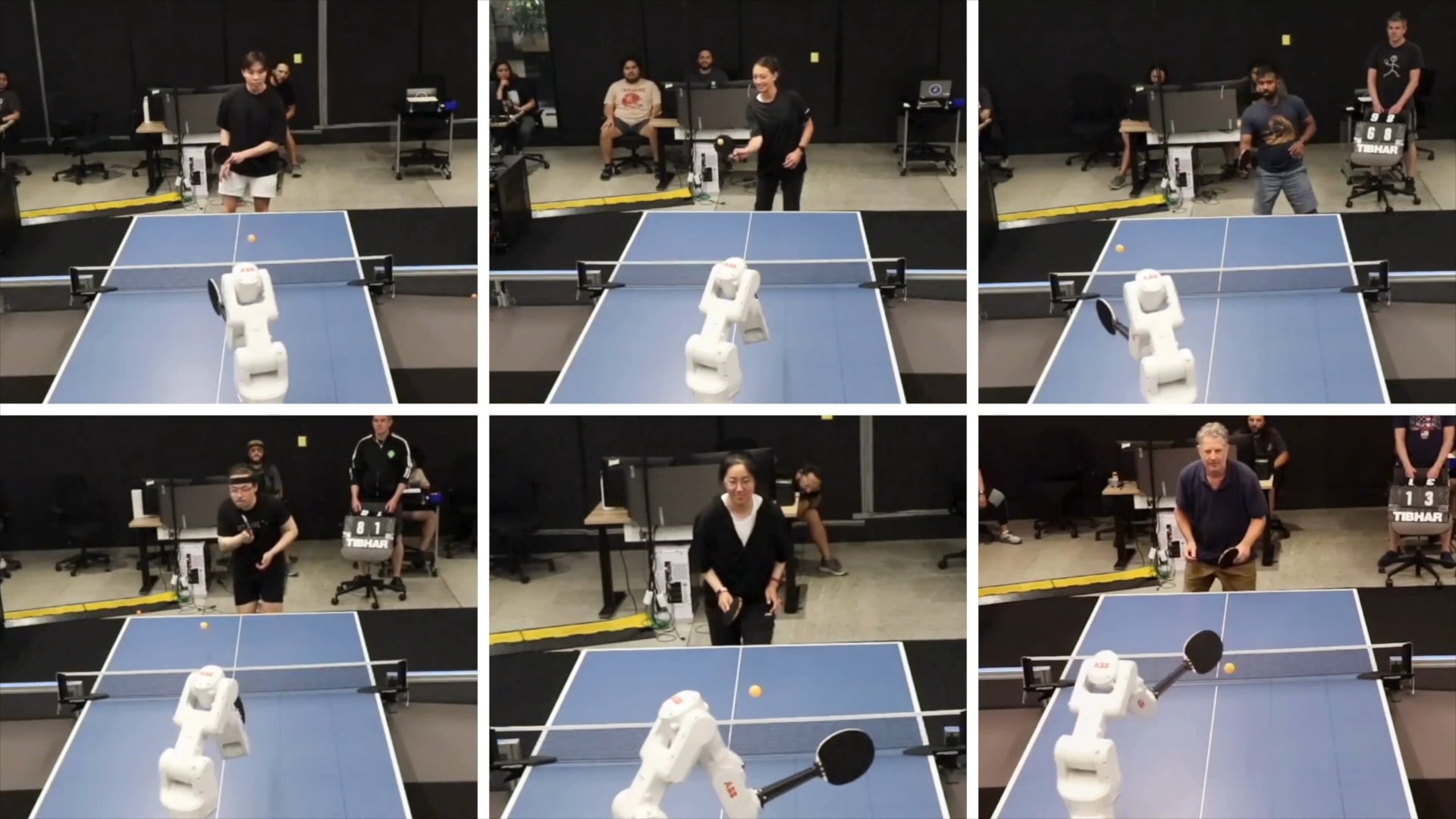
Yes, some advanced ping pong robots do have simulated games, offering various difficulty levels and practice scenarios.
Ever wondered if your ping pong robot opponent is just going through the motions or actually thinking? The question, “do ping pong robots have simulated games” pops up quite often. Well, the technology has come a long way.
Many modern robots include programmed game modes that mimic realistic match situations. This helps users improve specific skills, from forehand loops to backhand blocks. These simulated games provide a more engaging and effective training experience.

Do Ping Pong Robots Have Simulated Games?
Have you ever wondered if those cool ping pong robots you see can actually play games like you do? It’s a great question! The answer isn’t a simple yes or no, but it’s definitely interesting. Let’s dive into the world of ping pong robots and find out just how they “play.” We’ll explore what “simulated games” really means for these amazing machines, and how they help players get better at table tennis.
What Does “Simulated Game” Even Mean?
When we talk about a simulated game with a ping pong robot, we’re not talking about a robot that feels emotions or thinks like a human opponent. Instead, it means the robot is programmed to behave like a player during a match. It does this by using complex computer programs to change the speed, spin, and direction of the ball it shoots. Instead of just shooting balls randomly, the robot can be programmed to send shots that mimic different game situations and styles of play that you would typically encounter when playing against a real person. This includes practicing specific strokes and tactics, making your training more effective.
Basic Robot Functions vs. Game Simulation
To understand simulated games, we first need to understand what basic ping pong robots can do. Most robots can:
- Shoot balls at different speeds.
- Shoot balls with different spins (topspin, backspin, sidespin).
- Change the frequency of the ball being shot (the number of balls shot per minute).
- Change where the balls go on the table.
These basic functions are great for practicing basic hits. But, a truly simulated game goes beyond this. It involves a sequence of programmed shots, like a pattern, that mimic a rally or a game situation. It’s not just random balls; it’s a planned sequence of shots, giving you a more real-feeling training session.
How Robots Create a Simulated Game
Creating a simulated game involves combining the robot’s basic functions in intelligent ways. Here’s how it generally works:
Software and Programming
The brains behind a robot simulation is the software. This is a program, which consists of a set of instructions that tells the robot what to do and when to do it. The programmer, or sometimes a user, can specify:
- The specific pattern of shots (e.g. short backspin followed by long topspin).
- The specific speed and spin combinations of each shot.
- The target location of each shot (left, right, middle of the table).
- The number of repetitions of the sequence.
Some more advanced robots can even adjust the simulated game based on how well the player returns the ball. For example, if the player consistently struggles with backspin shots, the robot might increase the number of backspin shots in the sequence.
Different Levels of Simulation
There are different levels of simulated games. Some robots might have very simple sequences where the same series of shots are repeated over and over. Others can have complex programs that mimic different players or specific game strategies.
- Basic Simulation: The robot shoots the same series of shots over and over again. This helps in practicing the return of specific type of shots.
- Intermediate Simulation: The robot uses pre-programmed patterns with a mixture of different types of spins, speeds, and locations. This helps in practicing reacting to different types of shots.
- Advanced Simulation: The robot might even adjust the pattern based on player’s performance or be able to mimick specific styles like defensive style or offensive style.
Examples of Simulated Game Scenarios
Let’s see some examples of what a simulated game with a robot might look like:
Practicing Forehand Loop
The robot might begin by shooting short backspin balls to the player’s forehand side. Then the robot will shoot a high topspin loop to practice your forehand loop. This helps practice the proper techniques to counter these types of shots that are normally faced in real match.
Practicing Serve Return
The robot may be programmed to simulate different types of serves (short, long, different spins). This would allow players to improve their serve receiving abilities. The robot will serve a different type of serve and a follow up shot that is similar to an attack done after a serve.
Simulating Different Opponent Styles
Some advanced robots can be programmed to mimic the playing styles of real players. For example:
- A defensive style: The robot will send backspin pushes and blocks from far away from the table, simulating an opponent who mostly defends.
- An offensive style: The robot will send fast, topspin drives and loops that forces you to counter attack aggressively.
By practicing against different simulated styles, players become well-rounded and prepared for many playing scenarios.
Benefits of Simulated Game Training
Why are simulated games so useful? Here are some benefits:
Consistent Practice
A robot doesn’t get tired or make mistakes like a human opponent can, so your practice will be consistent. The robot delivers the exact same ball each time, allowing you to focus on getting your own techniques right.
Targeted Training
You can focus on your weaknesses. You may program the robot to focus on the types of shots that you struggle the most with.
Increased Repetition
You can get in many repetitions with specific shots and sequences in very short time period, allowing you to develop muscle memory and improve your consistency.
Convenience
You can practice anytime without the need to find a partner. This is extremely helpful if you don’t have many training partners around you or have very little time to practice.
Data Analysis
Some modern advanced ping pong robots even keep track of your practice. They provide information on things like how fast and how consistent you are, helping you track your improvement.
Limitations of Simulated Games
While simulated games are beneficial, they’re not perfect. Here are some limitations to keep in mind:
Lack of Adaptability
The robot follows its program and does not have the ability to spontaneously adjust to the player’s gameplay as a human would do. Human opponents may change their strategy mid-match in response to your game, something a robot can’t truly replicate on its own.
No “Feel” of a Real Game
A real match has a certain tension and feel to it, the pressure, unpredictability, and mental challenge that a robot just can’t recreate. This means players need to train against humans as well.
Dependence on Good Programming
If the simulation is not done well, a player can develop bad habits. A poorly programmed sequence may focus on techniques or game scenarios which are unlikely to happen in real match situations.
Cost
Advanced robots that have powerful and versatile simulation software may be very expensive, potentially putting them out of reach of a lot of players.
Choosing the Right Robot for Simulated Games
If you’re thinking about getting a ping pong robot for simulated games, here are a few important things to consider:
Level of Programming
Some robots only have very simple settings and basic sequence training options. Others have very complex software that allow for advanced simulation and customization. The more advanced features you need, the higher the price will likely be.
Features
Look at the robot’s features like how many spins it can generate, range of speed, how big the ball hopper is, how many areas of the table can it target, and any other additional features that might be helpful to your training.
User-Friendliness
A very complex software might make training sessions very effective but is also useless if the software is not user friendly and difficult to operate. Make sure to look at the software and see if the interface is easy for you to understand and operate.
Price and Quality
Balance the cost with what features and simulation capabilities the robot offers, and look at the reviews to make sure the product has a solid build quality.
Future of Simulated Ping Pong Games
The technology for ping pong robots is always getting better. In the future, we might see robots that can:
- Learn and adapt to a player’s style of play over time.
- Use AI (Artificial Intelligence) to create more realistic simulated matches.
- Provide more detailed performance analysis, with advice and suggestions on how to improve.
With such improvements, robots could become even more valuable training partners for ping pong players of all levels.
So, do ping pong robots have simulated games? Absolutely! They use their ability to control ball speed, spin, and placement with complex programming to mimic the patterns of a real game. While they don’t feel or think like a human opponent, they do provide great practice. This helps players improve their skills and make the most out of their practice time. While robots might not be a total replacement for actual games against humans, they serve as a powerful training tool to help players at all levels and are getting better and better with passing time.
Ai robots taking over ping pong 👀 #shorts
Final Thoughts
Ping pong robots often include practice modes, but do ping pong robots have simulated games? The short answer is yes, some do. These simulations mimic real match conditions, with varying speeds and spin.
Many advanced robots offer this capability. They create a virtual opponent with adjustable skill levels. This feature allows players to improve in a game-like setting.
These simulated games significantly boost practice efficiency. Players can prepare for real competition. So, do ping pong robots have simulated games? Yes, offering a valuable training tool.

