
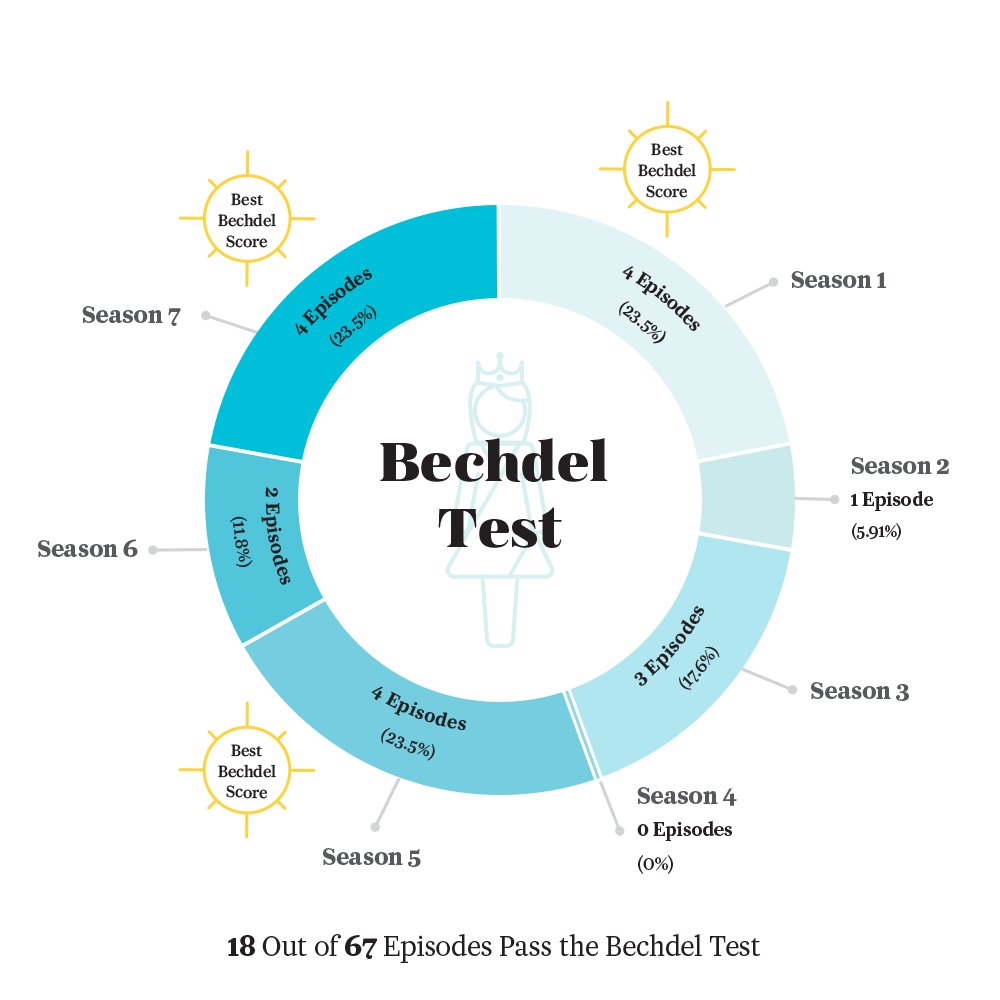
No, Game of Thrones largely fails the Bechdel test due to limited conversations between women that aren’t about men.
Does Game of Thrones pass the Bechdel test? This question sparks a lot of debate among fans and critics alike. Many appreciate the show’s complex female characters, but some wonder if they get enough narrative space outside their relationships with men. This is a valid concern to explore, as the Bechdel test remains a basic measure of female representation in media.

Does Game of Thrones Pass the Bechdel Test?
Let’s talk about the super popular show, Game of Thrones. You know, the one with dragons, knights, and lots of power struggles? It’s an epic story loved by many. But here’s a question: does it pass the Bechdel Test? This test, named after cartoonist Alison Bechdel, is a simple way to see how well a story represents women. It has three rules, and we will see if Game of Thrones manages to follow them.
What is the Bechdel Test?
Before we jump into the world of Westeros, let’s make sure we understand what the Bechdel Test is all about. It’s not a test of how “good” a movie or show is, but rather a way to check if female characters are portrayed as real people with their own goals and thoughts. Think about it like this – are they more than just girlfriends, wives, or daughters? The test has three simple parts:
- The story must have at least two women in it.
- These two women must talk to each other.
- Their conversation should be about something other than a man.
That sounds pretty easy, right? But you might be surprised how many stories fail this simple check. The test is a quick and easy way to examine gender representation in storytelling.
Game of Thrones: A Quick Look at the Female Characters
Okay, now let’s think about Game of Thrones. We’ve got a lot of amazing female characters. There’s Daenerys Targaryen, the dragon queen who wants to rule the seven kingdoms. There’s Cersei Lannister, the cunning queen who isn’t afraid to get her hands dirty to remain in power. Then we have Sansa Stark, who goes from being a naive girl to a powerful leader. We also have Arya Stark, the brave girl who wants to be a warrior. And there are other characters like Brienne of Tarth, a knight known for her loyalty and strength, and Missandei, Daenerys’s wise advisor. All of these women have complex and varied journeys. But do they pass the Bechdel Test, though?
Analyzing Conversations: Do They Talk About More Than Men?
Let’s dig a bit deeper and examine the conversations between the female characters. It’s easy to fall into the trap of thinking a strong female character who’s the center of attention means a show will automatically pass the Bechdel test, but that’s not always the case. The conversations need to be substantive and not solely revolve around their relationship with men. This is where the show faces some challenges.
Daenerys and Missandei: Strategy and Politics
Daenerys and Missandei have many conversations, and most of them pass the third part of the test. They talk about how to rule, about the people they’re trying to help, and about making hard choices. Missandei is Daenerys’s confidante and offers advice on more than just romantic matters, they make a strong, female-focused team. Their discussions often concern strategies for dealing with enemies, navigating complicated political landscapes, and what it means to be a good ruler.
Sansa and Arya: Family and Survival
Sansa and Arya, two sisters with differing life paths, also converse often, often about family and their survival through difficult times. However, many of their conversations revolve around their shared past with men like Joffrey or Ramsay. However, as they grow stronger, they shift their focus, discussing how to rule, build alliances, and protect their people, particularly in the later seasons, meaning they frequently pass the Bechdel test. Their growth as people and leaders is depicted through their conversations with one another and not just with men.
Cersei and Other Women: Power and Manipulation
Cersei is a very powerful character, and we see her talking with other women. She speaks to ladies-in-waiting, servants, or even powerful players like Olenna Tyrell, discussing plots, the future of the kingdom and more. Yet, her dialogue often circles back to her family, especially her son, or the men in her life such as Jaime. Her interactions with other women are often transactional or manipulative. She may be a powerful character, but this doesn’t mean she and the other female characters always talk about something other than the men.
Brienne and Other Female Characters: Honor and Duty
Brienne of Tarth also has meaningful discussions with female characters. She often speaks with Sansa about duty, loyalty, and protecting the weak. She also interacts with women such as Margery Tyrell, discussing honor and court politics. These conversations do often pass the test, showing that the women have lives beyond the men in the story. Brienne’s deep sense of honor and dedication is not limited to men, and she inspires female characters to be brave.
Areas Where Game of Thrones Falls Short
Despite these examples where the series does succeed, Game of Thrones also misses the mark in some significant areas. Here’s a closer look:
Conversations Centered Around Men
It’s fair to say many conversations between women ultimately revolve around men. These conversations are about their feelings for men, their actions, or the power men hold in Westeros. The early seasons, in particular, fall into this trap a lot, with even strong women often talking about men and family lineages.
Lack of Meaningful Female Interactions
At times, female characters, especially those from different walks of life, don’t interact much. There are missed opportunities for interesting conversations that could have explored their different experiences or perspectives. The absence of dialogue between these characters weakens the narrative’s representation of women.
Over-Sexualization
The representation of women in the show, especially in the first few seasons, is a key reason it is often discussed in relation to the Bechdel Test. Women are often shown in ways that are more for the benefit of the viewer rather than for the benefit of the story. This can be a distraction from their characters, and it reduces their role to more than just a person with their own life.
A Season-by-Season Look
Let’s break down how Game of Thrones fares season by season. It’s not a fixed line, and the show does improve over time in regards to how it portrays women and their dialogue.
| Season | Bechdel Test Performance | Notable Female Interactions |
|---|---|---|
| Season 1 | Poor | Limited meaningful conversations, often centered around men. |
| Season 2 | Fair | Slight increase in female conversations, but still often linked to men. |
| Season 3 | Fair | Introduction of key female friendships, but still not enough to be considered a strong pass. |
| Season 4 | Mixed | More conversations start to address political and personal challenges for women. |
| Season 5 | Mixed | Some improvements, but over-sexualization and objectification still exist. |
| Season 6 | Good | More meaningful interactions, with women taking on more leadership roles. |
| Season 7 | Good | Stronger conversations about power and strategies for female characters. |
| Season 8 | Good | Female characters play key roles, and have more direct and substantial dialogues. |
As the show progresses, we see a clear effort to give the women characters more agency. They also get more meaningful conversations that explore the world without always being tied to men. However, the early seasons don’t fully pass the test, and there are still some areas where the show falls short overall. The show gets better as it goes on, but the impact of the show’s early failings is not easy to forget.
Why Does This Test Matter?
You might be wondering, why does it even matter if Game of Thrones passes the Bechdel Test? It’s just a show, right? Well, how stories portray women shapes how we view the world. When we only see women talking about men, it sends a message that their lives don’t have much to offer beyond those relationships. It’s important to have stories that show girls and women are complete people, with their own goals, dreams, and opinions. Stories that pass the Bechdel Test give us all a fuller, richer view of human life, not just a half story. By examining stories and their use of women, we can challenge stereotypes and encourage writers to create more equal narratives. This ultimately makes for better stories for all viewers.
So, does Game of Thrones pass the Bechdel Test? It’s complicated. Some parts of the show do, and others don’t. It’s not a simple yes or no answer. The show improves as the seasons progress, but it has some obvious early failings. The Bechdel test is a good starting point to begin conversations about how we represent women on screen, and where we can make changes to create better stories. Game of Thrones, with all its complexities, teaches us a lot about the challenges of equality.
LOTR – Bechdel Test
Final Thoughts
Ultimately, Game of Thrones often fails the Bechdel test despite having several female characters. Many of their interactions revolve around men, power struggles directly linked to male figures, or their own romantic relationships.
While some scenes feature conversations between women that seemingly pass, a deeper analysis reveals that these talks are often about male characters. This shows a must needed improvement in writing women’s stories independently from men.
Therefore, the answer to ‘does game of thrones pass the bechdel test’ is mostly no. Its frequent failure highlights a need for more female-centric dialogue and narratives in popular media.

