
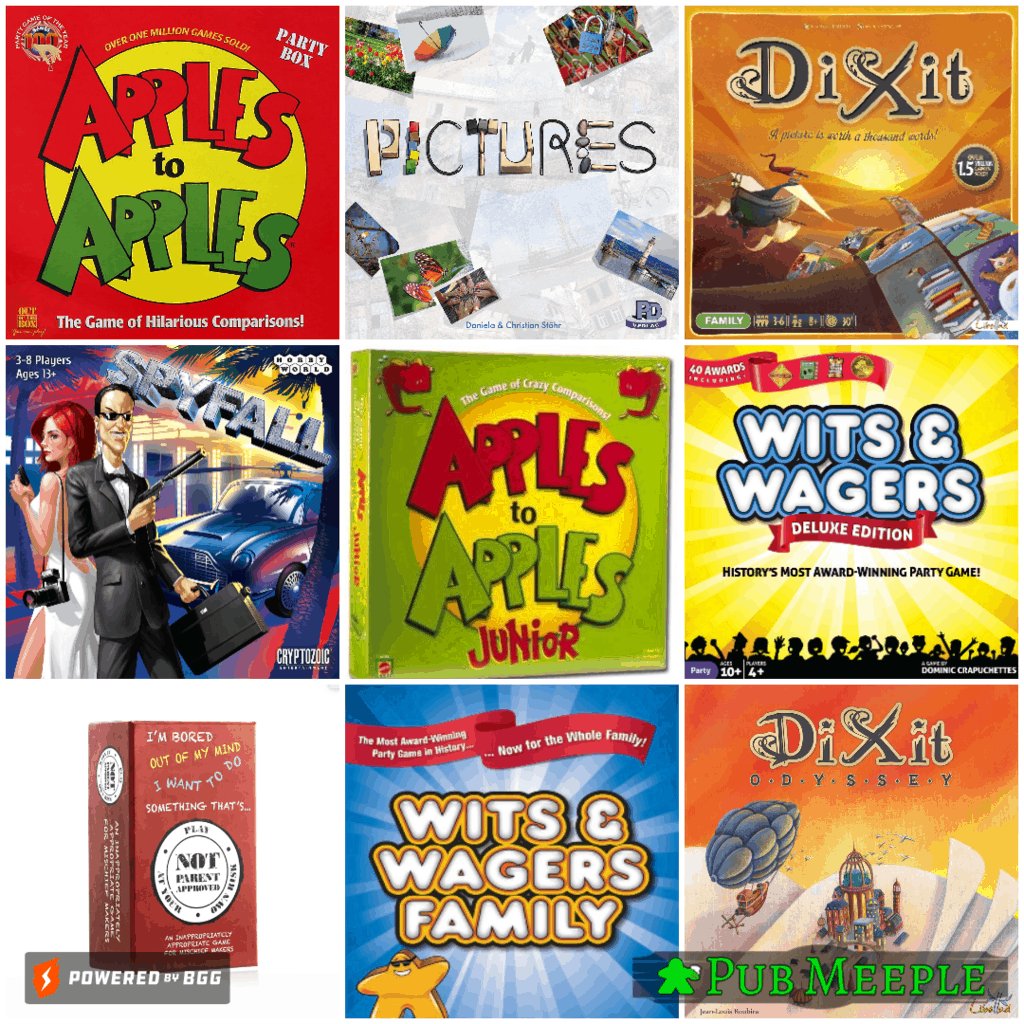
For games like Apples to Apples, consider Cards Against Humanity (for mature audiences), Dixit (for imaginative play), or Codenames (for word association with a twist).
Here’s the requested content:
Looking for something similar to Apples to Apples? You’re definitely not alone; its simple yet hilarious gameplay has made it a party favorite. But what if you’re ready to explore other options?
There’s a whole world of comparison and association games out there. Each offers unique spins on the formula.
Let’s take a peek at some great games like Apples to Apples to get your next game night going!

Games Like Apples to Apples: Find Your Next Party Hit
Apples to Apples is a classic party game. It provides easy laughs and often showcases your friends’ unique senses of humor.
But what if you’re looking for something new? Maybe you’ve played Apples to Apples too many times. Perhaps you need a game that caters to a slightly different sense of humor or offers a different dynamic.
There are many games that capture the spirit of Apples to Apples. This article explores a variety of great alternatives for your next game night.
Cards Against Humanity: A Darker Twist
Cards Against Humanity is a notorious party game. It is definitely not for the faint of heart.
This game takes the Apples to Apples formula and injects a heavy dose of offensive humor. Players match cards to complete fill-in-the-blank statements.
The results are often outrageous and hilariously inappropriate. It’s essential to know your audience before breaking out Cards Against Humanity.
Key Differences from Apples to Apples
Cards Against Humanity embraces shock value. Apples to Apples typically stays within more family-friendly boundaries.
The card combinations in Cards Against Humanity can be extremely absurd. This can lead to much more laughter, or offense, depending on the players.
Cards Against Humanity is best suited for adult groups with a shared sense of humor.
Superfight: The Argument Game
Superfight pits fictional characters against each other. These characters are imbued with absurd powers and weaknesses.
Players argue why their character would win in a fight. The game relies on creative thinking and persuasive arguments.
Gameplay Mechanics
Each player draws a character card and power cards. They then present their fighter and argue for their victory against another player’s fighter.
The other players (and sometimes a rotating judge) vote on who they think would win. Superfight is all about making ridiculous scenarios seem plausible.
What Do You Meme?: The Internet Culture Game
What Do You Meme? brings internet memes to life in game form. Players caption images with reaction texts.
The goal is to create the funniest meme, as judged by a rotating judge.
How It Works
Each round, a picture card is revealed. Players then choose a caption card from their hand that they think best fits the image.
The judge selects the funniest combination. The player who submitted the winning caption wins the round.
What Do You Meme? requires a good understanding of internet culture.
Quiplash: Improvise Your Way to Victory
Quiplash is a hilarious party game. It thrives on player-generated content.
Players answer prompts with witty responses. The other players then vote for their favorite answer.
Digital Advantage
Quiplash is played using phones or tablets as controllers. This makes it easy for everyone to participate.
The game encourages creativity and improvisation. Quiplash is sure to generate laughs.
Telestrations: A Visual Twist on Telephone
Telestrations combines drawing and guessing. It is a visual twist on the classic game of Telephone.
Players draw what they see. They then pass their drawings on, leading to hilarious misinterpretations.
The Fun of Miscommunication
Players start with a word or phrase. They then draw a picture of it. The next player guesses what the drawing is.
They then draw their interpretation of that guess. This continues around the circle.
The final player reveals their guess. Hilarity ensues as the original prompt gets twisted and misinterpreted.
Codenames: A Game of Clever Clues
Codenames is a word association game. It requires teamwork and clever thinking.
Two teams compete to identify their secret agents based on one-word clues.
Strategic Wordplay
Spymasters give one-word clues that relate to multiple words on the board. Their teammates must guess which words are their agents.
The game requires careful planning. Teams need to avoid guessing the assassin, which leads to instant defeat.
Concept: Abstract Communication
Concept uses universal icons. Players must communicate a concept without speaking.
They use these icons to guide other players towards the correct answer.
Visual Communication
A team selects a word or phrase. They then place tokens on icons on the game board to represent the concept.
The other players try to guess the word or phrase. Concept challenges players to think outside the box.
Dixit: Storytelling Through Imagery
Dixit is a storytelling game. It uses beautiful and evocative imagery.
Players take turns being the storyteller. They provide a clue related to one of their cards.
Interpreting the Artwork
The other players choose a card from their hand that they think best matches the clue. All the cards are shuffled and revealed.
Players then vote on which card they think belongs to the storyteller. Dixit encourages imagination and interpretation.
Taboo: The Forbidden Words
Taboo is a word-guessing game with a twist. You can’t say certain forbidden words.
Players must describe a word without using the listed taboo words.
Creative Descriptions
One player tries to get their team to guess the word on their card. However, they cannot use the taboo words listed on the card.
This requires creative descriptions and quick thinking. Taboo is a fast-paced and challenging game.
Scattergories: Thinking on Your Feet
Scattergories is a word game that tests your vocabulary and quick thinking. Players must come up with words that fit certain categories and start with a specific letter.
Categories and Letters
A letter is chosen, and a list of categories is provided. Players must think of words that fit each category and start with the chosen letter.
The goal is to come up with unique answers that no one else has. Scattergories is a fun way to expand your vocabulary.
Balderdash: Bluffing Your Way to Victory
Balderdash is a game of bluffing and deception. Players create fake definitions for obscure words.
The goal is to trick other players into thinking your definition is the correct one.
The Art of Deception
A word is chosen, and each player writes down a definition for it. The real definition is also included.
Players then vote on which definition they think is the correct one. Balderdash rewards creativity and deception.
Say Anything: What Would You Say?
Say Anything is a game of opinions and predictions. Players answer questions with whatever comes to mind.
One player acts as the judge and chooses their favorite answer.
The Power of Persuasion
A question is asked, and each player writes down an answer. The judge secretly chooses their favorite answer.
The other players then bet on which answer they think the judge will choose. Say Anything is a game of persuasion and predicting what others will think.
Loaded Questions: Revealing Personalities
Loaded Questions is a game of revealing personal preferences and personalities. Players answer open-ended questions.
The other players then try to guess who wrote which answer.
Getting to Know Each Other
A question is asked, and each player writes down an answer anonymously. The answers are then read aloud.
Players then try to guess who wrote each answer. Loaded Questions is a fun way to get to know your friends and family better.
Relative Insanity: Family-Friendly Humor
Relative Insanity combines setup cards and punchline cards for comical results. It is designed to be a family-friendly version of Cards Against Humanity.
Creating Absurd Situations
Players take turns reading a setup card. The other players choose a punchline card from their hand that they think best completes the joke.
The judge selects the funniest combination. Relative Insanity relies on creating absurd situations with relatable characters.
Bring Your Own Book: Scavenging for Sentences
Bring Your Own Book encourages creativity. Players use any book available to find phrases that fit prompts.
It’s a unique blend of scavenging and storytelling.
How it works
A judge reads a prompt aloud. Each player flips through their own book to find a sentence that best fits the prompt.
The judge chooses their favorite sentence. The player who found that sentence wins the round.
Bring Your Own Book can lead to some truly unexpected and hilarious results.
Bad Choices: Embracing the Silly Side
Bad Choices explores “what if” scenarios. It challenges players to make ridiculous decisions.
The game is designed to be lighthearted and fun.
Making Ridiculous Decisions
Players are presented with a “bad choice” scenario. They must choose the most ridiculous or entertaining option.
The goal is to make the choice that the other players will find the funniest. Bad Choices encourages players to embrace their silly side.
Apples to Apples Editions and Expansions
Apples to Apples has many different editions and expansions available. These variations can keep the game fresh.
Each edition offers new cards and sometimes slightly different rules.
Apples to Apples Big Picture
This edition uses images instead of words. This adds a new layer of visual association.
The game becomes even more accessible. Visual cues can be interpreted in many ways.
Apples to Apples Party Box
The Party Box contains a large number of cards. It is perfect for larger groups.
It offers a wide variety of options. You can keep the game going for hours.
Apples to Apples Kids
This version is designed for younger players. The cards are simpler and more age-appropriate.
It’s a great way to introduce kids to the game. It allows them to participate in family game night.
Choosing the Right Game for Your Group
Consider your group’s preferences when selecting a game. Think about their sense of humor.
Also consider their tolerance for offensive content. Some games are better suited for certain groups than others.
Consider the number of players. Some games are designed for larger groups. Other games are better suited for smaller gatherings.
Finally, consider the complexity of the game. Some games are easy to learn. Others require more strategic thinking.
If You Like Apples to Apples You Might Love… ?! with the Game Boy Geek
Final Thoughts
If you want similar fun and laughs, many games offer a comparable experience. They encourage creative connections and hilarious comparisons.
These alternatives provide a social and engaging environment for players. You must consider Scattergories or Cards Against Humanity.
Ultimately, for side-splitting laughter and simple gameplay, explore games like Apples to Apples. Find your next party favorite!

