
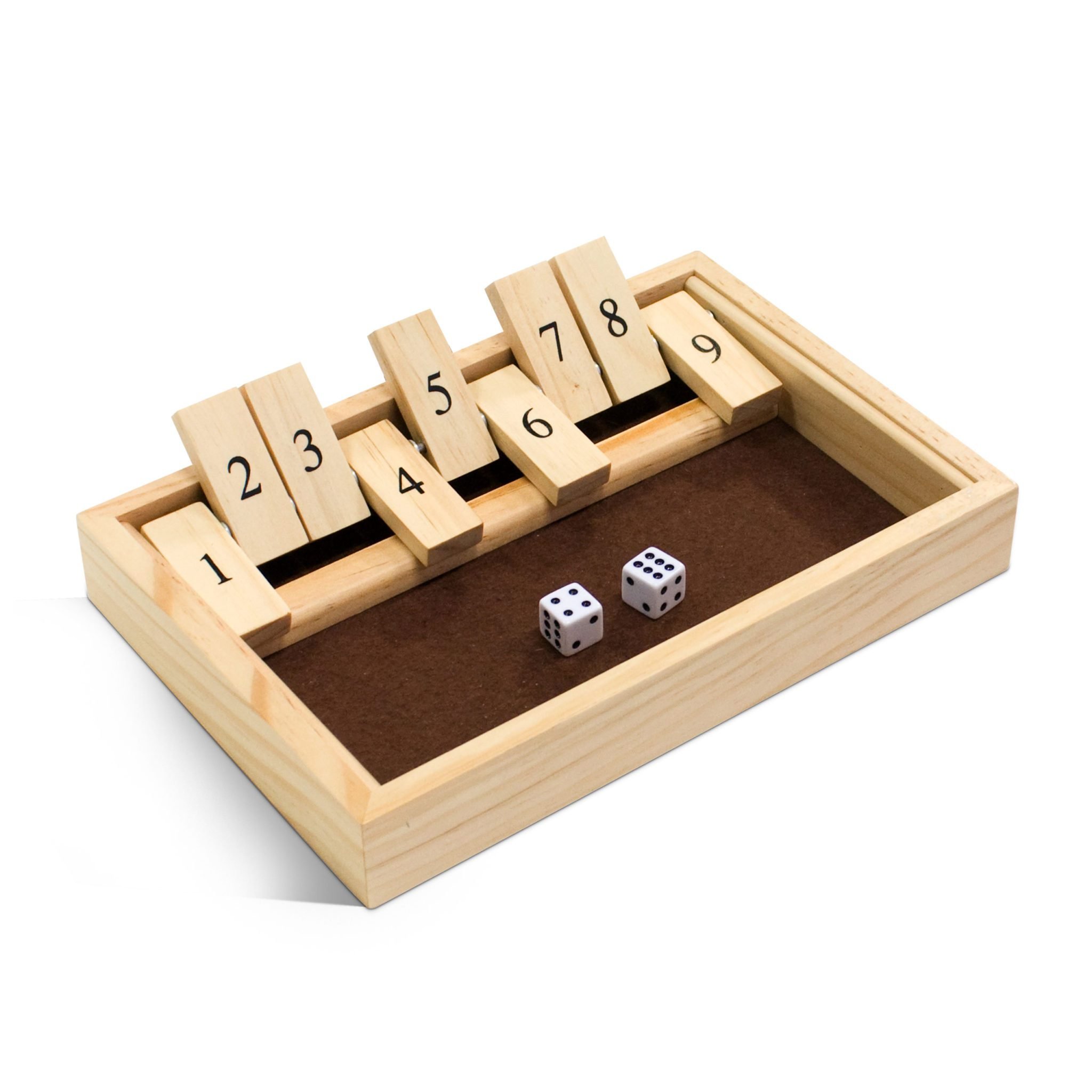
Dice games like Shut the Box offer similar simple math and probability-based fun. Consider trying Beat That!, Tenzi, or Yahtzee.
Ever get hooked on a game that’s deceptively simple, yet endlessly engaging? That’s often the case with Shut the Box!
If you enjoy the quick thinking and satisfying click of flipping those tiles, you might be wondering, what other games are similar? What can give you that same satisfying feeling?
Fortunately, there are plenty of games like Shut the Box that offer a comparable blend of luck and strategy. Let’s explore some options that capture that essence!

Games Like Shut the Box: A Deep Dive
Shut the Box is a classic pub game with simple rules but surprisingly engaging gameplay. Its blend of luck and strategy has captivated players for generations. But what if you’re looking for something similar, a game that scratches the same itch?
This article explores a variety of games that share Shut the Box’s core elements. We will look at dice games, number games, and games of chance. Each option offers a unique twist on the formula.
Dice Games with Number Play
Many dice games incorporate number manipulation similar to Shut the Box. They present different challenges and strategies for players to explore.
Dice 10000 (or Zilch/Cosmic Wimpout)
This family of games involves rolling dice to accumulate points. Players must strategically choose when to stop rolling.
Objective: The goal is to reach a target score, typically 10,000.
Gameplay: Players roll dice and score points based on specific combinations (e.g., three of a kind, straights).
Risk Management: A key element is deciding when to stop rolling to avoid “zilching” (rolling no scoring combinations).
Yahtzee
Yahtzee is a popular dice game that combines luck and strategic decision-making. It provides structured scoring categories that encourage thoughtful choices.
Scoring Categories: Players aim to achieve specific combinations like straights, full houses, and Yahtzees (five of a kind).
Re-rolls: Players have three rolls per turn to try to achieve their desired combinations.
Strategic Choices: Choosing which dice to re-roll and which categories to fill is crucial for maximizing your score.
Kniffel
Kniffel is the German variant of Yahtzee. It shares the same core mechanics but sometimes has slight variations in scoring.
German Origins: Kniffel is widely played in Germany and other European countries.
Scoring Similarities: The scoring categories are mostly the same as Yahtzee.
Potential Rule Variations: Some regional rule variations might exist.
Tile-Based Number Games
These games involve tiles with numbers, offering a different tactile experience compared to dice. They often require strategic placement or manipulation of tiles.
Rummikub
Rummikub involves creating sets and runs of numbered tiles. Players race to be the first to empty their rack of tiles.
Sets and Runs: Players form sets of tiles with the same number but different colors or runs of tiles with consecutive numbers of the same color.
Melding: Players initially need to meet a minimum meld value before adding tiles to existing sets or runs.
Strategic Tile Placement: Deciding where to place your tiles to maximize your options and block opponents is key.
Qwirkle
Qwirkle is a game of pattern recognition and strategic tile placement. Players score points by creating lines of tiles that share either the same shape or the same color.
Shape and Color Matching: Players score points for creating lines of tiles that share a common attribute (shape or color).
Qwirkle Bonus: Completing a line of six tiles (a “Qwirkle”) awards a bonus.
Strategic Placement: Placing tiles strategically to maximize your score and block opponents’ opportunities is crucial.
Card Games with Number Themes
Card games offer a portable and versatile way to enjoy number-based gameplay. Many card games incorporate elements of strategy and chance.
UNO
UNO is a classic shedding-type card game. The goal is to be the first player to get rid of all your cards.
Matching Colors and Numbers: Players must match the color or number of the previous card played.
Action Cards: Special action cards can skip players, reverse the order of play, or force opponents to draw cards.
UNO! Call: Players must declare “UNO” when they have only one card left.
Phase 10
Phase 10 involves completing specific phases (sets, runs, etc.) to advance to the next round. The first player to complete all ten phases wins.
Progressive Phases: Players must complete each phase in order before moving on to the next.
Sets and Runs: Phases often involve collecting sets of numbers or creating runs of consecutive numbers.
Strategic Card Management: Deciding which cards to keep and which to discard is crucial for completing your phases.
Games of Chance and Probability
These games rely heavily on chance but still offer opportunities for strategic decision-making. Understanding probabilities can give players an edge.
Craps
Craps is a dice game played in casinos. It involves betting on the outcome of dice rolls.
Complex Betting Options: Craps offers a wide variety of betting options, each with different odds.
House Edge: Understanding the house edge for each bet is important for making informed decisions.
Probability Calculations: Calculating the probabilities of different outcomes can help players make strategic bets.
Roulette
Roulette is a casino game involving a spinning wheel and a ball. Players bet on which number the ball will land on.
Various Betting Options: Players can bet on single numbers, groups of numbers, colors, or whether the number will be odd or even.
House Advantage: The house has a slight advantage due to the presence of the “0” (and sometimes “00”) on the wheel.
Probability Awareness: Being aware of the probabilities associated with each bet is crucial for responsible gambling.
Shut the Box Variations and Similar Games
Beyond the core game, many variations and conceptually similar games exist that offer unique twists and challenges.
High Rollers
High Rollers uses similar mechanics, often involving shutting numbers based on dice rolls. It is a fun alternative for Shut the Box enthusiasts.
Shutting Numbers: Players roll dice and strategically shut down numbers.
Dice Combinations: Different dice combinations can shut down multiple numbers.
Variable Rules: Rule variations can add complexity and excitement.
Kluster
Kluster isn’t directly a number game, but the strategic placement of magnetic stones shares a similar spatial reasoning element with planning your Shut the Box moves. The game uses a circle of string and magnets.
Magnetic Pieces: Players strategically place magnetic stones within a designated area.
Placement Challenges: The challenge is to place the stones without causing them to clump together.
Strategic Thinking: Players must think carefully about where to place their stones to avoid triggering a magnetic reaction.
Tenzi
Tenzi is a fast-paced dice game where players race to roll ten dice showing the same number. It is less strategic than Shut the Box but provides a quick and exciting challenge.
Fast-Paced Action: Players rapidly roll and re-roll their dice.
Simple Goal: The goal is to get all ten dice to show the same number.
Competitive Element: Players compete to be the first to achieve the goal.
Digital Adaptations of Shut the Box
In addition to physical games, Shut the Box is also available in digital formats. These versions offer convenience and accessibility.
Mobile Apps
Many mobile apps offer Shut the Box gameplay. They often include different rule variations and difficulty levels.
Convenient Gameplay: Mobile apps allow you to play Shut the Box anytime, anywhere.
Rule Variations: Some apps offer different rule variations to add variety.
AI Opponents: Play against AI opponents of varying difficulty levels.
Online Platforms
Online platforms allow you to play Shut the Box against other players from around the world. This provides a social and competitive experience.
Multiplayer Mode: Play against other players online in real-time.
Global Community: Connect with Shut the Box enthusiasts from around the world.
Leaderboards and Rankings: Compete for a spot on the leaderboards.
Math and Strategy in Similar Games
Many games similar to Shut the Box emphasize mathematical reasoning and strategic thinking. These skills are essential for success.
Probability Awareness
Understanding probabilities can help players make informed decisions in games like Craps and Roulette. This knowledge is crucial for minimizing risk and maximizing potential rewards.
Calculating Odds: Determining the odds of different outcomes is essential for strategic betting.
Understanding House Edge: Being aware of the house edge for each bet is important for making informed decisions.
Risk Management: Assessing and managing risk is crucial for long-term success.
Strategic Decision-Making
Games like Yahtzee and Rummikub require players to make strategic decisions about which moves to make. This involves weighing the potential benefits and risks of each option.
Evaluating Options: Assessing the potential outcomes of different moves is crucial.
Planning Ahead: Anticipating future moves and planning accordingly can give players an edge.
Adapting to Circumstances: Being able to adapt your strategy based on changing circumstances is essential for success.
Number Sense
Developing a strong number sense can help players excel in games like Shut the Box and other number-based games. This involves understanding the relationships between numbers and being able to quickly perform mental calculations.
Mental Math Skills: Being able to quickly add, subtract, multiply, and divide is essential.
Pattern Recognition: Identifying patterns and relationships between numbers can help players make strategic decisions.
Estimation Skills: Being able to estimate quantities and probabilities can give players an edge.
Why These Games Resonate: Core Appeal
The enduring popularity of Shut the Box and its similar games lies in their accessible rules combined with strategic depth. This blend attracts a wide range of players.
Simple Rules, Engaging Gameplay
The rules of Shut the Box are easy to learn, making it accessible to players of all ages and skill levels. The gameplay, however, offers surprising depth and strategic challenges.
Easy to Learn: The rules can be explained in a few minutes.
Quick to Play: Games are relatively short, making it a great choice for casual play.
Engaging Decisions: Despite the simple rules, players face meaningful decisions on each turn.
Luck and Strategy Balance
Shut the Box and its similar games strike a good balance between luck and strategy. While luck plays a role, strategic decision-making can significantly improve your chances of winning.
Chance Element: The roll of the dice introduces an element of chance.
Strategic Choices: Players make choices that influence the outcome.
Skill Development: Strategic thinking is rewarded, providing incentive to improve.
Social Interaction
Many of these games are best enjoyed with friends and family. The social interaction adds to the overall enjoyment of the experience.
Group Activity: These games can be a fun way to spend time with others.
Friendly Competition: The competitive element adds excitement and engagement.
Shared Experience: Playing games together creates shared memories and strengthens bonds.
Shut the Box is a classic fun game for all ages and number of players. #gamenight #boardgames
Final Thoughts
Shut the Box offers simple, addictive fun. Its engaging gameplay makes it a classic. We have seen its appeal that extends across ages and skill levels.
The game’s blend of luck and strategy keeps players hooked. This compelling combination makes it a great choice for quick entertainment.
Games similar to Shut the Box emphasize number combinations and calculated risk. You must find games that offer engaging math-based gameplay. So, for simple yet mentally stimulating fun, try games like shut the box.

