
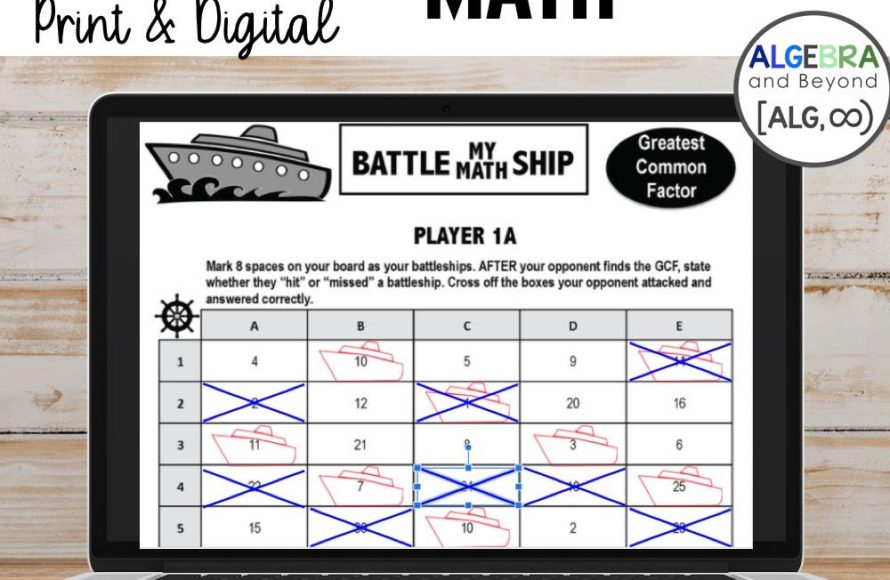
The GCF game is a fun way to practice finding the Greatest Common Factor of two or more numbers by turning the problem into a competitive or collaborative activity.
Math can be more engaging than just worksheets! Ever thought about gamifying tricky concepts? That’s what we’re doing with the GCF.
It’s time to make learning the Greatest Common Factor (GCF) enjoyable and effective. A gcf game makes it easy!
This article explores how turning math practice into a gcf game can change student’s attitude towards math. Get ready to explore the different ways to engage your students with gcf.

GCF Game: Mastering Greatest Common Factor with Fun
The Greatest Common Factor (GCF), also known as the Highest Common Factor (HCF), can be a tricky concept for many. Let’s explore how a “GCF Game” can make learning this mathematical principle engaging and effective.
What is the Greatest Common Factor (GCF)?
The GCF is the largest number that divides evenly into two or more numbers. Finding the GCF is fundamental in simplifying fractions and solving various mathematical problems.
It’s about finding the biggest shared factor. Think of it as the largest common piece two numbers have.
Why Use a GCF Game?
Games offer an interactive way to learn and reinforce mathematical concepts. A GCF game takes the pressure off rote memorization.
Instead, it promotes active problem-solving and critical thinking. This can lead to deeper understanding.
Types of GCF Games
There are numerous ways to design a GCF game, both physical and digital. Each type provides unique benefits and learning experiences.
Let’s look at some popular options.
Board Games for GCF Practice
A board game centered around GCF can involve moving pieces based on finding factors. Players could draw cards with number pairs.
Then they determine the GCF to advance on the board. This adds a competitive element.
Card Games Focusing on GCF
Card games can be designed with different numbers on each card. Players can then try to find pairs or sets with a specific GCF.
This can be a quick and engaging activity for individual or group play. It’s versatile.
Digital GCF Games and Apps
Many websites and apps offer interactive GCF games. These often include visual aids, immediate feedback, and varying difficulty levels.
They can be accessed on computers, tablets, or smartphones. Accessibility is key.
Designing Your Own GCF Game
Creating your own GCF game can be a rewarding experience. It allows you to tailor the game to specific learning needs.
Here are some steps to consider.
Defining the Learning Objectives
Clearly define what you want players to learn from the game. Do you want them to find the GCF of two numbers?
Or perhaps extend it to three or more numbers? Tailor the game mechanics.
Choosing the Game Mechanics
Select game mechanics that align with your learning objectives. Consider elements like scoring, challenges, and rewards.
Make the game fun and engaging. Competition can also be motivating.
Creating the Game Components
Gather the necessary materials for your game. This could include a board, cards, dice, or a computer for a digital game.
Ensure that the materials are visually appealing and easy to use. Simplicity is often best.
Testing and Refining the Game
Test your game with your target audience and gather feedback. Use this feedback to refine the game mechanics, rules, and design.
Iterate until the game is effective and enjoyable. Don’t be afraid to make changes.
GCF Game: Step-by-Step Example
Let’s design a simple card game to illustrate how a GCF game works. This game will focus on finding the GCF of two numbers.
Game Title: GCF Match
This game is designed to be simple and quick to play. The goal is to match number pairs with their corresponding GCF.
Game Components
A deck of cards with number pairs (e.g., 12 and 18, 24 and 36).
A set of cards with the GCF values corresponding to the number pairs (e.g., 6, 12).
Game Setup
Shuffle both decks of cards separately. Deal 5 number pair cards to each player. Place the remaining number pair cards face down in a draw pile. Spread out the GCF cards face up on the table.
Gameplay
Players take turns to find the GCF of one of their number pair cards. If they find the correct GCF card on the table, they claim it and discard the number pair card.
If a player cannot find a matching GCF card, they draw a new number pair card from the draw pile. The player with the most pairs at the end wins.
Variations of the GCF Match Game
You can introduce variations to the GCF Match game to increase its complexity. This can keep players engaged and challenged.
Here are a few ideas.
Timed Rounds
Add a timer to each round. Players have a limited time to find the GCF. This adds an element of urgency.
Penalty Points
Introduce penalty points for incorrect matches. This discourages guessing and promotes careful calculation.
Team Play
Divide players into teams. Teams collaborate to find the GCFs. This promotes teamwork.
GCF Game: Digital Adaptation
Adapting a GCF game to a digital format unlocks new possibilities. This includes automated scoring, interactive visuals, and personalized feedback.
Here are key aspects to consider.
Interactive Interface
Design a user-friendly interface that is intuitive and easy to navigate. Use clear visuals.
Automated Scoring
Implement an automated scoring system that tracks player progress. This provides immediate feedback.
Adaptive Difficulty Levels
Incorporate adaptive difficulty levels that adjust based on player performance. The game adapts to the learner.
Gamification Elements
Add gamification elements such as points, badges, and leaderboards. These motivate engagement.
Benefits of Playing GCF Games
Playing GCF games offers a multitude of benefits for students of all ages. They make learning math more approachable and fun.
Here are some key advantages.
Improved Understanding of Factors
Reinforced Knowledge: Games help reinforce the concept of factors and multiples.
Practical Application: Players see how factors relate to finding the GCF in a practical context.
Enhanced Problem-Solving Skills
Critical Thinking: Players develop critical thinking skills as they analyze numbers and find their GCF.
Strategic Thinking: They learn to strategize and make informed decisions based on the game rules.
Increased Engagement and Motivation
Fun Learning: Games make learning fun and engaging, reducing math anxiety.
Intrinsic Motivation: Players are more motivated to learn when they are having a good time.
Development of Mathematical Fluency
Rapid Recall: Frequent practice through games improves mathematical fluency and rapid recall.
Accuracy Improvement: Players become more accurate in finding the GCF through repetition and feedback.
Integrating GCF Games into the Classroom
Integrating GCF games into the classroom can transform the learning experience. These games can be used as part of lessons or as independent practice activities.
Here are some strategies for effective integration.
Use as Warm-Up Activities
Start math lessons with a quick GCF game to activate students’ prior knowledge. It gets them thinking mathematically.
Incorporate into Lesson Plans
Integrate GCF games into lesson plans as a fun and engaging way to teach and reinforce concepts. It makes learning interactive.
Provide Independent Practice
Use GCF games as an option for independent practice. This allows students to work at their own pace and reinforce their skills.
Facilitate Group Activities
Use GCF games as part of group activities. This promotes collaboration and teamwork.
Assessing Learning Through GCF Games
GCF games can also be used as assessment tools. They offer a dynamic way to evaluate students’ understanding of the concept.
Here are some ways to assess learning through GCF games.
Observe Gameplay
Observe students as they play the game. Pay attention to their strategies and problem-solving skills.
Collect Game Data
Collect data from digital GCF games. This includes scores, time spent, and accuracy rates.
Use as Formative Assessment
Use GCF games as formative assessments. This helps identify areas where students may need additional support.
Combine with Traditional Assessments
Combine GCF games with traditional assessments, such as quizzes and tests, for a comprehensive evaluation. This gives a holistic view.
Advanced GCF Game Concepts
For advanced learners, GCF games can be extended to include more complex concepts. This can deepen their understanding and challenge their skills.
Here are some ideas.
GCF with Multiple Numbers
Challenge players to find the GCF of three or more numbers. This increases the complexity.
GCF with Algebraic Expressions
Introduce GCF games that involve algebraic expressions. This bridges the gap between arithmetic and algebra.
GCF and Real-World Applications
Design games that demonstrate the real-world applications of GCF. This adds relevance to the learning.
Prime Factorization Challenges
Incorporate prime factorization into GCF games. Players must find prime factors before finding the GCF.
Tools and Resources for Creating GCF Games
Creating GCF games can be easier with the right tools and resources. There are many online platforms and software options available.
Here are some recommendations.
Online Game Development Platforms
Explore online game development platforms like Scratch, Unity, and Construct 3. These platforms offer user-friendly interfaces.
Spreadsheet Software
Use spreadsheet software like Microsoft Excel or Google Sheets to create simple number-based games. These are versatile tools.
Graphic Design Tools
Utilize graphic design tools like Canva or Adobe Photoshop to create visually appealing game components. Aesthetics matter.
Educational Game Websites
Leverage educational game websites like Quizizz or Blooket to create interactive GCF quizzes and games. They offer ready-made templates.
Future of GCF Games
The future of GCF games is bright. With advancements in technology, there are endless possibilities for creating engaging and effective learning experiences.
Here are some potential developments.
Augmented Reality (AR) GCF Games
Imagine GCF games that overlay virtual elements onto the real world using AR technology. This could make learning more immersive.
Personalized GCF Learning Paths
Develop AI-powered GCF games that adapt to individual learning styles and needs. This allows for customized education.
Gamified GCF Simulations
Create gamified GCF simulations that mimic real-world scenarios. This enhances practical application skills.
Collaborative GCF Gaming Platforms
Establish online platforms where students can collaborate on GCF games. This fosters teamwork.
Conclusion of GCF Game: Mastering Math Through Play
Learning the Greatest Common Factor doesn’t have to be a chore. By incorporating a “GCF game,” we can transform a potentially tedious topic into an engaging and effective learning experience. Whether through physical games, digital adaptations, or classroom integration, the possibilities are endless. Embrace the power of play and unlock a deeper understanding of mathematical concepts.
Greatest Common Factor Game – Perfect GCF practice game explanation! superteachergames.com
Final Thoughts
In short, this game offers a fun method to solidify your understanding of the Greatest Common Factor. Practicing with various numbers builds speed and accuracy when finding the GCF.
The ‘gcf game’ makes learning math engaging. Repetition reinforces the concept, making finding the GCF must easier.
With consistent practice, you will improve your gcf skills in this game. Play it regularly to see your scores increase.

