
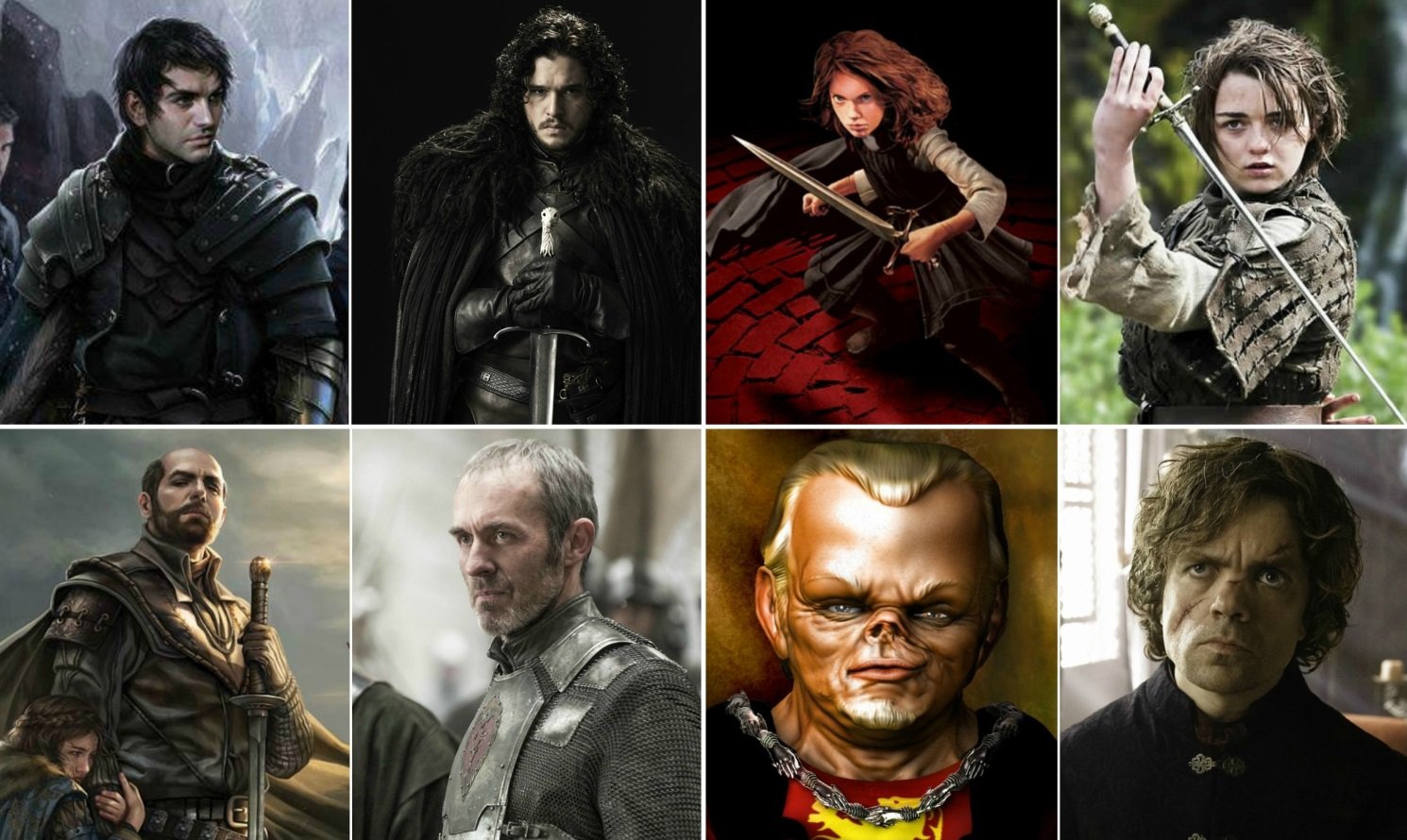
The television series Game of Thrones deviates significantly from the A Song of Ice and Fire books, particularly in later seasons. Key plotlines and character arcs diverge, impacting the overall story.
The world of Westeros, brought to life on screen, captivated millions. But for those who devoured George R.R. Martin’s intricate novels, a burning question remains: how accurate is game of thrones to the books? Did the show faithfully adapt the source material, or did it carve its own path? The answer, as many fans know, is quite complex.
Early seasons hewed closer to the books, adapting key events and characterizations with relative fidelity. However, as the show progressed, changes became more pronounced. This shift created separate narratives with distinct outcomes, sparking debates about the integrity of adaptation.

How Accurate is Game of Thrones to the Books?
So, you’ve watched all the twists, turns, and dragon fire of HBO’s Game of Thrones and maybe even picked up George R.R. Martin’s A Song of Ice and Fire books. You’re probably wondering: How close is the show to the source material? Well, the answer is complicated, a bit like the plot itself! The show started pretty faithful, but as it went on, it took some significant detours. Let’s dive into the details and explore just how accurate Game of Thrones was to the books, and where the paths diverged.
The Early Seasons: A Close Adaptation
The first four seasons of Game of Thrones are generally considered to be the most accurate to the books. These seasons largely followed the plots of A Game of Thrones, A Clash of Kings, and the first half of A Storm of Swords quite closely. We saw the major events unfold – Ned Stark’s investigation and execution, the War of the Five Kings, and the Red Wedding – in ways that were largely faithful to the printed page. Character personalities, dialogues, and key scenes were often directly lifted from the books. There were minor changes, of course, but these changes generally didn’t alter the main storylines in a significant way.
Faithful Character Portrayals
Many actors perfectly captured the essence of their book counterparts in the early seasons. Peter Dinklage’s Tyrion Lannister was a standout, embodying the wit, intelligence, and vulnerability of the character. Similarly, Sean Bean’s portrayal of Ned Stark was spot-on, bringing to life the honorable but tragically doomed Lord of Winterfell. Lena Headey’s Cersei, Maisie Williams’ Arya, and Sophie Turner’s Sansa also felt very much like they stepped off the pages. While there were some minor differences in appearances (like Jon Snow’s book description being more wiry), the core essence of the characters remained intact.
- Tyrion Lannister: His cynicism and intelligence were brilliantly captured by Peter Dinklage.
- Ned Stark: Sean Bean embodied his honor and stoicism perfectly.
- Arya Stark: Maisie Williams’ feisty portrayal was a perfect match.
Key Events and Plot Points
The early seasons recreated many iconic scenes with impressive faithfulness. The King’s Landing drama, the battles, and the shocking deaths all played out in ways very similar to the books. Even the smaller details, like the specific wording of a speech, the layout of a location, or a certain character’s costume design, often reflected what was described in the source material. This attention to detail was part of what made those seasons so popular with fans of the books.
- The King’s Landing Plot: The intricate political machinations and power struggles were faithfully adapted.
- The Red Wedding: This brutal and devastating event was depicted in gruesome detail, staying true to the book’s emotional impact.
- Major Battles: Key battles such as the Battle of the Whispering Wood were recreated with a great degree of accuracy.
The Shift Begins: Divergences and Adaptations
As the show progressed, and especially after the third book of the series, A Storm of Swords, the show started to make some substantial departures from George R.R. Martin’s books. This was partly because Martin had not finished writing the remaining books, and partly due to the demands of television production and storytelling. The show’s creators, David Benioff and D.B. Weiss, had to make choices about which plotlines to prioritize and which to cut or alter. This resulted in some significant differences that left book readers with many questions.
Plotlines and Character Arcs
One of the biggest areas of divergence was the streamlining of plots. The books are incredibly intricate, with many storylines and characters. The show combined or omitted several plotlines to make things more manageable for television. For instance, characters like Lady Stoneheart, a zombified version of Catelyn Stark, were completely removed from the show. Other characters, like Aegon Targaryen, were introduced in the books but haven’t made an appearance in the show. Also, some character arcs changed significantly. For example, the show version of Sansa Stark had a more prominent role in some storylines than her book counterpart, and Bran’s journey beyond the wall took a very different path.
- Lady Stoneheart: This character was entirely absent in the show.
- Aegon Targaryen: A key character in the book, not in the show.
- Dorne Plot: The Dorne storyline was significantly altered, to the dismay of many fans of the books.
Pacing and Time Compression
The show had a much faster pace compared to the books. In a novel, George R.R. Martin can spend pages detailing the journey of one character or exploring the intricacies of a political maneuver. The show, with its limited screen time, had to speed things up. This meant that some events occurred much more quickly, and others were simply glossed over. The slow, deliberate nature of the books was often replaced by a faster-paced, more action-oriented style in the later seasons. The passage of time itself often seemed different between the two formats, with characters aging very differently.
Character Mergers and Fates
To further simplify things, the show merged several characters into single roles. For example, the character of Jeyne Poole in the books, who is impersonated as Arya Stark by the Lannisters, was cut and elements of her story were given to Sansa. Some characters were also killed off much sooner, or in different ways, than they were in the books, altering their impact on the overall story. The fates of characters like Barristan Selmy and Ser Jorah Mormont were significantly different in the show, impacting the political and personal storylines.
- Jeyne Poole: Her storyline was given to Sansa.
- Barristan Selmy: His death was much different and sooner in the show.
- Ser Jorah Mormont: His fate differed significantly between the show and books.
Major Differences: When the Paths Diverge
The differences between the show and the books became glaring in the final seasons. With no completed books available as a guide, the show had to chart its own course. This led to some controversial choices and plot developments that frustrated many fans. The discrepancies were no longer minor adjustments but substantial departures from the established storylines and character arcs.
The Ending and Key Storylines
The ending of the show was perhaps the most significant divergence from the books. The rushed pace and lack of build-up in the show’s final season led to many fan complaints. Daenerys Targaryen’s descent into madness, the crowning of Bran Stark as King, and the fate of the other major characters all played out very differently from how fans envisioned they might in the books. The storylines that the show wrapped up so quickly in its last season might take multiple books to be explored by George R.R. Martin. We are waiting to see if his version of the end will be more satisfying.
- Daenerys’s Transformation: Her rapid fall from a benevolent ruler to a destroyer felt unearned in the show, compared to the slow build-up hinted at in the books.
- Bran Stark as King: This felt unconvincing to many viewers of the show, and we do not have any hint of this from the book.
- The Night King’s Defeat: The show resolved this plotline very differently than anticipated, with an anti-climactic end in contrast to the more complicated and dangerous situation in the books.
Character Relationships and Motivations
The relationships between characters also took different paths. For example, the romance between Missandei and Grey Worm felt like it came out of nowhere in the show, while relationships between certain other characters were altered in terms of their importance and impact on the story. The motivations behind certain character actions sometimes seemed unclear or out of character, further highlighting the divergences. The complexity of characters in the books was often reduced in the show, making them seem less nuanced.
Geographical and World Building Differences
The show also simplified the vast geographical scope of the books. Travel times were shortened, and some locations were either merged or omitted completely. The scale of the world and the many different cultures of Essos, for example, were not fully realized in the show. This lack of geographical complexity affected the overall feeling of the world of Game of Thrones, making it feel more compact and less detailed than in the books.
- Reduced travel times: Characters could get from one location to another much faster in the show than in the books.
- Simplified locations: Some regions, cities, and cultures were simplified or excluded altogether.
- Fewer cultures: In particular, some different cultures of Essos were never shown on screen.
Why the Differences Occurred?
Several factors contributed to the discrepancies between the show and the books. The fact that the books are still unfinished is a major factor, of course. But the demands of television production also played a significant role. The show’s creators had to make creative choices to suit the medium and meet deadlines. Let’s explore the key reasons why the show differs from the source material.
The Unfinished Source Material
Perhaps the biggest reason for the differences was that the show outpaced the books. George R.R. Martin has been working on the series for decades, and at the time of writing, The Winds of Winter, the sixth book, is still not released. Benioff and Weiss had to make decisions about how to end the story when they did not have the full plot outlined in the books. This left room for speculation and ultimately resulted in many choices that fans felt didn’t align with the established themes.
Television Production Constraints
Television production has its own challenges. The show needed to fit into a set number of episodes per season, which meant that they needed to condense the story. Budget constraints also led to certain storylines or characters being cut or merged. The need to maintain a certain pace and to attract a wide audience also meant the show prioritized action and drama over some of the nuanced details found in the books.
Creative Interpretations and Choices
Finally, it’s important to remember that the show was ultimately an adaptation, not a direct recreation of the books. The show’s creators had their own ideas about the characters and the story, and these ideas sometimes differed from those of George R.R. Martin and the reader’s interpretations. Some changes were made because the showrunners felt they would work better for a television audience. The differences were not always about missing information or budget constraints, but also about creative choices.
What Does it Mean for Fans?
So, what does all of this mean for fans of both the show and the books? Well, for some, the discrepancies are a point of frustration, particularly regarding the rushed ending. For others, the show provided a different, but still enjoyable, take on a beloved story. It’s also interesting to have these two different versions to compare and analyze. Whether you loved the show or hated some of the changes, it’s undeniable that Game of Thrones created a massive cultural phenomenon. Now, we all eagerly await to see how George R.R. Martin concludes his epic saga. It’s very possible that the end of the book series will be very different from the TV series’ conclusion, which can offer a brand new experience for the viewers who also read the books.
The accuracy of Game of Thrones to the books is not a simple yes or no question. While the early seasons were very faithful, the show diverged greatly, particularly in its final seasons. These differences were driven by a variety of factors, including the incomplete nature of the book series, television production constraints, and creative choices made by the show’s creators. Whether these changes are considered improvements or shortcomings is a matter of personal opinion, but they definitely offer a lesson in the complexities of adapting books to the television medium.
Game of Thrones: Everything They Changed From the Books
Final Thoughts
The adaptation strays significantly from George R.R. Martin’s novels, particularly in later seasons. Certain character arcs and plotlines diverge notably. The show simplifies some complex narratives.
Major characters meet different fates, and key events occur in a different order. The level of detail about the world and its history must be reduced for the screen. Thus, ‘how accurate is game of thrones to the books’ shows varying degrees of fidelity, especially towards the end.

