
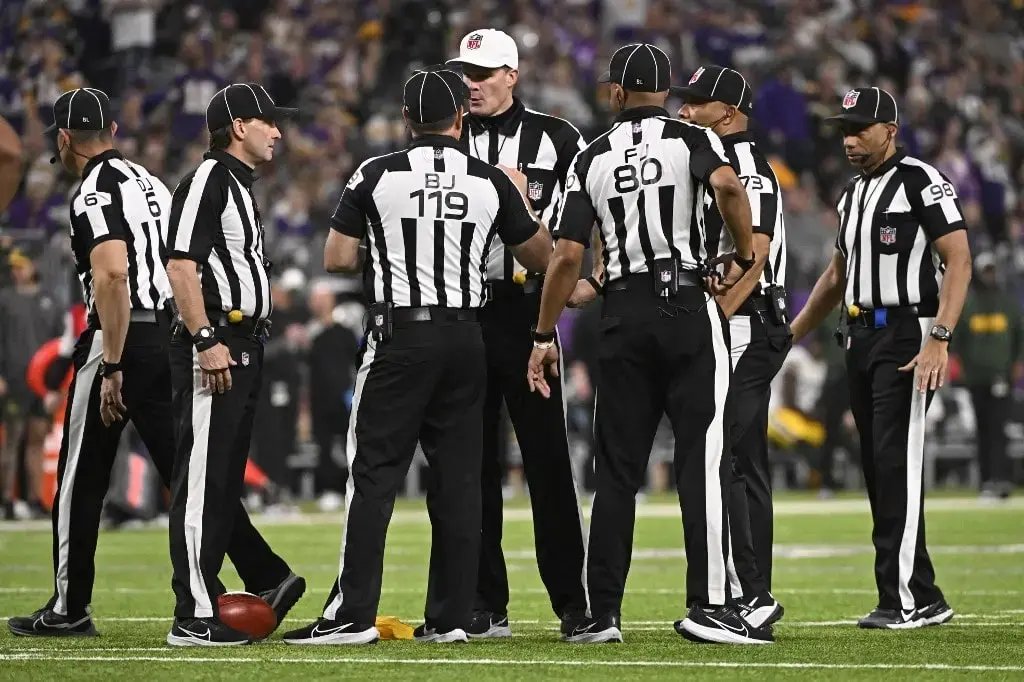
NFL referees are assigned to games based on a complex system that factors in performance evaluations, experience, and rotation to ensure fairness and impartiality across all matchups.
Have you ever wondered about the folks in stripes making crucial calls on the gridiron? The question of how are nfl referees assigned to games is a fascinating one. It’s not random; there’s a deliberate process at work, involving careful consideration.
The NFL uses a detailed system that evaluates each official’s performance. They also consider their experience level in assigning them games. Furthermore, rotation of officials helps maintain a balanced approach throughout the season.

How are NFL Referees Assigned to Games?
Ever wonder how the referees in the NFL end up officiating the games you watch every Sunday? It’s not like they just pick names out of a hat! There’s a whole system in place to make sure the most qualified officials are on the field for every matchup. Let’s take a closer look at the fascinating process behind NFL referee assignments.
The NFL Officiating Department: The Brains Behind the Operation
Before we dive into the specifics of game assignments, it’s important to understand who’s calling the shots. The NFL Officiating Department, located at the league headquarters, is the central hub for all things referee-related. This department is in charge of the recruitment, training, evaluation, and, most importantly, the assignment of officials to each game throughout the regular season and playoffs. They employ a full-time staff that includes the Vice President of Officiating, along with other directors, supervisors, and coordinators. This team constantly reviews game film, evaluates referee performance, and uses data analytics to determine which crews are best suited for each contest. They’re like the coaches of the officials, helping them get better every week. Think of them as the team that makes sure the referee team is on their ‘A-game’!
The Ranking System: Not All Refs are Created Equal
Just like players, referees have a performance rating system. This system considers various factors, helping the NFL Officiating Department determine which officials are performing the best and are ready to handle the pressure of big games. Here’s a glimpse into how this works:
Performance Evaluations
Each referee’s performance is rigorously evaluated every week. This includes watching game film, analyzing decision-making, and reviewing the accuracy of calls. This process includes evaluations of each individual official, and also includes evaluations of the entire crew.
- Game Film Review: After each game, the officiating department thoroughly analyzes the game film. This review focuses on calls made by the referee crew, flags thrown, and any instances where a decision is questioned.
- Accuracy of Calls: The central part of evaluation focuses on call accuracy. Did the referee call it as it is? Was the penalty correct? Did the crew miss any fouls? These kinds of questions are central to the review process.
- Decision-Making Under Pressure: Referees have to make quick decisions while under pressure during a game. Evaluation also focuses on how well they make decisions in these situations.
Grading the Crew
Individual referees are not graded alone. Their performance as a member of a specific crew is also reviewed. The aim is to analyze the quality of team work and interaction between crew members, to make sure that the right crews are put on the right games.
- Crew Communication: How well does the crew communicate during the game? Does everyone know what the others are doing? This is a vital element of referee work, and is part of the evaluation.
- Crew Consistency: It’s important for the crew to stay consistent throughout the entire game. The crew must apply rules accurately and fairly.
The Ranking System Itself
Based on the evaluations, referees and crews are given a rating which affects how many important games they are assigned to. The better the referee performs the higher rating they get.
- Tiered System: The NFL uses a tiered system where the highest rated crews are generally given the more high-profile and important games.
- Ongoing Monitoring: Referees are constantly being monitored, so their rankings can improve or drop depending on their weekly performance.
Scheduling Considerations: Beyond Just Rankings
While the ranking system is important, it is not the only element that the NFL considers when making game assignments. The NFL Officiating Department takes many other things into consideration. Let’s explore some of them:
Geographic Factors
One factor is geography. The NFL tries to minimize travel time for referees to save money and reduce fatigue.
- Minimizing Travel: The NFL tries to assign referees to games that are geographically closer to where they live. This saves the league money on travel expenses.
- Reduced Fatigue: Shorter travel times mean referees arrive at the stadium feeling fresher and better prepared for the game.
Crew Familiarity
Another important factor that goes into assignment is how familiar referees are with each other. The NFL prefers keeping referee crews together for multiple games to increase team-work and understanding.
- Teamwork and Communication: Crews that have worked together before are more likely to have good communication. They know how to work together.
- Consistency: Keeping crews together helps to keep refereeing consistent across all games. This is because they have an established method of operation.
Game Importance
Of course, the NFL also considers how important a game is when assigning referees. The more important the game, the higher ranked the referees assigned to it will be.
- High Profile Games: Games that receive national attention, such as Monday Night Football, or rivalry games are usually officiated by the top-ranked crews.
- Playoff Games: Playoff games are usually assigned to the most experienced and top rated referees.
Avoiding Conflicts of Interest
It is very important for referees not to show any bias for or against any team.
- Hometown Avoidance: Referees are not assigned to games that feature their hometown teams. This is to remove any suggestion of possible bias.
- Previous Connections: Referees with previous affiliations to teams or coaches are also not assigned games to avoid the appearance of bias.
Special Situations
Sometimes, there are special cases that require the Officiating Department to carefully adjust referee assignments.
- Short notice Changes: Sometimes a referee can become sick or unable to work last minute. In these cases the officiating department must make quick replacements with qualified officials.
- Injuries: Just like players, referees can be injured. Injuries to a referee on a crew may cause the officiating department to shuffle crews.
The Assignment Process: A Week-by-Week Look
The assignment process is a multi-step one that requires careful planning and attention to detail. It is not as simple as picking names out of a hat. Here’s how it generally unfolds each week:
- Preliminary Review: At the beginning of the week, the NFL Officiating Department examines the upcoming schedule of games and which crews are available to work.
- Evaluation Analysis: They use the evaluations of each crew and individual to create a ranking list, and begin to formulate possible assignments for each game.
- Scheduling Factors: They use geographical considerations, previous crew assignments, and game importance to refine the assignments.
- Conflict Check: The Officiating Department makes certain that there are no possible conflicts of interest with any referee assignments.
- Finalization: Once all of these factors are considered, the final game assignments are made and communicated to the referees.
The Role of Technology in Referee Assignments
Technology plays an important part in helping the NFL Officiating Department to efficiently perform game assignments.
- Database Systems: The NFL uses a database system to track referee performance, their assignments, travel information, and any potential conflicts of interest. This system makes it easier to manage all of the data needed for the process.
- Analysis Tools: The NFL uses game footage analysis software. This helps the officiating department in evaluating referee performance and making improvements to the officiating crews.
- Communication Systems: Once assignments are made they are communicated to the referees through digital channels. This helps to make sure referees are aware of their assignments well ahead of time.
The Importance of Fair Officiating
The process of assigning referees to NFL games is carefully thought out to ensure the highest standards of officiating. Fair officiating is important for fair game play. By considering the performance, experience, and potential conflicts of interest, the NFL tries to ensure that every game is officiated fairly. Fair officiating helps to build fan trust in the league and its management.
Continuous Improvement
The NFL is always looking for ways to improve its officiating standards. This means that the assignment process is always being changed to improve fairness and performance. These are a few of the ways they try to improve this.
- Feedback Loops: Referees are provided regular feedback on their performances. They also give the NFL their feedback so that the assignment system can be continuously improved.
- Training Programs: The NFL provides referees continuous training so they can improve their skills, which results in better officiating.
- Adaptation: The NFL is continually adapting to changes in game play, and will constantly make changes to rules, and procedures as needed. This continuous adaptation helps to keep the game fair and competitive.
So, the next time you watch an NFL game, remember that there’s a lot more happening behind the scenes than just what you see on the field. The careful assignment of referees helps ensure fair play and the integrity of the game. This is the reason that every game is managed by professionals who are the best and most capable at their job. It is all part of what makes the NFL the great sports league that it is.
How are NFL Referees Assigned to Games? #americanfootball #footballhelmet #nfl #americansports
Final Thoughts
NFL referee assignments depend on performance evaluations and experience. The league grades officials each week. They prioritize experienced crews for high-profile matchups.
The NFL uses a complex system for scheduling. They factor in referee’s past performance, location, and potential conflicts. They aim for fair and impartial officiating each week.
Essentially, how are nfl referees assigned to games? The process involves careful consideration of individual skill and overall team dynamics ensuring a quality game.

