
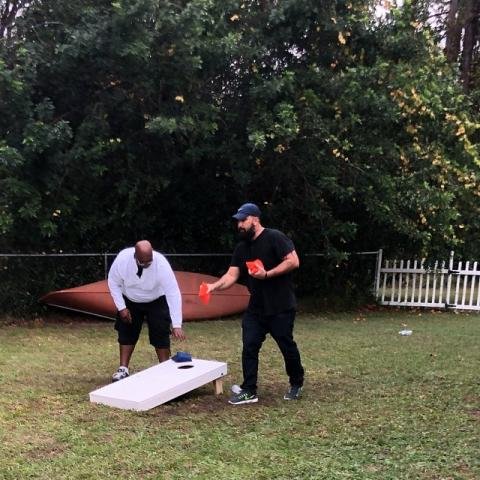
The game cornhole likely got its name from the bags traditionally filled with dried corn that players toss at the board.
Ever wondered how did the game cornhole get its name? It’s a question many ponder as they enjoy a casual backyard game or a fierce tournament. The name, while simple, reflects the game’s humble origins and primary material.
Corn, a staple in many regions, became a practical and readily available stuffing for the beanbags used in the game. The ‘hole’ part is fairly obvious; aiming for the hole on the board is the central aspect of the game.

How Did the Game Cornhole Get Its Name?
Ever tossed a beanbag towards a hole and wondered, “Why is this called cornhole?” You’re not alone! It’s a funny name for a fun game, and the story behind it is actually quite interesting. While the game itself has older roots, the name “cornhole” is relatively modern. Let’s dive into the details and explore the different ideas about how this popular backyard pastime got its catchy, if a little silly, moniker. We’ll look at everything from the game’s humble beginnings to possible reasons why “cornhole” stuck.
The Game’s Early Days: No “Cornhole” Yet
Before we get to the name, let’s talk a little about the game’s origins. Many historians and cornhole enthusiasts believe that the game evolved from an older game, sometimes called “bean bag toss,” “sack toss,” or “faba,” that has been around for centuries. Some stories suggest its roots go way back to 14th century Germany, where they used fabric bags filled with beans. Others think it might have been inspired by a game played by Native Americans using animal bladders filled with dried corn. Regardless of its exact origin, this beanbag tossing idea traveled across the ocean and was played in different variations over time.
The Game’s Migration to North America
The game, in its various forms, made its way to North America. It wasn’t until the late 1800s and early 1900s that a version that looks more like the cornhole we know today started to pop up. At this point, it was often played in rural areas and was a popular pastime at family gatherings, fairs, and outdoor events. It wasn’t called “cornhole” yet. You might have heard of it as “bean bag toss,” “baggo” or just a plain old “sack toss game.”
The Rise of “Cornhole”: The Naming Puzzle
So, where did the name “cornhole” come from? This is where things get a bit murky. There isn’t one definitive, universally agreed-upon origin story. Instead, there are a few theories and possibilities that seem to hold water.
Theory 1: The Corn-Filled Bags
The most popular and, quite frankly, most logical explanation relates to what’s inside the bags. Early versions of the game often used actual dried corn kernels as filling for the beanbags. This makes perfect sense because corn was readily available, inexpensive, and, when dried, creates a good weight and feel for tossing. Think about it, if you’re throwing a bag of corn, “corn bag toss” makes some sense. Eventually, that got shortened to “cornhole.” This theory is also supported by the fact that even today, professional cornhole bags are often filled with corn kernels before being replaced with resin.
Here is the breakdown:
- Early bags were filled with dried corn.
- The game was associated with the “corn” filled bags
- The name “cornhole” emerged as a natural shortening of “corn bag toss”.
Theory 2: The Double Entendre Angle
While the corn-filled bag theory is the most accepted, there’s another, slightly cheekier idea about where the name came from. Some people think the name “cornhole” is a sort of playful double entendre, combining the “corn” from the bags and “hole” of the target board. “Hole” in this sense is referring to the opening where you are supposed to toss the bag. This theory adds a bit of humor and, depending on your sense of humor, can make the name a bit more memorable. It’s the kind of name that sticks in your mind.
Theory 3: Regional Slang and Evolution
It’s also possible that the name “cornhole” arose as a regional slang term in certain parts of the United States, particularly in the Midwest and Kentucky, where the game gained early popularity. It’s not uncommon for names of games or activities to evolve organically as they move from place to place. Maybe someone somewhere started calling it “cornhole,” and it just caught on with the others around him, and spread from there. Over time, as the game became more widespread, this local name became the standard.
Why Not Other Names?
So why didn’t “sack toss” or “bean bag toss” stick? Those names are certainly descriptive. Here’s a table that explains the differences:
| Name | Description | Why it didn’t stick |
|---|---|---|
| Bean Bag Toss | A very general term for tossing bags. | Too generic and could refer to other games. Lacked a unique connection to the specific gameplay. |
| Sack Toss | Another general term for throwing bags or sacks. | Similar to “bean bag toss,” too broad. Did not have the unique identifying feel associated with Cornhole. |
| Baggo | A regional term for the game. | While “baggo” is a popular term for the game, it never became as widespread as “cornhole” |
| Cornhole | Specific to a game with corn-filled bags aimed at a specific hole. | Easy to say, somewhat humorous, and had a clear link to the key materials used. |
The Modern Cornhole Boom
Regardless of the exact reasons, “cornhole” stuck. The game, with its catchy name, has seen a huge surge in popularity in the 21st century. It’s no longer just a backyard game. There are now national organizations, professional leagues, and tournaments. People of all ages and skills enjoy playing cornhole. The relatively simple rules, low cost of equipment, and easy portability makes it the perfect game for everyone. The name “cornhole” has become instantly recognizable, associated with fun, friends, and some friendly competition.
The Name’s Impact on the Game
The name “cornhole,” with its slight humorous undertones, likely contributed to the game’s appeal. It’s easy to say, memorable, and has a certain folksy charm that resonates with players. It’s a name that doesn’t take itself too seriously, and that reflects the fun, laid-back vibe that the game itself promotes. Imagine if it was called “Strategic Projectile Deployment,” or something equally stuffy. It probably wouldn’t have the same ring to it.
The Continued Evolution of Cornhole
Cornhole’s popularity continues to grow. What started as a simple game is now played across the world. The name is here to stay and is not something that people might change as it has been associated with game itself. People of all ages can play it and enjoy it.
The story of the name “cornhole” is a good example of how language and culture shape even the simplest of games. From its humble beginnings with corn-filled bags, to its current status as a global game, the name has stood the test of time. And it continues to generate laughter and playful ribbing among players, and a few confused looks from newcomers. So the next time you’re tossing those bags towards the board, remember the funny story behind the name. It’s a bit corny, maybe, but that’s part of its charm.
How did cornhole get its name?
Final Thoughts
Cornhole’s origins remain debated, but the name’s likely connection is straightforward. Early versions used bags filled with dried corn kernels. People simply started calling it “cornhole” due to this.
Therefore, how did the game cornhole get its name is probably because of the corn-filled bags people tossed. The name must have seemed natural for players at the time.

