
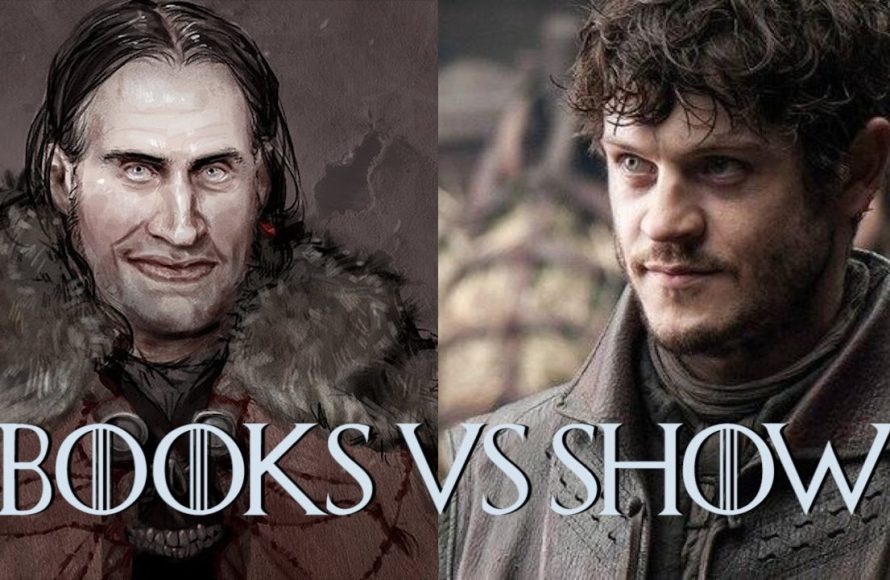
The show significantly alters plotlines, character arcs, and omits many characters and events, making how different is game of thrones from the books a matter of frequent debate among fans.
Have you ever finished a TV series and then picked up the books, only to find they’re not quite the same? This is especially true for fans of Game of Thrones. The HBO adaptation took some serious liberties with George R.R. Martin’s A Song of Ice and Fire series. Many wonder how different is game of thrones from the books, and it’s a valid question.
Some beloved characters from the books didn’t make it into the show at all. Others underwent huge changes in personality and motivation. These differences caused much discussion within the fandom during its run.

How Different is Game of Thrones From the Books?
Okay, let’s dive deep into the world of Westeros and explore just how much the HBO show, Game of Thrones, strayed from George R.R. Martin’s A Song of Ice and Fire book series. If you’ve only watched the show, you’re in for a surprise. The show is amazing, sure, but the books offer a much richer and more detailed experience. It’s like comparing a beautiful painting to the intricate design of a tapestry; both are impressive, but one has far more layers. We will look at the biggest changes, focusing on characters, plotlines, and the overall direction of the story. Get ready because it’s a wild ride through the differences!
The Divergence Begins: Early Seasons vs. The Books
The first few seasons of Game of Thrones stuck pretty close to the source material, which is why many book fans were initially thrilled. Season 1, for example, was a fairly faithful adaptation of A Game of Thrones. We saw Ned Stark’s tragic fate, the rise of Daenerys Targaryen, and the beginning of the war for the Iron Throne, all mirrored quite well on screen. Even Season 2, with the events of A Clash of Kings, stayed relatively on track, although we started seeing a few subtle changes creep in.
The Seeds of Change
These early alterations might have seemed minor at the time, but they were like the first few ripples in a pond. They started shifting the narrative in ways that would become more pronounced later. For instance, the show introduced a few character deaths earlier than in the books, and certain characters’ motivations were simplified or altered slightly. While these weren’t deal breakers, they were early signs that the showrunners were making creative choices that would eventually lead to significant departures from the books.
Character Transformations: Big Changes for Familiar Faces
One of the most noticeable differences between the show and the books is how some characters are portrayed and developed. Some have significant storyline changes and some characters have been completely dropped or merged into others. Let’s look at a few major examples:
The Case of Sansa Stark
In the show, Sansa’s story after fleeing King’s Landing involves her alliance with Petyr Baelish, her marriage to Ramsay Bolton and her eventual rise as Lady of Winterfell. While there are parts of that in the books, the path she follows is considerably different. Her character development also differs substantially. The show gives her more agency in some areas, making her a stronger, more proactive player at times. In the books, she has a different path entirely, her story in the Vale, where she is under the name Alayne Stone and serves as a ward of Lord Baelish, is significantly more about manipulation and learning the game rather than direct leadership.
Tyrion Lannister’s Journey
Tyrion’s storyline deviates more substantially in later seasons, especially after he leaves King’s Landing and joins Daenerys. While he does eventually become Daenerys’ advisor in both versions, the events leading there and the dynamics are very different. In the books, his journey to find Daenerys is complex with many detours and more in-depth exploration of the politics. The show simplifies this journey, and some of the intricacies are lost. Further, some of his actions in later seasons, particularly his decision-making in relation to Daenerys, felt less authentic to the book character.
The Curious Case of Lady Stoneheart
Perhaps one of the most glaring omissions from the show is the character of Lady Stoneheart. In the books, Catelyn Stark is resurrected as a vengeful, silent undead leader. This character arc was completely omitted from the show, much to the dismay of book fans. Lady Stoneheart is a major antagonist in later books, leading a group of outlaws seeking vengeance on those connected to the Red Wedding. Her absence leaves a significant gap in the story of the Riverlands and makes the show miss a great opportunity for a compelling plot line.
The Dorne Disaster
The storyline in Dorne is another significant departure. The book versions are rich with complex family dynamics, political intrigue, and fascinating characters like Prince Doran Martell and his daughters, the Sand Snakes. The show significantly reduces the plot, turning the Martells and Sand Snakes into rather stereotypical, underdeveloped characters. This change disappointed many fans who were anticipating a vibrant and compelling adaptation of the Dorne storyline from the novels. The changes were so vast that the Dornish plot is often cited as the biggest failure of the show’s adaptation.
Plot Points: Significant Shifts in the Narrative
Beyond changes to individual characters, the show makes significant alterations to the overall plot. Some of these changes were made due to production constraints, while others were likely creative choices.
The White Walkers’ Storyline
The White Walkers and their Night King become the primary focus of the series in later seasons. In the books, this threat is still very much in the background and the Others, as they are called, are shrouded in mystery. The Night King, as portrayed in the show, is not a character present in the books; he’s an invention of the TV series. The show’s resolution with the Night King is also completely different from how the books are shaping up to be, and the focus is less on one single enemy, instead more on the intricate web of human conflicts and the larger looming threat.
The Fate of Stannis Baratheon
Stannis Baratheon’s arc also takes a dramatic turn in the show, where he burns his daughter Shireen at the stake. While Stannis is certainly not a good man in the books, there’s no indication that he would commit such a horrendous act, making it a key deviation of the character. In the show, this is a turning point that makes him a clear villain. But in the books, he’s more of a complex, morally gray figure. The storyline of Stannis is also yet to be resolved in the books and it seems unlikely this is where his storyline will end up.
Euron Greyjoy: A Completely Different Beast
Euron Greyjoy is another character who is radically different in the show. In the books, Euron is a truly terrifying figure, a cunning and sadistic pirate with mystical and dark magical undertones. The show makes him a simple, villainous pirate, losing much of the depth and horror that made him so compelling in the novels. The show’s version is a watered-down imitation of the menace and unpredictable nature that he has in the books.
Speeding Up the Story: The Show’s Pace vs. The Books
The pace of the show is considerably faster than the books. With limited seasons to tell the story, the show had to condense, merge, and sometimes completely omit storylines. This led to a more streamlined narrative that moved much faster, while the books are incredibly detailed and complex, focusing on world-building and the internal thoughts of the characters as much as action.
Here’s a table summarizing some key differences in pacing:
| Aspect | Books | TV Show |
|---|---|---|
| Pacing | Slow, detailed, and intricate | Fast-paced, streamlined, and condensed |
| Focus | Character development, world-building, intricate plots | Action, major plot points, streamlined narratives |
| Subplots | Numerous, detailed, interwoven | Reduced, simplified, or omitted |
The Ending and Beyond: Where the Paths Diverge
The biggest point of divergence, and arguably the most controversial, is the show’s ending. The show had to finish the story without the benefit of the last two books. Thus, the final seasons of the show are essentially fan-fiction based on what little information was available about Martin’s planned ending. This led to many storylines that felt rushed, unearned, or just plain unsatisfying for many viewers, especially those familiar with the books.
The Iron Throne Resolution
The show’s conclusion, where Bran becomes king, is a significant point of departure from the book’s probable direction. The books are likely to have a very different final outcome, with the political complexities, and the roles of other major players like Aegon Targaryen (who is yet to appear in the show), playing a much bigger part.
Characters’ Final Fates
Beyond just who becomes king, the fates of many characters are likely to differ considerably. Many characters who died in the show may still be alive in the books, and vice-versa. This means that the emotional impact of the book series is likely to be quite different from that of the TV show.
The Impact of the Differences
These deviations aren’t necessarily a bad thing; the show is its own entity and told a complete story. But it’s important for fans to understand how different the two versions are. The books provide a much deeper, richer, and more intricate story that is still unfolding, while the show, though it tells the same basic narrative, was forced to find a quick resolution.
Here’s a quick overview of how the differences impact the overall experience:
- Depth of World-Building: The books offer a vastly more detailed and complex world.
- Character Arcs: Many characters have completely different journeys in the books.
- Plot Complexity: The books have far more intricate storylines and subplots.
- Pacing: The show is much faster paced, while the books are more leisurely.
- Resolution: The show’s ending is very different, and the book’s ending is still to come.
The journey through Westeros is unique depending on whether you take the road provided by HBO or by George R.R. Martin. Both are captivating, but each offers a distinct and enriching experience.
The show and the books are both excellent in their own right, but they are very much two separate entities. Game of Thrones delivered a visual spectacle that many loved, but A Song of Ice and Fire gives a complex, intricate story that’s still unfolding. Whether you prefer the fast-paced show or the detailed and sometimes slow burn of the books, both have given us an incredible world to explore.
Game of Thrones: Everything They Changed From the Books
Final Thoughts
The television adaptation significantly diverges from George R.R. Martin’s novels, particularly in later seasons. Character arcs change, and some plots are omitted entirely or altered dramatically. Many key characters meet vastly different fates than in the books. The show’s pacing and narrative structure also depart significantly, this difference is must when we discuss how different is game of thrones from the books.
The series concludes with a different ending compared to the books, which are still unfinished. These variances make them separate experiences. The difference is notable for many fans.

