
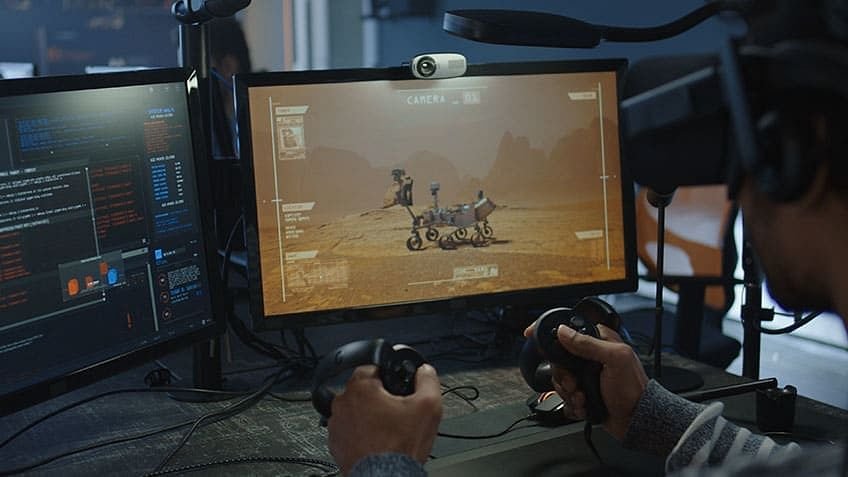
To become a game programmer, you should learn programming languages like C++ or C#, and then study game development concepts and tools like Unity or Unreal Engine.
Ever dreamt of crafting interactive worlds? Do you ask yourself, “how do i become a game programmer?” It’s a common question for many aspiring creators. This journey starts with a solid grasp of programming fundamentals.
Focus on languages that drive game engines. Practice is essential, build small projects and explore different game genres. You’ll develop your skills gradually as you build.

How Do I Become a Game Programmer?
So, you dream of building worlds, coding characters, and crafting epic gameplay? That’s awesome! Becoming a game programmer is a fantastic journey, and while it takes hard work, it’s totally achievable. This article will guide you through the steps, skills, and knowledge you’ll need to start creating your own video games. Let’s dive in!
Understanding Game Programming Fundamentals
Before you jump into writing code, it’s important to grasp some key ideas about how games actually work. Think of it like understanding the rules of a sport before you start playing. Game programming isn’t just about coding; it’s about bringing ideas to life in an interactive and engaging way. It involves many different aspects working together.
What Does a Game Programmer Do?
Game programmers are the people who make the game “go”. They write the instructions (code) that tell the computer what to do when a player presses a button, when enemies appear, and how the game world reacts to the player’s actions. They’re basically the architects of the game’s inner workings.
- They write code to make characters move smoothly.
- They create systems for combat, inventory, and game menus.
- They make sure the game is running well and doesn’t have any big problems.
- They work with artists, designers, and other members of the game development team.
Different Types of Game Programming
Game programming has several special areas, like different kinds of jobs. Here are a few examples:
- Gameplay Programmers are responsible for creating the core game mechanics – how the game plays, character movement, combat, etc.
- Graphics Programmers focus on the visual aspects of the game, making sure things look good, by optimizing rendering, working on shaders, and special effects.
- AI Programmers work on making the computer controlled characters smart and react well to the player, such as enemies, companions, etc.
- Engine Programmers work on the core technology of the game, improving performance and implementing new features in the game engine
- Tools Programmers create and improve software and features that game developers use to create the games, such as editors, debuggers, and build processes.
Essential Skills for Game Programming
To become a game programmer, you’ll need to build a strong set of skills. These skills involve a combination of technical know-how and creative problem-solving.
Learning Programming Languages
The most important skill is learning at least one programming language. Here are some popular languages used in game development:
- C++: This is a very powerful language and is used very often for game engines. It’s fast but can also be tricky to learn.
- C#: A widely used language in the Unity game engine, a good choice for beginners.
- Java: Sometimes used in Android games.
- Python: Although primarily not a game programming language, Python can be used in some game development tools and for scripting in some game engines.
- Lua: A scripting language often used for in-game logic and modding.
- GDScript: It is very popular in Godot Game Engine, similar to Python and very easy to learn and use.
For beginners, starting with C# and Python is often recommended due to their easier learning curves. You can start with one language and then move to others as needed. Learning programming is like learning a new language; it takes practice and time.
Understanding Data Structures and Algorithms
Data structures and algorithms are the building blocks of all software, not just games. They are like organizing and solving puzzles in coding.
- Data Structures are methods to store and organize information so they can be used effectively. Example includes array, list, and trees.
- Algorithms are step-by-step instructions for solving a problem or performing a task. This helps to make games run fast and smoothly. Example includes search algorithms, sort algorithms and pathfinding algorithms.
It’s like organizing your toys in boxes so you can find them quickly when you want to play with them. Knowing these helps you write efficient code that does not slow down the game.
Mathematics for Games
Believe it or not, math is very important in game development. Here’s a rundown of what you’ll need:
- Basic Math: Knowing addition, subtraction, multiplication, and division is very important.
- Algebra: Algebra helps calculate positions, speeds, and collisions.
- Trigonometry: Trigonometry is used to make things rotate, move in angles and many other things.
- Linear Algebra: Linear algebra is used to manipulate positions, rotations, and scaling of objects in a 3D space. This helps to make games realistic.
Don’t be scared! You don’t need to be a math wizard; just a basic understanding will get you started. You’ll learn more as you go.
Problem-Solving Skills
Game programming is all about solving problems. You’ll face challenges every day, like figuring out why a character doesn’t move the way you want, or why the game isn’t loading correctly.
- Debugging: You’ll have to become good at finding and fixing bugs in your code.
- Logical Thinking: Break down big problems into smaller, easier steps.
- Perseverance: Don’t give up easily. Sometimes, you might need to try many different approaches before you get it right.
- Resourcefulness: Learn how to find answers on your own by using the internet, books and help forums.
Getting Started with Game Development
Now you know the basic idea of the skills required for the game development; let’s jump into the actual game development.
Choosing a Game Engine
Game engines are tools that make it much easier to create games. They handle many of the complicated tasks for you, so you can focus on the fun parts of game design. Think of them like Lego sets for making games.
Here are a few popular options for beginners:
- Unity: Unity is very popular and has lots of tutorials and resources available. It’s great for both 2D and 3D games. It’s very popular and has a very large community.
- Godot: Godot is a free and open-source engine that’s easy to learn. It is very powerful, and it’s good for both 2D and 3D games. It is fast, lightweight, and comes with a very big community.
- Unreal Engine: Unreal is a powerful engine used for making high quality games. It is used in making AAA games, but it can be a bit more complicated for beginners to learn compared to other game engines.
- GameMaker Studio: A good option for starting with 2D games, especially for beginners. It has its own scripting language (GML).
For beginners, Unity and Godot are great places to start due to their large community and tutorials. Choose one and start learning it step by step.
Starting Small: Simple Projects
Don’t try to build a huge game like your favorite video game right away. Start with very simple projects to learn the basics. Start building small games, such as:
- Text-Based Games: Learn about input, output, and game loops.
- Simple 2D Platformers: This can help you learn about movement, collisions, and basic game mechanics.
- Pong or Breakout: These classic games are great for learning the fundamentals of game programming.
Focus on finishing a small project, even if it’s not the most exciting one. It will teach you a lot, and you’ll get a sense of accomplishment.
Using Tutorials and Online Resources
You do not have to learn everything all by yourself; there are many helpful resources available online. Here are a few great options:
- YouTube: Many channels provide video tutorials on game programming and different game engines.
- Online Courses: Websites like Udemy, Coursera, and Skillshare have lots of courses on game development.
- Game Engine Documentations: Game engines usually come with very detailed guides that can help learn different aspects of the game engine.
- Game Development Communities: Join forums or online communities to ask questions and share ideas with others who are also learning.
Take advantage of these resources; they are like having a teacher by your side.
Version Control using Git
Version control is like having a save button for your code. It lets you keep track of changes, make mistakes safely, and work with others. Git is the most popular version control system. It may seem complicated to learn at first, but it’s one of the most useful tools a programmer will use.
- Track changes: Keep a record of all changes made to the game’s code over time.
- Collaboration: Allows multiple people to work on the same project without messing up each other’s work.
- Revert changes: Easily go back to the previous versions of your code if you make a mistake.
Building Your Game Programming Portfolio
A portfolio is very important to show what skills you have as a game developer. It is a very important tool when you want to apply for a job.
Creating Game Projects
The most important thing is to have a portfolio of games that you’ve worked on.
- Finish What You Start: Try to complete the projects. Don’t just start and leave them unfinished.
- Showcase Your Code: Make sure you write clean, well-organized code.
- Add Variety: Create different types of games to show you can use different tools and technologies.
Participating in Game Jams
Game jams are events where you have a short time to create a game. It’s a great way to learn, try out new things, and work with others. You can find many online game jams on websites like itch.io.
Contributing to Open-Source Projects
If you’re very good in programming, you can contribute to game engines like Godot. This is a very good way to learn and grow as a game programmer.
Career Paths in Game Programming
There are many different ways that you can work as a game programmer. Your skills are always in demand in different places.
Working at Game Studios
You can apply for a job at different game studios. Most of the game companies look for talented people who have solid skills and a good portfolio.
Freelance Game Programming
You can choose to work on a project-based basis as a freelance programmer. You can work on your own time, and you can also work on your own projects.
Creating Your Own Games
You can create your own game, publish it, and try to make it popular on different platforms. This is a very good way to learn and build something of your own.
Teaching Game Programming
If you like to help people, you can become a game development teacher or create videos on different game engines and programming for the community.
Continuous Learning
The technology changes so fast, so it is always a good idea to keep learning. The game development world is always changing and evolving. You have to be a constant learner to keep up with the new changes.
Staying Updated on New Technologies
Make sure to read all the newest updates and keep up with the new technologies.
Practicing Your Skills
The more you practice your coding, the better you get. Always try to make different projects.
Joining the Community
The game development community is very helpful. Make sure you engage and be part of different communities.
Becoming a game programmer is not an easy task; it requires hard work, dedication and perseverance. Starting is the most difficult part. Keep learning, keep building and never stop creating new things. It is a journey that has a lot of challenges, but the end result is totally worth it.
How I would learn game dev (If I could start over)
Final Thoughts
Start with focused learning of programming languages like C++ or C#. Practice coding regularly, working on personal projects helps greatly. Understanding game engines such as Unity or Unreal Engine is also important.
Build a portfolio with your projects to showcase your abilities to potential employers. “how do i become a game programmer” is a question many ask, and the answer lies in consistent practice and learning.
Networking with other developers and actively participating in game development communities is also crucial. This shows real passion for game development.

