
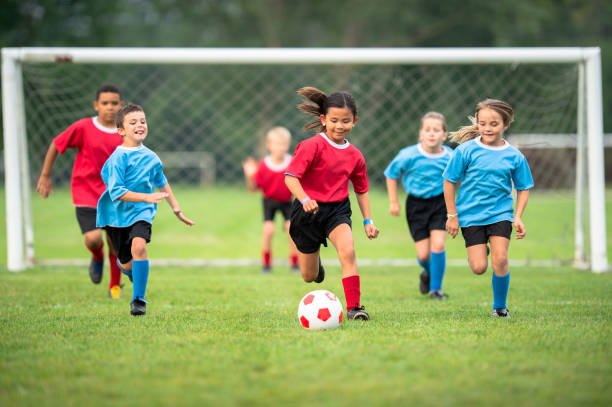
The length of kids soccer games varies by age group, typically ranging from 40 to 90 minutes, including halftime.
Ever wondered about the duration of those exciting soccer matches your kids are playing? It’s a common question for parents and spectators alike: how long are kids soccer games, exactly? The answer isn’t always straightforward, as it depends on a few key factors.
Age plays a vital role in determining game length. Younger children usually have shorter games, while older kids have matches that run longer, similar to adult games. This helps accommodate their physical abilities and attention spans.

How Long Are Kids Soccer Games?
Okay, so you’re probably here because you’re wondering, “Just how long are these kids soccer games, anyway?” It’s a great question! The answer isn’t always the same because it depends on a few different things, like the age of the players and the league they play in. Think of it like this: a game for very little kids isn’t going to be the same length as a game for teenagers, right? Let’s dive into all the details so you know exactly what to expect when you head to the field!
Age Groups and Their Game Durations
One of the biggest factors determining how long a kids soccer game will last is the age of the players. Younger players need shorter games to keep them engaged and avoid tiring them out too much. As they get older, the game length gradually increases. Let’s take a closer look at some common age groups:
Under 6 (U6)
For our tiniest soccer stars, typically around 4-5 years old, games are super short! We’re talking about a duration of around 40 minutes, usually broken down into four 10-minute quarters. The focus here is really on having fun, learning the basic rules, and getting some exercise. Don’t expect highly structured play; it’s more about exploration and movement. Coaches and parents are usually very involved, helping the kids understand where to go and what to do.
- Typical game length: 40 minutes
- Quarters: Four 10-minute quarters
- Focus: Fun, basic skills, movement
Under 8 (U8)
When kids are around 6-7 years old, they move up to the U8 level. Here, the game length gets a little bit longer. You’ll usually see games last for around 50 minutes, often divided into four 12.5-minute quarters or two 25-minute halves. At this age, kids have started to grasp the basics of the game a bit more and can maintain their focus for a slightly longer period. The rules become more consistent, and you’ll see the beginnings of real gameplay strategies emerging.
- Typical game length: 50 minutes
- Quarters or Halves: Four 12.5-minute quarters OR Two 25-minute halves
- Focus: Skill development, basic teamwork, and more structured play
Under 10 (U10)
Kids aged 8-9 generally play in the U10 category. At this stage, soccer games increase in length. Expect a game time of about 60 minutes, with two 30-minute halves being the most common setup. Kids at this age are more physically capable and have a better understanding of the game. They are working on passing, shooting, and different positions, so the games are more strategic and engaging to watch.
- Typical game length: 60 minutes
- Halves: Two 30-minute halves
- Focus: More complex skills, positional play, and teamwork
Under 12 (U12)
When kids reach 10-11 years old, they’re usually playing at the U12 level. The standard game length at this level is approximately 70 minutes. Usually, that is broken into two 35-minute halves. At this age, players have a deeper understanding of the game and are playing with more skill and strategy. They are moving across the field more efficiently and exhibiting team coordination. This is a more competitive stage where kids are starting to specialize in different positions.
- Typical game length: 70 minutes
- Halves: Two 35-minute halves
- Focus: Advanced skills, strategic play, and refined teamwork
Under 14 (U14) and Older
As players move into the teenage years, the game length increases even further. For the U14 level (typically ages 12-13) and older, games often run for 80 minutes or even 90 minutes, the length of professional games. These games are usually played in two 40 or 45 minute halves, which can vary depending on the league and competition level. Players at this level are usually more experienced and the game is more focused on competitive play.
- Typical game length: 80-90 minutes
- Halves: Two 40-45 minute halves
- Focus: High-level skills, tactical play, and competitive matches
Understanding Halftime and Injury Time
Besides the actual playing time, it’s important to know about halftime and injury time. Halftime provides players with a break to rest, rehydrate, and listen to their coaches. Injury time, on the other hand, is added to the end of each half to account for any delays due to injuries during play.
Halftime
Halftime is a short break between the two halves of a soccer game. It’s generally 5-10 minutes long, but can vary depending on the age group and the league. For younger children, halftime might be shorter to keep them focused. For older children, halftime is usually longer to allow players to rest and recover.
- Typical length: 5-10 minutes
- Purpose: Rest, rehydration, coach discussions
Injury Time (Stoppage Time)
Injury time is added to the end of each half of a soccer game. If a player gets hurt, or play is otherwise interrupted, the referee can add extra time to the game to make up for time that was lost. The amount of injury time added is decided by the referee and can vary. Sometimes, it might be just a minute or two. Other times, if there are many stoppages, injury time can be longer.
- Purpose: Compensation for time lost during the game
- Determined by: The referee
- Length: Varies depending on stoppages
Factors That Can Affect Game Length
While the age group is the primary determinant of game length, other factors can also come into play, sometimes affecting the exact time of the game. Let’s take a look at some of the other things that may have influence.
League Rules and Regulations
The specific rules of a league, association, or tournament can have a big effect on game duration. Some leagues may choose different lengths of game time for certain ages than other leagues in order to best meet their objectives for kids’ soccer development. For example, a local recreational league might have shorter game lengths than a more competitive travel league. It’s always a good idea to check the rules for the league your child is playing in before the start of the season so you know what to expect.
Tournament Formats
Tournaments often have their own rules regarding game times. Games can be shorter or longer depending on the tournament format. Some tournaments might shorten games to fit more matches into a single day. Others may choose longer games for the final stages to make them more challenging. Tournament rules are usually available beforehand, so you can stay informed.
Inclement Weather
Bad weather can really shake things up. If there is heavy rain, lightning, or extreme heat, the game may be temporarily suspended or even cancelled. If the weather clears, the game may restart, sometimes after the clock has been reset, and sometimes play will resume where it was stopped. It all depends on the tournament or league rules. If the weather makes it dangerous to play, officials will prioritize player safety. Sometimes a game may be cut short, and if that happens, the results might be decided based on the score at the time of the stoppage, or it may simply not count.
- Heavy Rain: Can cause slippery conditions and lead to pauses in play.
- Lightning: Absolutely will cause a suspension of the game until it’s safe.
- Extreme Heat: Can result in additional water breaks, or even shortened game times.
Special Events or Festivals
Sometimes games are part of special events or festivals. These events may include modifications to the normal game length to accommodate the overall event schedule. These adjustments might be shorter games, or even shorter breaks in between. These rules are often set beforehand to fit the flow of the event.
Why the Length of Games Matters
You may be wondering why game lengths are structured the way they are. There is a lot of thought that goes into the timing of kids’ soccer games. Let’s explore some of these reasons:
Age-Appropriate Physical Demands
Young children can have trouble maintaining focus and energy. Games have to be adjusted to avoid exhaustion or burnout. Shorter game times are appropriate for younger kids because it’s important to help them learn the basics and have fun without being overwhelmed. As the children get older, they can handle longer periods of activity, and the game times increase accordingly. This helps them develop the endurance and focus they need to succeed at the sport.
Skill Development
Appropriate game times allow players the chance to develop their skills. Younger players focus on simple movements, ball control, and having fun. Older kids can develop more complex strategies and tactics. As children age, longer games mean they have more time to practice what they’re learning in a game situation. This is beneficial for the children’s personal development.
Maintaining Interest and Engagement
Long games can become boring or overwhelming for younger children. Keeping games shorter helps keep them engaged and excited about playing. This is important for retaining their enthusiasm and passion for the game. If a child has a positive experience, they will be more likely to continue playing and improving.
Safety
Shorter game times for young kids helps keep them safer by preventing injuries related to exhaustion or overexertion. Older children and teens usually have a better understanding of their bodies and can handle longer playing times. Safety is always paramount, so game time length is always a consideration.
What to Expect at a Typical Game
Now that we know about game lengths, let’s recap what you can expect at a typical soccer game for kids:
Arrival and Warm-up
Teams usually arrive before the scheduled start to prepare. Players might do some warm-up exercises and drills. This time may be anywhere from 15-30 minutes prior to game time, depending on the league and coach. Coaches also use this time to discuss strategy with the players. Be sure to get to the field early to allow for this time and not make the players rush.
Game Time
The game itself will run for the amount of time determined by the age group and the league rules. You’ll see players running, passing, and trying to score goals. The pace can vary, especially in younger age groups, where players are still learning. The pace of the older age groups will be faster and more complex. Cheer them on!
Halftime Break
As mentioned, there is a short break in the middle of the game. This is a time for players to rest, refuel, and get some last minute instructions from their coaches.
Post-Game
After the game, players will usually shake hands with the opposing team, showing good sportsmanship. Some teams may use this time to do a brief cool down or listen to their coach. Don’t forget to bring water and snacks for after the game.
So, while the exact length of a kids soccer game can vary, knowing these general guidelines can really help you prepare for the season. It also helps ensure that your child has a positive and beneficial experience on the soccer field. Remember, the game lengths are structured to match the physical and mental capabilities of the children playing, and it is all designed to help them improve and have fun!
SOCCER for Kids | Basic Rules | Episode 1
Final Thoughts
Kids soccer game durations vary significantly by age group. Younger children typically play shorter games, often around 40 minutes. As kids grow older, game lengths increase. Understanding the specific rules of your local league is important.
Knowing how long are kids soccer games helps parents plan their schedules. The duration ranges from short matches to longer ones. Check with your league for exact timings. This lets you organize accordingly.

