
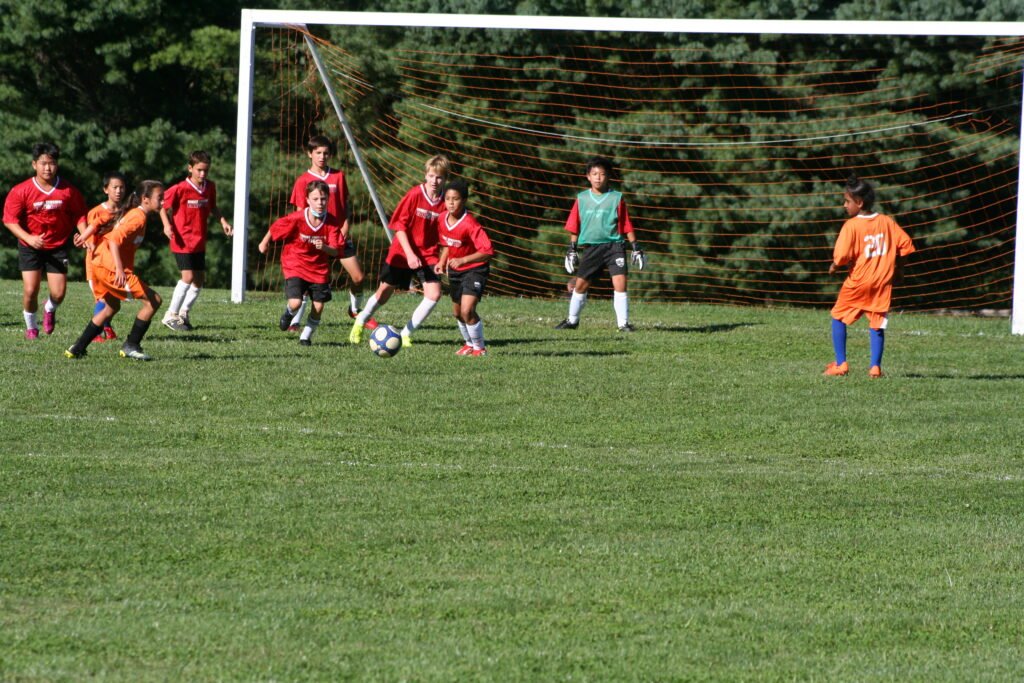
Middle school soccer games typically last between 60 and 70 minutes, divided into two halves with a short halftime break.
Ever wondered about the duration of those exciting middle school soccer matches? You see the players running up and down the field, the crowd cheering, but how long are middle school soccer games, really? The answer is actually pretty straightforward.
It’s helpful to know that the game time isn’t as long as high school or professional matches. The shorter time frame allows for the physical capabilities of this age group, and helps keep the game fast-paced.
This knowledge is useful whether you are a parent cheering from the sidelines, or a player ready to give it your all. Understanding the game length sets expectations for players and spectators alike.

How Long Are Middle School Soccer Games?
Figuring out how long a soccer game lasts in middle school can be a bit like trying to solve a puzzle. It’s not as straightforward as just saying “it’s always this many minutes.” Lots of different things can change the length of a game. Let’s dive deep and figure it all out!
Standard Game Time for Middle School Soccer
The most common game length for middle school soccer is usually around 60 minutes. This total time is often split into two halves, each lasting 30 minutes. This is the standard format that many leagues and schools follow. However, this isn’t a hard and fast rule. You’ll find some variations depending on the league, the region, and even the specific school or organization.
Halves and Breaks
Let’s explore the typical structure of a middle school soccer game:
- Two Halves: A typical game is divided into two equal halves. In most cases, each half is 30 minutes long. This means a total of 60 minutes of playing time.
- Halftime Break: There’s usually a break between the two halves called halftime. This break is typically around 5-10 minutes long. It allows players to rest, grab a drink, and get instructions from their coaches.
- No Stop Time: Unlike some other sports, the clock in soccer usually doesn’t stop when the ball goes out of bounds or when there are minor stoppages. Time only stops when a serious injury occurs, or the referee pauses it for some specific reason. This means the game clock keeps running, so the actual time the game takes to complete may be a bit longer than 60 minutes.
Factors Affecting Game Length
Several things can affect how long a middle school soccer game actually takes, including variations that make the game shorter or longer.
League Rules and Regulations
Different leagues might have their own unique rules about game length. Some leagues may opt for shorter halves, perhaps 25 minutes each, especially for younger middle schoolers. This means a total game time of 50 minutes. Other leagues might have 35-minute halves, resulting in a 70-minute game. Always check with the league organization for the specific rules they are following to be absolutely sure about match length.
Age Groups
Within middle school, we often have different age brackets, such as sixth graders, seventh graders, and eighth graders. Generally, younger players might participate in shorter games. This can be because they are still developing their stamina and need to acclimate to longer playing times gradually. For instance:
- Younger Middle Schoolers: 6th graders might have shorter game times, maybe 25-minute halves.
- Older Middle Schoolers: 7th and 8th graders often play the standard 30-minute halves.
Tournament Play
Tournaments can often have different time rules than regular season games. To fit in multiple games in a day, tournaments might opt for shorter game times, this could be to ensure enough time for all matches or allow travel time between venues. In some tournaments, the knockout stages can have longer game times. It’s essential to check the specific rules of any tournament you’re participating in.
Weather Conditions
Sometimes, Mother Nature impacts how long a game lasts. If it’s super hot, referees can pause the game to allow players to hydrate and cool down, this adds to the overall length of the game. Extreme weather conditions such as lightning or heavy rain can cause a game to be delayed, shortened, or even canceled. The safety of the players is always the main priority.
Referee Decisions
The referee’s decisions can sometimes lengthen the game. Serious injuries might require a stoppage, and that adds to the overall time. Also, other situations requiring the referee to intervene can also extend the time of game slightly. In these cases, the referee can sometimes add injury or stoppage time on to the match length.
Local Rules
Local playing rules may add an extra twist on the traditional timing of game. Certain middle school leagues might have some special local rules impacting game time. These are not common rules, but always be sure and check to make sure that the game will run smoothly.
Why Game Length Matters
You might wonder, “Why does it matter how long a game is?” It’s not just about the clock; game length has important effects.
Player Stamina and Conditioning
The length of a soccer game directly relates to how much running, sprinting, and effort players need to put in. Shorter games are better for younger kids who may not have the conditioning for longer matches. Longer games demand more stamina and physical preparedness from players. Coaches will use practice to ensure players are ready for the standard game length for their age group.
Strategic Considerations
Coaches and players also think about game length for game strategy. Longer games need different plans than shorter games. Longer games allow a team to build a strategic plan during game and have opportunities to catchup. A shorter match will require the team to start strong and maintain pace throughout.
Scheduling and Logistics
Understanding the length of games is very important for game and tournament scheduling. Coaches, parents, and organizers will need to consider the match length when arranging transportation, game start times, and field availability. All need to be in line with the amount of time needed for matches.
Variations in Game Length: A Closer Look
Let’s look deeper into the different variations we have discussed so far.
Shorter Game Lengths
These are often implemented for younger age groups, or for tournaments.
- 20-Minute Halves: This could result in a total playing time of 40 minutes, ideal for very young middle schoolers.
- 25-Minute Halves: A total of 50 minutes, commonly used for younger age groups and some types of tournament play.
- Modified Halves: There may be special scenarios that might include modified game lengths of 20 or 25 minutes, like when inclement weather has delayed a schedule or to make sure that tournaments run on time.
Longer Game Lengths
Though less frequent in middle school, they exist in specific situations.
- 35-Minute Halves: A total of 70 minutes of playing time. These are sometimes seen in older middle school groups.
- Tournament Knockout Rounds: In more competitive tournaments, especially during the knockout stages, they can make these game times longer, to ensure a winner is determined.
Special Considerations in Tournaments
Tournaments often employ variations in game length.
- Pool Play vs. Knockout Rounds: Pool matches are generally shorter, while the knockout matches may be longer.
- Time limits: Tournaments sometimes have fixed time limits, even if the match is tied, especially to make sure they stick to a tight schedule. In these situations, the match will end at the designated time and go to the next match.
- Overtime Rules: Instead of time over time, if a tournament knockout game ends in a draw, they may go straight to penalty shootouts instead of extra time, this is to shorten the length of game.
How to Find Out the Exact Game Length
It’s always best to confirm the exact length of a middle school soccer game before the match. Here’s how you can find out:
- Check with the Coach: Your team coach is the best resource for rules and information on game length.
- Check the League Website: Many leagues will post their rules on their website, including match duration.
- Look for Tournament Information: Tournament websites or handouts usually contain details about game rules and duration.
- Ask League Officials: Don’t hesitate to ask the league officials or the tournament director for clarification on game lengths.
Always ensure you have the correct information before the day of your game, you will be glad you did when it comes time for matchday! Knowing the game length will help you prepare your players for the day of your match, and allow them to play to their best ability.
In middle school soccer, the most common game length is around 60 minutes, divided into two 30-minute halves, but always check with your league or tournament rules for the specific duration.
How I got ready for soccer in middle school #soccerplayer #soccer #soccergirl
Final Thoughts
Middle school soccer games typically last between 60 and 70 minutes. They often consist of two 30 or 35 minute halves. There’s a short break in between. This game length allows enough time for playing, with consideration for player stamina.
Ultimately, how long are middle school soccer games? The answer is that game times can vary slightly depending on the league or specific rules. Generally, expect around an hour to an hour and ten minutes. The games will always be shorter than high school games.

