
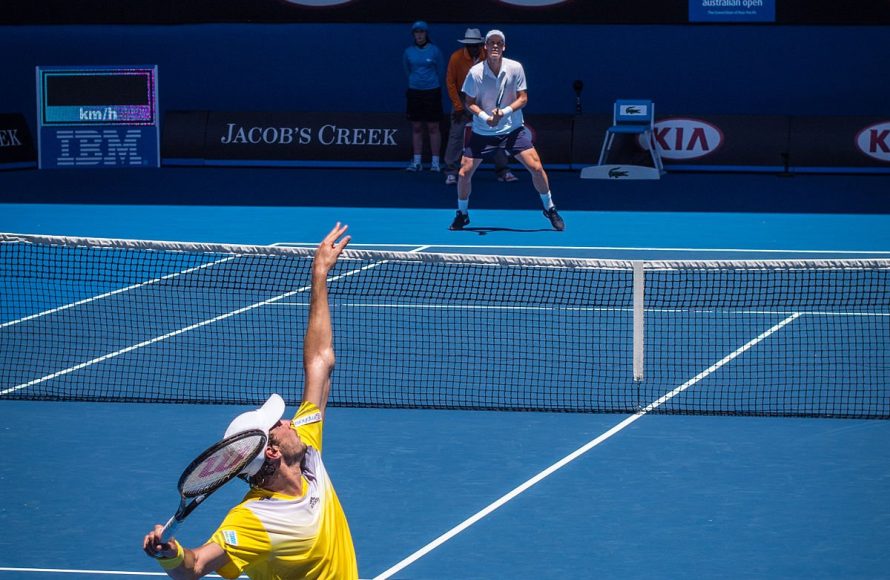
The length of tennis games varies significantly; a match can last from under an hour to over five hours depending on the number of sets and the length of each game.
Ever wondered about the time commitment when tuning into a tennis match? Or perhaps before you decide to try a game yourself? The question of ‘how long are tennis games’ is quite common, and the answer isn’t as straightforward as you might expect. Several factors contribute to the overall duration.
Matches don’t follow a strict clock like other sports. Instead, they progress based on the number of games and sets won. This makes it tricky to predict the exact duration of a match.
The players’ styles and the particular format of play directly impact the length. A closely contested match between two evenly matched players will naturally take longer than a one-sided affair.

How Long Are Tennis Games?
Tennis matches, unlike some sports with set time limits, can vary quite a bit in length. This is because the way tennis is scored, with sets and games, means a match can end quickly or stretch on for hours. So, when you ask “how long are tennis games?”, the answer isn’t a simple number. Instead, it depends on a few key things. Let’s dive into what makes tennis match durations so different.
Factors Influencing Tennis Match Duration
Several factors play a role in determining how long a tennis match will last. Think of it like making a cake; different ingredients and different baking times affect the final result. Let’s look at these key factors:
The Number of Sets
The most significant factor impacting match length is the number of sets required to win. In most men’s professional matches (like Grand Slams), players need to win three sets out of five (best-of-five). For women’s professional matches and most amateur matches, players usually play best-of-three sets, meaning they need to win two sets to win the match. Obviously, a best-of-five match will likely take longer than a best-of-three one because there are more chances for extended play.
How Close the Games Are
If players are evenly matched and constantly trading games, or going to deuce many times in a game, the match will naturally be longer. Close games mean players are going back and forth, trying hard to win each point and that takes time. When players are playing long rallies back and forth, it will extend the time. This is one of the many reasons why some matches fly by and others crawl on forever.
Players’ Styles of Play
The way a player plays tennis can also affect the time of the match. For example, a player who often serves and volleys usually makes for quicker points. They aim to finish the point quickly at the net. But, a player who plays from the baseline, relying on powerful groundstrokes to win points, tends to have longer rallies. These longer rallies make each game and the overall match take more time. Some players might be consistent and make sure to get every ball back, while others might try to hit winners quickly. These playing styles and strategies greatly influence how long it takes to complete each match.
The Level of the Players
Generally, higher-level professional matches between highly skilled players can be longer. They’re able to return more shots, make fewer unforced errors, and keep rallies going. Lower-level matches between beginners or recreational players might be shorter because points tend to be shorter. Unforced errors also lead to quicker points.
Weather Conditions
Believe it or not, even the weather can play a role in match length. Extreme heat or humidity can slow down players, leading to longer points and more breaks. Rain can interrupt matches, causing delays. Wind can also change the way a ball bounces and make it harder to play. All these factors extend the time it takes to finish a tennis match.
Tiebreaks
Another thing that can make the length of a match tricky to predict is tiebreaks. A tiebreak happens when the score in a set is 6-6. Instead of playing normal games to get ahead by two, there’s a special tiebreak game, where the first player to reach seven points with a two-point lead wins the tiebreak (and the set). Tiebreaks can be over really quickly if one player wins easily, but they can also take a while if it’s a close battle. When both players are playing at top level, it will always be a challenge to get the 7 points.
Typical Match Durations
Now that we’ve talked about the things that change match lengths, let’s look at some typical times. These are just rough estimates, of course. Remember that a match can always be longer or shorter based on the factors we discussed. Let’s explore them through the table:
| Match Type | Typical Duration |
|---|---|
| Professional Men’s (Best-of-Five) | 2 to 5 hours or more |
| Professional Women’s (Best-of-Three) | 1 to 3 hours |
| Amateur/Recreational (Best-of-Three) | 45 minutes to 2.5 hours |
| Junior Matches | 30 minutes to 2 hours |
Keep in mind that these are just general guidelines. For example, some women’s matches in Grand Slams can also go longer than 3 hours if they are very close.
Deep Dive into Set Lengths
Let’s break down the structure of a set. Each set is made up of games. The first player to win six games with a lead of two games is the winner. For example, 6-4, 6-3, 6-2 are all winning set scores. If the score is 6-5, one player is at advantage point and needs one more game to win the set and make the score 7-5, but if the other player manages to win the next game, the score will turn to 6-6 and they will go into a tiebreak. Let’s take a look more deeply into it.
Understanding Games and Points
Each game is made up of points. Tennis scoring is a bit different: 0, 15, 30, 40, and then game point. So, if a player has four points before their opponent gets three points, they win the game. If the score is 40-40, it is called “deuce”. A player needs to win two points in a row from a deuce to win a game. The first point after deuce is called “advantage,” and if the same player wins again, they win the game. If the other player wins the advantage point, it goes back to deuce.
The Role of Tiebreaks
As we mentioned, tiebreaks happen when the score in a set reaches 6-6. In a tiebreak, the players score points like in regular games (1, 2, 3, etc.), and not 15, 30, 40. The first player to reach 7 points with a lead of two points wins the set. If the score is 6-6 in a tiebreak, the game continues until one player is ahead by two points. So, tiebreaks can sometimes be quick and sometimes can become very long, it depends on how the players are performing.
Examples of Short and Long Tennis Matches
Let’s look at some real-world examples to see the wide range of tennis match lengths:
Examples of Shorter Matches
- Quick wins: Sometimes, a player might dominate the whole match with few unforced errors or the opponent will have very many unforced errors. The match may end very quickly if a player wins 2 sets in a row with scores like 6-2, 6-1.
- Early retirements: Sometimes a player might get injured or unwell, which might lead to retirement and that results in very short games.
Examples of Longer Matches
- Grand Slam epics: There have been many famous Grand Slam matches that have lasted over five hours! These typically happen with male players due to best-of-five set format and when the players are almost equally skilled and they go back and forth for a very long time, and there are many deuces, advantages, tie breaks, and this can easily take over 5 hours to complete.
- Close 3-setters: Even best-of-three matches can be very long if players are evenly matched and have a very high consistency. If every game becomes very tight and has so many deuces, advantages, the match length can get to over 3 hours.
Strategies for Watching Tennis
Knowing that tennis matches can vary in length can help you plan your viewing. Here are some strategies:
For Short Matches
- Quick viewing: If you are just looking to watch some tennis for a short period, you can choose to watch matches where a player is winning easily. These can be completed in one hour.
- Plan accordingly: If you have a set time limit, understand that you might not get to finish watching all the games of a match.
For Longer Matches
- Plan for breaks: if you know it’s a match where two really great players are facing off, plan for many hours of viewing. Make sure you have all your necessary refreshments and meals nearby.
- Patience: Be ready for a longer viewing time and enjoy the drama and excitement as the match unfolds.
- Check the schedule: Sometimes match schedules give estimated times or projected end times, so check these to help your viewing.
How Tennis Match Lengths Compare to Other Sports
Now, let’s take a quick look at how tennis match lengths compare to some other popular sports:
- Basketball: Professional basketball games have a set time of 48 minutes (4 quarters of 12 minutes each), but with stoppages, it can usually take about two hours. This has less variability than tennis.
- Soccer: Soccer matches last 90 minutes, divided into two halves of 45 minutes. With stoppages the match is almost always around two hours long. There is a stoppage time at the end of the half.
- Baseball: Baseball games have nine innings, but the length of games vary widely. A game might last for 2-3 hours, or some might even go over 4 hours. The game length in baseball depends on the number of hits, home runs, walks, and pitching changes, etc.
- American Football: NFL games are 60 minutes long, but with stoppages can take around 3 hours, similar to baseball.
As you can see, tennis, with its variable time, stands out a bit from other sports. The time can vary a lot depending on how the match unfolds. It is not easy to predict the time for the completion of the game, unlike other sports.
Understanding the many factors that affect how long tennis games can last, from the number of sets to the player’s styles, will help you enjoy watching the matches. Tennis offers a unique viewing experience, ranging from short matches to thrilling, long epics. The unpredictable nature of match length is part of what makes tennis so exciting!
The Rules of Tennis – EXPLAINED!
Final Thoughts
So, how long are tennis games? Match durations vary greatly based on sets, individual player styles, and overall competitiveness. A simple match can last less than an hour, while a five-set Grand Slam final might extend for over five hours.
Factors like tie-breaks and injury timeouts also influence the total playing time. Remember, these are just averages, and each tennis match possesses unique timing. Understanding the range is key for both planning and appreciation.

