
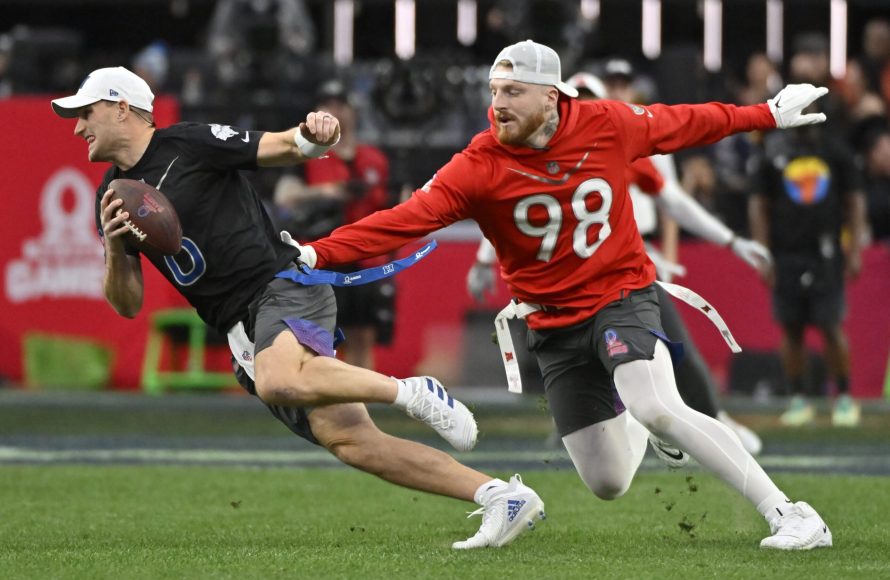
Youth flag football games typically last between 40 and 60 minutes, with variations based on league rules and age groups.
Thinking about signing your child up for flag football? A common question parents have is, “how long are youth flag football games?” It’s a valid point, considering busy schedules and other commitments. The game length directly impacts your availability and your child’s stamina.
Understanding this aspect beforehand can make planning much easier. Different leagues might have their own specific time frames. So, checking the rules of the league is always a good practice.

How Long Are Youth Flag Football Games?
Understanding the duration of youth flag football games is crucial for parents, coaches, and young athletes alike. It’s not just about knowing when to show up and when to leave; it impacts game strategy, player stamina, and overall enjoyment. The length of these games isn’t set in stone like the NFL; it varies significantly based on a number of factors. Let’s explore these variations in detail and see what you can typically expect when it’s game day!
Factors Influencing Game Length
Several elements come into play when determining the length of a flag football game for kids. These factors help ensure fair play, safety, and an age-appropriate experience.
Age of the Players
Perhaps the most significant factor is the age group of the participants. Younger children, like those in kindergarten and first grade, will obviously have shorter attention spans and less stamina than older kids in middle school. Because of this, game lengths are adjusted accordingly. Here’s how it usually breaks down:
Kindergarten – 2nd Grade (5-8 years old): Games are usually the shortest, often ranging from 40 to 60 minutes total. These shorter times help keep the kids engaged and prevent them from becoming overly tired. This age group needs more frequent breaks and shorter playing periods.
3rd – 5th Grade (8-11 years old): Game times here typically increase, running about 60 to 75 minutes. The kids are older and more developed, allowing them to play for longer durations. They have a better grasp of the game’s rules and are capable of maintaining focus for extended periods.
6th – 8th Grade (11-14 years old): As kids reach middle school, game lengths can extend to 75 to 90 minutes. They have improved physical fitness and a more competitive mindset, making them ready for longer game times and more challenging gameplay. Some leagues might even slightly go beyond that, as they prepare for high school level sports.
League Rules and Regulations
Each league or organization that hosts flag football has their own rules, and these rules extend to the clock. Some leagues might adhere to a running clock, only stopping for time outs or injuries, while others might stop the clock more frequently, similar to what you see in higher levels of football. This variance directly impacts how long a game actually lasts. Here are some common rule-related time factors:
Running Clock: The game clock only stops for timeouts and injuries. This keeps the game moving and tends to lead to quicker game times overall. Many recreational leagues for younger kids use a running clock.
Stopped Clock: The clock stops for incomplete passes, out-of-bounds plays, and penalties, similar to traditional football. This significantly increases the total game time and is more common in older age groups or more competitive leagues.
Halftime Length: The duration of halftime can also vary. Halftimes are typically shorter for younger groups and longer for older players. A short break is enough for the youngest kids to recharge, while older kids might need a slightly longer rest and to plan strategy with the coaches.
Number of Timeouts: The number of timeouts allowed per team can also have an impact. Fewer timeouts mean fewer stoppages and a faster-paced game, while more timeouts will cause the game to last longer.
Playing Format
The specific way flag football is played can also affect how much time it takes to complete the game.
Number of Quarters or Halves: Most youth flag football games are divided into halves, like basketball, or quarters, like standard football. The length of these periods differs widely. Typically, younger players will have shorter quarters (8-10 minutes), while the quarters can run 12-15 minutes for older kids.
Game Formats: Some leagues might experiment with different formats like festivals or round robins where multiple short games are played in one day. In such cases, games might be significantly shorter, perhaps only 20-30 minutes, but teams will play more games in the same day.
Tournament Structures: Tournament play adds complexity. Depending on whether it’s a single-elimination or round robin format, the length and number of games can be different. Tournament games often have slightly increased times, as the competition intensifies.
Other Considerations
Beyond the age, rules, and playing format, additional factors can influence the total duration of the game.
Weather: Extreme weather conditions like heavy rain or excessive heat can sometimes shorten games or force delays. Some leagues are equipped with lightning detectors and have strict policies on stopping play for player safety.
Injuries: If a player gets hurt, the game clock stops while medical personnel attends to them. Serious injuries might require significant delays. This can affect total game time but is, of course, very necessary.
Score Differences/Mercy Rules: Some leagues have mercy rules where, if one team is winning by a large margin, the game can be shortened or called early. This helps to prevent excessive mismatches and maintain good sportsmanship.
Typical Game Lengths by Age Group: A Closer Look
Let’s break down typical game durations for various age groups in more detail. Remember, these are general guidelines, and individual leagues may vary slightly.
Pre-Kindergarten and Kindergarten (4-6 Years Old)
This age group focuses on introducing the game’s basic concepts and fostering a love for sports. Therefore, the games are structured to be short, fast paced, and engaging.
Typical Game Length: 30-45 minutes total.
Quarter or Half Length: Usually two halves, with each half being around 15-20 minutes.
Clock Type: Running clock, only stopping for time outs or injuries.
Halftime: Short, usually no more than 5-10 minutes.
Key Characteristics: Games at this level are generally non-competitive, emphasizing fun and participation. Short game durations match the limited attention spans of young players.
1st and 2nd Grade (6-8 Years Old)
At this stage, kids start to understand more of the game’s rules and develop basic skills, but still require shorter games with frequent breaks.
Typical Game Length: 45-60 minutes total.
Quarter or Half Length: Typically, two halves lasting around 20-25 minutes. Some leagues might also use four quarters that run for 10–15 minutes each.
Clock Type: Usually a running clock with limited stoppages.
Halftime: A little longer than pre-k/kindergarten, usually around 10 minutes.
Key Characteristics: This level begins to introduce basic game strategy, while still keeping fun and active participation as the main goal.
3rd and 4th Grade (8-10 Years Old)
As players progress into 3rd and 4th grade, they are more coordinated, have better focus, and understand the competitive aspects of the game more fully.
Typical Game Length: 60-75 minutes total.
Quarter or Half Length: Typically four quarters lasting around 12-15 minutes, or two halves that run 25-30 minutes each.
Clock Type: Might use a running clock, but some leagues might introduce stopped-clock rules for incomplete passes and out-of-bounds plays.
Halftime: Around 10-15 minutes.
Key Characteristics: Games at this stage involve more skill development and strategic thinking. Increased game length suits players with improved stamina.
5th and 6th Grade (10-12 Years Old)
Kids at this level tend to be more athletic and ready for a more intense game experience. They also have a deeper understanding of the game and its strategies.
Typical Game Length: 70-85 minutes total.
Quarter or Half Length: Usually four quarters at 15-20 minutes each, or two halves of 30-35 minutes each.
Clock Type: More likely to have a stopped clock, similar to traditional football, with stoppages for incomplete passes, out of bounds, and penalties.
Halftime: Approximately 15 minutes.
Key Characteristics: This age group involves a higher level of competition, with more complex plays and strategies. Games become more physically demanding with the added time and a faster pace.
Middle School (7th and 8th Grade) (12-14 Years Old)
At the middle school level, players are almost ready for high school athletics, and game lengths reflect that.
Typical Game Length: 75-90 minutes total.
Quarter or Half Length: Usually four quarters of around 15-20 minutes, or two halves lasting about 35-40 minutes.
Clock Type: Predominantly a stopped clock, to more closely resemble the format used in higher-level football.
Halftime: Can be 15-20 minutes.
Key Characteristics: Games are very competitive, with players demonstrating complex strategies and advanced skills. The longer game times prepare players for the demands of high school sports.
A Table Summarizing Typical Game Lengths
To make it easier to see how game lengths vary, let’s organize this information into a table:
| Age Group | Typical Game Length | Quarter/Half Length | Clock Type | Halftime |
| :—————— | :—————— | :————————— | :————— | :————- |
| Pre-K/Kindergarten | 30-45 minutes | 2 halves of 15-20 minutes | Running Clock | 5-10 minutes |
| 1st-2nd Grade | 45-60 minutes | 2 halves of 20-25 minutes or 4 quarters 10-15 minutes | Running Clock | 10 minutes |
| 3rd-4th Grade | 60-75 minutes | 4 quarters of 12-15 minutes or 2 halves of 25-30 minutes | Running/Stopped | 10-15 minutes |
| 5th-6th Grade | 70-85 minutes | 4 quarters of 15-20 minutes or 2 halves of 30-35 minutes | Mostly Stopped | 15 minutes |
| Middle School | 75-90 minutes | 4 quarters of 15-20 minutes or 2 halves of 35-40 minutes | Stopped | 15-20 minutes |
How to Prepare for Game Day Duration
Now that you have a clear idea of game lengths, here are some tips on how to prepare for game day, both as a parent and as a young player:
For Parents:
Check the Schedule: Always double-check the schedule provided by the league. Confirm the start time and anticipated end time.
Arrive Early: Give yourself enough time to arrive at the field. This allows for any last-minute bathroom breaks, stretching, or just settling in before game time.
Pack Accordingly: Bring snacks, water, and any other essentials for the length of the game and the conditions. A comfortable chair or blanket is also recommended if seating is limited.
Be Prepared for Changes: Be aware that games can sometimes be delayed or shortened. Flexibility is key.
For Young Players:
Stay Hydrated: Drink water regularly before, during, and after the game to avoid dehydration.
Eat Lightly: Have a healthy, light meal or snack before the game. Avoid heavy or greasy foods.
Warm Up: Take time to warm up and stretch before the game to avoid injury and get your body ready to play.
Listen to Coaches: Pay attention to the coach’s instructions and make sure you understand the game plan, including when to rest.
Have Fun: Remember, flag football is about enjoying the sport, participating, and improving your skills!
Understanding game length is a critical part of the flag football experience for everyone involved. It impacts everything from how much water you need to bring, to how much time you dedicate to the field that day. It can vary by age group, league, and even by the weather, so it’s good to know what to expect. Now that you are aware of all those details, you are better prepared to get in the game!
By understanding the different factors that influence game length, and the typical times for different age groups, you can ensure that your young athlete is ready for anything!
How to Play Flag Football | NFL Flag Football Basics
Final Thoughts
Youth flag football games have varied durations, depending on age and league rules. Generally, these games last between 40 and 60 minutes, divided into shorter halves. Younger kids usually play shorter games.
The clock often runs continuously except for timeouts and injuries. This keeps the pace moving. Understanding the specific timing helps players and coaches plan effectively.
So, how long are youth flag football games? The typical timeframe spans from 40 to 60 minutes. It’s important to check with your particular league for exact details.

