
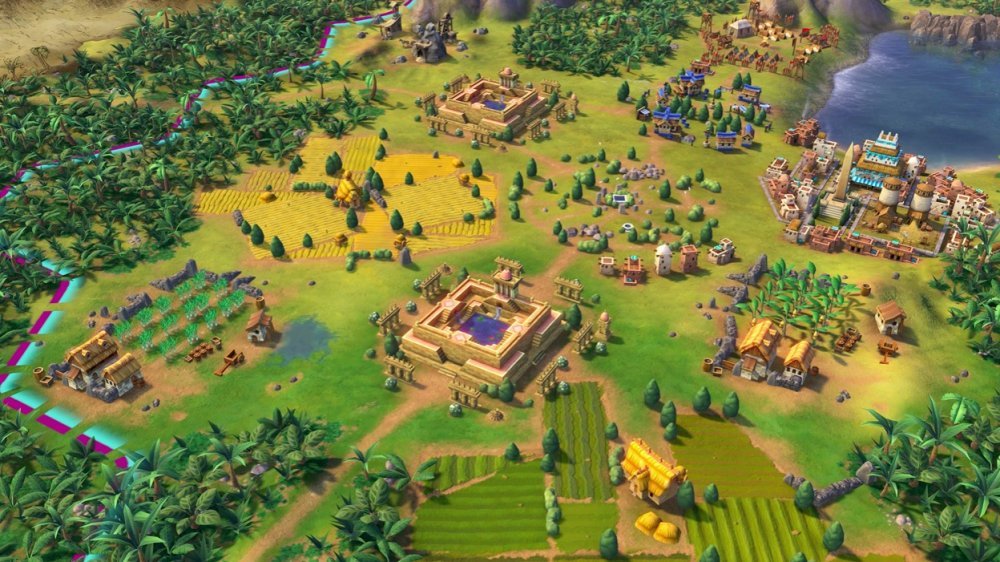
A typical Civilization 6 game can take anywhere from 4 to 12 hours to complete, depending on the map size, game speed, and your chosen victory type.
Ever found yourself wondering just how long does a civ 6 game take? It’s a common question for both new and seasoned players. The time it takes to finish a game varies greatly depending on several factors.
These include map size and the chosen game speed, but also the victory condition that you are pursuing. Therefore, some games will end faster than others.
Knowing this allows players to plan gaming sessions better and gives everyone realistic expectations before starting. A longer game might need breaks, which is also a factor.

How Long Does a Civ 6 Game Take?
Okay, so you’re itching to build your empire, lead your people through the ages, and maybe even nuke a rival or two in Civilization VI (Civ 6). But before you dive in, you’re probably wondering: “Just how much time am I signing up for?” That’s a great question, and the answer, like the game itself, is wonderfully complex. There’s no single, hard-and-fast rule for how long a Civ 6 game will take. It’s more like a “choose your own adventure” kind of timescale. Let’s explore all the different factors that affect the clock ticking away as you play.
Game Speed: The Foundation of Your Timeline
The most significant factor influencing your game’s length is the chosen game speed setting. Think of it as the overall pace of time in your Civ 6 world. There are several options, and each one dramatically alters how quickly things progress.
Online Speed: The Sprint
Duration: Games played on Online speed can be remarkably fast. Expect a game to conclude within roughly 2 to 4 hours.
Gameplay: This speed significantly accelerates the game, with turns moving rapidly. Production and research progress quickly. It’s perfect for a quick match or multiplayer sessions where time is limited.
Best for: Players seeking a shorter, more intense experience. It’s ideal for online multiplayer games where matches need to fit within a reasonable timeframe. It can be good for people who know what they are doing and want to practice the game in a short time.
Quick Speed: A Speedy Journey
Duration: Quick games will typically last around 4 to 6 hours.
Gameplay: Slightly slower than online speed, but still significantly faster than standard. Progress is accelerated but not as dramatically as with online speed.
Best for: Players who want a relatively fast game but still want a sense of progression. It allows for a good play through of the game without getting too dragged out.
Standard Speed: The Classic Experience
Duration: Most people play on Standard speed, with games averaging 8 to 12 hours.
Gameplay: This offers the balanced game experience, providing sufficient time for development, exploration, and conflict. It’s the pacing the developers designed the game around.
Best for: Players who want a typical Civ 6 experience. Standard speed allows for a full and detailed game without dragging on too long. Many of the online resources and guides are geared towards standard speed, so it provides the most familiar context.
Epic Speed: A Long, Detailed Campaign
Duration: An Epic game can stretch to 15 to 20+ hours.
Gameplay: Turns are longer, and the entire game unfolds at a slower pace, making strategic decisions more impactful and allowing for deeper development.
Best for: Players who want to savor every moment and fully immerse themselves in their civilization’s growth. This speed lets you feel each era and make more meticulous changes.
Marathon Speed: The Ultimate Time Sink
Duration: Marathon games can easily go beyond 25 to 30+ hours or even more for a single game.
Gameplay: This is the slowest speed, with each turn taking a significant amount of in-game time. This makes the game very slow.
Best for: Those who want the most in-depth and intricate game experience and don’t mind investing a very large number of hours. Be prepared for a very long haul when you play a marathon game. You will have to invest lots of time.
Map Size: The Scope of Your World
The size of the map you play on significantly contributes to the overall playtime of your game. A larger map naturally translates to more territory to explore, more cities to manage, and more potential for conflicts.
Duel Maps
Size: Very small, typically for two players.
Impact: Games will usually finish faster since there are fewer territories, resources, and opponents to contend with.
Expected Game Time: 2-5 hours on Standard speed.
Tiny Maps
Size: Small, accommodating a few players.
Impact: Games will generally be shorter than average. There are still enough locations for a good game, but the map fills out quicker.
Expected Game Time: 4-8 hours on Standard speed.
Small Maps
Size: Moderate, suitable for a smaller group of players.
Impact: These maps offer a good middle ground between speed and scale. The game can progress at a reasonable pace without feeling cramped.
Expected Game Time: 6-10 hours on Standard speed.
Standard Maps
Size: Medium-sized maps that usually support 8 civilizations.
Impact: This is considered the default, which provides a good challenge and lots to do.
Expected Game Time: 8-12 hours on Standard speed.
Large Maps
Size: Big, accommodating a large group of players.
Impact: These maps provide more room to grow, develop, and engage. They take longer to explore completely.
Expected Game Time: 12-18 hours on Standard speed.
Huge Maps
Size: Massive maps capable of handling a large group of civilizations.
Impact: Games on huge maps are long and involved, often requiring significant time to complete.
Expected Game Time: 18-25+ hours on Standard speed.
The Number of Civilizations: Competition and Conflict
The number of civilizations in your game directly influences the complexity and duration of the game. More civilizations mean more potential for interactions, alliances, rivalries, and wars, which can all add to the overall time.
Fewer Civilizations: Fewer civilizations mean fewer interactions and can lead to a faster game, as there are fewer opponents to deal with.
More Civilizations: With more civilizations, you have more to manage in terms of international relations, trade, and military conflicts, causing the game to stretch out over more time. More rivals means more potential for war.
Your Playstyle: Aggressor or Diplomat?
Your preferred playstyle can dramatically alter the pace of a Civ 6 game. Are you a warmonger who likes to conquer every city in sight, or are you a peaceful builder who prefers to win through cultural or religious dominance?
The Warmonger
Gameplay: Focused on military expansion and domination.
Impact: Early and frequent wars can accelerate the game, but managing conquered territories and units will take time as well.
Timeline: May lead to a shorter game by eliminating opponents or a much longer game as you conquer the world.
The Diplomat
Gameplay: Focused on forging alliances and winning through diplomacy.
Impact: Games can be longer, involving more turns of negotiation, trade, and city-state interactions.
Timeline: May lead to a longer, slower-paced game as you work towards diplomatic or cultural wins.
The Builder
Gameplay: Prioritizing city development, wonders, and overall progress.
Impact: Can lead to a moderately paced game, focused more on growth and less on conflict, unless you are attacked.
Timeline: May lead to a longer game as you meticulously expand your cities and complete wonders.
The Scientific Explorer
Gameplay: Focused on research and scientific advancements.
Impact: This type of gameplay may be longer than others, and you might be on the defensive more often than other types of play.
Timeline: May lead to a longer game as you advance faster than your opponents in the technological tree.
Victory Conditions: How You Choose to Win
The victory condition you’re aiming for can also affect the length of your game.
Domination Victory: Achieved by capturing all original capital cities. This can be quick if you focus on warfare but can be very long if you encounter stiff resistance.
Science Victory: Achieved by launching a Mars colonization mission. This victory can be very long, depending on how fast you can advance and if you are fighting wars at the same time.
Culture Victory: Achieved by attracting more tourists than any other civilization. This typically takes a long time, as you need to develop your cities and obtain cultural wonders.
Religious Victory: Achieved by converting all civilizations to your religion. This is a long victory condition, as you will need to spread your religion slowly.
Diplomatic Victory: Achieved by winning the world leader vote. This victory can be fast or long depending on how you play the game.
Score Victory: Achieved by having the highest score at the end of the game. This is the default victory if no one else meets other conditions by the end of the game.
Other Factors Affecting Game Length
Beyond those major factors, several other elements can add or reduce the duration of a Civ 6 match:
Your Skill Level: Experienced players who know the game very well will naturally progress faster than newcomers.
Game Difficulty: Higher difficulties increase the AI’s advantages, which can cause the game to take much longer to win.
Number of Players (Multiplayer): Multiplayer games can be longer due to waiting for other players’ turns, or they can be very quick if players get defeated.
Modifications: Certain mods can increase or decrease the game’s pace and may influence the total playtime.
Interruptions and Pauses: Real-world interruptions will of course contribute to the time it takes to finish a game.
Decision-Making Speed: If you spend a lot of time thinking about each turn, then the overall game will obviously take longer.
Estimating Your Game Time
So, how do you get a rough idea of how long your game will take? Here’s a simple approach:
1. Start with Game Speed: Standard is a safe bet, but adjust for faster or slower gameplay.
2. Consider Map Size: Larger maps increase the length of the game.
3. Factor in Civilization Count: More civilizations usually mean more time.
4. Think about Your Playstyle: Do you prefer war or peace?
5. Identify Your Victory Goal: Domination is usually faster than culture, for example.
6. Add Some Buffer: Always give yourself some extra time for the unexpected.
For a rough idea, many players agree that a standard speed game on a standard-sized map with a normal number of civilizations and a mixed playstyle will average around 8 to 12 hours. But of course, this number will vary significantly based on all the factors that we have talked about earlier.
There’s no one-size-fits-all answer to how long a Civ 6 game will take. It depends heavily on the settings you choose and how you play the game. It is an amazing game that allows you to play in your own way, whether for a few hours or many hours. The joy of it is experimenting and finding what works best for you. So, start a game and see where your journey takes you!
Enjoying the long games of Civ 6 can be quite a rewarding experience. It’s like starting a book that you will enjoy for a long time. And that is why many people like the game.
MASTERING the First 10 Turns in Civ 6 | Civilization 6 Guide
Final Thoughts
A full game of Civilization VI can take anywhere from a few hours to several days, depending on your chosen game speed and map size. Quicker speeds, like online, finish faster, while marathon speed games can stretch into many play sessions. Larger maps naturally require more time to complete.
Ultimately, how long does a civ 6 game take is highly variable. Player experience and playstyle also impact game length significantly, as some people prefer a more methodical approach which naturally slows down progress. Therefore, plan your gameplay sessions accordingly.

