
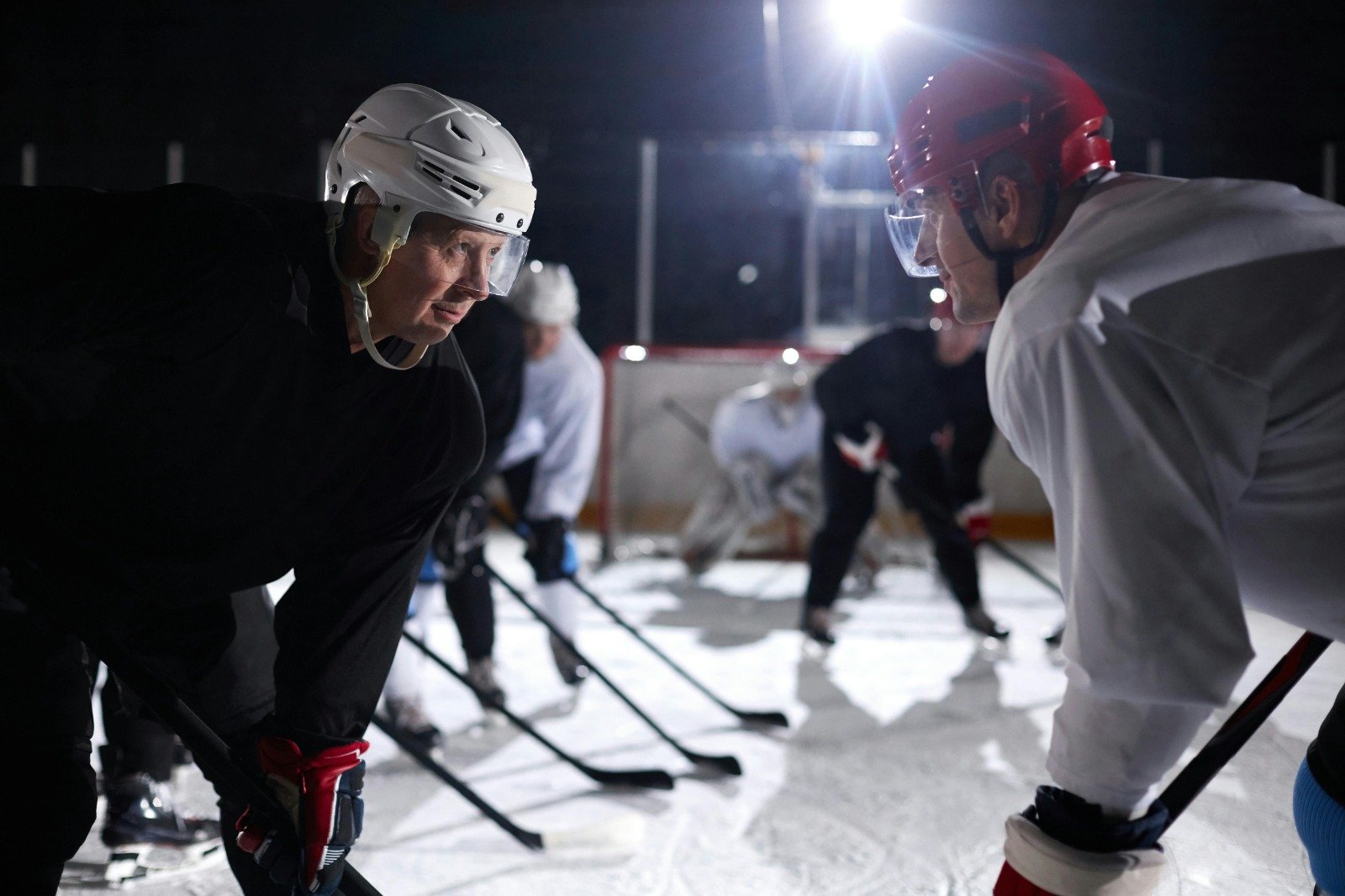
A college hockey game lasts for 60 minutes, divided into three 20-minute periods, with intermissions in between.
Ever wondered about the clock when watching college hockey? The fast-paced action and hard hits can make it feel like time flies by. It’s natural to ask, “how long does a college hockey game last?”
Well, the core game is straightforward enough. You will find that the game divides into three periods. These periods each run for a specific duration, and don’t forget those breaks that happen in between. This gives time for players to recoup.

How Long Does a College Hockey Game Last?
Ever wondered how much time you need to set aside to watch a college hockey game? It’s a fair question! Unlike some other sports with set clock times, hockey games have a few different pieces that add up to the total time. Let’s dive into the details and figure out exactly how long you can expect to be cheering on your favorite team.
The Basic Structure: Three Periods of Play
At its core, a college hockey game is made up of three main parts called periods. Think of them like the chapters in a book. Each of these periods is 20 minutes long, but that’s not all there is to it! The clock only runs when the puck is in play. So, any time there’s a stop in the action, the clock also stops. This means the real time a game takes is always longer than the sum of the period times.
What Happens During a Period?
During each 20-minute period, teams try to score goals by shooting the puck into the other team’s net. Players skate very fast on the ice, and it’s a lot of back-and-forth action. There are usually a lot of shots, saves by the goalie, and great passes. If a player does something against the rules, called a penalty, they have to sit in the penalty box for a short time. We’ll talk about this more in a bit, but penalties also stop the clock. All of this activity means that while the periods themselves are 20 minutes long, the time between whistles will increase the actual amount of time each period will take.
Intermissions: The Breaks Between Periods
Just like in a movie, there are breaks between the periods. These are called intermissions. Intermissions are very important for the players. They use this time to rest, hydrate, and get new strategies from their coaches. The ice crew also uses this time to clean the ice and make it smooth again for the next period. In college hockey, intermissions are typically 15 minutes long. So, add two of these intermissions to the three 20-minute periods to get a sense for what the length of a hockey game will be. Here’s a little look at how they break down:
- First Period: 20 minutes of play
- First Intermission: 15 minutes
- Second Period: 20 minutes of play
- Second Intermission: 15 minutes
- Third Period: 20 minutes of play
The Impact of Timeouts
Just like in other sports, each team has the opportunity to use timeouts. Timeouts are times when play stops completely and the team’s coach can talk to the players to give direction and guidance. In college hockey, each team gets one timeout per game. Timeouts usually last around 30 seconds and they will affect how long the game will last, but only by that small amount. These timeouts can be very important at the end of a close game. So, timeouts are another little thing that will add a few minutes to the total game time.
Penalties: When the Clock Stops
As we mentioned before, penalties are a big part of hockey. If a player breaks the rules, they go to the penalty box, and their team has to play with one less player for a short time. Common penalties include things like tripping, hooking, or being too rough. These penalties also stop the game clock. A minor penalty usually means the player has to sit for two minutes, while a major penalty can be longer. However, if the other team scores a goal while they have more players on the ice (this is called a power play), the penalty time is cut short. All of these stoppages add more to how long the game will take. The number of penalties in a game can vary a lot, and that can make a difference in how long the game actually runs.
Different Types of Penalties
It’s helpful to know about the different penalty types because they can affect the time. Here are a few examples:
- Minor Penalty: Usually two minutes long. The offending player sits in the penalty box.
- Major Penalty: Usually five minutes long. A more serious rule break.
- Misconduct Penalty: Usually ten minutes. Usually the offending player goes to the locker room and a substitute player can take the ice.
- Game Misconduct Penalty: The offending player is removed from the game and the team must play short a player for five minutes.
Knowing these will help you see why some games may seem longer than others.
Overtime: When the Game Needs More Time
Sometimes, after the three regular periods, the score is still tied. In this case, the game goes to overtime. Overtime is an extra period or two where the teams get another chance to score and win the game. In regular season college hockey, there is usually only a single overtime period that lasts five minutes. If no goal is scored during the overtime, then the game ends in a tie. However, in a tournament, overtime can last until someone scores a goal. This sudden-death style of overtime can cause the games to last much longer. This can increase the overall time of the game quite a lot. You can almost double the time if it comes down to sudden-death overtime.
The Flow of the Game: Factors That Increase Game Length
Several things that happen during a hockey game can increase how long it actually takes. Here are a few of the things that impact the overall time of a game.
- Stoppages in Play: Each whistle to stop play will pause the clock, and these stoppages can add up. Stoppages are caused by penalties, icing, offsides, goals, or pucks that leave the playing area.
- Video Reviews: Sometimes, if there is a question about a goal or a penalty, the referees will use video reviews. This can take some time, and it is important to get the call correct.
- Injuries: If a player gets hurt during the game, medical staff come onto the ice and help the player. This stops the clock and play while the player is being helped.
Average Total Game Time: What to Expect
Putting all of these pieces together, the average college hockey game usually lasts between 2 and 2.5 hours. This includes all the periods, intermissions, and any extra time like penalties, reviews, or timeouts. However, it’s important to remember that some games may take a little more or less time, depending on the number of penalties, reviews, or if there is overtime. Keep in mind that games can run longer or shorter. But, if you’re planning to go to a college hockey game, it’s a good idea to plan on at least two and half hours. This will give you a cushion just in case the game goes long.
Factors that Shorten Game Time
While we’ve talked a lot about what makes games longer, there are things that can make a game move faster:
- Fewer Penalties: If teams play cleanly and don’t get many penalties, the game will run more quickly. Fewer penalties mean less stopping of the game clock.
- Few Video Reviews: Video reviews happen when a call is in question and the referees need to take some time to review the game tapes to make the proper call.
- No Overtime: When a team wins in regulation, without the need for an overtime, the overall game time is shorter.
- Few Injuries: If no one gets hurt, the game will likely move at a more consistent speed.
Understanding the Game Clock
It can be helpful to understand the game clock. When the puck is in play, the clock counts down from 20 minutes to zero. When the whistle is blown, the clock stops. So, watching the clock during the game is a good way to understand how much time is left in each period. All of the stoppages in play are what will make the game longer, even though the periods themselves are only 20 minutes. So, keep in mind that while you see the period clock counting down, the real time it will take to play a period is much longer.
Planning for Game Time: Tips for Fans
Knowing how long a college hockey game typically lasts is helpful, whether you’re heading to the rink or watching from home. Here are some tips to keep in mind:
- Arrive Early: Get to the arena a bit before the game starts. This allows you to find your seat, buy some snacks, and see the teams warm up.
- Plan for Extra Time: It is always a good idea to plan for the game to take around 2.5 hours. This way you’ll be prepared if there is some overtime.
- Stay Hydrated: Hockey games are exciting and you may be doing lots of cheering. Having a drink of water or two is a good way to keep up with the action.
- Wear Comfortable Clothes: Depending on the hockey rink, it can be very cold in the building. Wearing a warm jacket and hat will help you stay comfortable while you watch.
In Conclusion
College hockey games are exciting, fast-paced, and usually last between 2 and 2.5 hours. While the game is broken into three 20-minute periods, there are a few things that impact how long a game will take. Intermissions, penalties, timeouts, video reviews, injuries, and the possibility of overtime can all make a game longer. It’s a good idea to be ready for a game to go a little longer so you can enjoy the experience without worrying about making other plans. Now that you know more about how long a game takes, go grab a seat and enjoy the action!
Boston College vs Denver | NCAA Hockey Frozen Four Final | Highlights – April 13, 2024
Final Thoughts
A typical college hockey game lasts around two and a half hours. This duration includes three 20-minute periods of play. Intermissions between periods add extra time.
Penalties, stoppages in play, and overtime can all extend the total game time. How long does a college hockey game last really depends on game flow. Understanding game structure assists with planning.

