
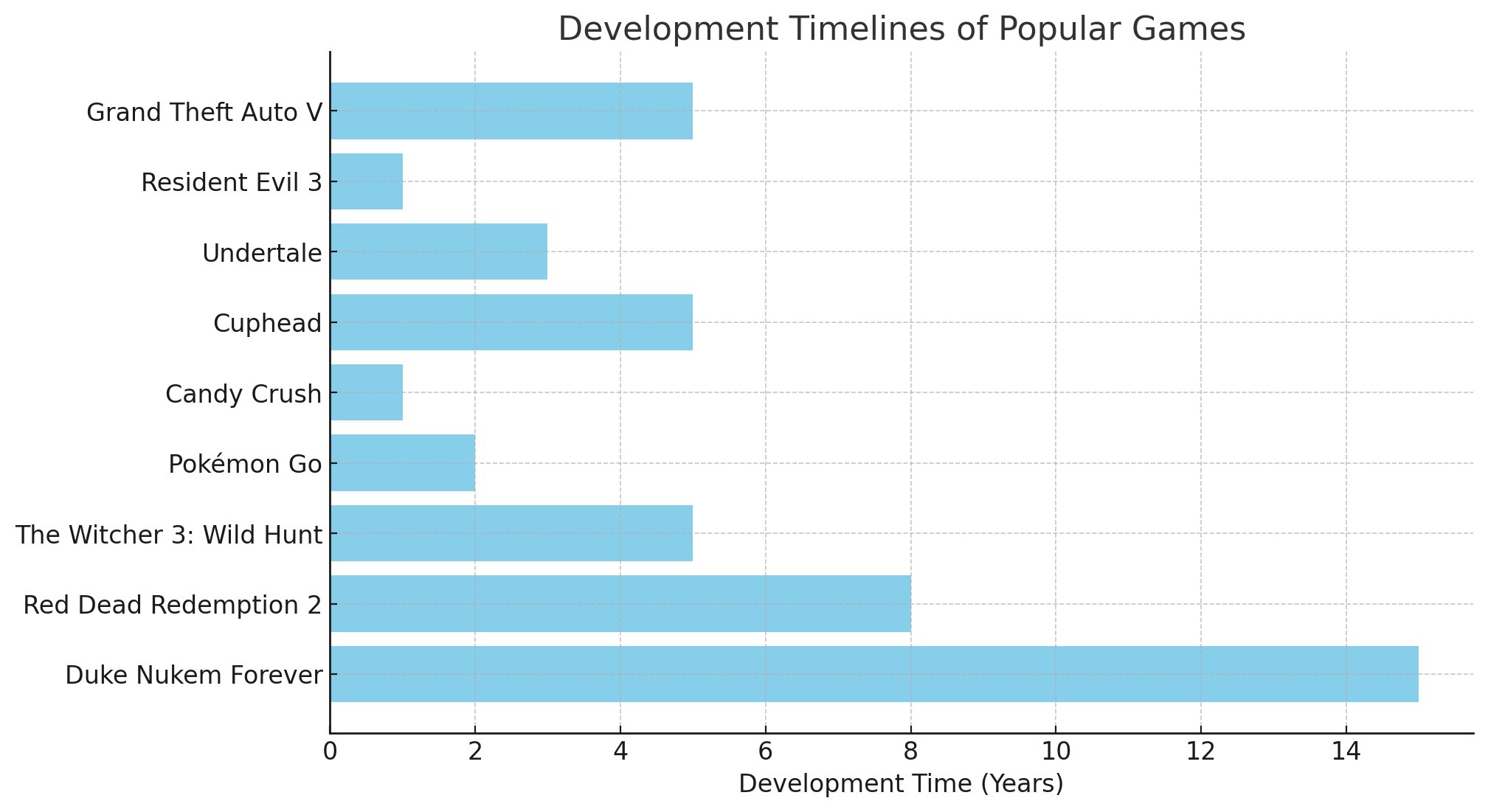
The time it takes to develop a game varies dramatically; it can range from a few months for simple indie projects to several years for large, complex AAA titles.
Ever wondered about the magic behind your favorite games? People often ask, how long does it take to develop a game? It’s a fascinating question with no single answer.
The development timeline depends on many factors like team size, game scope, and platform. A simple mobile puzzle game will take far less time than a sprawling open-world adventure.
So, let’s explore the different aspects that influence a game’s journey from concept to creation. This will help us understand why some games arrive swiftly while others take their time.

How Long Does It Take to Develop a Game?
Making a video game is like baking a cake, but way more complicated! You don’t just throw ingredients together and hope for the best. It takes planning, hard work, and lots of time. Just like cakes can be simple cupcakes or giant, multi-layered masterpieces, games come in all shapes and sizes. That means the time it takes to make one can vary a lot.
The Major Factors Influencing Game Development Time
Several key ingredients go into determining how long a game takes to develop. Let’s dive into them:
Game Complexity and Scope
Imagine the difference between drawing a simple stick figure and painting a realistic portrait. The same idea applies to games. A tiny mobile game with simple mechanics, like a puzzle game where you match shapes, will take much less time than a massive, open-world adventure game with complex stories and detailed characters.
- Simple Games: Think basic puzzle games, arcade-style games, or hyper-casual mobile games. These might only take a few months to make, maybe even less.
- Medium-Sized Games: Games with more detailed graphics, some level variety, and a clear beginning and end, often take a year or two. Think of platformers with a good amount of levels or a role-playing game with an engaging story.
- Large, Complex Games: These are the big AAA games you might see advertised everywhere. Huge open worlds, lots of characters, complicated stories, and online features can easily take three to five years, or even more!
Team Size and Experience
Just like a big construction project needs more workers, a big game needs more developers. A small indie team of a few friends can work on a game for a long time, but a big studio with hundreds of people will probably work faster. Team experience also matters. If the team has created games before, they’ll likely know how to avoid common mistakes, which can speed up development.
- Solo Developers: A single person working on a game will likely take longer, as they do all the work themselves. They need to be good at coding, art, design, and sound.
- Small Teams: A handful of developers working together can be faster than a solo dev. They can divide up the tasks but might still have to handle several roles each.
- Large Teams: Big studios have specialists in each field. They have dedicated programmers, artists, designers, and audio engineers, which can really help speed up the process.
The level of experience also has a significant role. An experienced team that knows the game development process well will be much faster than a team of new developers who are learning the ropes as they go.
Game Engine and Tools
Developers don’t usually write a game from scratch. Instead, they use tools called “game engines” that provide a framework for creating the game. Think of a game engine as a kit that has ready-made pieces that developers can use to build games. Using a ready-made engine can cut development time significantly compared to building one from scratch. Game engines come with pre-built tools to create graphics, handle physics, play sound, and more.
- Pre-made Engines: Popular engines like Unity and Unreal Engine have many ready-to-use tools and resources which can help a team create a game quickly and easily.
- Custom Engines: Sometimes large studios use their custom game engines. These are often better suited for very specific needs, but they take a lot of time and effort to make.
Platform and Target Audience
Where the game will be played (like on a computer, a phone, or a game console) also impacts development time. Developing for different platforms can require extra work because each platform can have its unique technical requirements.
- Mobile: Mobile games often have touch-based interfaces. They’re typically made to be played in short bursts. This can influence development time.
- PC: PC games often have more complex graphics and control systems. These can also include multiplayer and online features.
- Consoles: Console games need to work well with the specific controller, which requires unique coding.
Also, thinking about who will be playing the game (kids, adults, gamers, etc.) can impact the time spent refining the game and making it fun for that audience.
Art Style and Assets
The style of art the game uses also has an impact on how long it takes to make a game. Are the visuals realistic or cartoony? Is it 2D or 3D? Are there many characters, environments, and animations? The more complex the art style, the more time and resources it takes to develop the necessary assets.
- Simple 2D Graphics: Simple 2D pixel art games will usually take less time to create than 3D games with detailed models.
- Detailed 3D Graphics: 3D art with lots of detail, smooth animations, and realistic effects takes significantly more time.
Testing and Quality Assurance
Making sure a game is fun to play and has no bugs (or very few) is a crucial part of development. It takes a lot of time to test the game. This involves finding glitches, balancing the gameplay, making the game intuitive, and making sure everything is working perfectly. This process includes different types of testing such as functional, usability and user testing.
- Initial Testing: Before a game is released, game testers play the game to find problems that the developers might have missed.
- Iterative Testing: Testing occurs throughout the development process and it is crucial for improving the gameplay and fixing any problems.
Understanding the Stages of Game Development
Game development is a structured process, and each stage has its own timeline. Here’s a look at what goes into each phase:
Pre-Production
This is the planning stage. The team decides what the game will be about. This includes:
- Game Concept: What’s the core idea of the game? What makes it fun and engaging?
- Story and Characters: If there is a narrative involved, what is the story? Who are the main characters?
- Game Mechanics: How does the player interact with the game? What rules does it follow?
- Target Audience: Who is this game for? Kids? Adults? Hardcore gamers?
- Art Style: What will the game look like? Will it be cartoonish, realistic, pixelated?
- Technical Planning: Which game engine to use? What are the programming needs?
Pre-production can take a few weeks for a small game and many months for large, complex games. It’s a very important stage as it sets the foundation for the entire project.
Production
This is where the game is actually built. It’s typically the longest phase and includes the following:
- Programming: Writing the code for how the game works, from the user interface to the physics of the game world.
- Art Creation: Making the visual elements of the game such as characters, environments, and user interface assets.
- Level Design: Creating the game’s areas that players will interact with.
- Sound Design: Creating music, sound effects, and other audio elements.
- Animation: Making the game characters move and interact smoothly.
- Integration: Putting all these different pieces together, making sure everything works correctly.
Production can take anywhere from a few months for smaller games to several years for more complex titles.
Testing/Quality Assurance (QA)
Once the game is playable, the focus shifts to identifying and fixing bugs. This involves:
- Bug Finding: Testers play the game and look for errors, glitches, and any problems.
- Fixing Bugs: Programmers fix the issues found during testing.
- Balancing: Ensuring the game isn’t too easy or too hard.
- Usability Testing: Making sure the game is easy to use and understand.
Testing and fixing issues take time and might be repeated numerous times during development. It is crucial for a polished game.
Post-Production and Launch
After the game is released, there is still more work such as:
- Marketing: Promoting the game to attract players.
- Support: Providing updates and addressing any issues the players encounter.
- Bug Fixes: Continuing to address new bugs discovered by players after the game is live.
- Content Updates: Releasing new levels, features, or characters, as planned.
Post-launch can take months or even years as developers address feedback and continue to update the game. Some games might continue getting updated for many years after launch. Some games are designed to be a “game as a service”, receiving regular content updates and fixes.
Examples of Game Development Timelines
To make this clearer, let’s take a look at a few examples of different types of games and their approximate development times. Note that these are only estimates and can change based on the factors discussed above.
Small Indie Games
- Type: Simple platformers, puzzle games, hyper-casual mobile games.
- Team Size: 1-5 developers.
- Development Time: 3-12 months.
- Example: A simple mobile puzzle game.
Mid-Sized Indie Games
- Type: 2D Role-playing games, adventure games, more complex platformers.
- Team Size: 5-15 developers.
- Development Time: 1-3 years.
- Example: A classic-style indie RPG.
AAA Games
- Type: Big-budget open-world games, first-person shooters, complex online multiplayer games.
- Team Size: 100+ developers.
- Development Time: 3-5+ years.
- Example: Large open-world action-adventure games with a rich storyline.
The Importance of Time Management and Planning
As you can see, game development can take a lot of time. Therefore, proper planning and time management are vital. If teams do not manage their time well, they risk running out of time and money before the game is finished. They must have a detailed timeline and keep an eye on project progress. This way they can adjust if things are taking longer than expected. It is also important to be flexible, because the team will often discover things along the way that require them to adapt their original plans.
Tools and methods like Agile development can help manage this. It breaks down a project into small, manageable chunks, which makes it easier to monitor progress and adjust as needed. Regular communication between all members of the team and project stakeholders is crucial.
It’s also essential that developers don’t rush things. If they hurry too much to release a game quickly, they might miss critical bugs or create a game that is not fun to play. Quality is key, and it often takes time. It’s better to take the extra time to create a polished and enjoyable experience for the players.
So, “how long does it take to develop a game?” The answer, as you’ve learned, isn’t simple. It’s a mix of the game’s complexity, the size of the team, the tools they’re using, and the time they spend refining everything. It is more of a marathon than a sprint, and careful planning and execution are essential for creating a successful game.
How Long Does It REALLY Take to Make an Indie Game?
Final Thoughts
Game development timelines vary greatly. Simple games might take a few months. Complex, high-budget titles can take several years. Therefore, ‘how long does it take to develop a game’ depends heavily on scope and resources.
Numerous factors, such as team size, engine choice, and required art assets impact the schedule. You should consider these before estimating your project’s completion time. Planning effectively aids in realistic projections.

