
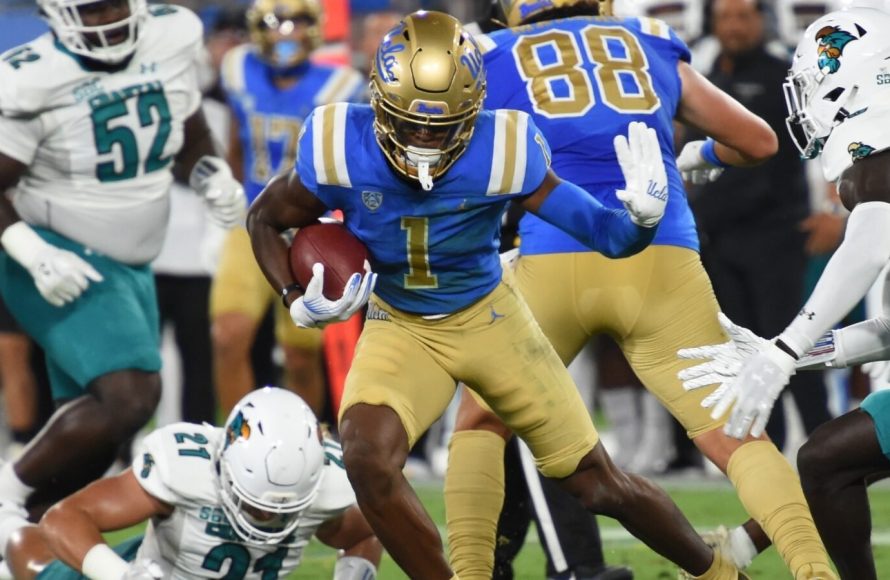
An NCAA football game typically lasts for about 3 hours, though it can sometimes extend longer due to factors like overtime and stoppages.
Ever wondered just how much time you need to set aside on a Saturday for some college football action? It’s a common question, and knowing the answer to “how long is a ncaa football game” helps with planning your day. The game clock is only a part of the story.
Many factors come into play that add to the overall length. These can range from timeouts and penalties to replay reviews and the halftime break. So, while the on-field action might take less time, the overall experience can easily stretch out.

How Long is an NCAA Football Game?
Okay, so you’re curious about how long those exciting NCAA football games actually last, right? It’s a great question because it’s not always as straightforward as you might think. While the clock says 60 minutes, a lot goes into that time. There’s more to the story than just the pure playing time. Let’s dive in and explore everything about the duration of a college football game.
The Standard Game Clock
At the heart of it, an NCAA football game is designed to be 60 minutes long. This 60 minutes is split into four periods, known as quarters. Each of these quarters is 15 minutes long. If you put it together, that’s 15 minutes x 4 quarters, which equals 60 minutes of playing time. Easy peasy, right?
The Quarter System
Let’s break down how these quarters impact the flow of the game:
- First Quarter: The game begins! Teams start battling for that first score.
- Second Quarter: The action continues, and teams often adjust their strategies.
- Halftime: A break after the second quarter where players rest, coaches strategize, and fans can grab snacks.
- Third Quarter: The game gets back underway, usually with teams coming back with renewed energy.
- Fourth Quarter: The final push! This is where nail-biting moments often happen, and teams give it their all.
Beyond the Clock: What Adds to Game Time?
Now here’s the twist – while the clock shows 60 minutes of playing time, the actual time you spend watching a game is usually much longer. Why? Because of all the things that stop the clock, and that takes some explaining. Let’s look at these factors that make a game length vary:
Clock Stoppages
There are various reasons why the game clock stops. These stoppages are essential to the game, as they let players and referees keep everything orderly. Here’s a closer look:
- Incomplete Passes: When a pass isn’t caught, the clock stops. This is a very frequent cause of stoppage.
- Out-of-Bounds Plays: If a player carrying the ball goes out of bounds, the clock stops.
- Penalties: If a penalty occurs, the clock stops while the referees discuss and enforce the penalty.
- Change of Possession: After a punt, an interception, or a fumble, the clock stops briefly to switch possession.
- Timeouts: Teams get timeouts to talk strategy and make substitutions, these also stop the clock.
- Injuries: If a player gets hurt, the clock stops while they get help and are potentially taken off the field.
The Halftime Break
Halftime is a scheduled break between the second and third quarters. This break is normally about 15 to 20 minutes long. This time allows players to rest, coaches to make adjustments, and for some stadium entertainment, like band performances or other shows. Halftime is a necessary part of the game, and adds to the total length.
Television Broadcasts
The biggest influence on game length often comes from TV broadcasts. College football is really popular, and TV networks make sure that they have time for commercials, replays, and studio analysis. Those TV breaks really lengthen the time you spend watching the game. While the actual play time is 60 minutes, the broadcast time could be significantly longer. Here’s how:
- Commercial Breaks: TV breaks for commercials can be scheduled between periods and after plays, and can greatly extend game time. These breaks are necessary for broadcast revenue.
- Replays: The TV networks show instant replays of exciting or controversial plays, and they add time to the broadcast.
- Studio Analysis: Commentators and analysts discuss game situations, which take up TV time and contributes to the overall game time.
Average Time for a College Football Game
So, taking all of those things into account, how long does a typical NCAA football game take? While the official playing time is 60 minutes, a typical college football game will usually last for about 3 to 3.5 hours. There are some games that can finish faster and some that can go much longer. There are few reasons why some games are longer than other, some of them are:
Factors Influencing Game Duration
Several factors cause some games to be longer than others. This is not an exact science, and there are games that can be much faster and much longer. Here are some reasons why game lengths can vary:
- High-Scoring Games: More touchdowns usually mean more changes in possession and more clock stoppages. This can make a game longer than one where the scoring is less.
- Close Games: Close games often result in teams using more time-outs and have more intense plays, both of which add to time.
- Numerous Penalties: Games with a lot of penalties will have more clock stoppages while referees sort things out. This can increase game length.
- Overtime: Sometimes games end in a tie, and they go into overtime. This can add an extra 15-20 minutes, or even longer, to the game time.
- Multiple injuries: When a game has more injuries that require a stoppage, the game takes longer overall.
Overtime Rules
When a game is tied at the end of the fourth quarter, it goes into overtime. NCAA overtime rules are different than in the NFL. Here is a breakdown:
- Possession: Each team gets a chance to have the ball on offense from the 25-yard line.
- Scoring: Teams try to score a touchdown, a field goal, or a two-point conversion.
- Sudden Death: If the game is still tied after the first overtime, the game goes into a second overtime. After the second overtime, it goes to a two-point conversion shootout, until one team wins.
Overtime can significantly add to a game’s length. Close games that go into multiple overtime periods can stretch to nearly four hours or even longer.
Tracking Time: The Game Clock and the Play Clock
There are actually two clocks at work in a football game: the game clock, which counts down the 60 minutes of the game, and the play clock. The play clock is used to ensure the pace of the game is consistent.
The Play Clock
The play clock is a 40-second clock. After each play, teams have 40 seconds to begin the next play. The play clock keeps the game from taking too long. If a team does not get ready to start a play in 40 seconds, they are penalized. This penalty makes them move backwards on the field, and it can cause a loss of yardage.
How It Works Together
The game clock and play clock work together to manage time. The play clock speeds up the game, and the game clock counts down to end the game, each has a different purpose, but is really important in making a game flow smoothly. It can sometimes be a source of time management strategies for teams. Coaches decide when to make a play quickly to save time on the game clock, or when to make a play slowly to run out the game clock. It’s all part of the strategy.
Variations in Game Time
While the average game length is around 3 to 3.5 hours, it’s important to remember that each game is different. Some games may be shorter, and some may be much longer. Here are some key points about game time variations:
- Blowouts: Games where one team is much better than the other often finish faster, as the winning team often takes their foot off the gas, as it were.
- Low-Scoring Games: Games that do not have a lot of scoring may go by faster than high-scoring games, as scoring drives tend to stop the clock more often.
- Weather Delays: In some cases, severe weather can delay or suspend a game. These delays can add considerable time to how long a game lasts.
- Specific Events: Some special game events, like rivalry games or bowl games, might have slightly different broadcast schedules, which will change how long the game seems to go.
Strategies Around the Game Clock
Coaches and players are always aware of the game clock and are always trying to use it to their advantage. There are some strategies that are important in game management:
- Managing the Clock at the End of a Half: Teams can try to run out the clock if they have a lead, or they can try to score quickly if they are behind.
- Timeouts: Coaches often use timeouts to stop the clock or to change the momentum of the game.
- Hurry Up Offense: Sometimes teams use a “hurry up offense” to save time, to move up field as fast as possible and give themselves time to score.
How teams manage the clock is often as important as how they play on the field.
So there you have it! While the official NCAA football game is 60 minutes, the actual time spent watching is closer to 3 to 3.5 hours, but it is not always precise. The stoppages, halftime, television breaks, and other factors really add time to the overall viewing experience. So, now you know how long to set aside when you plan on watching a college football game!
CFB 25 RUINED this players life🤯 #collegefootball #cfb #cfb25 #ncaa #bigten #goblue #ohiostate
Final Thoughts
A standard NCAA football game lasts around three hours, although this can vary. Several factors influence the total time, including timeouts, penalties, and scoring plays. Television broadcasts also often extend game durations due to commercial breaks.
The actual playing time is significantly less, typically about an hour. Delays and stoppages account for the difference. Therefore, figuring out how long is a ncaa football game involves understanding these time differences.

