
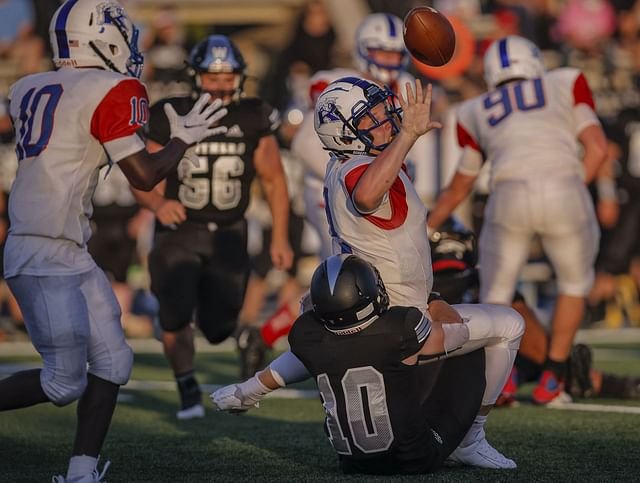
A typical high school football game lasts approximately 2 to 3 hours.
Ever wondered about the clock when cheering on your local team? It’s a common question: how long is a typical high school football game? The duration isn’t always exact, but there’s a general range you can expect, which we will explore.
Game length can vary due to several factors. These elements influence the flow of play and subsequently, the total time of the game. We’ll break down these elements in this short exploration.

How Long Is a Typical High School Football Game?
Alright, let’s dive into the exciting world of high school football! You’re probably wondering, “Just how long will I be sitting in the stands (or cheering from my couch) watching a game?” Well, the answer isn’t always a simple number because there are a few different factors that come into play. But don’t worry, we will explore everything you need to know about the length of a high school football game, so you will be fully prepared for kickoff!
The Standard Time: Four Quarters of Action
The main structure of a high school football game is built around four quarters. Each quarter is 12 minutes long. That seems straightforward, right? Four 12-minute quarters mean 48 minutes of playing time. But, here’s the thing: that’s only the “game clock time.” The clock doesn’t run constantly. It stops often, making a typical game last much longer than just 48 minutes. The clock stops when a play is not happening and this is where much of the total game time is added. Think of it like this – the 12-minute quarters are like time slices of the game, but real games have many stops and starts in-between those slices.
Understanding the Game Clock
The game clock is not like your regular watch. It’s managed by game officials and is stopped for different reasons:
- Incomplete Passes: When a pass doesn’t get caught by a player, the clock stops.
- Out of Bounds: If a player carrying the ball goes outside the white lines of the field, the clock stops.
- Penalties: If a player makes an illegal move, the clock stops while officials discuss and impose a penalty.
- Injuries: If a player gets hurt, the clock stops while they get assistance.
- Timeouts: Each team gets three timeouts per half. When a team calls a timeout, the clock stops.
- Change of Possession: After a team scores a touchdown or field goal, or if the ball changes teams by way of a turnover (fumble or interception), the clock also stops temporarily.
These various factors can make the game clock time longer than what is shown in each quarter. The clock does not stop for a first down achieved by a running play. There is a strategy in running plays for the purpose of keeping the clock running, to control game time. This is one reason that the game clock is so unpredictable.
Halftime: A Break in the Action
After the second quarter, there’s a break called halftime. This is usually about 15-20 minutes long. Teams use halftime to rest, re-strategize, and maybe grab a quick snack. Halftime is a great time for fans to use the restroom, grab more food and drinks, or stretch their legs. This break is an important part of the game experience, but it also adds time to the overall duration.
The Real Time of a Game: Beyond the Clock
So, if the game clock time is only 48 minutes, and halftime is another 15-20 minutes, how long does a typical high school football game really take? Games often take between 2 to 3 hours, sometimes a bit more if the game is really close, or filled with penalties. The actual time varies quite a bit, because of those in-game clock stoppages. Sometimes a game with many clock stoppages will last much longer than a game with few stoppages.
Factors Influencing Game Length
Here’s a look at different things that can make a game longer or shorter:
- Close Games: A close game, with lots of back-and-forth scoring, usually results in more clock stoppages and longer game time overall. Think of the constant changes of possession after a score, this can make clock time go up.
- Lots of Penalties: Games with many penalties will add to the time because the game clock will stop frequently.
- Many Injuries: Any time a player gets injured, it stops the clock, so games with a few injuries will take longer.
- Blowouts: In games where one team is far better than the other, the clock might move a bit faster in the second half due to something called a “running clock.” This helps speed up the game when the score is heavily one-sided, but not in every case, which can make game lengths inconsistent.
- Offensive Styles: If a team throws the ball a lot, or if they run the ball often, they can affect the overall time of the game. Because the clock is not stopped after a running play, it keeps the game time moving, while throwing a pass often means an incomplete pass, which will stop the clock.
- Weather Conditions: In the case of extreme weather like storms, games can be delayed or postponed. This won’t impact normal game time, but it can make for a longer day of football.
The “Running Clock” Rule
As mentioned earlier, high school football leagues may sometimes have a “running clock” rule. When one team is winning by a large margin of 35 or 40 points, or greater, the game clock keeps running even when it would normally stop for penalties, out of bounds or incomplete passes. This reduces the overall time of the game and usually happens in the second half of the game. Each league and school district has their own rules. Not all games or leagues use a “running clock”. This rule is designed to avoid blowouts and keep teams from losing a large amount of points.
A Quick Look: Game Length Summary
Let’s put it all together. Here’s a simple breakdown:
- Game Clock Time: 4 quarters of 12 minutes each = 48 minutes
- Typical Halftime Break: 15-20 minutes
- Total Game Time (Including Breaks, Clock Stoppages): 2 to 3 hours (sometimes a bit more)
Why Knowing Game Length Matters
Why is it important to know how long a high school football game lasts? Well, for a few reasons. If you’re a parent, knowing when the game will finish helps you plan rides, meals, or other evening plans. If you’re a player, knowing the potential game time helps you mentally prepare for the physical and emotional demands. And if you’re a fan, knowing how long you will be at the stadium, will help you arrange things such as seating, bathroom breaks, and snacks. Knowing this also helps you make sure you have enough time to cheer on your favorite team until the very last whistle!
Beyond the Game: Pre and Post Game Activities
Don’t forget that there are things besides the game itself that can add to your overall time commitment. For instance, the pregame warm-ups, tailgating or marching band performances usually add time to the event. On the flip side, post-game activities, such as the handshake between teams or team meetings, also mean that the time for you to leave the stadium will be delayed. Add all these things together, and you will see that a typical game day can last quite a few hours!
Factors that Can Change Game Length
It is important to recognize that football game times are not an exact science, and there are always things that come up that can impact time. Here’s a quick summary of the main things that will make a difference:
- Game Scores: Close games tend to take longer than blowouts.
- Penalties: If there are a lot of penalties, games will take longer to complete.
- Injuries: If there are a number of injuries, game time is going to increase.
- Weather: Heavy rain or lightning can cause delays or postponements, increasing the total time you are at the event.
- Running Clock Rules: If there is a rule about a running clock due to a one-sided game, time will be decreased.
Understanding Timings Within Different Football Levels
High school football is not alone in the realm of football, so let’s consider that other levels have different times. We will explore the ways they differ from high school games:
College Football Game Times
College football games have four 15-minute quarters. That is three minutes more per quarter than a high school game, which makes a real difference. College football also has more timeouts and more television commercial breaks, which can make games last for 3.5 to 4 hours or sometimes more. The pace of a college football game is much different than that of a high school game. Because of all the stoppages for television commercials, college football games will take more time than high school games.
National Football League (NFL) Game Times
NFL games also have four 15-minute quarters. As with college football, there are many television commercial breaks and timeouts, which can extend the games to about 3 hours or even longer. The pace of an NFL game is different from a college or high school game. NFL games also have longer breaks, such as between quarters, and this adds to the game time. These differences in time can make for a big difference between watching a high school game and an NFL game.
A Look into Youth Football
There is also youth football, which usually refers to kids who are still in elementary or middle school. These leagues usually have a shorter game length. Youth football games may have 6-8 minute quarters and may not have the same level of stoppage as games at the high school level. These games usually last much less time than a high school game, sometimes just 1 to 1.5 hours. These game lengths are appropriate for the youth level and help to ensure that the kids do not get tired or fatigued.
How to Prepare for Game Day
Now that you understand the length of high school football games, here are some tips for enjoying your time at a game:
- Plan Ahead: Check the game time and plan for travel and other things that may impact the overall game time.
- Dress Comfortably: Wear clothes appropriate for the weather and comfortable shoes because you will be on your feet for a long time.
- Bring Snacks and Drinks: Bring your own food or drink, or plan to buy from the concessions.
- Stay Hydrated: It is especially important to stay hydrated, especially if the weather is hot.
- Be Prepared for Delays: Remember that games may last longer due to injuries, weather delays, or other issues.
- Enjoy the Game: Take a deep breath, cheer on your team, and enjoy the experience!
So, while a high school football game has 48 minutes of game clock time, the real experience will keep you occupied for 2-3 hours or more. Now that you understand all the different elements that impact game time, you can better prepare and make the most of your time at any game. With that in mind, grab your fan gear and go enjoy the excitement of high school football!
Typical high school football play #viral
Final Thoughts
A typical high school football game lasts about 2 to 3 hours. This includes four quarters of play, halftime, and timeouts. The clock frequently stops for various reasons.
Variations can occur due to injuries or other delays, adding to the duration. Therefore, the exact duration fluctuates. However, how long is a typical high school football game usually falls within this timeframe.

