
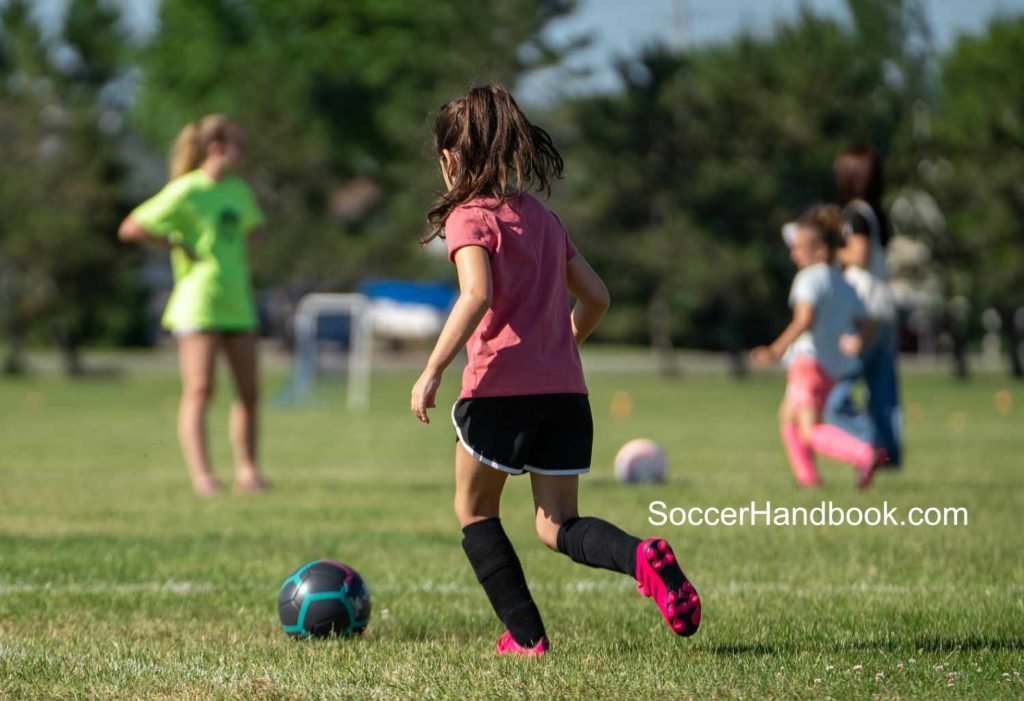
A U13 soccer game typically lasts for 70 minutes, divided into two 35-minute halves.
Ever wondered how long is a u13 soccer game? It’s a common question for parents and young athletes alike, eager to know the duration of play on the field. Knowing the game length helps with planning and understanding the commitment involved in youth soccer.
The game time influences training schedules and overall game-day experience. Understanding the specific timing ensures both players and spectators are prepared for the match. It’s crucial for effective time management for all involved.

How Long is a U13 Soccer Game?
Figuring out how long a U13 soccer game is can sometimes feel like solving a puzzle. It’s not as simple as just saying “90 minutes” like the pros. Several things affect game length, and it’s important for players, parents, and coaches to understand these factors. Let’s dive deep into the details so you know exactly what to expect.
The Standard Game Length for U13 Soccer
The most common game length for U13 soccer, also known as Under 13 soccer, is 70 minutes. This is a fairly standard duration found in many leagues and tournaments. These 70 minutes are usually divided into two halves, with a short break in between. This format helps young athletes manage their energy and gives them time for strategy adjustments. Remember, this is a guideline, and things might vary slightly based on the specific league or association.
The Halves
Typically, the 70-minute game is divided into two 35-minute halves. Each half is a separate period of play. After the first 35 minutes, the teams get a break before starting the second 35-minute half. The half time is there for team discussions, hydration and rest.
Half-Time Break
Between the two halves, there’s usually a half-time break. This break usually lasts between 5 to 10 minutes. This time allows the players to rehydrate, take a breather, and coaches to share tactics for the second half. The time is short, so players need to make the most of it.
Factors Affecting Game Duration
While 70 minutes is a typical duration, the actual length of a U13 soccer game can change. Several reasons cause these variations, and it’s helpful to know them.
League and Association Rules
Different leagues and soccer associations might have their own unique rules regarding game length. A national governing body might recommend certain durations, but regional or local leagues might adjust these. Always check the specific guidelines of your league to know the exact game duration.
Tournament Formats
Tournament play can often bring about different game lengths, often shorter to accommodate more games in a single day or weekend. For instance, a round-robin tournament might have shorter matches than a knockout style tournament. It’s crucial to get these specifics from the tournament organizers before the event starts.
Weather Conditions
Extreme weather can affect the length of a game. Intense heat, heavy rain, or even lightning can cause a match to be shortened or temporarily suspended. Referees have the authority to modify game times in such conditions to ensure the safety of all players.
Field Availability
In some situations, field availability can play a part. If there are many matches scheduled for the same field, the game times might be adjusted to fit everything into the allocated time frame. This might lead to shorter game times.
Referee Decisions and Stoppage Time
Similar to professional soccer, referees might add stoppage time at the end of each half due to injuries, substitutions, or other delays. However, this is usually limited in youth games and is not as extensive as in professional matches. It’s not common for youth matches to have a significant amount of stoppage time added. However, a small amount might still be added.
Game Structure: Understanding the Flow
Beyond just knowing the length, it’s helpful to understand how a typical U13 soccer game flows. This helps both the players and spectators better understand the game.
Pre-Game Preparations
Before the start of the actual game, you’ll have a warm-up session where players get their bodies prepared. This might involve light running, stretching, and some practice with the ball. The referee will also conduct a pre-game check of the players and field conditions.
Kick-Off
The game begins with a kick-off from the center of the field. From there, the first half begins. Players and coaches have plans, and they strive to score as many goals as they can in the first half.
Mid-Game Actions
During a soccer match, different activities take place. Players constantly change positions, as per strategies. In every match, goals are being scored, fouls are made, and saves are attempted. And also, there are substitutions where players come in and go out. These are all part of a soccer game.
Second Half
After the half-time break, the second half begins with the teams switching sides. The same rules and play apply. They also have the same amount of time in the second half.
Full-Time
At the end of the second half, the referee will blow the whistle to indicate the end of the game. The team with more goals wins the game. If the scores are tied, the game will end in a tie. Of course there might be extra time based on the league or competition.
Differences From Other Age Groups
U13 soccer is unique, and there are differences in game lengths compared to other age groups. Knowing these can put things into perspective.
Younger Age Groups
Younger age groups, like U8 or U10, usually have shorter game times. For example, U8 might play games that are 50 minutes or less, often with shorter halves, to suit their physical capabilities. The focus for younger kids is on building foundational skills and having fun rather than long competitive matches.
Older Age Groups
As players get older, game lengths typically get longer. For example, U15 and U17 matches usually have longer durations, possibly up to 80 or 90 minutes, as their physical abilities and tactical understanding develop. By the time they reach high school, the games are usually the full 90 minutes like professional soccer.
Why These Durations?
Why are these game lengths chosen for U13 players? Several factors play a role.
Physical Development
U13 players are still developing physically. Their stamina and endurance are improving, but they are not yet at the adult level. Therefore, the game duration is designed to be challenging enough without being overly exhausting. The 70 minutes allow them to fully participate without too much stress.
Skill Development
The 70-minute duration allows coaches to work on different skills and strategies with their players. It provides enough time to implement game plans and evaluate how well the players are progressing with their techniques.
Player Focus
Having shorter game times keeps players more focused and engaged. With less tiring periods, they tend to be more attentive and make better decisions, which is crucial for their overall development.
Safety
Shorter game durations, with short breaks, help in minimizing the chance of injuries for young players. They do not get too tired, which reduces the chances of them making mistakes that can lead to injuries.
Maximizing the Game Experience
Understanding the game’s duration helps in maximizing the overall soccer experience for both players and those cheering from the sidelines.
For Players
Players need to understand how to pace themselves during the game. They also should know how to make the most of their half-time breaks. A player should not be running all the time during the whole match. They need to understand that how they should strategize.
For Coaches
Coaches use the game time to implement their strategies and make substitutions to improve their team’s performance. They also utilize the half-time break to evaluate their team’s performance and provide directions.
For Parents
Parents, understanding the game length helps with planning their days, whether it be travel arrangements to reach the match on time, or other family needs. This way, they can plan in advance.
Key Takeaways
- The standard U13 soccer game is usually 70 minutes long.
- It’s divided into two 35-minute halves.
- There’s usually a 5-10 minute half-time break.
- Game lengths can vary depending on leagues, tournaments, weather, and other circumstances.
- U13 games are shorter than older age groups but longer than younger ones.
- Understanding these aspects helps in making the most out of the soccer experience.
What Happens If the Game Is Tied?
What happens if the score is tied at the end of a regular U13 soccer game? It depends on the rules of the specific league or tournament you’re participating in. Here are common scenarios:
Tie Stands
In many regular-season games, a tied score means the game simply ends in a draw. No further play occurs, and each team gets one point in the standings.
Extra Time
Some leagues or tournaments might use extra time in the case of a tie. Extra time usually consists of two shorter periods, say 5 or 10 minutes each. This is less common in youth matches.
Penalty Shoot-Outs
For matches where a winner must be decided (such as tournament elimination games), a penalty shoot-out might be used after extra time if there is no winner. In this, each team takes turns shooting penalties against the other team’s goalkeeper. The team that scores more penalties wins the match.
Combination of Methods
Some competitions may use a combination, such as extra time followed by penalty shoot-outs if the game is still tied.
The Role of the Referee
The referee is an important part of the game. Their decisions have a direct impact on how the game unfolds.
Timing the Game
Referees are responsible for keeping track of time. They signal the start and end of each half and ensure that the game adheres to its scheduled time.
Enforcing the Rules
They also keep an eye on the game to ensure that all players follow the rules of soccer. When there is a foul or any other violation, the referee makes the call and acts accordingly.
Stoppage Time
Referees are the ones who can add any stoppage time at the end of halves, if there are any delays because of injuries, substitutions or other things.
Understanding Substitutions in U13 Soccer
Substitutions are an important part of soccer at all levels. They are used to keep players fresh and to change up strategies. U13 leagues usually have rules on how substitutions are to be performed.
Rolling Substitutions
Many U13 leagues allow “rolling” substitutions, where players can come in and go out of the game frequently at a particular point, usually with the consent of the referee. This is different from professional soccer, where substitutions are more restricted. Rolling substitutions enable all players to get playing time.
Unlimited Substitutions
Some leagues might have no limits on substitutions, meaning coaches can switch players in and out as they see fit. This gives players more chances to play in the field and for the coaches to play various strategies.
When Substitutions Occur
Substitutions can be made during the half-time break, during stoppages in play, and at other times as specified by the rules. A referee usually controls this. They must be done in a way that keeps the game flowing.
What Equipment is Needed?
The equipment that is needed for a u13 soccer game is as important as the game itself, so here is what players need to have to make the game enjoyable and safer. The equipment is more or less the same for all levels, but here are some specifics.
Soccer Jersey
Every player on the team needs to wear the same color jersey with a number on the back so that the referee can identify them. They make them lightweight and comfortable, so that they can perform better.
Soccer Shorts
Like jerseys, each player should be wearing the same soccer shorts. It makes them look professional.
Socks
Socks are crucial because they have to cover and protect the shin guards. The sock color must be same for all team members.
Shin Guards
Shin guards are necessary for preventing shin injuries from happening. The goal is to provide safety to all players during the soccer game.
Soccer Cleats
Soccer cleats help players to gain better traction on the field, which makes it easier for them to run and maneuver. The appropriate cleats must be used, according to the playing surface. You can also get indoor shoes for indoor soccer.
Goalkeeper Gloves
Goalkeepers wear gloves to protect their hands and have a better grip on the ball, this is very helpful, especially when trying to stop hard shots on goal.
Water Bottle
Players should always have access to water bottles, this way they can rehydrate, especially during half-time breaks. Water is crucial to have energy and perform better.
Understanding the length of a U13 soccer game is vital, but knowing the different aspects of the game helps in making the most of every match, and with this understanding, players, coaches, and fans can have the best experience possible.
FC Barcelona u13: academy life | celebrating the win #fcbarcelona #soccer #academy #football #u13
Final Thoughts
A U13 soccer game typically lasts 70 minutes. This playtime splits into two 35-minute halves. There is a brief halftime break between these periods.
Understanding the game length is crucial. It helps with planning practice and game day schedules. Knowing how long is a u13 soccer game also aids coaches. They can better manage player substitutions and stamina throughout the match.
Therefore, the answer to the query, ‘how long is a u13 soccer game’ is seventy minutes, divided into two equal halves. This is the standard timeframe.

