
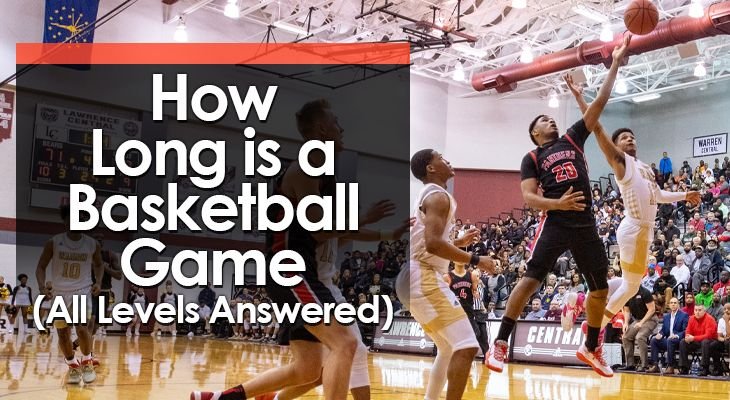
A standard professional basketball game lasts 48 minutes, divided into four 12-minute quarters.
Ever wondered about the duration of those high-flying dunks and nail-biting finishes? It’s a common question for fans, especially newcomers to the sport. People often ask, “how long is basketball game”? This question can have varying answers depending on the level of play.
While the basic structure involves four quarters, timeouts and stoppages of play extend the actual time spent. Understanding this fundamental timing is crucial for appreciating the game’s flow.

How Long is a Basketball Game?
Okay, so you’re wondering how long a basketball game actually lasts? It’s a great question because it’s not always as straightforward as you might think. Unlike some sports that have a set time, basketball has a few different factors that can influence the total length of a game. We’ll break it all down here so you’ll know exactly what to expect, whether you’re watching your favorite team or getting ready to play yourself.
The Basics: Quarters and Halves
At its core, a basketball game is divided into periods. These periods are the building blocks of the game, and they determine how much playing time is actually spent on the court. The most common way to divide a game is into quarters.
The Length of a Quarter
Most professional and college basketball games use a four-quarter format. In the National Basketball Association (NBA), each quarter lasts 12 minutes. That means that in total, there are 48 minutes of scheduled playing time in an NBA game. For college basketball in the United States (NCAA), each quarter lasts 10 minutes. So a college game has a total of 40 minutes of scheduled playing time. This difference impacts the total time of the basketball game.
Halftime
In addition to the quarters, there’s a break in the middle called halftime. Halftime is longer than the breaks between quarters, usually around 15 minutes for both the NBA and NCAA games. This gives the players time to rest, strategize with their coaches, and, let’s be real, grab a quick snack! Halftime also provides the audience with some entertainment.
Timeouts: A Pause in the Action
Beyond quarters and halftime, basketball games have timeouts. Timeouts are like little pauses in the game where play stops. Teams can call timeouts for various reasons, such as to talk about their strategy, allow players to rest, or to stop the other team’s momentum. Each team has a set number of timeouts they can use during a game.
How Timeouts Impact Game Length
Timeouts are not part of the 48 minutes of game time, but they add to the overall time of the game. Each timeout is usually around a minute long, but the length can vary a little bit depending on the rules. Since teams use timeouts frequently, these little pauses can add several minutes to the total length of a basketball game. The number of timeouts can also vary. In the NBA, each team gets seven timeouts per game (with some additional short timeouts in specific situations), while college basketball gives each team five timeouts.
Fouls and Free Throws: More Time on the Clock
Another big factor that impacts how long a basketball game lasts is fouls and free throws. When a player commits a foul, the game stops and the fouled player may get to shoot free throws, which are shots from the free-throw line without any defenders trying to block. The process of calling a foul, shooting free throws, and getting the game started again adds time to the clock.
How Many Free Throws
The number of free throws a player shoots depends on the type of foul. A personal foul during a shot attempt will typically result in two or three free throws. Technical fouls can also result in free throws. Each free throw takes some time since the player needs to get ready, make the shot, and then the ball needs to be returned to the court. This means more time is added to the total length of the basketball game.
The Importance of the Game Clock: Stop Time
Unlike some sports where the clock keeps running even when the ball isn’t in play, basketball uses a “stop time” clock. This means the game clock stops whenever there’s a foul, the ball goes out of bounds, or a timeout is called, or any other instance where the game needs to pause. This is a crucial part of how the basketball game time is determined. This is done to ensure that a team does not use up time to their advantage.
Why Stop Time Matters
The stop-time rule makes each minute of game action more valuable. It also means that the actual time a basketball game takes is longer than the sum of the playing minutes. For example, even if there are 48 minutes of playing time in an NBA game, it might take over two hours or even three hours from the start to the final buzzer. The stop-time feature means that a basketball game doesn’t have a fixed time because the clock will pause very often.
Overtime: When the Game Needs More Time
Sometimes, a basketball game ends with a tie score after all the quarters are done. When this happens, the game goes into overtime. Overtime is like an extra period of play that continues the game until one team wins. Overtime adds even more time to the basketball game.
How Long is Overtime?
In the NBA, an overtime period lasts for 5 minutes, while in NCAA basketball, it is also 5 minutes for each period of overtime. If a game is still tied after the first overtime, they continue to have as many overtime periods as needed until there is a clear winner. Overtime significantly increases the total length of a basketball game and can add much excitement for viewers.
Variations in Game Length: Different Leagues and Levels
We’ve mainly talked about NBA and NCAA basketball, but it’s important to know that not all basketball games have the same playing time. Different leagues and levels of play have slightly different rules when it comes to game length. For example, high school games and other leagues often have shorter quarters than professional games.
Youth and High School Basketball
Younger players don’t have as much endurance as professional players, so their games are usually shorter. For example, in many high school games, the quarters are 8 minutes long instead of 10 or 12 minutes. The overall length of a youth basketball game can also be shorter due to fewer timeouts or fewer fouls being called.
- High school games may have 8 minute quarters.
- Youth leagues can have even shorter quarters, maybe 6 or 7 minutes each.
International Basketball
The Federation Internationale de Basketball (FIBA) is the international governing body of basketball. FIBA games, which you might see at the Olympics or other international competitions, also use four 10-minute quarters like NCAA basketball. So, the total scheduled playing time for FIBA games is 40 minutes. However, because of timeouts, fouls, and other interruptions, these games can also take over two hours to complete.
- FIBA uses 10 minute quarters, like NCAA.
- International competitions follow FIBA rules.
The Real-Time Duration: More Than Just Playing Time
So, if we put it all together, how long does a basketball game really take from start to finish? It’s definitely not just the amount of playing time. Remember, there are many things that cause breaks in game time.
- NBA: usually between 2 and 2.5 hours
- NCAA: usually between 1.5 and 2 hours
Keep in mind, this can vary. Some games move quickly, and some can have a lot of interruptions. For instance, a game with a lot of free throws or fouls will probably last longer than a game with fewer stops. If a game goes into overtime, that will also add a considerable amount of time. When planning your time, it’s always best to expect that games will take longer than just the sum of their playing minutes.
Factors That Influence the Overall Game Length
Let’s summarize the main things that make a basketball game longer than the actual playing time.
Key Factors Affecting Game Length
- Quarters: The number and length of quarters vary by level of play.
- Halftime: A longer break in the middle of the game.
- Timeouts: Frequent interruptions for strategy and rest.
- Fouls and Free Throws: Can cause several pauses.
- Stop-Time Clock: The clock stops when the ball isn’t in play.
- Overtime: Extra play periods when the score is tied.
A Detailed Look at How the Clock Works
Let’s dive in deeper into the specifics of the game clock. The way the clock is managed is a key part of what makes a basketball game so unique. When you first watch a basketball game, the continuous stop and start of the clock can be confusing, but it is part of what makes the game fast paced.
When the Clock Stops
The clock stops for numerous reasons in basketball. Let’s look at a detailed breakdown of these scenarios:
- Fouls: When a player commits a personal foul, the clock stops immediately. This is to allow the referee to make the necessary calls, assess the penalty and, if needed, allow for free throws.
- Out of Bounds: When the ball goes out of bounds, the clock stops as well. The time remains stopped until the ball is inbounded and play resumes.
- Timeouts: When a team calls a timeout, the clock stops immediately and does not resume until play resumes.
- Jump Balls: In the rare instance of a jump ball, the clock stops until the ball is controlled by either team.
- End of Quarters: When a quarter or the half ends, the clock stops until the next period starts.
- Injuries: In the event of an injury, the clock stops until the player is checked and play can be resumed.
Why Stopping the Clock is Important
The main reason why stopping the clock is an important aspect of a basketball game is to ensure fairness. Without the stop-time rule, teams that are ahead could simply dribble the ball to waste time, and prevent the other team from making a comeback. The stop-time rule helps ensure that all playing minutes have the same amount of game action and that the other team has more opportunities to score.
The Impact on Strategy
The unique way time works in basketball affects strategy as well. Coaches use timeouts to make big changes in their strategy. They can also use timeouts to calm their players when they are behind. Teams will often foul players on the other team near the end of the game to try to take away time. These types of decisions are all influenced by the rules and the clock. The nature of the stop time also means that late-game situations can become intensely exciting and suspenseful.
In Summary: Planning for a Basketball Game
When you’re planning to watch or play in a basketball game, it’s a great idea to remember that the actual time will be longer than the scheduled play time. This is because of all of the stops, timeouts, and other factors that can extend a game. The number of fouls, the number of timeouts used, and whether or not there is an overtime can increase the time the game takes. Be prepared and have some extra time set aside so that you are ready.
Understanding these variations helps you know what to expect when you watch or play the game. It means you’ll be able to plan ahead so you don’t miss any important moments. Whether you’re a player or just a fan, knowing how long the game will actually take helps you enjoy it even more.
So, next time you hear the squeak of sneakers on the court, you’ll be a basketball game time expert!
How long is a basketball game?
Final Thoughts
A professional basketball game typically lasts 48 minutes, divided into four 12-minute quarters. This excludes any timeouts, halftime breaks, and potential overtime. In contrast, high school games usually run for 32 minutes with shorter quarters.
The exact game duration will vary. Factors such as the number of timeouts taken by each team can change how long it takes to finish. So, to answer “how long is basketball game,” it’s roughly between 32 and 48 minutes of play, but expect it to take longer overall.

