
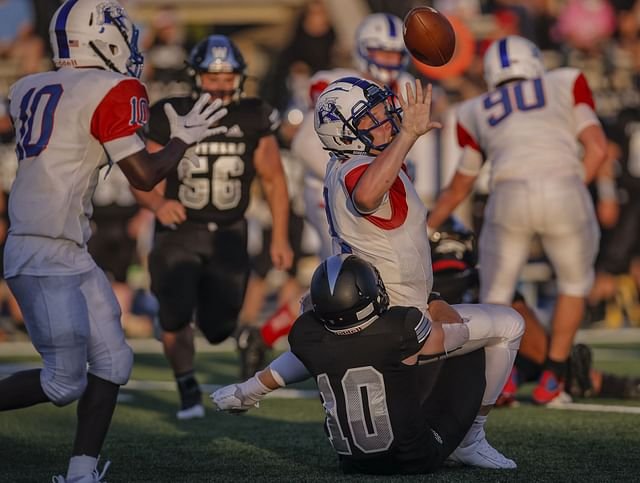
The average high school football game lasts approximately 2 to 3 hours.
Ever wondered how long you’ll be sitting in the stands cheering on your team? Understanding the time commitment helps plan your Friday nights, especially when considering travel and post-game plans. The question, “how long is the average high school football game,” pops up frequently.
The length varies slightly based on stoppages and overtime situations. However, this estimated window provides a pretty reliable guide to expect. Remember, this includes halftime!

How Long is the Average High School Football Game?
So, you’re wondering just how long you’ll be sitting in those bleachers watching some high school football? It’s a great question, because it’s not as simple as a quick hour. The clock in football can be tricky, and several things can affect how long a game actually takes. Let’s dive into the details of a high school football game and figure out what makes the game take the time it does.
The Basic Structure of a High School Football Game
The first thing we need to understand is the basic structure of a high school football game. Unlike professional games, which have 15-minute quarters, high school games are divided into four quarters, each lasting 12 minutes. This may seem simple enough, but those 12 minutes on the game clock aren’t the only time involved in the game. Think of it like a class at school. The bell rings to signal the beginning, but there’s still a lot going on in the background.
The Four Quarters
As we said, a high school football game has four 12-minute quarters. So, if you just added 12 + 12 + 12 + 12, you would get 48 minutes. Right? But, that’s just game time, or “running clock.” There’s a lot more to it than that! Game time also has stoppages, and those can add up quickly.
- First Quarter: The game starts, and the clock begins.
- Second Quarter: The second 12-minute period of the game.
- Halftime: After the second quarter, there’s a break.
- Third Quarter: The third part of the game.
- Fourth Quarter: The final period of the game.
Halftime: The Important Mid-Game Break
Between the second and third quarters, there’s a halftime break. This is a longer break than in between the other quarters, and it’s a time when players rest, coaches give important pep talks, and sometimes there are fun performances like marching bands and cheerleaders. Halftime is usually around 15 to 20 minutes long.
Why Halftime Matters
Halftime gives players time to catch their breath and make adjustments. Coaches also use this time to review the first half and make plans for the second. It’s a critical part of the game, and it affects the total game time.
Timeouts and Other Clock Stoppages
Here’s where things get a little more complicated. The clock in a football game doesn’t run continuously. It stops for a variety of reasons, and these stoppages can significantly impact the total length of the game. These breaks are important for player safety, strategy and game management.
Types of Clock Stoppages
The clock can stop for these reasons:
- Timeouts: Each team gets a limited number of timeouts to stop the clock. Coaches use timeouts to discuss plays, slow the game’s momentum, or manage the clock when they are close to scoring.
- Incomplete Passes: If a pass isn’t caught, the clock stops until the next play starts.
- Out-of-Bounds Plays: When a player with the ball goes out of bounds, the clock stops.
- Penalties: When a player commits a penalty, the clock stops while the referee explains the penalty.
- Injuries: If a player is hurt, the clock stops while they get medical attention.
- Change of Possession: After a team scores or when a team turns the ball over to the other team, clock may stop or change.
- Scoring plays: Clock stops after points are scored.
The Impact of Penalties
Penalties are a part of football, and they play a crucial role in the length of the game. When a team commits a penalty, it not only affects the yardage and play of the game, but it also affects game time. The time it takes for the referee to announce, explain, and enforce a penalty will stop the clock, therefore adds to the game’s overall length. Common penalties include holding, offsides, and pass interference. Depending on the number of penalties in a game, this can add to the length of the game.
The Role of Injuries in Game Length
Player safety is always the top priority. If a player gets injured, the game clock stops immediately. Medical staff will come to the field to help the injured player. This is important, but it can definitely add extra time to a game. Depending on the severity of the injury, the stoppage can range from a few minutes to much longer. We need to remember that a players health is always more important than the length of the game.
How Different Game Situations Affect the Clock
The stage of the game and the score can change how the game runs.
Close Games vs. Blowouts
A close game, where both teams are scoring a lot, often has more clock stoppages. Both teams use timeouts and there are more scoring plays which can increase the game time. A blowout game, where one team is far ahead, may run faster as coaches may be less concerned with using their timeouts in the fourth quarter or running the ball and keeping the clock moving.
Late-Game Situations
The last few minutes of the fourth quarter can be the slowest of the whole game! When a team is trying to score a game winning touchdown, coaches use their timeouts more strategically to slow down time. A team that is behind will often pass more, and incompletions can stop the clock. These can make the end of the game feel like it is taking forever.
Travel and Warm-Up Time
When you consider the total time commitment for a high school football game, there’s also travel time and warm-up time to consider. Often teams will have to travel to the opposing team’s stadium. For fans, this also adds time before the game and after. Players will also be warming up for some time before the game. All of these things need to be considered when looking at total time commitment.
So, What’s the Total Time?
So, after all that, how long does the average high school football game actually last? While the game itself might only have 48 minutes of “running clock,” the total time, including halftime and stoppages, is usually around 2 to 3 hours. However, it could go faster if one team is leading by a lot and it could go much longer if the game is very close and has many penalties or injuries. It is rare for a high school football game to go over 3 hours.
- Running Game Time: 48 minutes (four 12-minute quarters)
- Halftime: 15 to 20 minutes
- Total Time with Stoppages: Typically 2 to 3 hours
Factors That Can Extend Game Time
Many different factors can impact how long a high school football game is and can add extra time.
- Number of Penalties: More penalties mean more clock stoppages.
- Injuries: Any injuries will pause the game.
- Number of Timeouts: More timeouts used means the game will take longer.
- Close Game with High Scoring: A close game with a lot of scoring will stop the clock a lot.
- Overtime: If the game ends in a tie, overtime will extend the game.
Strategies for Watching a High School Football Game
Understanding how long the game will be can help you plan to watch it with success. Here are some helpful tips for those attending a game or those who will watch on TV.
For Fans Attending the Game
Fans need to consider many things when attending a game.
- Arrive early: This way you have time to get your parking, get into the stadium, find a seat, and possibly get snacks.
- Bring layers: Be prepared for all types of weather because it might get cold during the game.
- Be patient: Games can have long stops and can be slow at times.
- Enjoy the experience: It’s more than just the football. Take the time to enjoy the community and the whole experience.
For Fans Watching on TV
For fans watching on TV there are several ways to prepare:
- Clear your schedule: A football game can take up a big chunk of time.
- Have snacks and drinks ready: You don’t want to miss the action of the game.
- Be patient: The commercial breaks are part of TV broadcast.
Beyond the Game Clock
There’s a lot more to a high school football game than just the time on the clock. There is the travel time, the pregame warm ups, the band, the cheerleaders, and all of the other aspects of game day. All of these things also add to the total time needed to commit to a high school football game experience. The game clock, halftime, injuries, penalties, and all of the other aspects add to how long a game actually takes. The best thing to do is always be prepared for the possibility of a longer game so you can cheer on your favorite team.
So, next time you’re heading out to watch a high school football game, remember that the average game is usually between 2 and 3 hours long. Enjoy the game!
This 14 Year Old Has Over 40 D1 Offers! #highschoolfootball #boobiefeaster #desotofootball
Final Thoughts
Typically, a high school football game lasts around two and a half to three hours. This includes four quarters of play, halftime, and time-outs. However, game length can vary slightly.
Factors like excessive penalties or injuries can extend the game time. Conversely, a game with few stoppages might run a bit faster. So, how long is the average high school football game? It generally hovers around that two and a half to three hour mark.

