
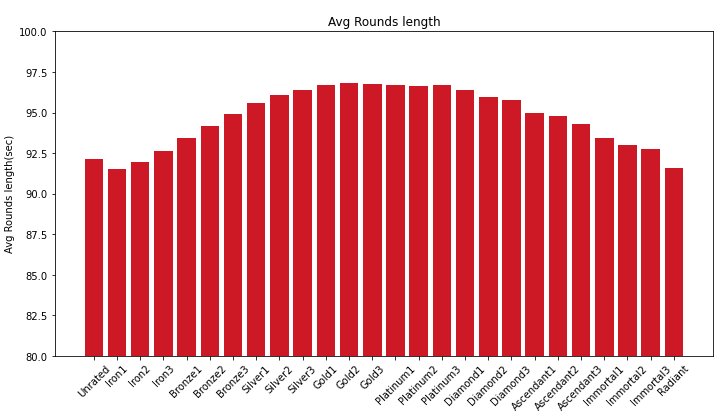
The average Valorant game typically lasts between 30 to 40 minutes.
Ever wondered how much time you should set aside for a session of tactical shooting? It’s a common question: how long is the average Valorant game, anyway? Planning your gaming around real life becomes easier when you have an idea of game length.
Knowing this helps with scheduling, allowing you to fit in a match or two during breaks. Plus, it prevents you from starting a match just as you need to leave.

How Long is the Average Valorant Game?
Alright, let’s talk about time! If you’re diving into the exciting world of Valorant, you’re probably wondering, “How long will I be playing each match?” It’s a fair question. After all, you need to know if you have time for a quick game or if you should settle in for a longer session. The length of a Valorant match isn’t set in stone like a lot of other games; it can change, making it a bit tricky to nail down a precise average time. But don’t worry, we’re going to break it down and get you a clear idea of what to expect.
Understanding the Basic Structure of a Valorant Match
Before we get into average times, it’s crucial to understand how a Valorant match actually works. Each game is based on a “best of” system, with the first team to win a certain number of rounds being declared the winner. Let’s look at the core structure:
- Standard Unrated and Competitive Matches: These game modes are the most common. Here, the first team to win 13 rounds wins the match. There are also side changes in between. One team plays as attackers, and the other as defenders. After 12 rounds, the sides switch.
- Overtime: If the score is tied at 12-12, the game enters Overtime. In Overtime, teams play until one team leads by two rounds, in this mode, the game’s win condition changes to having 2 clear rounds lead from their opponent.
- Spike Rush: This is a shorter mode where the first team to win 4 rounds is the winner.
- Deathmatch and Other Modes: There are modes like Deathmatch, Escalation, and Replication with different rules and time lengths. These aren’t usually considered when talking about average Valorant game time.
Factors Affecting Valorant Match Length
Several things can make a Valorant game longer or shorter. It’s not just a matter of one team being better than the other, though that can be a major factor. Here are some key points:
Round Speed and Strategy
The speed at which rounds are played greatly impacts game length. If teams play aggressively and quickly end rounds, the match will be quicker. However, if teams are more cautious and employ strategic play styles, rounds can take longer as they wait for the right moment to strike or execute a plan.
- Aggressive Play: Teams that push quickly and go for early engagements usually end rounds faster.
- Strategic Play: Teams that use a lot of strategy, like holding angles and waiting for rotations, tend to have longer rounds.
- Economy Rounds: Teams use economy rounds where they save their credits. This can make rounds faster as they buy less powerful weapons, but this depends on how the team plays those specific rounds.
Skill Disparity
When teams are unevenly matched, games often end quicker. If one team dominates the other, they’ll likely win the rounds faster and thus finish the game faster. Close matches where teams are evenly matched generally go the distance and take longer because neither team can gain the upper hand easily.
- One-Sided Matches: If a team is much stronger, they often win with ease and end the match quickly.
- Close Matches: When teams are equally matched, rounds can last longer and there is also a chance the game might go to overtime.
Overtime
Overtime is a big factor that can really make a Valorant game take longer. If a game reaches 12-12 and overtime begins, the match will definitely go on for extra rounds. Overtime can add multiple rounds to the game length and will increase the game length significantly.
- How Overtime Works: A game will continue until one team wins two rounds consecutively.
- Impact on Game Time: Overtime can significantly increase match length depending on how much the match can go back and forth.
Map Choice and Agent Composition
Certain maps may encourage a different pace of play. Also, some agent compositions can be more defensive, while others can be more aggressive. All of these can impact how long the game will last.
- Map Layout: Some maps with more open areas might encourage quicker pushes, while others with tight corridors may have longer, more strategic rounds.
- Agent Pick: Teams choosing agents that focus on area control may slow the game down, while teams with entry fraggers may speed up the pace.
Average Game Length in Different Modes
Now, let’s look at the average times you can expect in different Valorant game modes. It’s important to remember that these are just averages. Your actual game time may be shorter or longer.
Unrated and Competitive Matches: The Core Experience
These are the most common modes, and the ones people often think of when they talk about Valorant. Based on a lot of gameplay data, here’s a realistic range for game time:
- Average Time: A typical Unrated or Competitive game lasts around 30 to 40 minutes.
- Shortest Games: If one team dominates, games can end in around 20-25 minutes.
- Longest Games: When matches are super close and go into overtime, they can reach 50-60 minutes, or sometimes even more.
Spike Rush: The Quick Option
If you’re looking for a quick game, Spike Rush is the mode for you! Matches in this mode are much shorter than the main modes.
- Average Time: Spike Rush games usually take 8 to 15 minutes.
- Fastest Games: Some matches can end very quickly, especially if one team wins 4 rounds quickly.
Other Game Modes
Modes like Deathmatch, Escalation, and Replication have their own time lengths, but these vary significantly. These modes often have shorter and quicker experiences designed for practice or fun, instead of a serious match.
- Deathmatch: Generally ends around 5-10 minutes.
- Escalation and Replication: Can also last around 10-20 minutes per game.
Tips for Managing Your Time Playing Valorant
Knowing about game lengths is only half the battle. How do you manage your time effectively when playing Valorant?
Plan Your Sessions
Before you begin, think about how much time you have available. If you only have 30 minutes, it might be better to play a Spike Rush game instead of risking an incomplete competitive match. Planning this way helps you not leave in the middle of the game or not be late for anything else that you have planned for the day.
- Check Your Schedule: Before starting a game, check if you have enough time for a full match.
- Choose Game Modes Wisely: Pick Spike Rush for short gaming sessions. Go for Unrated or Competitive when you have more time.
Take Breaks
Playing a bunch of games back-to-back can be tiring. Take breaks between games to rest your eyes and mind. This will help you play your best.
- Rest your eyes: Look away from your screen for some time and relax your eyes.
- Move around a bit: Get up and stretch between matches to keep your energy up.
Don’t Start a Game When Short on Time
If you only have 15-20 minutes, resist the urge to start a standard match. You might end up leaving early, which isn’t fair to your teammates. Go for a Deathmatch or Spike Rush instead.
The Importance of Time Awareness
Being aware of how long a Valorant game takes is useful for planning your gaming sessions and avoiding frustration. Here’s why time awareness matters:
Avoiding Mid-Game Leaves
Knowing the approximate time of a match helps prevent starting a game when you don’t have enough time. Leaving a game mid-match can ruin the experience for your teammates, and in competitive modes, you can get penalties for doing so.
- Respect Teammates: Knowing how long a match will take can prevent you from needing to leave them hanging mid-game.
- Avoid Penalties: Leaver penalties are present to encourage players to finish the match. If you leave often, you can face serious restrictions.
Better Gaming Experience
When you know how long a game will take, you can relax and fully enjoy the experience without worrying about time. It also helps in deciding what mode is right for your gaming sessions.
- Stay Focused: You can stay fully immersed in the game knowing that you have enough time for your current match.
- Reduce Stress: You won’t have to worry about rushing or being late if you planned the game in advance.
Improved Time Management
Being aware of the typical match time helps you manage your time better outside of the game too. It allows you to schedule your gaming sessions around other activities and chores and prevents you from pushing back or missing important deadlines.
- Schedule Accordingly: Knowing the typical time allows you to plan your gaming sessions around other commitments.
- Better Productivity: When you can plan your gaming sessions properly, it can have a positive impact on your productivity for your other tasks.
So, there you have it! The typical Valorant game can vary in length, but knowing the basic structure, the factors that affect game time, and the average lengths of different modes can help you make the most of your playtime. Remember to plan ahead, respect your teammates, and have fun!
How To Double Rank Up In Valorant
Final Thoughts
A typical Valorant match lasts around 30 to 40 minutes. However, factors like overtime rounds can extend game time. Quicker games happen if one team dominates early.
‘How long is the average Valorant game’ really depends on the skill level and luck involved. Shorter matches may only take 20 minutes. longer competitive matches are easily over an hour.

