
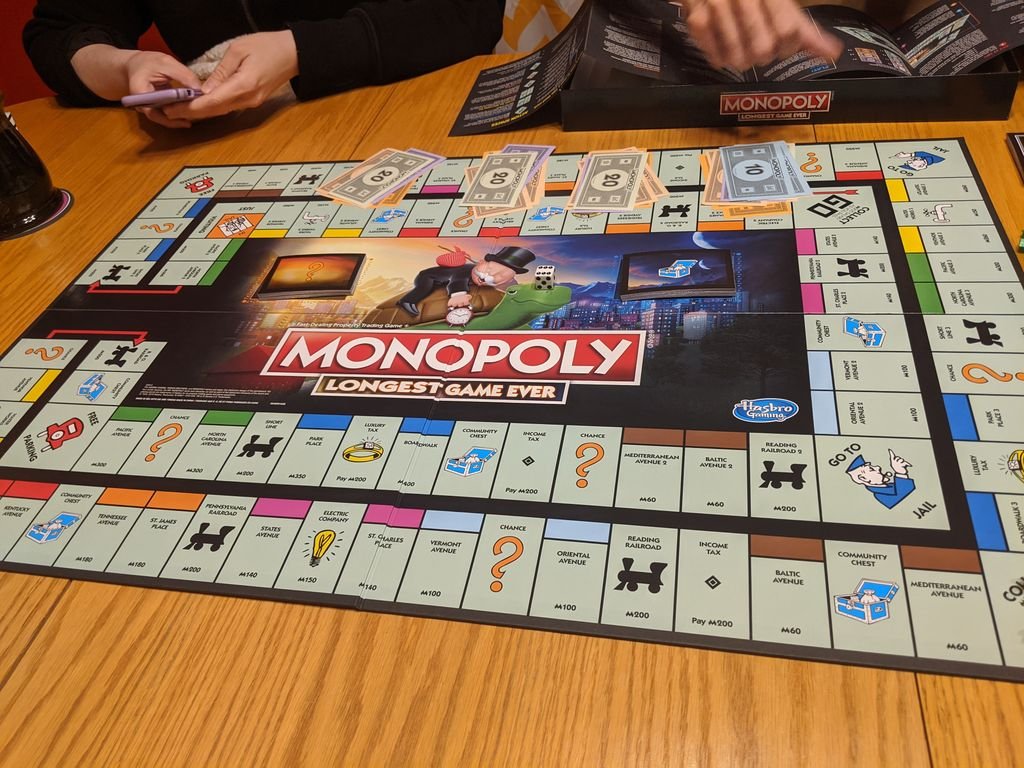
The longest game of Monopoly lasted for 70 straight days.
Ever wondered about the limits of friendly competition, or perhaps how long a game can truly stretch? Well, when it comes to Monopoly, some have taken the concept of a lengthy game to an extreme. You might have asked yourself, how long was the longest game of monopoly?
The answer may surprise you. It wasn’t a mere afternoon or even a weekend affair. The record books hold a staggering story.

How Long Was the Longest Game of Monopoly?
The game of Monopoly, with its iconic top-hatted mascot and colorful properties, is a staple in many homes. It’s a game that’s brought families together for countless hours of wheeling and dealing, sometimes ending in laughter, sometimes in friendly (or not-so-friendly!) squabbles. But have you ever wondered just how long a game of Monopoly can actually last? It’s a question that sparks curiosity, especially for those of us who’ve found ourselves trapped in seemingly endless rounds of bankrupting our siblings or parents. When we talk about “the longest game of Monopoly,” we’re not just talking about a casual Saturday afternoon session. We’re talking about record-breaking, endurance-testing marathons of buying, selling, and building. So, let’s dive into the details and explore the fascinating world of extreme Monopoly!
The Average Game vs. The Extreme
Before we get to the record-breaking lengths, it’s helpful to understand what a normal game of Monopoly looks like. The official rules state that a typical game should take anywhere from 60 to 90 minutes. Of course, this varies greatly depending on the number of players, their experience, and, let’s be honest, how much everyone is focused on the game. Some games might wrap up in a quick hour, while others can easily stretch out to a few hours, especially if people are playing strategically and not making quick trades.
However, the record for the longest game isn’t measured in hours, but in days, even weeks! These marathon Monopoly sessions go far beyond the typical family game night. They are tests of patience, strategy, and sheer determination. They often involve rule variations, and they demonstrate what happens when the standard game is stretched far beyond its intended limits. These aren’t just friendly games; they are epic battles of property accumulation and shrewd negotiation.
Documented Longest Games: The Records
The quest to determine the absolute longest game of Monopoly is a bit tricky. Official game records are hard to verify and some stories are more legendary than proven. However, several notable attempts and reported instances deserve mention. These show the incredible potential for Monopoly games to extend into marathon sessions.
The Reported 70-Day Game
One particularly famous (though hard to verify with official records) story revolves around a game that allegedly lasted 70 straight days. This game, often cited in various sources, allegedly involved an agreement among the players to never give up, no matter what. This meant each day was simply an extension of the previous, with players setting up their boards and picking up again day after day. The conditions and full details of this game are, as mentioned, somewhat sketchy, making it more of a legendary tale than a verifiable record. However, the existence of this story proves the extent to which dedicated players can continue their games.
The Marathon Game Variations
Many “longest” games are achieved with rule variations or special conditions that intentionally prolong the game. Some groups choose to add house rules to the game, which slow it down. Some of those include:
- No Trading: This rule greatly hinders the ability to create monopolies, which significantly prolongs the game.
- Limited or No Mortgaging: This can lead to more players being stuck with less liquid capital and unable to buy.
- Set time limits for each move: Players have a limited amount of time to think and make a decision.
- The use of ‘slow-play’ techniques: Players might intentionally make less than optimal moves to prolong the game.
These changes to the game’s core mechanics can drastically increase the time it takes for someone to achieve a monopoly, or bankrupt all other players. These methods are specifically employed by people aiming for the longest possible playtime. They often remove or modify the ‘end game’ mechanics that cause the game to resolve quicker.
The Role of Boredom and Perseverance
Long Monopoly games are as much a test of mental fortitude as anything. The repetition of rolling dice, buying properties, and negotiating deals becomes a challenge in itself. The ability to maintain focus, especially when not much is happening, is key to stretching the game to record lengths. It’s not just about strategy; it’s about the willingness to endure potentially hours of what can be monotonous gameplay. The psychological aspect is crucial, as players battle fatigue and waning enthusiasm. Some players are motivated by the desire to reach a record and keep going through boredom and frustration.
How the Rules Influence Game Length
Even without intentionally making rule variations, the default rules of Monopoly can contribute to longer games. Certain aspects can lead to stalemate situations:
- Low Starting Cash: Starting with a relatively small amount of money can limit aggressive purchasing at the beginning, which can drag a game out.
- Limited Number of Properties: As players slowly claim more properties the game progresses slowly
- Reliance on Landing on Properties: Because of the dependence on chance, a bad set of rolls can really change the length of a game.
- The Possibility of Landlocking: If all the key properties are bought and owned, and no one trades, a stalemate can result.
A game could drag on indefinitely if players don’t make the right strategic decisions and trading doesn’t happen. This is why some groups prefer adding rule variations that incentivize quicker gameplay and decision making.
Why Do People Attempt Long Games?
The question then arises: why would anyone intentionally participate in such extended Monopoly games? The reasons are varied and fascinating.
The Thrill of Competition
For some, the long game is about testing their limits and demonstrating their competitive spirit. It’s not just about winning; it’s about seeing how far they can push themselves (and their opponents) within the framework of the game. The longer the game goes, the greater the challenge and the more satisfying the win feels. Players enjoy knowing that they’ve outlasted their opponents in a test of endurance and strategy.
The Social Aspect
For others, these games are about spending time with friends or family. The game becomes a backdrop for conversation, bonding, and shared experience, even if that experience involves a lot of waiting. Extended games often lead to inside jokes and memorable moments that are unique to that particular game. The game transforms into more than just a competition and creates lasting bonds between participants. It becomes a story everyone involved can remember.
The Novelty and the Challenge
The inherent absurdity of playing Monopoly for days at a time is part of the appeal. It’s a unique challenge, something far removed from everyday life. There’s an element of testing the boundaries, of seeing just how long they can keep going before they need a break from the game. It’s a conversation starter and provides a unique story that the players can tell. People sometimes aim to have unique experiences, and intentionally playing the game for a long time helps achieve that. This also brings a sense of accomplishment when the game finally concludes.
Factors That Contribute to Longer Games
Several factors can contribute to a Monopoly game dragging on for an extended time. Understanding these can help players avoid these long periods or if intentional make it last longer.
Player Strategy
Players who adopt a more conservative approach, focusing on saving money and avoiding risky purchases can inadvertently extend the game. This strategy can lead to a slow buildup of monopolies and makes it difficult to bankrupt other players. By not making big moves, the game will inherently last longer.
The Dice
The luck of the dice plays a significant role. A series of unlucky rolls can leave players stuck on less desirable spaces or make it difficult for them to earn money. By having the dice play a crucial role, it is harder to make strategic moves. This leads to an increase in game length.
Limited Trading
Refusal to trade properties often leads to long games. When players hold on to properties and refuse to negotiate, it becomes difficult for others to create a monopoly. This makes it more of a grind than a strategic game. In this case, the game can drag on for many hours or even days depending on how stubborn the players are.
Rules Variations
As previously mentioned, certain house rules can lead to exceptionally long games. Modifying core mechanics of the game can have a large impact on its overall length. Variations like no trading or no mortgaging can greatly increase the play time.
Practical Tips for Shorter Games
If you prefer a quicker game of Monopoly, there are several strategies you can implement.
Aggressive Property Buying
Focus on quickly acquiring properties, especially the orange and red ones. This can accelerate your ability to build houses and hotels which can help bankrupt others faster.
Trading Strategically
Be willing to trade even if it does not seem immediately beneficial. Completing monopolies is essential to speeding up the game. If you get a property that helps other players make a monopoly, trading with them can be useful.
The “Speed Die” Variant
Use the “speed die” if playing a newer version of the game. This introduces more chaos and can accelerate the game by allowing players to move more spaces at once.
Set a Time Limit
Agree to a time limit before you start the game. This will encourage players to make decisions faster and prevent the game from dragging on. If the time limit is met, you can decide to play until someone wins or tally up the net worth of each player.
The Legacy of Long Monopoly Games
The stories of the longest Monopoly games, whether verified or legendary, contribute to the enduring appeal of this game. They show the creative ways in which people engage with games and the limits to which they go for entertainment. They also prove how adaptable even seemingly straightforward games can be. These tales are fun reminders of the human fascination with competition and our tendency to try and break records.
The game of Monopoly continues to be enjoyed by many. There are many aspects of the game that make people keep on coming back to it. Long games, short games, or somewhere in the middle, the game is as fun and exciting for all sorts of players.
How to play Monopoly Longest Game Ever
Final Thoughts
The longest game of Monopoly lasted an incredible 70 days. Players meticulously moved around the board, battling for real estate dominance. This record demonstrates the sheer dedication some have for the game.
Such an extended playtime really pushes the limits of strategy and endurance. The question of ‘how long was the longest game of monopoly’ is truly remarkable when you consider it spans over two months. The game’s longevity showcases a must for perseverance.

