
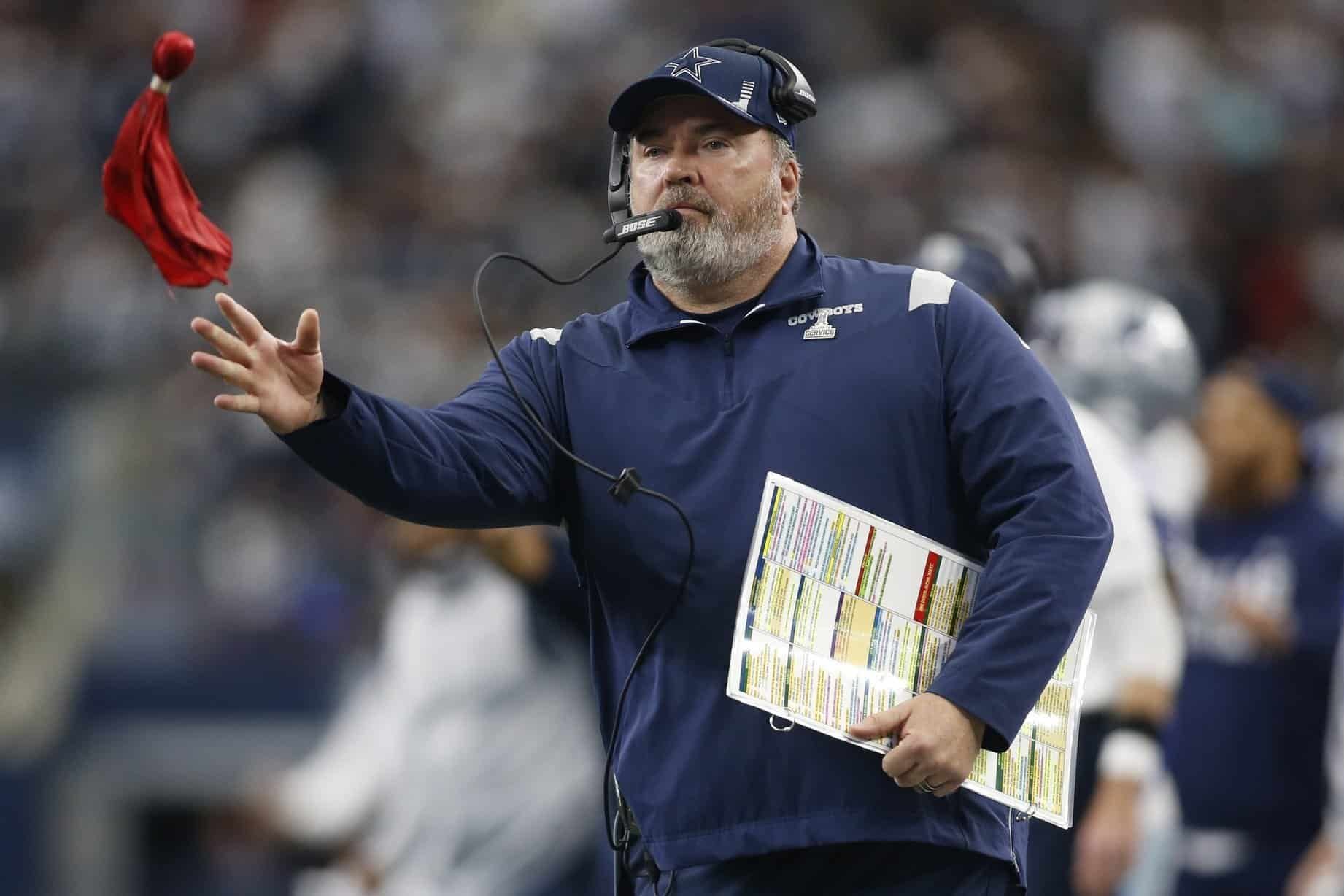
Each NFL team gets a maximum of three challenges per game, provided they have at least one remaining and they are successful.
Ever wondered about the red flags and coaches frantically signaling for a review? That’s because the NFL has a challenge system in place. How many challenges do you get in an NFL game? This is a question that often pops up among viewers.
The challenge system adds a layer of strategy and excitement. It can change the course of the game and every coach needs to understand this to make important decisions. So, let’s delve into the rules and understand more about these reviews.

How Many Challenges Do You Get in an NFL Game?
Ever watched an NFL game and seen a coach throw a red flag onto the field? That’s a challenge! It’s like a teacher checking to see if the refs made the right call. But how many times can a coach do that during a game? It’s a good question, and the answer is important for understanding the game. Let’s dive into the world of NFL challenges and see how they work.
The Basics of NFL Challenges
In the National Football League, coaches have the option to challenge certain plays when they think the referees got it wrong. This system is in place to help make sure the game is as fair as possible. The goal isn’t to second-guess every little thing; it’s to correct clear and obvious mistakes. Challenges are a bit like a “do-over” button, but with some rules.
What Kind of Plays Can Be Challenged?
Not every play can be challenged. The rules are pretty specific about which calls are reviewable. Generally, challenges focus on plays involving:
- Scoring Plays: Touchdowns, field goals, and safeties are often reviewed to make sure the ball crossed the goal line, or if a player was down before scoring.
- Pass Completions and Incompletions: Was the ball caught? Did the receiver have control? Did the receiver have two feet in bounds. These are the types of questions that can be answered using replay.
- Fumbles: Did the player drop the ball before or after he was down? Replays are crucial to see who had possession before the ball came out.
- The runner being down or out of bounds: Did the player get out of bounds before advancing? Was he actually down or did the player advance?
- Forward progress: Where should the ball be spotted? Was forward progress stopped or did the player advance more?
- Whether the passer was past the line of scrimmage: Was the player behind the line of scrimmage when the ball was released?
- Other situations: The ball hitting goalpost, touching a player out of bounds etc.
However, there are some plays that a coach cannot challenge. Penalties, like holding or pass interference, cannot be challenged by the coach. These calls are made on the field and are up to the referee to decide and can not be reviewed on a coach challenge. However, these plays are subject to review by the replay assistant, more on that later.
How Many Challenges Do Coaches Get?
Now, let’s get to the main question: how many challenges does a coach get in an NFL game? Each team starts the game with two challenges. These are their opportunities to ask the refs to take a second look at a play.
Getting a Third Challenge
There’s a way for a coach to earn a third challenge! If a coach successfully wins both of their first two challenges (meaning the call on the field was overturned), they will be given a third challenge. This is like winning a bonus round in a video game! So, it is possible for a coach to have zero, one, two or three challenges during a game.
Losing a Challenge
A challenge isn’t a free pass. If a coach challenges a play and the call on the field is upheld, meaning the refs were right in the first place, the team loses one of its challenges and gets charged a timeout. The refs will look at the play again, often using slow-motion replays. These replays can sometimes be shown on big screens in the stadium. The team still has a timeout if they have two or three remaining challenges. When a team loses their last challenge they also lose a timeout. If you’re wrong, it costs you.
The Replay Official
Besides coaches’ challenges, there’s also a replay official. This person is in a booth somewhere and watches the game closely on multiple screens. The replay official has the power to initiate a review of some plays, especially scoring plays or turnovers within the last two minutes of each half and during overtime. This is important because, even if a coach doesn’t have any challenges left, the replay official can still jump in to fix a really big mistake. It gives teams some extra help, even when their own challenges are gone.
Automatic Reviews
In some situations, reviews happen automatically without a coach needing to throw a challenge flag. For example, any scoring play will be reviewed by the replay official. This helps ensure that all touchdowns, field goals, and safeties are correct, and it’s an automatic process to make sure that the big moments are right. During the last two minutes of each half and during overtime, turnovers are also reviewed automatically.
Replay Official’s Limited Authority
The replay official can’t just call back any play he doesn’t like. He’s limited to reviewing specific types of calls, much like coaches are. These reviews also focus on clear and obvious errors. The goal of having a replay official is not to slow down the game; it is to quickly correct mistakes so that the game can go on fairly. The game would be much longer if all calls were automatically reviewed.
How the Challenge Process Works
Let’s imagine a coach thinks the receiver didn’t catch the ball cleanly before going out of bounds, but the refs call it a catch. Here’s how the challenge process would go:
- The Throw: The coach throws the red challenge flag onto the field. This is the signal that he’s challenging the referee’s decision.
- The Review: The referees stop the game and go to the sideline to watch the replay. They look at the play from different angles, often in slow motion.
- The Decision: After reviewing the play, the referee will announce the decision. They either “uphold” the call (meaning the original call was correct), or they “overturn” the call (meaning they got it wrong).
- The Outcome: If the call is overturned, the team wins the challenge, and the play is corrected. If the call is upheld, the team loses a challenge and a timeout.
Why Challenges are Important
The challenge system is an important part of the NFL. It makes the game fairer. Think about it, without the ability to challenge plays, coaches might think that refs are making bad calls. So, if there was a scoring play that was wrong, it would stand. Challenges give a coach the chance to say, “Hey, I think you made a mistake. Can you look at it again?” It’s about making sure that games are won or lost because of the players, not because of a referee’s mistake. It’s a system designed to correct obvious errors and keep the integrity of the game intact.
The Impact of Challenges on the Game
Challenges can change the whole direction of a game. Imagine a close game, and a team challenges a play that results in a touchdown being called back. This could completely change the momentum of the game. It’s important for coaches to make smart choices when using challenges. They need to think carefully before throwing that flag. There is a limited number of challenges, so coaches have to be smart. This adds a level of strategy to the game, making it exciting for fans to watch as well.
Challenges and Game Strategy
Smart coaches think about the challenges and how it impacts their strategies. When a coach challenges a play, it can be a risk that can cost them. A coach would not want to waste a challenge on something they are uncertain about. A coach can also use this system to take a timeout, or when they think that refs made a crucial mistake. Coaches have to be calculating before using these challenges.
Changes to the Challenge System Over Time
The NFL’s challenge system has changed a few times over the years. The league reviews the rules of the game every year. The rules can be modified to make the game more fair or to improve the flow of the game. There are always tweaks to try to improve the system. Some changes have been made to be more clear about what can be challenged, while others have focused on improving the replay process. The goal is always to make the system as fair and efficient as possible, so that no games are decided on bad calls. This is important because it allows the game to grow and stay exciting for viewers and participants.
A Summary of Challenges
Let’s recap the important points about NFL challenges:
- Each team starts with two challenges per game.
- A third challenge can be earned if both initial challenges are successful.
- Unsuccessful challenges result in the loss of a challenge and a timeout.
- Not all plays can be challenged; rules are specific to certain situations.
- The replay official also reviews plays, especially during critical moments.
- The main purpose of challenges is to correct clear and obvious errors.
Understanding the challenge rules helps you appreciate the game even more. It shows how much effort the NFL puts into making sure each game is fair. Challenges add another element of strategy and drama to the experience of watching football.
Challenges are an important part of the game. They give the coaches power to make sure the game is being called correctly and allows the referees to make the necessary corrections to ensure a fair game. They are also strategic decisions that coaches must make which adds to the complexity of the game.
What NFL players do after games 🙌 | #shorts
Final Thoughts
Each NFL team begins with three challenges per game. If a challenge proves successful, the team retains that challenge. They can never have more than three challenges.
A team might potentially have more than three if they win a challenge in the first half. However, after the two minute warning of the second half, the ability to challenge expires. So, how many challenges do you get in an NFL game? A maximum of three is allowed.

