
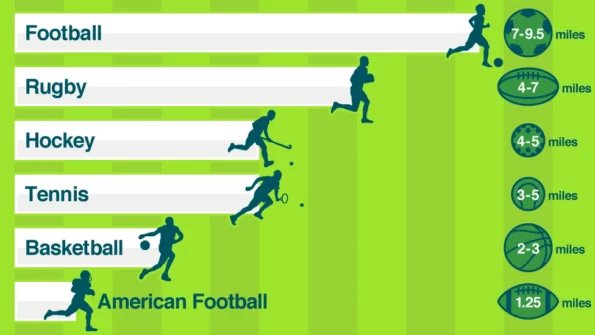
The average basketball player runs between 2 to 3 miles during a game.
Ever wonder just how much ground those athletes cover on the court? The constant back and forth, the sprints, and the pivots make you question how many miles do basketball players run in a game. It’s not just about the points; it is about the sheer athletic effort involved.
Those quick changes in direction and the bursts of speed really add up. Basketball is far more than a simple standing around kind of sport, that is for sure. It’s more of a marathon in short sprints.

How Many Miles Do Basketball Players Run in a Game?
Ever wondered how much ground basketball players cover during a game? It’s more than you might think! We see them running up and down the court, making quick cuts, and jumping high, but just how many miles do they actually clock? Let’s dive into the world of basketball and find out.
The Basics: Court Size and Game Length
To understand how much running happens in a basketball game, we first need to know about the court and the game’s duration. A standard basketball court in the NBA (National Basketball Association) is 94 feet long and 50 feet wide. In other leagues like high school and college, it might be a bit smaller, around 84 feet long. A full NBA game consists of four 12-minute quarters, making it 48 minutes of play time. However, add in time-outs, fouls, and halftime, and you’re looking at a game that can last over two hours! For high school or college, quarters are shorter, typically 8 to 10 minutes, resulting in shorter games.
The real trick to figuring out the miles is realizing that basketball isn’t a steady run, like a marathon. It’s a series of sprints, jogs, and quick changes in direction. This makes calculating mileage a little complex, but here’s what we know.
Average Distance Covered: A Range
So, how many miles do basketball players run in a single game? The general range is around 2 to 5 miles. This is quite a big difference, and it really depends on a bunch of things. Some factors greatly affect how much someone runs in a game. Let’s break these down:
- Position: Guards typically run the most, often covering more ground than forwards or centers.
- Playing Style: Players on teams that use a fast break style will generally run more than those on slower-paced, more strategic teams.
- Individual Roles: Some players are expected to be all over the court, chasing rebounds, playing defense, and leading the fast break. These players will run more.
- Time on Court: Obviously, the more minutes a player is on the court, the more running they’ll do.
Guards: The Court Sprinters
Point guards and shooting guards are like the engines of their teams. They’re always moving, bringing the ball up the court, setting up plays, and playing both offense and defense. These players might cover 4 to 5 miles in a full game, especially if they’re key players who rarely sit on the bench. Because they need to be quick and have great stamina, they are constantly running and sprinting.
Forwards: The Hustle Players
Small forwards and power forwards usually run a bit less than guards. They might be doing more rebounding and playing close to the basket. They still do a lot of running, averaging around 3 to 4 miles per game. They have to move quickly to secure a rebound or set a pick for their teammates. Their role is often physically demanding with lots of sudden changes of pace.
Centers: The Inside Runners
Centers tend to run the least, relatively, clocking in around 2 to 3 miles. They are often positioned closer to the basket and focus on rebounds, blocking shots, and scoring in the paint. They’re often doing short bursts of movement around the key, rather than lengthy running across the court. Although they don’t cover as much distance as guards, the amount of effort they put in is very high due to the physical nature of their position. They need a different kind of conditioning.
Factors Influencing Distance Covered
While the position a player plays is a big deal, other factors also come into play. Here are some key ones:
Game Pace: Fast vs. Slow
Some teams are known for their fast-paced play, always looking for fast breaks and quick shots. Players on these teams will tend to run more than players on teams that prefer a slower, more controlled style of play. If the game involves many possessions and quick transitions, players will need to cover more ground. It’s like the difference between jogging and sprinting; the more fast breaks there are, the more sprinting is needed.
Individual Playing Time
This one seems obvious, but it’s a very important point to consider. A player who logs 40 minutes of playing time is going to run far more than a player who is on the court for 15 minutes. The more time a player spends on the court, the more time they have to run. It’s straightforward as that. Star players, who often log lots of minutes, cover considerable ground. Players who come off the bench might run less.
Offensive and Defensive Systems
The game plan and the team’s offensive and defensive styles can influence the total distance covered. Some teams are structured to play half-court offense where they set up specific plays. Other teams thrive by focusing on full-court presses, requiring more running. Some players have very specific defensive roles which also cause them to run less or more.
Game Intensity
The intensity of the game itself can affect the distance covered. A close, hard-fought game usually requires higher levels of effort and movement. A blowout game where one team is way ahead might not result in the same amount of running. The energy on the court and the importance of the game impact everyone’s energy levels. The more intensely a player plays, the more they are going to run.
Technology and Tracking: How We Know
So, how do we even know how far players run? It’s not like someone is running alongside with a measuring wheel. Thanks to the advancements in technology, we have precise data. Here are some of the tools and techniques used to measure distance:
GPS Tracking Systems
Many professional leagues, like the NBA, use GPS tracking technology. Players wear small GPS devices, often embedded into their uniforms or compression wear. These devices track their movement on the court, including distance, speed, and acceleration. This is a very accurate method and provides precise data for both teams and statisticians.
Optical Tracking Systems
Another way to monitor movement is using optical tracking systems. These use cameras placed around the arena to track players’ positions on the court. With data obtained from these systems, analysts can calculate player movements very precisely. It captures the player’s speed, acceleration and distances covered during the game. This is beneficial for understanding player performance.
Statistical Analysis
Data collected by GPS and optical tracking systems allows for in-depth statistical analysis. Teams use this data to assess player performance and stamina, and adjust training regimens accordingly. They might see a certain player is covering more ground than others and see if his physical training can be improved or not. These statistics are also useful to evaluate team performance as a whole and see if adjustments should be made.
Why Distance Matters
Knowing how many miles basketball players run in a game isn’t just a fun fact. It is important for player performance, training, and even strategy. Understanding the distances involved helps coaches and players work on stamina and fitness levels to better prepare themselves for the game. Here is why the data matters.
Stamina and Conditioning
The ability to maintain a high level of energy and speed throughout the entire game is crucial. Basketball is an intense sport that needs a very high level of stamina. Tracking distance helps coaches develop tailored workouts for each player to enhance their stamina. This helps prevent fatigue and injuries throughout a demanding season.
Injury Prevention
Understanding the physical demands of the game also helps in injury prevention. Overuse and exhaustion are leading causes of injuries for athletes. When coaches and trainers have a complete understanding of how much distance their players are covering, they can adjust training accordingly. This helps to minimize the risk of injury.
Tactical Insights
Coaches can make better strategic decisions by understanding distance data. Knowing which players run more, and in what situations, helps coaches plan rotations effectively and understand the players’ strengths and weaknesses. For example, coaches can use this data to determine if a player is getting tired easily and how to adjust strategy according to this information.
Comparing to Other Sports
Let’s see how basketball stacks up against other sports when it comes to running:
- Soccer: Soccer players typically run more than basketball players, sometimes ranging from 6 to 9 miles or more in a game. This is because soccer is played on a bigger field and has very little stoppage of play.
- American Football: Football players cover much less distance, generally between 1 and 2 miles per game. This is largely because of frequent stoppages, and players taking time out for plays and rests.
- Tennis: In a match, tennis players may run 3 to 5 miles, similar to basketball. But unlike basketball, tennis games can take hours, so it may be a higher level of intensity for a longer duration.
- Baseball: Compared to other sports, baseball players run very little. Most of their physical work is more about sudden bursts rather than covering large distances.
Each sport has its own unique physical requirements and demands. Basketball has a unique mixture of sprints and endurance, in order for the players to play at a very high level of performance.
Basketball is More Than Just Running
While we’ve focused a lot on the mileage players cover, it’s vital to remember that basketball is not just about running. It requires a unique combination of speed, agility, and strategic thinking. Players must be able to change direction quickly, jump high, and make swift, precise movements, all while thinking about the game and where their teammates are on the court. The running aspect is just one piece of the puzzle in what makes the game so challenging and enjoyable to watch.
In conclusion, while the exact distance a basketball player runs during a game varies based on many factors, it typically falls between 2 to 5 miles. This is a significant amount of running which requires great fitness and stamina. Technology allows for more and more accurate measurements of players’ movements, providing valuable data for training and improving the game. So, next time you watch a game, you can appreciate all the ground those players are covering as they run, jump, and play the game of basketball.
Is Long Distance Running Good for Basketball?
Final Thoughts
Professional basketball players typically cover around 2.5 to 3 miles during a game. High-intensity bursts of sprinting and constant movement accumulate significant distance. The specific amount varies by player position and their playing time.
How many miles do basketball players run in a game depends greatly on their role within the team. Guards, for example, tend to run further compared to centers. So, the mileage differs by player’s job and length on the court.

