
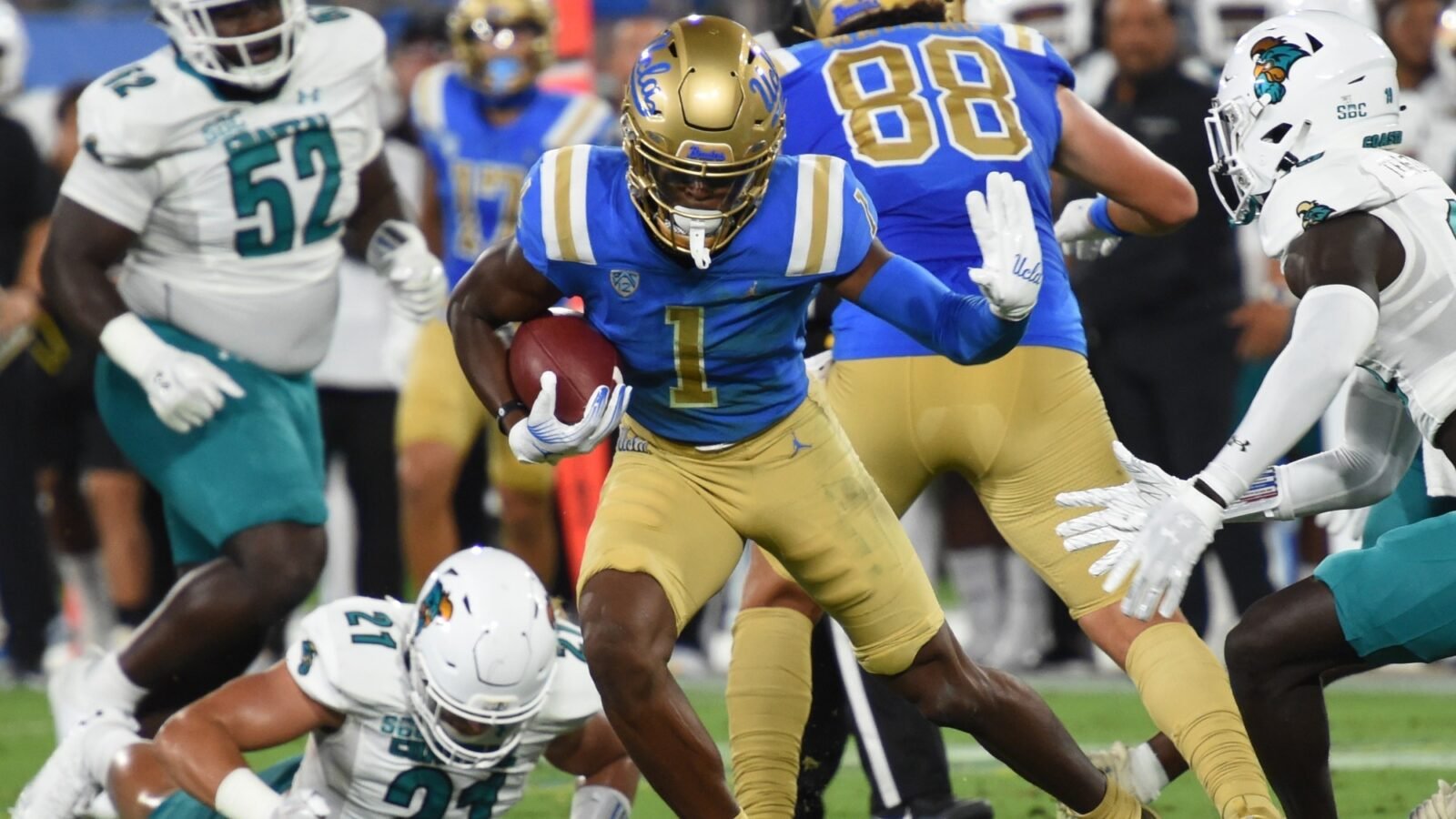
The total playing time in a college football game is 60 minutes.
Ever wondered about the duration of those thrilling college football matchups? It’s easy to get lost in the excitement of the game, with all the action happening on the field. The game is full of twists, turns, and breaks, so how many minutes in a college football game are we actually watching?
While the game clock ticks down 60 minutes, keep in mind that there are timeouts, stoppages for penalties, and halftime which greatly impacts the total time to watch one game. So it’s not a pure 60 minute experience.

How Many Minutes in a College Football Game?
College football is an exciting sport with lots of action, big plays, and nail-biting finishes. But have you ever wondered exactly how long one of these games actually lasts? It’s not as simple as just saying “60 minutes,” because a lot more goes into it than just the time on the clock. Let’s dive in and find out all the details about how much time is spent playing in a college football game.
The Official Time: Four 15-Minute Quarters
The most basic thing to know is that a college football game is officially divided into four quarters, and each quarter is 15 minutes long. So, if you add that all up, you get a total of 60 minutes of playing time, or one hour. This is the standard playing time according to the rules. But remember, that’s just the time that the clock is actually running.
It’s like when you are playing a video game, sometimes the clock stops because of certain things happening in the game. In college football, the clock also stops many times during the game.
Why the Clock Stops
Okay, so the clock doesn’t run constantly. Several events during the game cause the clock to stop. This is why a game that’s supposed to be 60 minutes long can sometimes take well over three hours to finish! Here’s a breakdown of the main reasons why the clock stops:
- Incomplete Passes: If a quarterback throws the ball and a receiver doesn’t catch it, the clock stops until the next play starts.
- Out-of-Bounds Plays: When a player with the ball runs out of the marked area on the side of the field (sideline), the clock stops.
- Penalties: If one team breaks a rule, like holding a player, the clock stops while the referee decides on the penalty.
- Change of Possession: When one team loses the ball and the other team gets it (like an interception, or fumble recovery), the clock stops until the ball is put back in play.
- Touchdowns and Extra Points: After a team scores a touchdown, the clock stops so they can try to kick an extra point, or try for a two-point conversion.
- Timeouts: Each team gets a limited number of timeouts they can use to stop the clock if they want to talk over strategy or regroup.
- Injuries: If a player gets hurt, the clock stops to allow medical personnel to help the player.
- Quarter Breaks: The clock also stops between each quarter.
The Half Time Break
After the first two quarters, there’s a long break called halftime. This break is usually about 15 to 20 minutes long. This time allows the teams to go back to their locker rooms, plan, and rest before going back out to play the second half of the game. During this time, we might see marching bands or other entertainment on the field, adding to the excitement of the game.
How Long Does a College Football Game Really Last?
So, if the official playing time is 60 minutes, why does a game feel so much longer? All those stoppages for incomplete passes, penalties, and other events add a lot of time to the game. In reality, a typical college football game will usually last somewhere between three and three and a half hours, sometimes even longer depending on the number of stoppages.
Factors that Affect Game Length
Several things can influence just how long a game takes to complete:
- Number of Penalties: If there are a lot of penalties, the game will take longer as each penalty causes the clock to stop.
- Close Game or Blowout: If the score is very close, teams tend to use timeouts more strategically and there are more intense moments and clock-stopping events. A blowout, where one team is winning by a lot, can sometimes move more quickly because there is less back-and-forth action and coaches might not use as many timeouts.
- Number of Scoring Plays: More touchdowns mean more time stopped for extra points or two-point conversions, this extends the game’s duration.
- Number of Injuries: Any medical stops for player injuries lengthen the game.
- Overtime: Sometimes games are tied at the end of regulation and go into overtime. Overtime can add anywhere from a few extra minutes to even a half-hour or more depending on how long it takes one team to win.
The Flow of a Typical Game
While every game is unique, here’s what you can generally expect to see in terms of time:
- Pre-Game: This includes the warm-ups. This is not included in the game time.
- First Quarter: 15 minutes of play with stoppages.
- Brief Intermission: A short break before the second quarter.
- Second Quarter: Another 15 minutes of play with clock stops.
- Half-time: About 15-20 minutes break.
- Third Quarter: 15 minutes of play and stoppages.
- Brief Intermission: Short break before the final quarter.
- Fourth Quarter: 15 minutes of play plus all the stoppages.
- Post-Game: After the fourth quarter, teams leave the field and games are considered over. Any post-game celebrations by fans are obviously not part of the playing time.
As you can see, the actual playing time of 60 minutes is only a small portion of the total time of a college football game. The stops in the clock, halftime, and breaks between the quarters add many extra minutes to the length of the game.
The Importance of Understanding Game Time
Understanding that a college football game is more than just 60 minutes of play helps you plan your day if you’re watching it live. It also gives you a sense of why TV broadcasts last as long as they do. It isn’t just about the on-field action; it’s also about the commercials, pre- and post-game shows, and expert commentary that fill out the broadcast time.
Planning Your Viewing
If you’re attending a game, arrive early to find parking and get through the gates. For home viewing, make sure your snacks and drinks are ready before kickoff, because you’ll be in for a long, fun ride! If you’re watching on TV, be sure to clear your schedule for at least three hours.
Why the Clock Rules Matter
The rules surrounding the game clock are crucial in college football. They significantly affect game strategy. Coaches have to decide when to use a timeout, whether to run the ball or pass it, and how to best manage the clock to try and win the game. Some teams are very good at controlling the time, using short runs to keep the clock running and keep the ball away from the other team, this strategy is called time management.
Overtime in College Football
When a college football game is tied at the end of the fourth quarter, the game goes into overtime. Overtime in college football is different from professional football, and the rules are more unique. Here is a brief explanation of how overtime works:
The Basic Overtime Rules
- Each team gets an offensive possession: In overtime, each team will get at least one chance to start on offense on the other team’s 25 yard line.
- If one team scores a touchdown and the other does not: The team who scored wins.
- If both teams score a touchdown: they proceed to an additional overtime until one team wins.
- 2-point Conversions: Once a game reaches the third overtime, teams are required to go for 2-point conversions after a touchdown. The team that scores a touchdown and then goes for the conversion and scores is the winner.
Overtime adds extra time to the length of the game, and many games have gone into multiple overtime periods, making the overall game time much longer. Overtime in college football can be very exciting and unpredictable as both teams are under immense pressure to score each time they get the ball.
Game Clock Management
As mentioned earlier, the way teams manage the game clock is a big part of college football. Teams can use the clock to their advantage. Here are a few examples of how a team may use the clock to win the game:
- Running Plays to Keep the Clock Moving: If a team is ahead in the fourth quarter, they may use running plays to keep the clock moving, so the other team doesn’t get a chance to score.
- Stopping the Clock with Incomplete Passes: If the other team is winning, teams may throw the ball on the sidelines to try to stop the clock to have more time to score.
- Strategic use of Timeouts: Teams can use their timeouts to their advantage in the last few minutes of a game, so they have extra time to try to score.
The game clock in college football is an important part of the game. Understanding how it works can help you appreciate the strategic aspect of the game.
So, while a college football game might be 60 minutes of play, the actual time that it takes to finish the game will almost always be more than three hours. The clock stops many times, and the teams have halftime and breaks in between quarters, these breaks help make the game fun and entertaining. So, next time you are watching a college football game, you’ll know why it is taking so long and can enjoy each minute of play!
North Dakota State vs. Montana State: 2024 FCS football championship highlights
Final Thoughts
A standard college football game features four 15-minute quarters. This totals 60 minutes of actual playing time. However, frequent stops for plays, penalties, and timeouts extend the overall duration of the game significantly.
So, while the clock displays 60 minutes of play, the entire game, including breaks, usually lasts three to four hours. Therefore, ‘how many minutes in a college football game’ is officially sixty.

