
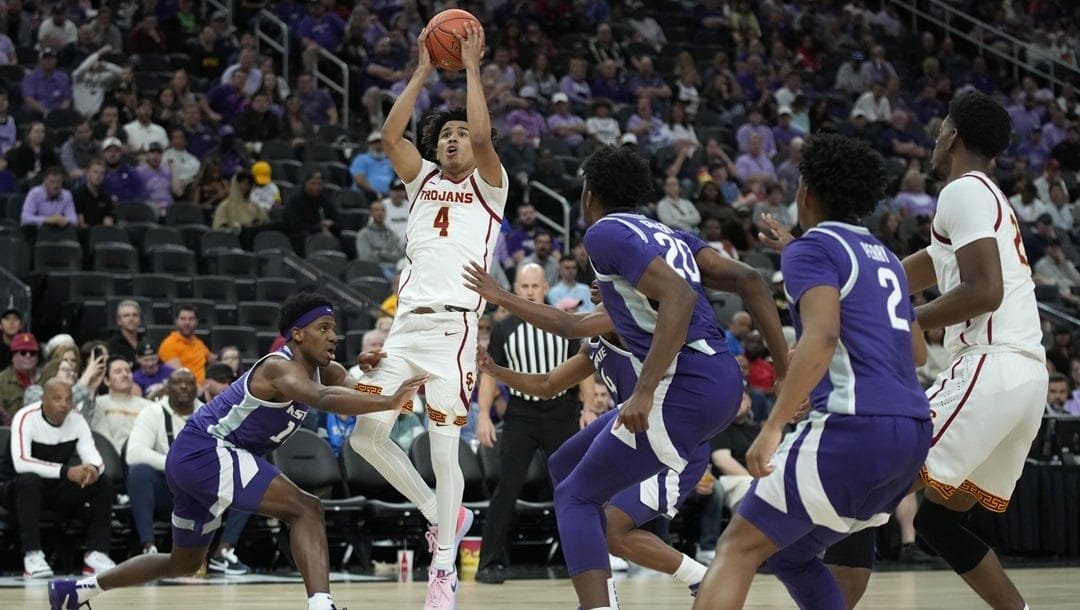
A college basketball game is 40 minutes long, divided into two 20-minute halves.
Ever wondered about the pace of a college basketball game? It’s a fast-moving spectacle, but have you ever asked yourself, ‘how many minutes is a college basketball game’? Understanding the duration helps appreciate the strategy involved.
Unlike some other levels, these games feature a specific time structure that dictates how teams strategize. The clock is always running and is crucial for gameplay.

How Many Minutes is a College Basketball Game?
So, you’re curious about how long a college basketball game lasts? It’s a great question, and the answer isn’t quite as simple as you might think! While the basic structure is consistent, several factors can influence the total time a game takes. Let’s dive into the details and figure out just how many minutes you can expect to see on the clock during a college basketball game.
The Standard Game Length: 40 Minutes of Action
At its core, a college basketball game is designed to be 40 minutes long. However, that 40 minutes isn’t one continuous stretch. It’s divided into two halves, each lasting 20 minutes. This split allows teams to regroup, coaches to make adjustments, and for a halftime break that gives everyone a chance to catch their breath. Think of it like two mini-games back-to-back.
This standard timing applies across most college basketball levels, including the NCAA Division I, II, and III. So, whether you’re watching the big-name schools battle it out or a smaller college team, the base game length is still 40 minutes broken into two 20-minute halves.
Understanding the Game Clock
It’s crucial to understand that the game clock in basketball isn’t like a regular clock that just keeps counting up. Instead, it stops whenever the ball isn’t in play. This happens frequently during a game. For example, the clock stops when:
- A player commits a foul.
- The ball goes out of bounds.
- A timeout is called by a team.
- There’s a jump ball situation.
- The basketball goes through the hoop on the shot clock violation
These stops are essential, as they allow players a chance to regroup, coaches to strategize, and officials to make sure the game is being played fairly. Because of all the stops, a game clock moving for 40 minutes of playtime might stretch out to almost two hours or more when you consider the breaks!
Halftime: A Necessary Pause
Between those two 20-minute halves, there’s a halftime break. Halftime is when the players go back to their locker rooms, coaches give advice, and the fans get some time to relax. It also allows the arena crew to keep everything running smoothly. Halftime typically lasts about 15 minutes, but it can sometimes be a little shorter or longer, depending on different circumstances. So when considering the full time, remember to factor in halftime, it’s the biggest break in college basketball.
Timeouts: Strategic Breaks
During the game, each team gets a certain number of timeouts. These are planned breaks that allow the coaches to speak with their players and plan specific strategies or play. Timeouts can come in two lengths: full timeouts and 30-second timeouts. Full timeouts are generally about a minute and a half (90 seconds), while short timeouts are, you guessed it, about 30 seconds. Each team gets to use their timeouts wisely throughout each game. The number of timeouts a team gets can differ a bit depending on the specific rules or the league, but this is a general overview of timeouts in college basketball.
How Timeouts Impact the Overall Game Time
Timeouts can greatly add to the overall length of the game. Even though they are short breaks, all those small chunks of time add up! A college basketball game can add several minutes, or even close to an hour with some timeouts happening frequently. When you add up all the timeouts over the course of a game, it does have a big impact on how long you’re sitting there watching the game, or listening on the radio!
Fouls and Free Throws
Fouls are another aspect of the game that stop the clock. When a player commits a foul, the clock will stop. Free throws are a direct result of fouls. Depending on the type of foul and where it occurs on the court, the player fouled might get a chance to shoot one, two, or even three free throws. The clock stops while the player shoots the free throws. After the free throws are taken, the clock resumes again.
How Free Throws Affect Game Time
Free throws don’t take a lot of time individually, but like timeouts, they add up. If a game has a lot of fouls, the clock might stop a lot and you might get a longer game. Towards the end of a close game, you might notice more fouls being called. The clock stops every single time a player goes to the free throw line, making the end of the game last longer than the rest of the game. These can make a big difference in the total time of the game.
Overtime: When the Clock Isn’t Enough
Sometimes, at the end of the regular 40 minutes, teams are tied! In this scenario, college basketball adds an overtime period, or periods. The amount of overtime periods can be different, but usually each overtime period is 5 minutes long. The clock rules in overtime are mostly the same as during the regular game. Overtime in a college game can be exciting for the fans, because overtime can make any game last even longer.
Multiple Overtime Periods
It’s possible for a game to have multiple overtime periods. If the teams are still tied at the end of the first overtime, they play another five-minute overtime, and so on until one team wins. This can dramatically increase the time spent watching the game. Sometimes an overtime game might last way longer than a standard game, with lots of stops and free throws!
Shot Clock: Keeping the Game Moving
College basketball also uses a shot clock. This is a rule that says that the team with the ball has to attempt a shot on the basket within 30 seconds. If the team doesn’t shoot within 30 seconds, the ball goes to the other team. The 30 second shot clock keeps the game moving and limits any stalling tactics that might drag a game out too long.
How the Shot Clock Influences Game Duration
The shot clock, even though it is there to keep the game moving, can also add a bit of extra time to the game. It does this by resetting and stopping the game if the team fails to shoot within the 30 second limit.
Review of Game Time Influences
Let’s recap the main factors that influence the length of a college basketball game:
- Standard Playing Time: 40 minutes, divided into two 20-minute halves.
- Halftime: A break of about 15 minutes between the two halves.
- Timeouts: Each team gets a number of timeouts, which can be either full or short.
- Fouls and Free Throws: They stop the clock and take time to complete.
- Overtime: Added five-minute periods if the teams are tied at the end of regulation.
- Shot Clock: Can stop and reset the clock if a team can’t shoot within 30 seconds.
These all add up to determine how long you will be watching the game.
Beyond the Clock: Other Time Factors
Besides the clock and in-game stoppages, a few other things can add to the total time it takes to play a college basketball game. These aren’t necessarily game rules, but are things that happen at most games:
- Pre-game ceremonies: There might be things like a team introduction, a national anthem singing, and maybe even some special recognitions that take place before the game begins.
- Half time show: Some bigger games have a band or a special show during halftime.
- Commercial breaks: If you’re watching on TV, there will be commercials during the timeouts and between halves.
- Injuries: If a player gets hurt, the game will stop while the player gets help.
All of these factors combined make a game’s length even longer than just the playing time and normal breaks.
Variations in Game Length
While the 40-minute rule is the standard in college basketball, some very minor differences can occur. Games at lower levels or in exhibition games might sometimes use different rules or play with shorter game time, but it’s most likely that you will always see 20-minute halves at the college level.
Estimating the Total Game Time
So, putting it all together, how long can you expect a college basketball game to last? A typical game, considering all the factors, usually takes between two and two and a half hours. Some might be a bit shorter, and some, with overtimes, can be even longer. The best way to estimate is to factor in all the stoppages and remember that the 40 minutes of playing time is just the start.
When you plan to go to a game, make sure you give yourself enough time, because the length can really vary depending on the type of game being played!
So, the next time you sit down to watch a college basketball game, you’ll be able to keep track of the time and know exactly why a game might be running longer than you expected! The game’s time really is more than just 40 minutes. It’s an exciting journey that involves many small parts!
College Basketball Picks & Predictions Today 1/7/25 | Ron's Bank Shot Breakdown
Final Thoughts
Therefore, a college basketball game runs for 40 minutes, divided into two 20-minute halves. This structure is standard across NCAA play. Timeouts and stoppages do extend the overall game duration.
Understanding the game’s length is key for both players and fans alike. Knowing how many minutes is a college basketball game is fundamental for anyone watching or participating. The game clock is a very important aspect.

