
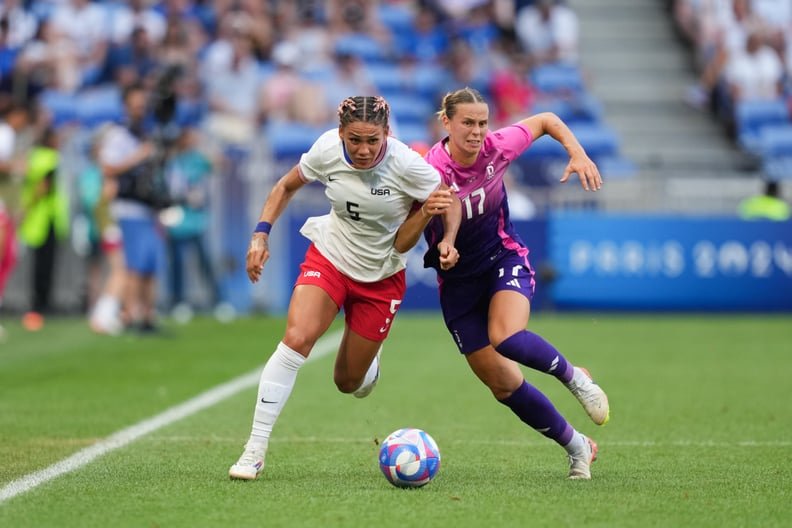
A standard women’s soccer game lasts 90 minutes, divided into two 45-minute halves, with a halftime break in between.
Ever wondered how long the action lasts on the field when you’re watching a women’s soccer match? It’s a common question, especially if you’re new to the sport, which is why today we are talking about how many minutes is a women’s soccer game.
Knowing the game duration helps you plan your viewing schedule and understand the flow of the match. So let’s dive into the details and clarify exactly how long you can expect a women’s soccer game to play out.

How Many Minutes is a Women’s Soccer Game?
Let’s dive deep into the exciting world of women’s soccer and figure out exactly how long a match lasts. It’s a question many fans, new and old, often ask. The answer isn’t always as simple as just one number because different levels of play can have slightly different timings. But don’t worry! We’re going to explore everything you need to know about match duration in women’s soccer, from professional leagues to youth tournaments.
The Standard Length: 90 Minutes
The most common answer to the question, “how many minutes is a women’s soccer game?” is 90 minutes. This is the standard length for most professional and international women’s soccer matches. This 90 minutes is not continuous; it’s split into two halves of 45 minutes each.
Halves and Half-Time
So, you have 45 minutes of play, then a break, and then another 45 minutes of play. This break is called half-time, and it’s usually 15 minutes long. This pause allows the players to rest, coaches to strategize, and of course, for fans to grab a quick snack or use the restroom. So, to recap the basic structure of a women’s soccer game:
- First Half: 45 minutes
- Half-Time Break: 15 minutes
- Second Half: 45 minutes
Adding it up, this makes for a total of 105 minutes, including the half-time break. However, when someone asks “how many minutes is a women’s soccer game?” they are generally referring to the playing time, which is 90 minutes.
What About Added Time?
Now, this is where things get a bit more interesting. A soccer game is not like a basketball or American football game where the clock stops whenever the ball is out of play. In soccer, time continues to run. This means that any time lost due to injuries, substitutions, or other stoppages during the 45-minute half is added back on at the end. This extra time is called “stoppage time” or “added time.” You will see the fourth official hold up a board at the end of each half indicating the amount of stoppage time that the referee is adding to the 45 minutes.
Why Added Time Matters
Added time can greatly influence the game. Imagine a team is trailing by one goal near the end of the second half, and the referee adds four minutes of stoppage time. Those four minutes could provide the team with extra time to equalize or even win the match. Referees have complete control of the time and are instructed to add the amount of time lost during the normal 45 minutes.
How is Added Time Calculated?
Referees keep track of any time lost throughout each half. The most common reasons for adding time to the game are:
- Injuries to players that require medical attention
- Substitutions
- Time wasting tactics by players
- Other stoppages that delay the game
It’s important to remember that the stoppage time added isn’t exact. It’s the referee’s judgment call based on the time they believe has been lost during that 45-minute half. So, a 90-minute match often ends up being slightly longer, sometimes by just a minute or two, but sometimes significantly more, depending on the flow of the game.
Variations in Game Length
While 90 minutes with added time is the most common for professional women’s soccer games, there are some variations you should know about, especially when dealing with younger players or specific tournaments.
Youth Soccer Game Lengths
When it comes to youth soccer, game lengths are often adjusted to accommodate the fitness levels of younger players. Here’s a general breakdown:
- Under 6-8 Years Old: Games are often shorter, perhaps two 20-minute halves with a short break. The focus at this age is fun and developing a love for the game and not intense fitness and concentration.
- Under 9-10 Years Old: Games are typically two 25-30 minute halves with a short break in between the halves. The playing time increases as the players develop more stamina and understanding of the game.
- Under 11-12 Years Old: This age bracket sees the game time go up again to 30-35 minutes per half. The short breaks remain.
- Under 13-16 Years Old: These games often have 40 minutes halves, slowly inching closer to the standard 45 minutes.
- Under 17-18 Years Old: Usually games have the same standard playing time of two 45 minute halves as the professional levels, unless in specific tournament rules.
It’s crucial to check the specific rules of the league or tournament your child is playing in to be sure of the match length. These durations can differ regionally or based on a particular organizing body’s regulations. So, while the professional women’s soccer game is always 90 minutes, youth games have varying lengths.
Tournament Variations
Even in adult-level soccer, game lengths can sometimes change for particular tournaments or circumstances. While 90 minutes is the norm for most competitions, some tournaments might have different rules. For instance, during certain exhibition matches or tournaments where the focus is on providing more opportunities for player development, the game might be slightly shorter. These instances are less common but it’s something to keep in mind.
Extra Time in Knockout Tournaments
What happens if a game is tied after 90 minutes and stoppage time? In many knockout-stage tournaments, you’ll see what’s called extra time. This is usually two 15-minute periods, played after the end of the second half. If the scores are still level after extra time, then the game will go to a penalty shoot-out to determine the winner.
The Intensity of Extra Time
Extra time can be an incredibly intense and exciting period of play. The players are often fatigued, and making a mistake is punished harder. Every play is very important at this point, as the game could be won or lost in a matter of moments. The pressure on the players to perform well is significantly higher during the extra time period.
Penalty Shootouts
If the match remains tied after extra time, it goes to a penalty shootout. Each team has five players take penalty kicks. If the scores are tied after five kicks each, the penalty shootouts then become a sudden-death situation, until one team is victorious. A penalty shootout can be the most tense part of a soccer match for fans and players alike.
The Importance of Understanding Game Length
Knowing how long a soccer game is, helps with everything from planning your schedule as a spectator, to understanding pacing when you are a player. Knowing the standard game length of 90 minutes, along with the potential for stoppage time and extra time, gives you a complete perspective of a women’s soccer match. As a fan, it helps you to understand the rhythm of the game. As a player, it helps with fitness planning and pacing yourself for 90 minutes of running, passing, and shooting.
Planning Your Day
If you’re planning to attend a women’s soccer game, understanding the game’s length will help you manage your day. Including travel time to and from the stadium or viewing location, plus any pre-game or post-game activities, allows you to plan accordingly. Knowing that the game is approximately 1 hour and 45 minutes long with the half-time break gives you a good estimate for how long the main action of the day will take.
Player Preparation
For players, understanding the length of the game is absolutely vital. It helps them prepare for the physical demands and the mental stamina required for the entire match. A team’s coaches plan their training with a focus on being able to sustain the intensity needed for a 90-minute game and potential extra time. Also, they focus on the importance of conserving energy and making smart plays, particularly as the game progresses.
How to Make the Most of a Women’s Soccer Match
Whether you’re a dedicated fan, a casual observer, or a soccer player, understanding the timing of a women’s soccer game is important. From planning your viewing schedule to training as a player, knowing the usual 90 minutes of play, plus the potential for added time, helps you to fully participate in the enjoyment of the sport. So, next time you are enjoying an exciting women’s soccer game, remember all the ins and outs of the game length, the different halves, and added time, to experience the full depth of the game.
With all that being said, the main body of this article has thoroughly explored the question of “how many minutes is a women’s soccer game,” going into great depth about all the intricacies of game length and timing in women’s soccer. Hopefully this provides a complete understanding of all aspects of game time. The main question is 90 minutes for standard adult games, split into two 45-minute halves, with a 15-minute half-time break. Added time is a variable factor and can greatly influence a game. You are now fully aware of all of these nuances and can go on to enjoy watching many more women’s soccer games!
Neymar Vs 11 female footballers 😯
Final Thoughts
A standard women’s soccer match runs for 90 minutes. This time is split into two 45-minute halves. There’s also an added halftime break for rest and team strategy adjustments.
The game time can be extended through added injury time at the end of each half. However, the base playing time must be 90 minutes. Therefore, how many minutes is a womens soccer game? It’s generally 90 minutes.

