
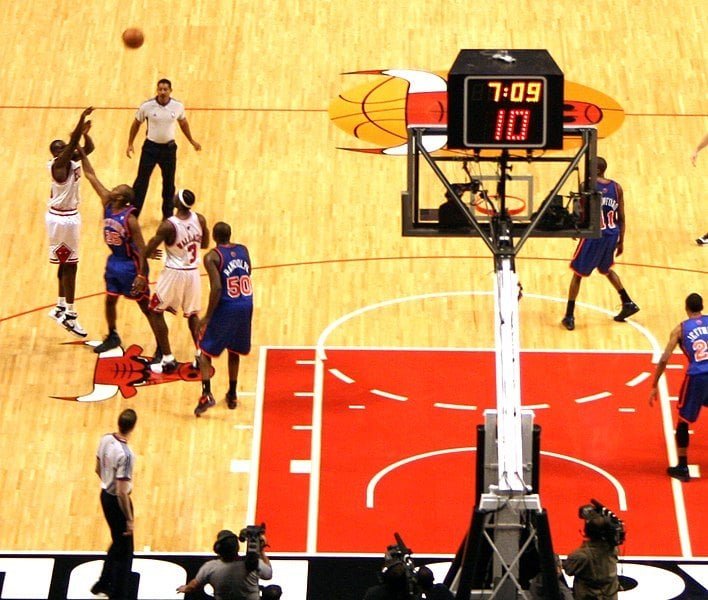
There are four periods in a standard basketball game.
Ever wondered about the structure of a basketball match? Many people ask, “how many periods in a basketball game?”. It’s a common question, especially for those new to the sport.
The game divides into distinct sections, each with its own timed duration. Knowing the period structure enhances your understanding and enjoyment of watching basketball. Each period offers its own exciting moments.

How Many Periods in a Basketball Game?
Let’s dive into the exciting world of basketball! You’ve probably watched a game or maybe even played one yourself. But have you ever stopped to think about how the game is actually structured? One of the main things to understand is how a basketball game is broken down into smaller parts. These parts are called periods, or sometimes quarters. Knowing how many periods are in a basketball game is the first step to understanding the flow of the game. It’s also important to know that the number of periods can be different, depending on who is playing! So let’s explore all the things about basketball periods and quarters.
The Standard Four Quarters
The most common setup for a basketball game is four periods. These periods are usually called quarters. You’ll see this structure in many leagues and levels of play, from high school games to professional leagues like the NBA. Each quarter is like a mini-game on its own and all of these four parts together make up the entire game. So, the core concept to remember is: most basketball games have four quarters.
How Long is Each Quarter?
Now that we know there are usually four quarters, let’s talk about how long each one lasts. The length of each quarter can change depending on the league or level of play. Here’s a breakdown of typical quarter lengths:
- NBA (National Basketball Association): Each quarter in an NBA game is 12 minutes long. This makes for a total playing time of 48 minutes if the game does not go into overtime.
- WNBA (Women’s National Basketball Association): Just like in the NBA, WNBA games also have four 10 minute quarters, totaling 40 minutes of game time, not including overtime.
- FIBA (International Basketball Federation): FIBA, which governs international play including the Olympics, also uses four quarters, but each quarter is 10 minutes long. This totals 40 minutes of actual playing time in a match, if it doesn’t go into overtime.
- High School Basketball: The standard time for high school games is typically 8 minutes per quarter. So, the total game time comes out to 32 minutes if the game does not go into overtime. Some states or leagues might have different rules, but this is the usual standard.
- Middle School/Youth Basketball: The quarter length for middle school and youth basketball games is usually shorter, often around 6 or 7 minutes each. This helps to make sure the games are age-appropriate and players have enough energy to play a good match.
As you can see, it’s important to be aware of the specific rules for the level of play you’re watching or playing. The length of the quarters directly impacts the total game time and therefore impacts the pacing of the game.
The Half-Time Break
Between the second and third quarters, there’s a longer break called halftime. This gives the players a chance to rest, regroup, and come up with new strategies for the second half of the game. During this time, coaches talk to their players, make adjustments to their play, and help their teams get ready for the remainder of the game. Halftime is also a good time for the audience to grab snacks or take a break.
How Long is Halftime?
The length of halftime varies, like the quarter lengths. Here’s what you can generally expect:
- NBA: Halftime in the NBA is 15 minutes long.
- WNBA: Halftime in the WNBA is also 15 minutes long.
- FIBA: Halftime for FIBA-regulated games is also 15 minutes long.
- High School Basketball: High school games usually have a halftime break that lasts for 10 to 15 minutes, depending on the particular rules of that particular association or league.
- Middle School/Youth Basketball: Middle school and youth basketball often have a shorter halftime break of about 5 to 10 minutes, again depending on the rules of the league or association governing that particular league.
It’s also important to know that besides the halftime break, there are shorter breaks of a minute or two between the first and second quarter, as well as between the third and fourth quarter, that allow for change of players and make tactical adjustments.
Overtime in Basketball
What happens when a game is tied at the end of the fourth quarter? This is where overtime comes in! If the scores are the same, the game goes into an additional period to decide the winner. This period is called overtime. How long is it? Well, overtime lengths also vary, just like the standard quarters.
How Long is Overtime?
- NBA: In the NBA, an overtime period is 5 minutes long. If the game is still tied after one overtime period, it will go into another overtime period until a winner is found.
- WNBA: The overtime periods are also 5 minutes long in the WNBA, and again, multiple overtime periods may be played if needed to decide the winner.
- FIBA: The overtime period in FIBA games is also 5 minutes long, with the number of overtimes played depending on whether a winner has been found.
- High School Basketball: The overtime period is usually 4 minutes in high school games.
- Middle School/Youth Basketball: Middle school and youth basketball games have shorter overtime periods, usually around 2 to 4 minutes, depending on the rules of the association that governs a particular league.
It’s important to remember that overtime periods keep going until one team is ahead at the end of an overtime period. This can make for a really exciting finish to an already interesting basketball game!
Why Are Games Divided into Periods?
You might be wondering, “Why not just play the entire game without breaking it up?” There are a few good reasons why basketball games are divided into periods:
- Managing Player Fatigue: Basketball is a very physically challenging sport. Breaking the game into periods gives players a chance to rest, get water, and recover, and manage their energy levels so that they can play their best throughout the match. Without breaks, players would likely get exhausted quickly, and their performance would suffer.
- Strategic Adjustments: The breaks between periods allow coaches to talk to their players, assess how the game is going, and make tactical changes. This includes substitutions, changes in game plans, and adjusting their overall game strategy. The breaks allow coaches to make these necessary game-time strategy changes.
- Spectator Engagement: The breaks and periods also make the game more interesting and engaging for spectators. The breaks keep everyone engaged and provide an opportunity for people to refresh and analyze what they’ve seen so far in the match. Halftime, in particular, provides a chance to enjoy some entertainment, get a refreshment, or use the bathroom.
- Flow and Pacing: Periods help control the flow and rhythm of a game. They allow for natural breaks in the action, which makes the game more easy to follow and enjoy.
Variations in Period Lengths and Rules
It’s also worth noting that some special tournaments, leagues, or exhibition games may have different rules about the number of periods and the length of each period. Sometimes, to make games shorter or more convenient, the number of periods might be changed, or their lengths shortened or lengthened. Always pay attention to the specific rules of the match or game you are watching or participating in. When you’re playing in a local league or at a certain tournament, there are usually specific rules given before the match or tournament starts that go over the variations in the rules of that particular tournament or league. These will help you to follow the rules of that tournament.
Examples of Variations
Here are a couple of scenarios where you might see variations:
- Special Tournaments: Some special or local tournaments might have shorter game times to accommodate more games in a single day. For example, a weekend basketball tournament for kids might feature shorter quarters and a shorter halftime break so that they can play more matches during that day.
- Exhibition Games: In an exhibition game, sometimes there might be a slightly different number of quarters, or different lengths for the quarters than in standard matches. These can depend on what the organizers have agreed upon, and these kinds of matches can often experiment with different rules.
The Importance of Understanding Game Structure
Understanding how basketball games are divided into periods is important for players, coaches, and spectators. For players, knowing the structure helps with energy management and pacing. Coaches can use the breaks strategically for game planning and tactical changes. Spectators can follow the game’s flow better by understanding the different periods and breaks. So the different parts of a basketball game are not just arbitrary; they actually contribute to the gameplay itself. By knowing the period, quarter and halftime structure you can understand the whole flow of a match much better.
In conclusion, while the standard is four quarters, it’s important to remember that quarter lengths and the presence of overtime can vary depending on the level of play. Knowing how the game is divided will help you better understand the game itself, whether you are playing, coaching or just watching. With this understanding, you are better equipped to appreciate the strategic nature and athletic skill of basketball.
How Many Periods Are In Basketball? – The Basketball Xpert
Final Thoughts
Basketball games generally have four periods. These periods are often called quarters. Each quarter provides a segment of play.
Professional and college basketball use this four-period structure. Knowing how many periods in a basketball game is fundamental to following the flow. The game clock resets at the beginning of every quarter.

